Substack Analytics That Explain What To Publish Next
Use Narrareach to review your Substack articles, Notes, and audience growth, then decide what to publish next. Find promising ideas, create the follow-up, and schedule it in the same workspace.
Advanced analytics: Revenue Writer · US$39/month, billed monthly · View plans
Review Substack performance beside subscriber growth
Narrareach’s Stats view brings channel performance and audience reports together. Review the work you published, see how readers responded, and explore which content brought subscribers.
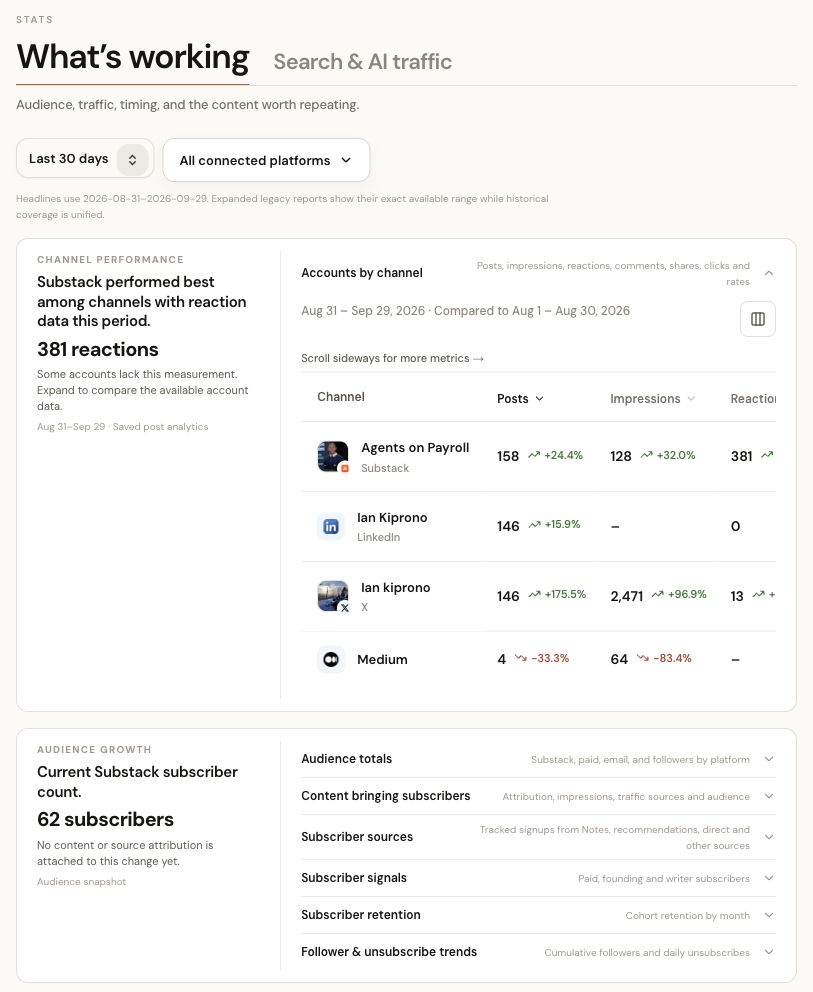
Find the ideas worth publishing again
See which articles and Notes your audience responds to. Use Narrareach to spot promising topics, try a different opening, or develop a Note into a full article. Create and schedule the follow-up in the same workspace, then see how it performs.
Your most-viewed post may be different from the one that brings subscribers. Start with the result you want: more readers, more conversation, or a growing subscriber base.
What does Substack analytics show?
Substack reports publication growth, post performance, engagement, traffic sources, and subscriptions. Its reports help you understand how individual posts perform and how your publication changes over time.
Narrareach brings those results into your publishing workflow. You can review performance, develop a follow-up, and add it to your schedule without treating analytics as a separate task.
Substack metrics explained: views, opens, reads, and subscribers
- Views: how often a post was viewed, as reported by Substack.
- Opens: recorded opens of an emailed or app-delivered post. Open tracking is an estimate, so use it alongside other signals.
- Reads: a recorded view or open does not tell you how much of an article someone read. Review responses and subscription results alongside those attention metrics.
- Engagement: responses such as likes, comments, shares, and restacks.
- Subscribers: audience growth, with free and paid subscriptions shown separately where available.
- Traffic sources: where Substack identifies visits or signups as coming from.
Compare similar posts over the same date range. An article’s email open rate and a Note’s replies tell you different things about how each piece worked.
Compare Substack Notes performance with article performance
Use Notes analytics to find the short posts that start conversations and attract readers. Use article metrics to understand how readers respond to longer pieces and emailed posts.
Narrareach helps you connect the two. A Note that keeps drawing replies might deserve a full article. An article that brings subscribers might contain an idea worth exploring in another Note.
Compare Notes with other Notes and articles with other articles first. Then decide which ideas are worth developing across formats.
Substack Notes activity, subscribers, and followers: what each tells you
A Note can start a conversation, bring a new subscriber, or help grow your following. Those are different results—and each can help you decide what to publish next.
- Activity: views, likes, replies, and restacks show how people respond to a Note.
- Subscribers: attributed subscriptions show which Notes brought people to your publication’s subscriber list.
- Followers: follower growth shows how your following changes over time. Following you and subscribing to your publication are different actions.
In Narrareach, review Notes activity, open the content attribution report to see which Notes brought subscribers, and review follower trends separately. Choose the next experiment around the result you want: start more conversations, grow your following, or bring more readers onto your subscriber list.
Understand Substack traffic sources and subscriber attribution
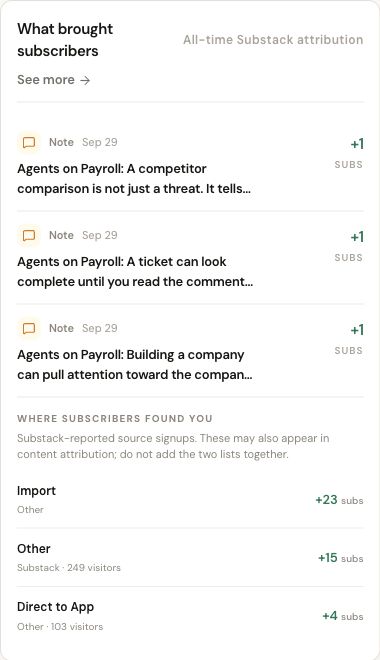
Review which content brought subscribers and which sources sent readers to your publication. Narrareach’s current dashboard shows attributed subscriber gains beside individual pieces of content, including Notes where those results are available.
Post attribution and source reports answer different questions. A subscriber can appear in both, so their totals should not be added together. Changes that happen around a publishing date are shown separately from attributed subscriptions.
Use the results to decide which pieces to follow up on and where to distribute them.
Turn analytics into the next publishing decision with Reach AI
Ask Reach AI to help explore a promising topic or develop a different angle. Turn the idea into an article, Note, or social post, review the draft, and schedule it across your connected channels.
For example, if several Notes about pricing freelance work draw replies, develop one into an article. Publish a follow-up Note with a different opening and compare the response.
You choose which ideas to pursue and what to publish.
A weekly Substack analytics review writers can maintain
- Review the same period. Look at article performance, Notes engagement, and subscriber growth.
- Choose one pattern to explore. Find a topic or opening that gets a response across more than one post.
- Create a follow-up. Develop a deeper article, a fresh Note, or a version for another channel.
- Schedule and compare. Publish the new piece and return to its results in your next review.
How Narrareach fits alongside Substack analytics
Substack provides native publication metrics, billing, and subscriber administration. Narrareach connects content performance with creating, scheduling, and learning across your publishing channels.
| Your question | How Narrareach helps |
|---|---|
| Which posts got a response? | Review article and Notes performance. |
| Which content brought subscribers? | See attributed subscriber gains beside content where available. |
| Where did readers come from? | Explore source reports alongside your publishing activity. |
| What should I publish next? | Develop a follow-up from a promising idea with Reach AI. |
| How do I test it? | Create and schedule the next piece, then compare its results. |
What writers say
“I love all the AI support, from generating notes from my already posted articles to analyzing what is working best in my field.”
Neosol, Content creator
Questions writers ask
What analytics does Substack provide?
Substack reports post performance, engagement, audience growth, traffic sources, subscriptions, and revenue. Use post reports to understand individual pieces and publication reports to follow broader trends.
Does Narrareach replace Substack analytics?
Narrareach works alongside Substack. Keep using Substack for publication metrics, billing, and subscriber administration; use Narrareach to connect your results with creating, scheduling, and comparing your next pieces across channels.
Can I compare Substack Notes with articles?
Yes. Review how each format performs against its purpose: starting conversations, reaching readers, or bringing subscribers. A successful Note can become an article, and a strong article can inspire follow-up Notes. Compare similar metrics and periods when judging the results.
Can I see which Substack content brings subscribers?
Yes. Narrareach shows attributed subscriber gains for content where that data is available, including Notes. Subscriber sources and broader audience trends give you additional context.
Do likes and restacks mean a Note brought subscribers or followers?
Likes and restacks show activity. Subscriber attribution shows subscriptions credited to a Note; follower trends show changes in your following. Use activity to see what sparked a response, attribution to identify subscriber gains, and follower trends to see how your audience is growing.
How accurate is Substack open rate?
Open rate is an estimate based on recorded opens. Image loading, privacy settings, and email or app behavior can affect it. Compare it with engagement and subscriber results before deciding what to change.
Can Narrareach compare Substack with LinkedIn and Medium?
Yes. Review available performance from connected channels in your publishing workflow. Metrics vary by platform, so compare results in their platform context.
Can AI tell me what to publish next?
Reach AI can help you explore patterns and develop a follow-up article, Note, or social post. You review the idea and draft before publishing.
Is Substack analytics useful for a small publication?
Yes. Start by comparing your own posts and the responses they receive. Look for patterns over several posts before making a bigger change.
See what your writing is actually doing
Find an idea worth repeating, create the next piece, and keep learning from the results.
Advanced analytics: Revenue Writer · US$39/month, billed monthly · View plans