Social Media Calendar Examples: 7 Templates for 2026
You start the month with a burst of posts. Then an essay takes longer than expected, client work fills the afternoon, and you miss the next slot. A quiet...
By Ian Kiprono
You start the month with a burst of posts. Then an essay takes longer than expected, client work fills the afternoon, and you miss the next slot. A quiet fortnight follows. By the end of the month, your content plan is another spreadsheet you don't open.
You're still writing. You're just making every distribution decision from scratch: which platform, which angle, what time, and whether to ask for a subscription. Your calendar lists topics, but it doesn't tell you what each post should accomplish. When work gets busy, publishing becomes optional because nothing has a defined job.
I recommend treating a calendar as a four-week experiment, not a promise to post forever. Fix the rhythm, batch the writing, and choose one outcome before you begin. Keep a record of production time so audience growth doesn't hide an unsustainable workload.
These seven social media calendar examples give you practical rhythms to test. Each includes a purpose for its slots, a batching workflow, and a metric that decides whether it stays. They're proposed experiments, not claims that I personally ran them or achieved someone else's results.
1. Substack Weekly Essay + Notes Rhythm Calendar
An essay shouldn't disappear from your distribution plan after publication day. I'd use this calendar when the main problem is good long-form writing that existing subscribers see, but new readers rarely discover.
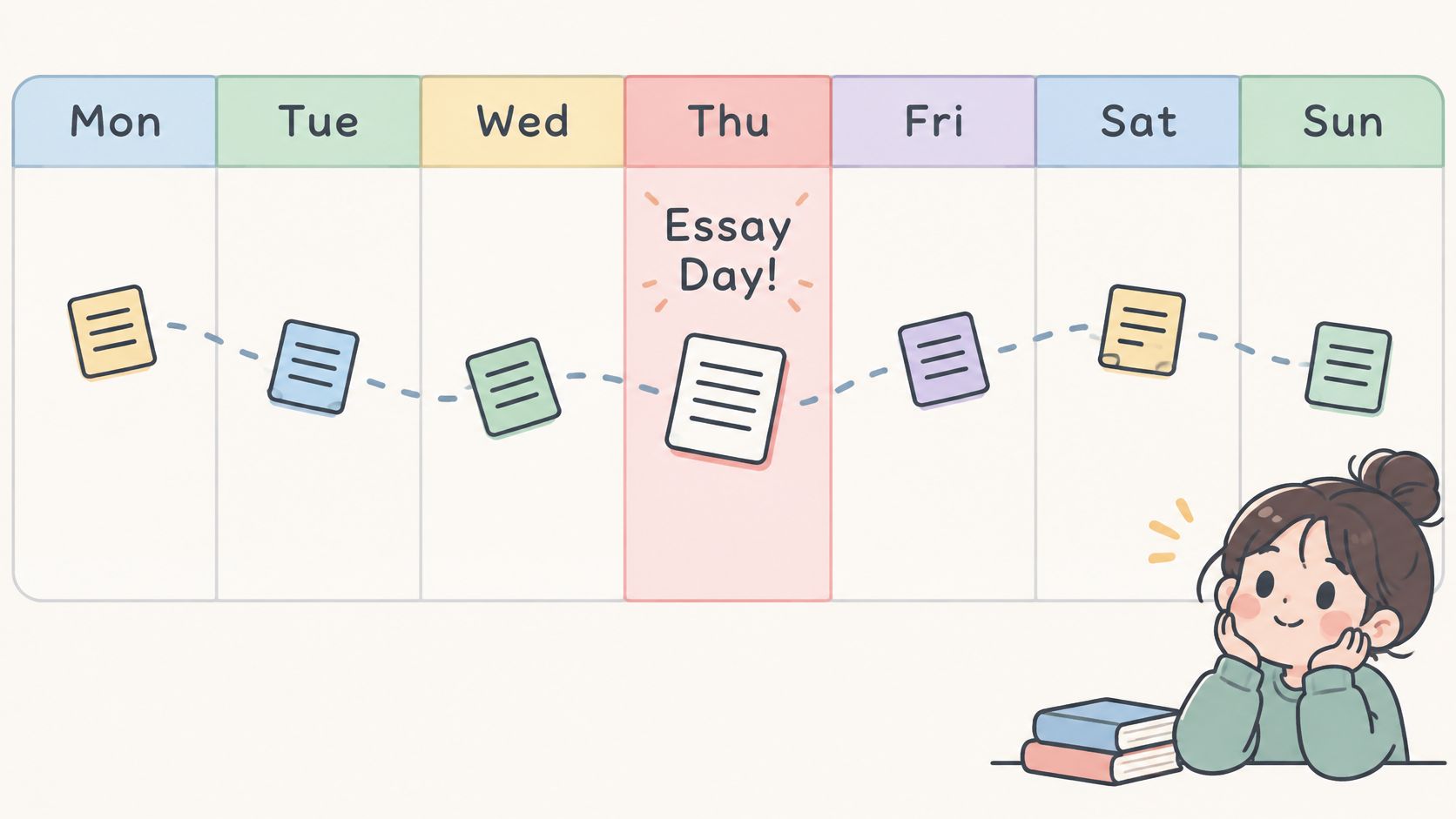
This illustrated planner shows the anchor-day approach. Use Tuesday for the test below, even though the illustration places its essay on Thursday.
- Tuesday: Publish the essay and a teaser Note explaining the reader's problem.
- Wednesday and Thursday: Share an insight and a counterargument, respectively.
- Friday: Ask a specific question readers can answer from experience.
- Saturday: Publish a recap or respond to a useful reader reply.
Draft the week's Notes immediately after finishing the essay. Extract three different angles rather than shortening the introduction repeatedly. The extra time cost is adaptation and conversation, not researching another article.
Judge subscriber growth, not Note volume
Track subscribers gained within 48 hours of each Note for four weeks. Treat that window as an association unless your analytics can attribute the subscription directly, since other promotion may overlap.
The Lori Ballen Substack Notes playbook reports a Substack finding that writers publishing at least three Notes during launch week gained 50% more subscribers than those below that threshold. That's a launch-week finding, not a guaranteed result for an established publication.
Choose your audience's active morning period as an initial timing hypothesis. Keep the essay's anchor day for twelve weeks if the workload remains manageable, while reviewing the first month's results. Use this Substack content strategy guide to connect discovery posts with a publication readers want to keep receiving.
2. LinkedIn Three-Post Weekly Calendar for Solo Creators
Daily publishing is a poor starting commitment when you're already struggling to publish weekly. I'd begin with Monday, Wednesday, and Friday, using a different editorial job for each slot.
Say you write a newsletter about customer interviews. Monday's post argues that founders ask leading questions. Wednesday describes a hypothetical interview that produces misleading praise, clearly labeled as a scenario. Friday gives readers a practical interview framework.
Turn one argument into distinct posts
- Monday, establish a position: Reduce your strongest newsletter argument to one defensible point.
- Wednesday, make it concrete: Use a genuine personal example or a clearly framed scenario.
- Friday, help someone act: Publish a framework, sequence, or useful list.
Batch these drafts from the same source article. Write short paragraphs, remove newsletter-specific references, and reserve time after publication to answer substantive comments. The workload includes conversation, not just filling the scheduler.
For context, Hootsuite's analysis of business posting activity found an average of 5.5 LinkedIn posts per week in Q1 2025. That describes businesses, not a minimum a solo writer must match.
Practical rule: Don't increase frequency until you can sustain the current rhythm without weakening the source material.
Run the schedule for four weeks and judge it on qualified inbound conversations. Define qualified before starting: someone asks about your service, proposes a relevant collaboration, or describes a problem you can help solve.
Record which slot started each conversation. A framework that attracts potential clients deserves more attention than an opinion post that produces applause from people who'll never need your work.
3. Multi-Platform and Evergreen Repurposing Calendar
For a writer publishing on Medium, LinkedIn, X, and Substack, I'd test one source idea with several native treatments, not identical copy everywhere. The trade-off is editing time: you save research effort, but each adaptation still needs a suitable opening and purpose.
Use this timeline to separate initial distribution from later evergreen reuse.
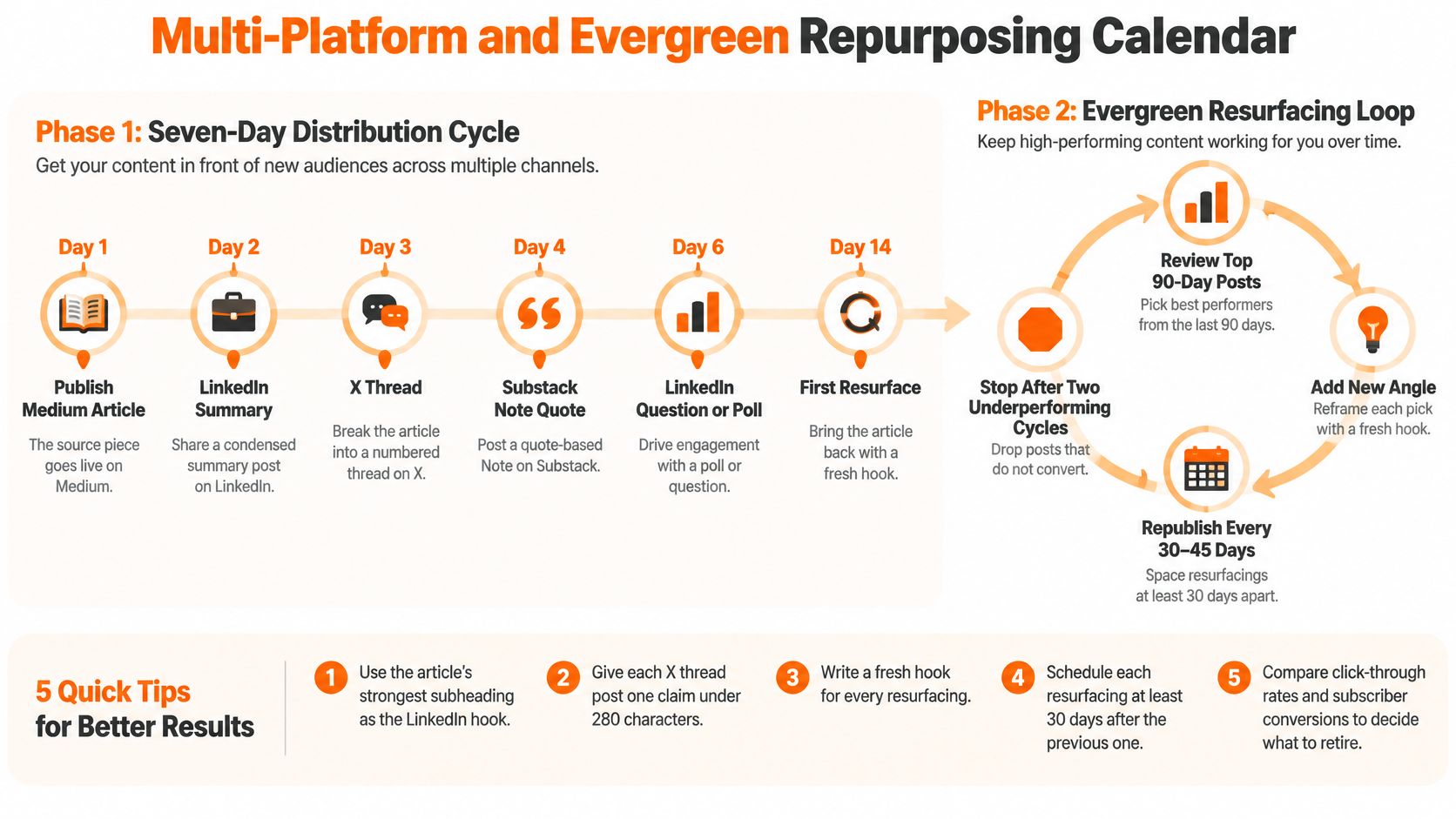
For a new Medium article, use this proposed sequence:
- Day 1: Publish the article.
- Day 2: Share a LinkedIn summary built around its strongest subheading.
- Day 3: Publish an X thread explaining the argument.
- Day 4: Share a quote-based Note with enough context to stand alone.
- Day 6: Ask a LinkedIn question that tests the article's premise.
- Around day 14: Revisit the idea through a different example.
Batch the adaptations while the argument is fresh. A 1,500-word article is a useful source-piece scenario, but length alone doesn't create reusable insights.
This video offers another way to think through the repurposing workflow.
Separate launch distribution from evergreen recycling
Review strong articles from the past ninety days. For later evergreen cycles, write a fresh hook and leave thirty to forty-five days between resurfacings. The initial follow-up above isn't the same as repeatedly recycling an established post.
SHNO's content-repurposing statistics compilation, citing HubSpot research, reports approximately double the engagement rates among companies using active repurposing strategies. It's secondary evidence, not a forecast for your account.
Judge your four-week test on attributable new subscribers. Keep clicks as a diagnostic, and stop recycling a piece after two weak cycles. This evergreen content recycling guide can help you distinguish an enduring idea from an outdated post.
4. X Thread Series Calendar for Thought Leadership
A named series gives you an editorial constraint. Instead of asking what to post on X, you ask which topic deserves the next installment.
For example, a finance newsletter could publish a weekly “Balance Sheet Breakdown.” A software writer could run “Product Decision Review.” I'd choose a format you can repeat without inventing expertise or manufacturing controversy.
Build the thread alongside the newsletter
Publish one thread each week, on the newsletter's publication day. Start with the series name and a clear claim, add five to eight supporting posts, and close with a newsletter invitation.
Keep each supporting post focused on one claim. Use a drafting ceiling of 280 characters to force concise editing, rather than treating available space as a target.
- Hook: Explain the decision or misconception.
- Evidence: Show the example, calculation, or reasoning.
- Application: Tell readers what they can do differently.
- Closing: Link to the full explanation with an explicit reason to continue.
Socialinsider's social media benchmarks, based on 198 million posts from 1.16 million brand accounts, reported an average of 70 monthly X posts in 2025. That scale explains why a weekly thread is a focused experiment, not a complete brand-account publishing program.
A thread that gets attention but sends nobody toward your deeper work may be succeeding at the wrong job.
Draft the thread immediately after the essay, then check every claim in isolation. The time cost comes from compression and reply handling.
Use newsletter link clicks as the deciding metric across four weeks. Review impressions and profile visits only to diagnose where readers stop. The guide to writing on Twitter offers a useful companion for sharpening the short-form argument.
5. 70-20-10 Content Pillar Calendar for Growth Leads
A startup's calendar can look busy while repeatedly asking people to buy. I'd test an education-heavy mix when promotion has crowded out useful explanations and customer context.
Treat 70-20-10 as a proposed allocation, not a proven universal growth formula. For a twenty-post test month, schedule fourteen educational posts, four community posts, and two promotional posts.

Give each pillar a buyer-facing job
For a project-management product, educational posts might explain handoffs and scope changes. Community posts could feature customer workflows with permission. Promotional posts should show the product solving a specific problem, not merely announce its availability.
Assign one owner to each pillar. Batch the month's briefs together, then draft related posts in groups so the writer doesn't repeatedly switch subjects.
The Dolomiti Mexico case study from Inscale Media describes a restaurant plan using product, community, and conversion pillars, with monthly booking inquiries rising from 28 to 39. That supports separating content jobs, but it doesn't validate this particular allocation for a software company.
Choose qualified leads as the deciding metric. Tag every post by pillar and connect leads to identifiable sources where possible.
Review results on the first Monday after the test. Don't reallocate everything because one promotional post performs well; the educational material may have helped prepare that buyer. I'd wait for two full months before shifting the allocation by five percentage points.
The main cost is coordination. Customer stories require permission, educational posts need subject expertise, and promotional claims need checking.
6. Product Launch Countdown Calendar for Newsletter Creators
A launch announcement asks readers to make a decision. It shouldn't also have to explain the problem, introduce your expertise, answer objections, and establish trust for the first time.
I'd use a four-week countdown for a paid newsletter tier, course, or digital product. Keep a fixed weekly rhythm of an anchor post, a supporting Note, and a question-answering update.
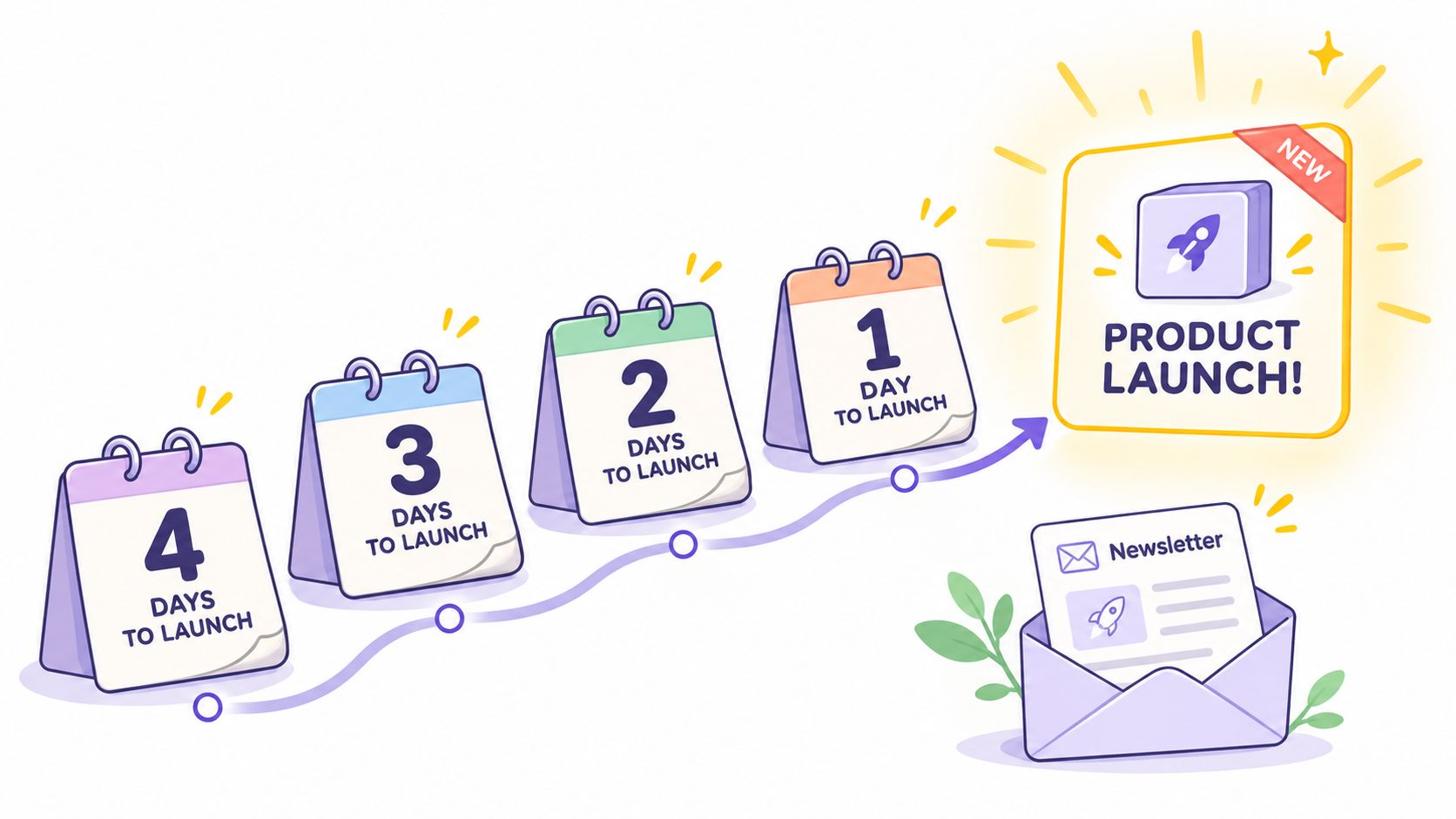
- Week one, establish the problem: Publish a useful teaser essay and invite waitlist interest.
- Week two, show the work: Explain your approach and answer reader questions.
- Week three, announce the offer: State who it's for, what's included, and the actual deadline.
- Week four, support the decision: Address objections and publish a factual closing reminder.
Batch the sequence, leave room for answers
Prepare the sequence before the teaser goes live. Reserve editing time for questions readers ask, rather than scheduling invented objections and ignoring replies.
Judge the test on paid sign-ups, broken down by platform and week. Waitlist growth is useful context, but it isn't the same outcome.
The quality standard matters here: Google's people-first content guidance recommends useful, original content that serves readers rather than merely attracting visits. Your teaser should help someone even if they never buy.
Launch safeguard: Include the real deadline in every offer post. If enrollment stays open, don't imply that it closes.
Use testimonials only with permission, and don't fabricate results when the product is new. Show a sample lesson or deliverable instead. These newsletter promotion ideas can help you vary the presentation without changing the offer every day.
7. Multi-Brand Agency Editorial Calendar with Approval Workflow
For an agency, the biggest calendar failure may happen before publication: a draft sits in someone's inbox while the scheduled slot passes.
I'd run a four-week approval experiment before increasing output. Give every client a fixed cadence, a separate set of pillars, and a shared status system: draft, client review, approved, scheduled, published.
Make the next action visible
Say an agency manages a consultant's newsletter and a software company's LinkedIn presence. The consultant might use the essay-and-Notes rhythm, while the software company uses the pillar mix. They share workflow fields, not a generic voice or identical posting frequency.
- Review window: Set a forty-eight-hour client review expectation and name an escalation contact.
- Draft context: Attach the brand voice guide, source material, and intended audience.
- Batch size: Prepare each client's posts in two-week batches.
- Accessibility: Include alt text, captions or transcripts where relevant, and readable formatting.
- Reporting: Send monthly subscriber outcomes and top posts by platform.
Choose the proportion of planned posts published on time as the deciding metric. Keep audience outcomes in client reports, but don't confuse approval reliability with audience growth.
A PostNitro calendar case study reports daily posting time falling from 45 minutes to 10 minutes. The source doesn't disclose enough methodology to treat that as an agency forecast, but it illustrates why production time deserves measurement.
The trade-off is administrative effort upfront. Record actual drafting, review, and scheduling time separately so you can identify the bottleneck.
Never treat silence as approval unless the client has explicitly agreed to that policy. Use this multi-brand management guide to organize separate identities within a shared workflow.
How the seven social media calendar examples compare on frequency, platforms, and tracking
Use each row as a four-week test: keep its posting rhythm fixed, give every slot a purpose, and judge it by one deciding metric. Batch the planned content before the test starts, then log the chosen metric consistently. The formats differ in channel mix and production effort, so avoid changing several variables at once.
| Item | Posting Frequency | Core Platforms | Best For | Key Metric |
|---|---|---|---|---|
| Substack Weekly Essay + Notes Rhythm Calendar | One essay weekly, with Notes throughout the week | Substack | Newsletter growth and reader engagement | Subscriber sign-ups driven by Notes |
| LinkedIn Three-Post Weekly Calendar for Solo Creators | Three posts weekly: Monday, Wednesday, and Friday | Solo creators building professional credibility | Qualified inbound conversations | |
| Multi-Platform and Evergreen Repurposing Calendar | Two-week distribution sequence; resurface evergreen content every 30–45 days | Medium, LinkedIn, X, Substack | Repurposing articles across platforms | Clicks and subscriber conversions |
| X Thread Series Calendar for Thought Leadership | One thread weekly | X, newsletter platform | Thought leadership and audience discovery | Impressions, replies, and link clicks |
| 70-20-10 Content Pillar Calendar for Growth Leads | Monthly content mix: 70% educational, 20% community, 10% promotional | Multiple social platforms | Teams balancing education, community, and promotion | Qualified leads |
| Product Launch Countdown Calendar for Newsletter Creators | Three- to four-week launch sequence | Substack, LinkedIn, X | Launching paid newsletters, courses, or digital products | Sign-ups by platform and week |
| Multi-Brand Agency Editorial Calendar with Approval Workflow | Client-specific cadence, planned in shared calendar | Multiple client platforms | Agencies coordinating content across brands | Proportion of planned posts published on time |
The metric should match the calendar's purpose. For LinkedIn, count qualified conversations rather than treating impressions or comments as success. For the 70-20-10 mix, track qualified leads, not broad pillar performance. For agency workflows, measure on-time publication; audience growth is a separate outcome.
The multi-platform sequence runs across two weeks, with evergreen resurfacing every 30–45 days. That cadence takes more coordination than a single-channel schedule, but gives repurposed articles room to circulate. Keep the batch workflow and tracking rule consistent throughout the four-week test.
Turn One Calendar Into a Four-Week Test
Pick the calendar that addresses your current constraint. If essays aren't reaching new readers, start with Notes. If client approvals keep slipping, fix the workflow before adding another platform.
Don't combine all seven experiments. You won't know whether growth came from a better topic, more posts, a new channel, or a changed offer. Choose one rhythm and give it enough consistency to produce a useful comparison.
Before starting, write down the outcome you want and the rule you'll use to measure it. For Notes, that might be subscribers gained within forty-eight hours. For LinkedIn, it might be qualified conversations, provided you define what qualifies.
- Before publication: Record the source article, platform, slot purpose, and intended action.
- During the test: Batch drafts, schedule the fixed slots, and log production time.
- At review: Compare outcomes by topic and format, then keep, adapt, or retire the approach.
Keep the distinction between activity and progress clear. Publishing every planned post proves that the workflow is manageable. It doesn't prove the content is attracting the right audience.
I'd also preserve a fallback version of each important idea. A concise text post, descriptive image text, and a transcript can help you publish something understandable when a video isn't practical. Don't let a complicated asset become the reason the entire week goes quiet.
At the end of the test, change the weakest variable rather than replacing the whole calendar. If readers click but don't subscribe, inspect the destination and invitation. If nobody clicks, revisit the topic, hook, and relevance before adding more slots.
Batch scheduling removes repeated decisions. A fixed rhythm makes those decisions comparable. Together, they give you a way to learn what deserves more distribution without committing yourself to an endless publishing treadmill.
Narrareach helps you schedule Substack Notes and articles, Medium articles, LinkedIn posts, and X content from one dashboard, then compare what drives subscriber and engagement signals. If you're ready to run your calendar, visit Narrareach and start free with no credit card required. If you'd rather stay connected first, subscribe to our updates for practical posting calendars and repurposing workflows you can use in your next test.