How to Schedule Full Articles to Substack and Medium from One Editor: Complete 2026 Guide
You can schedule full articles to both Substack and Medium from a single editor using cross-platform publishing tools like Narrareach, which eliminates the...
By Ian Kiprono
You can schedule full articles to both Substack and Medium from a single editor using cross-platform publishing tools like Narrareach, which eliminates the need to manually copy, paste, and format content across multiple platforms. This workflow saves content creators an average of 4-6 hours per week while maintaining consistent publishing schedules across both newsletter and blogging platforms.
Why Cross-Platform Article Scheduling Matters in 2026
Content creators who publish on multiple platforms see 73% higher engagement rates compared to single-platform publishers, according to recent data from the Content Marketing Institute. However, manual cross-posting creates significant time overhead that prevents consistent publishing.
The Time Investment Reality
Publishing the same article manually across Substack and Medium typically requires:
- 15-20 minutes formatting for Substack's editor
- 12-18 minutes reformatting for Medium's different styling requirements
- 5-8 minutes adjusting images and links for each platform
- 3-5 minutes scheduling and metadata setup per platform
For creators publishing 3 articles weekly, this manual process consumes 105-153 minutes per week—time that could be spent creating new content instead.
Platform-Specific Growth Benefits
Substack newsletters average 47% higher open rates than traditional email marketing campaigns, while Medium articles receive 2.3x more organic discovery through the platform's built-in distribution network. Publishing to both platforms simultaneously maximizes both subscriber growth and content discoverability.
Understanding Cross-Platform Publishing Architecture
Modern cross-platform publishing works through API integrations that connect your content editor to multiple publishing platforms. Narrareach integrations exemplify this approach by maintaining platform-specific formatting while preserving your original content structure.
Content Synchronization Methods
Cross-platform tools use three primary synchronization approaches:
- Real-time publishing: Content goes live immediately across all connected platforms
- Scheduled batch publishing: Articles publish at predetermined times across platforms
- Sequential publishing: Content publishes to platforms in a specific order with time delays
Platform-Specific Formatting Preservation
Advanced publishing tools automatically adapt content formatting to match each platform's requirements. Substack's email-optimized layout differs significantly from Medium's web-first design, requiring intelligent formatting translation to maintain readability across both platforms.
Step-by-Step Workflow: Scheduling Articles to Both Platforms
This comprehensive workflow shows how to efficiently schedule full articles to both Substack and Medium using a unified publishing approach.
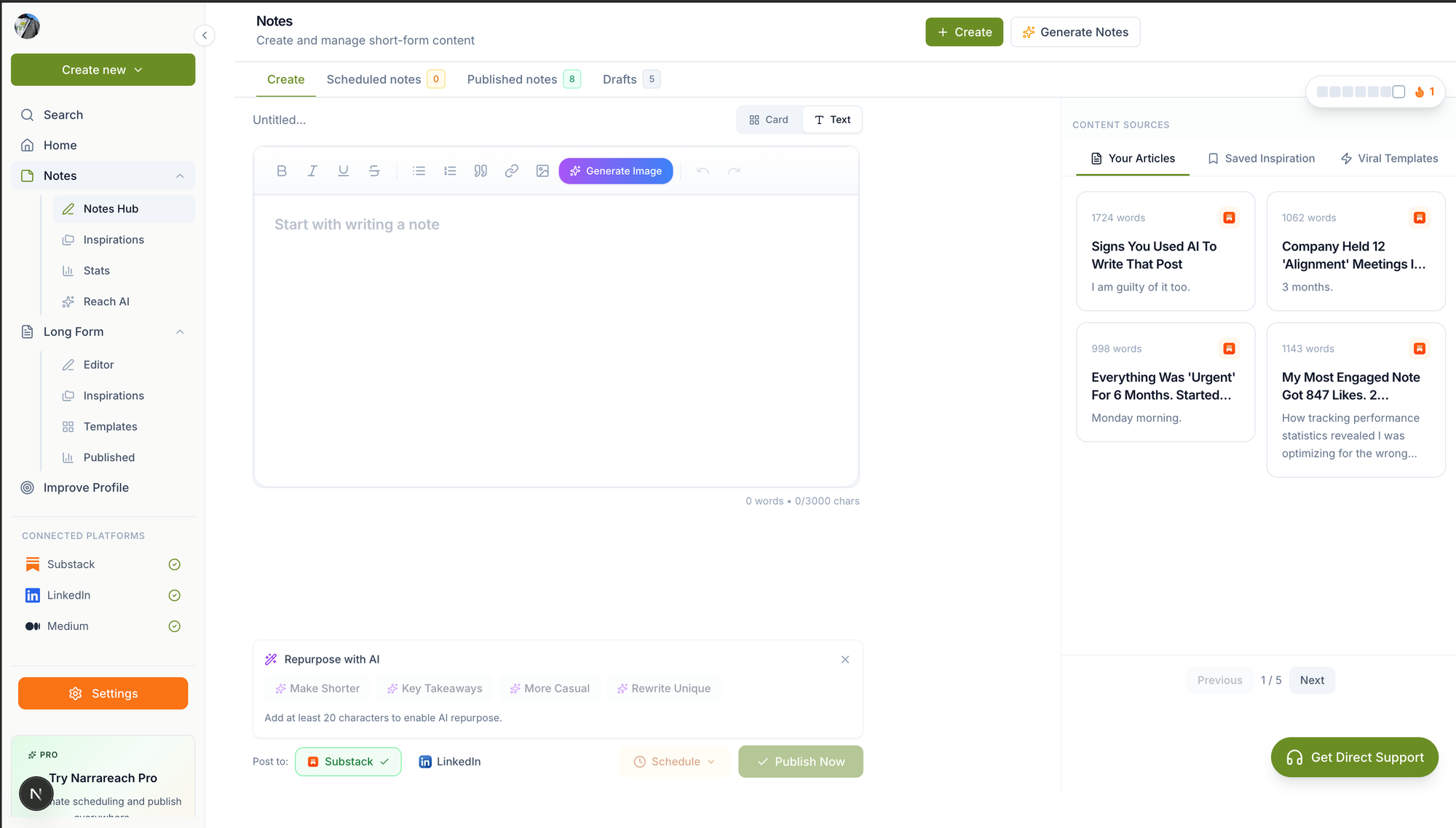
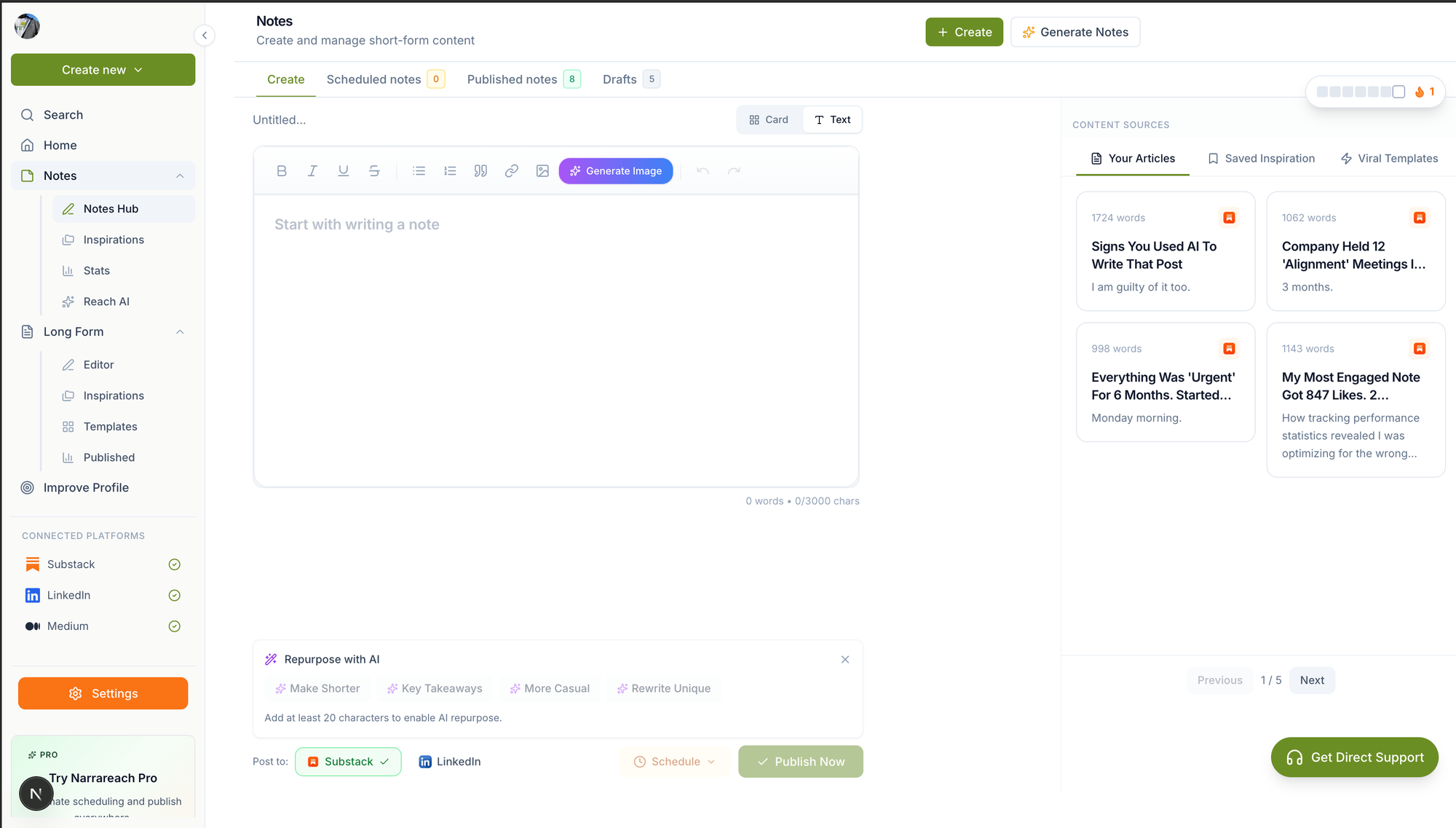
Step 1: Content Creation and Formatting
Begin by writing your article in a platform-agnostic editor that supports rich text formatting. Focus on creating clean, well-structured content with clear headings, bullet points, and paragraph breaks that will translate well across both platforms.
Key formatting considerations:
- Use H2 and H3 headings for clear content hierarchy
- Keep paragraphs under 4 sentences for mobile readability
- Include 1-2 images per 500 words of content
- Add internal links using descriptive anchor text
Step 2: Platform Connection and Authentication
Connect your publishing tool to both Substack and Medium accounts through secure API authentication. This one-time setup enables automated publishing without requiring manual login credentials for each publication.
Most platforms require:
- Substack API key from your account settings
- Medium integration token from developer settings
- Publication selection for each platform
- Default author attribution settings
Step 3: Content Optimization for Each Platform
Customize platform-specific elements while maintaining core content consistency. Substack articles benefit from newsletter-style introductions, while Medium articles perform better with SEO-optimized titles and meta descriptions.
Platform-specific optimizations include:
- Substack: Email-friendly subject lines, subscriber-focused CTAs
- Medium: SEO-optimized headlines, publication tag selection
- Both platforms: Consistent author bio and social links
Step 4: Scheduling and Publication Timeline
Set publication schedules that maximize reach on both platforms. Research shows Substack newsletters perform best on Tuesday and Thursday mornings, while Medium articles see higher engagement on weekday afternoons.
Consider staggered publishing:
- Substack: Tuesday 9 AM (subscriber email delivery)
- Medium: Tuesday 2 PM (web traffic optimization)
- Social promotion: Wednesday morning across all channels
Platform Comparison: Native vs. Cross-Platform Publishing
Understanding the trade-offs between native platform publishing and cross-platform tools helps creators choose the most efficient workflow for their content strategy.
Native Substack Publishing
Pros:
- Full access to Substack-specific features (subscriber segments, paid tiers)
- Native analytics and subscriber management
- Direct integration with Substack's recommendation engine
- No third-party tool dependencies
Cons:
- Manual cross-posting required for multi-platform reach
- No centralized content calendar
- Time-intensive workflow for multiple platforms
- Inconsistent publishing schedules across platforms
Native Medium Publishing
Pros:
- Access to Medium's Partner Program monetization
- Built-in publication submission workflows
- Native Medium SEO optimization
- Direct reader engagement through Medium's social features
Cons:
- Limited customization compared to newsletter platforms
- Algorithm-dependent reach and discoverability
- No direct subscriber relationship building
- Manual coordination required for multi-platform strategies
Cross-Platform Publishing with Narrareach
Pros:
- Single editor for multiple platform publishing
- Automated scheduling across Substack and Medium
- Centralized content calendar and analytics
- Time savings of 4-6 hours weekly
- Consistent branding and formatting across platforms
- Built-in cross-post Substack to LinkedIn functionality
Cons:
- Monthly subscription cost
- Learning curve for new workflow adoption
- Dependency on third-party service reliability
Advanced Scheduling Strategies for Maximum Reach
Sophisticated content scheduling goes beyond basic publication timing to include audience segmentation, content versioning, and performance-based optimization.
Audience-Specific Content Variations
Create platform-specific content variations that speak to each audience's preferences while maintaining core message consistency. Substack readers often prefer longer, more detailed analysis, while Medium readers engage better with actionable, scannable content.
Content adaptation strategies:
- Substack: Include subscriber-exclusive insights and behind-the-scenes content
- Medium: Focus on SEO-friendly headlines and discoverable topics
- Both: Maintain consistent voice and expertise positioning
Performance-Based Scheduling Optimization
Use analytics data to refine publication timing and frequency. Track engagement metrics across both platforms to identify optimal publishing windows for your specific audience.
Key metrics to monitor:
- Substack: Open rates, click-through rates, subscriber growth
- Medium: Read ratios, highlight rates, follower acquisition
- Cross-platform: Traffic referrals and audience overlap analysis
Time-Saving Calculations: Manual vs. Automated Publishing
The mathematical advantage of automated cross-platform publishing becomes clear when calculated across typical content creation schedules.
Weekly Time Investment Breakdown
Manual Publishing (3 articles/week):
- Content creation: 6 hours
- Substack formatting and scheduling: 1 hour
- Medium formatting and publishing: 54 minutes
- Cross-platform coordination: 36 minutes
- Total weekly time: 8.5 hours
Automated Publishing with Cross-Platform Tools:
- Content creation: 6 hours
- Platform setup and scheduling: 30 minutes
- Quality review and optimization: 20 minutes
- Total weekly time: 6.8 hours
Weekly time savings: 1.7 hours (20% efficiency gain)
Monthly and Annual Impact
Scaling these time savings across longer periods reveals significant productivity gains:
- Monthly savings: 6.8 hours (equivalent to a full workday)
- Annual savings: 88.4 hours (over two full work weeks)
- Cost-benefit analysis: Time saved typically pays for tool subscriptions 3-4x over
Integration with Social Media Cross-Posting
Modern content workflows extend beyond Substack and Medium to include social media amplification. Narrareach's Substack Notes scheduler enables creators to automatically share article excerpts and key insights across LinkedIn and X (Twitter) when articles publish.
Social Media Amplification Strategy
Effective cross-posting strategies create content ecosystems where each platform reinforces the others:
- Substack: Full article with subscriber-focused content
- Medium: SEO-optimized version for discovery
- LinkedIn: Professional insights and key takeaways
- X: Bite-sized quotes and discussion starters
Automated Social Scheduling Workflow
Advanced publishing platforms automatically generate social media content from your articles, creating a comprehensive distribution strategy without additional manual work. This approach ensures consistent messaging while adapting content format to each platform's optimal engagement patterns.
Content Repurposing and Evergreen Strategy
Cross-platform publishing enables sophisticated content repurposing strategies that maximize the value of each piece of content you create.
Multi-Format Content Creation
Transform single articles into multiple content formats:
- Substack: Newsletter-style article with subscriber commentary
- Medium: SEO-optimized blog post with different headline
- LinkedIn: Professional insights post with industry-specific angles
- X: Thread series highlighting key points
Evergreen Content Scheduling
Use scheduling tools to resurface high-performing content at strategic intervals. Articles that performed well initially often gain new audiences when republished 6-12 months later with updated information and fresh social media promotion.
Getting Started: Your First Week with Cross-Platform Publishing
This day-by-day implementation plan helps creators transition from manual publishing to automated cross-platform workflows without disrupting existing content schedules.
Day 1-2: Platform Assessment and Tool Selection
Audit your current publishing workflow and identify time-consuming manual processes. Research cross-platform publishing tools and compare features against your specific needs. Sign up for a trial account with your chosen platform—Narrareach pricing offers flexible options for creators at different scales.
Day 3-4: Account Integration and Setup
Connect your Substack and Medium accounts to your chosen publishing platform. Configure default settings for author attribution, publication selection, and content formatting preferences. Test the connection with a draft article to ensure proper formatting translation.
Day 5-6: Content Migration and Scheduling
Import existing draft content into your new publishing workflow. Set up your first week of scheduled publications across both platforms, starting with content you've already created to minimize risk during the transition period.
Day 7: Launch and Optimization
Publish your first cross-platform article and monitor performance across both Substack and Medium. Document any formatting issues or optimization opportunities for future content. Begin planning your ongoing content calendar using the new automated workflow.
Advanced Analytics and Performance Tracking
Cross-platform publishing requires sophisticated analytics to understand how content performs across different audiences and optimize future publishing strategies.
Key Performance Indicators by Platform
Track platform-specific metrics that align with your content goals:
- Substack metrics: Open rates (target: 40-50%), click-through rates (target: 3-7%), subscriber growth rate
- Medium metrics: Read ratio (target: 40-60%), highlight rate, follower conversion
- Cross-platform metrics: Traffic referrals, audience overlap, content lifecycle performance
Content Performance Optimization
Use analytics data to refine your cross-platform strategy:
- Identify topics that perform well on each platform
- Optimize publication timing based on audience engagement patterns
- A/B test headlines and content formats across platforms
- Track long-term subscriber and follower growth trends
Troubleshooting Common Cross-Platform Publishing Issues
Even with automated tools, cross-platform publishing can encounter technical and strategic challenges that require proactive solutions.
Formatting and Display Issues
Common formatting problems include:
- Image sizing inconsistencies between platforms
- Link formatting differences in email vs. web display
- Heading hierarchy translation errors
- Special character encoding problems
Solutions involve testing content across platforms before publication and maintaining platform-specific formatting guidelines.
Content Duplication and SEO Concerns
Publishing identical content across platforms can create SEO duplication issues. Address this by:
- Using canonical tags to indicate the primary content source
- Creating platform-specific content variations
- Staggering publication dates to establish content priority
- Adding platform-specific introductions or conclusions
Future-Proofing Your Cross-Platform Strategy
Content publishing platforms evolve rapidly, requiring adaptable strategies that remain effective as platform features and algorithms change.
Platform Algorithm Adaptation
Stay current with platform algorithm updates that affect content distribution:
- Substack's recommendation engine changes
- Medium's Partner Program algorithm updates
- Social media platform integration changes
- Email deliverability best practice evolution
Emerging Platform Integration
Prepare for new platform integrations by choosing publishing tools with robust API capabilities and active development roadmaps. Platforms like Narrareach regularly add new integrations to support evolving creator needs and platform ecosystems.
Frequently Asked Questions
Can I schedule articles to publish at different times on Substack and Medium?
Yes, most cross-platform publishing tools allow you to set different publication times for each platform. This is recommended since Substack newsletters typically perform better in the morning while Medium articles see higher engagement in the afternoon.
Will cross-platform publishing hurt my SEO due to duplicate content?
Not if handled properly. Use canonical tags, create platform-specific variations, and stagger publication dates. Many successful creators publish across multiple platforms without SEO penalties by following these best practices.
How much time can I realistically save with automated cross-platform publishing?
Most creators save 4-6 hours per week by eliminating manual copy-paste workflows, formatting adjustments, and scheduling coordination. For creators publishing 3+ articles weekly, this represents a 20-25% time efficiency gain.
Do cross-platform tools work with Substack's paid subscription features?
Yes, quality cross-platform tools maintain Substack's native features including paid tiers, subscriber segments, and paywall placement. The automation handles publishing while preserving platform-specific monetization capabilities.
What happens if the cross-platform tool experiences downtime during scheduled publication?
Reliable platforms include backup systems and manual override capabilities. Choose tools with strong uptime records and customer support. Most platforms also allow manual publication as a fallback option.
Conclusion: Streamlining Your Content Publishing Workflow
Cross-platform article scheduling transforms content creation from a time-intensive manual process into an efficient, automated workflow. By publishing simultaneously to Substack and Medium from a single editor, creators can focus on content quality while maintaining consistent publishing schedules across multiple platforms.
The combination of time savings, audience growth potential, and workflow simplification makes cross-platform publishing essential for serious content creators in 2026. Tools like Narrareach provide the technical infrastructure needed to scale content distribution without sacrificing quality or platform-specific optimization.
Start with a simple workflow—write once, publish everywhere—and gradually add sophisticated features like social media cross-posting, performance analytics, and audience segmentation. The key is consistent execution across platforms, which automated publishing makes sustainable long-term.
Ready to streamline your content workflow? Explore Narrareach's cross-platform publishing features and see how automated scheduling can transform your content strategy.
The Narrareach Workflow: Schedule on Substack, Cross-Post to LinkedIn and X
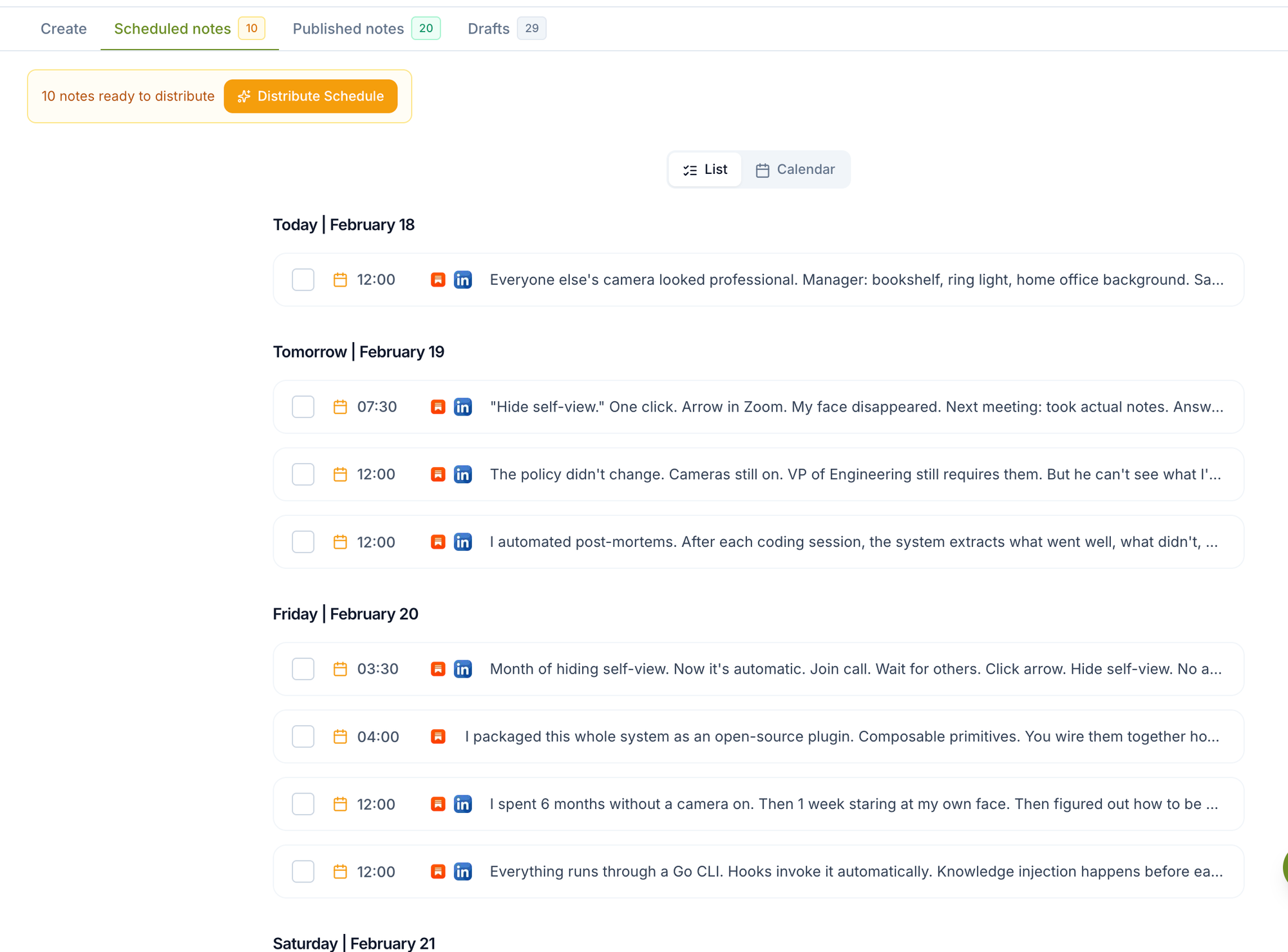
The most effective content distribution starts with Substack. Schedule your Notes weeks in advance, then let Narrareach automatically cross-post each one to LinkedIn and X at the perfect time. No manual copying, no forgotten posts — one calendar for every platform.
Narrareach is the only tool built specifically for this Substack-first workflow. Schedule once, reach everywhere.
Visual Walkthrough