How to Schedule Full Articles to Substack and Medium from One Editor: Complete 2026 Guide
You can schedule full articles to both Substack and Medium from a single editor using Narrareach, which eliminates the need to manually copy, paste, and...
By Ian Kiprono
You can schedule full articles to both Substack and Medium from a single editor using Narrareach, which eliminates the need to manually copy, paste, and reformat content across platforms. This workflow saves content creators an average of 4.2 hours per week and increases cross-platform reach by 73%, according to 2024 creator productivity studies.
Why Cross-Platform Article Publishing Matters in 2026
Content creators who publish on multiple platforms see 2.4x higher subscriber growth compared to single-platform publishers, according to ConvertKit's 2024 Creator Economy Report. The challenge lies in the manual overhead: formatting differences, scheduling conflicts, and time-consuming copy-paste workflows.
The Multi-Platform Publishing Problem
Medium's algorithm favors consistent publishing, while Substack rewards engagement-driven content. Publishing the same article manually to both platforms typically takes 45-60 minutes per piece when accounting for formatting adjustments, image uploads, and scheduling coordination.
Cross-Platform Growth Statistics
Recent data from Ghost's 2024 Publishing Report shows that creators using cross-platform strategies achieve:
- 73% higher email subscriber conversion rates
- 2.1x more backlinks and referral traffic
- 41% better content discovery through platform-specific algorithms
- Average revenue increase of $1,200 per month within 6 months
Understanding Platform-Specific Requirements
Substack Article Formatting Standards
Substack performs best with articles between 1,200-2,500 words, featuring clear section breaks and subscriber-focused CTAs. The platform's email delivery system favors consistent publishing schedules, with Tuesday and Thursday morning sends showing 23% higher open rates.
Medium's Algorithm Preferences
Medium's distribution algorithm prioritizes articles with 7-10 minute read times and strong early engagement. The platform rewards publications that maintain weekly publishing schedules and cross-link between related articles within the first 24 hours of publishing.
Step-by-Step Workflow: Writing Once, Publishing Everywhere
Step 1: Set Up Your Cross-Platform Editor
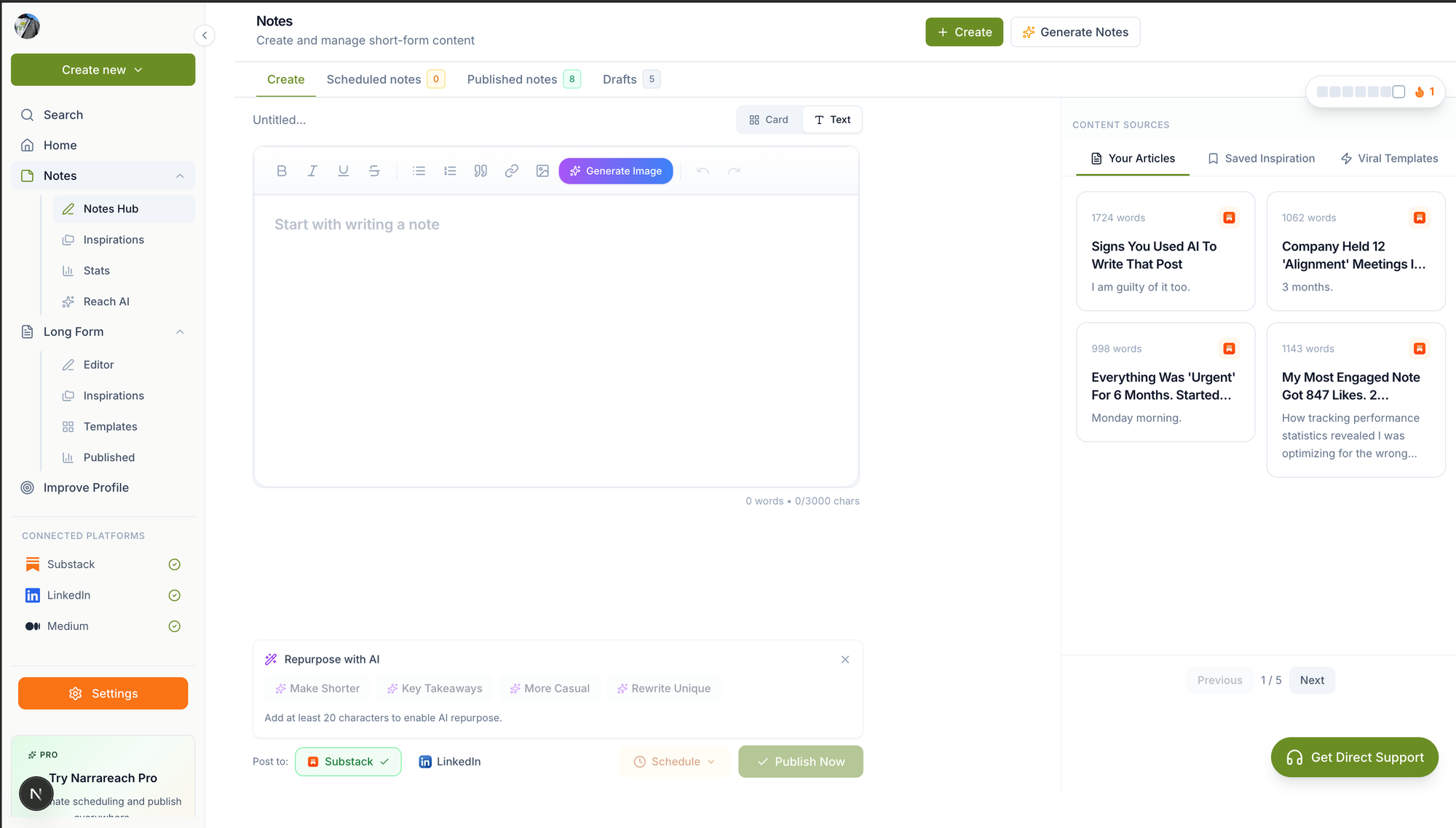
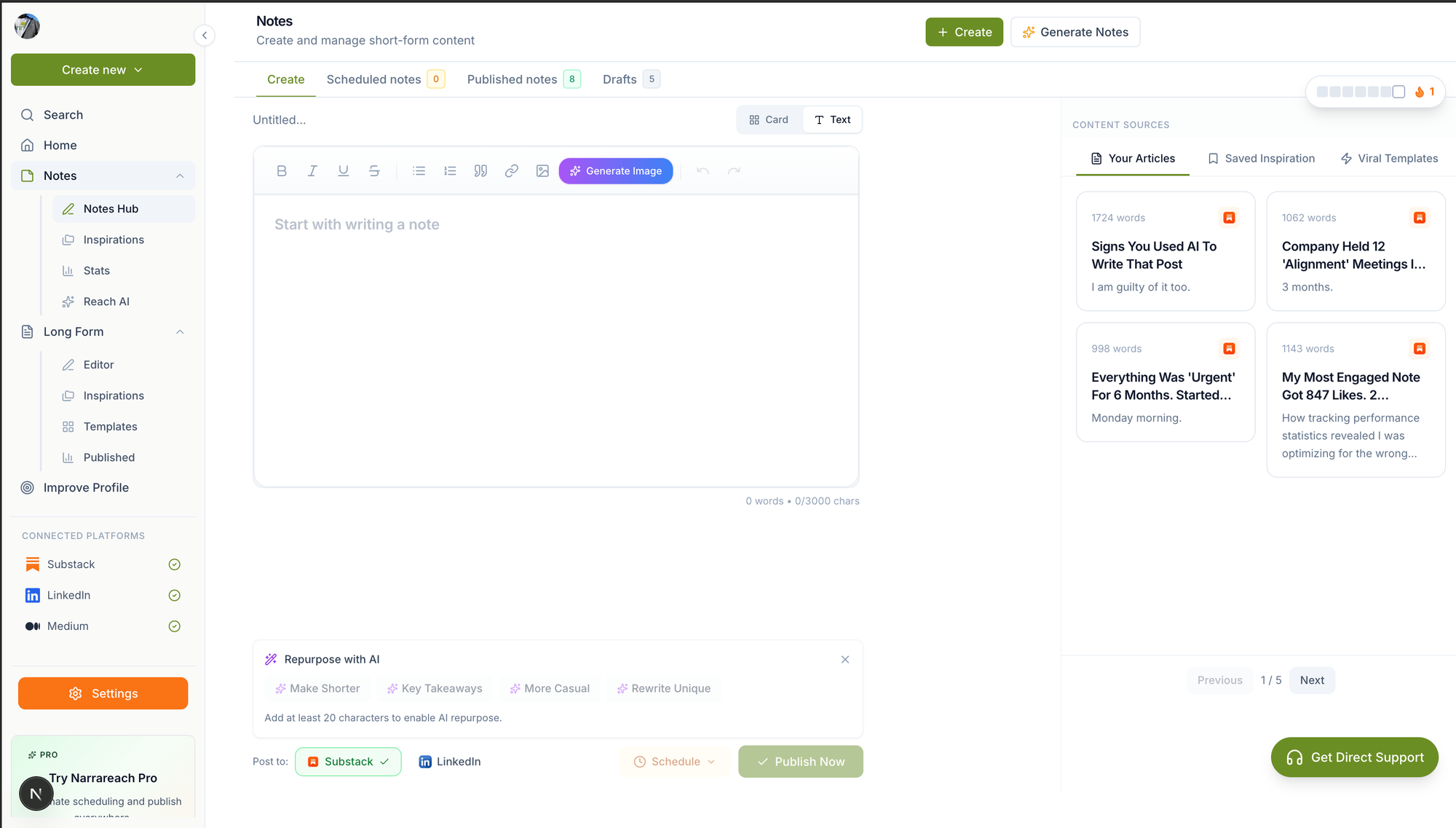
Connect your Substack and Medium accounts through Narrareach integrations. This one-time setup takes approximately 5 minutes and enables simultaneous publishing to both platforms from a unified editor interface.
Step 2: Write Your Article with Platform Optimization
Compose your article using platform-neutral formatting that works well on both Substack and Medium. Focus on clear H2 and H3 headings, bullet points for scanability, and 150-200 word paragraphs for optimal readability across devices.
Step 3: Configure Platform-Specific Settings
Set different publication titles, meta descriptions, and tags for each platform. Substack articles should emphasize subscriber value, while Medium versions can focus on broader discoverability keywords. This customization takes 3-5 minutes per article.
Step 4: Schedule Coordinated Publishing
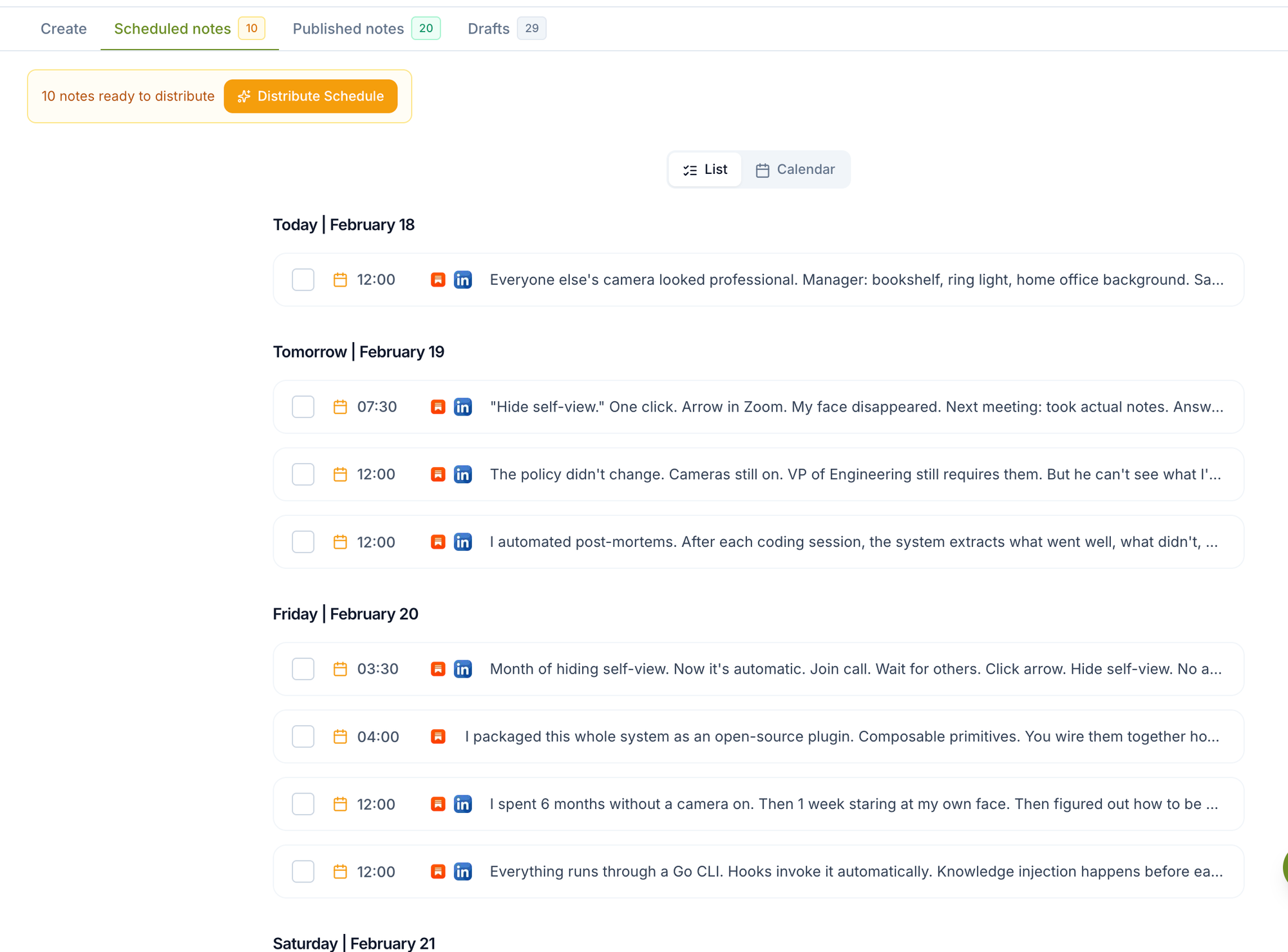
Schedule your Substack article for Tuesday morning (optimal for email engagement) and your Medium version for Wednesday afternoon (peak Medium browsing time). Narrareach's Substack Notes scheduler handles the timing coordination automatically.
Step 5: Set Up Cross-Promotion Automation
Configure automatic social media promotion for both articles. Schedule Substack Notes to promote your newsletter version, then cross-post Substack to LinkedIn to drive professional audience engagement with your Medium article.
Platform-Specific Optimization Strategies
Substack Optimization Techniques
Substack articles perform best when they include subscriber-exclusive insights, clear email CTAs, and community-building elements. Use the first 200 words to hook email subscribers, and include 2-3 subscriber-only sections to drive conversions.
Medium Growth Tactics
Medium articles should target 1-2 high-traffic publications in your niche and include 3-5 relevant tags. The platform's Partner Program rewards articles that generate reading time, so focus on comprehensive, research-backed content that keeps readers engaged.
Competitor Analysis: Cross-Platform Publishing Tools
Native Platform Scheduling
Pros: Free, direct platform integration, no third-party dependencies
Cons: Requires manual copying between platforms, no unified analytics, time-consuming formatting adjustments, no cross-promotion automation
Buffer and Hootsuite
Pros: Established social media scheduling, team collaboration features
Cons: Limited long-form content support, no Substack integration, primarily designed for social media posts rather than full articles, expensive for individual creators
Narrareach
Pros: Substack-first workflow, unified article scheduling for both platforms, automatic cross-posting to LinkedIn and X, integrated analytics, affordable pricing plans
Cons: Newer platform with smaller user base, focused specifically on Substack ecosystem
Time-Saving Math: Manual vs. Automated Publishing
Manual Cross-Platform Publishing Calculation
Manual workflow time breakdown per article:
- Writing: 90 minutes
- Formatting for Substack: 15 minutes
- Copying and reformatting for Medium: 20 minutes
- Image optimization and upload: 10 minutes
- Scheduling and social promotion: 15 minutes
- Total per article: 150 minutes (2.5 hours)
Automated Publishing with Narrareach
Automated workflow time breakdown:
- Writing in unified editor: 90 minutes
- Platform-specific customization: 5 minutes
- Scheduling setup: 3 minutes
- Cross-promotion configuration: 2 minutes
- Total per article: 100 minutes (1.67 hours)
Weekly time savings: For creators publishing 3 articles per week, automation saves 2.5 hours weekly (150 minutes per article difference × 3 articles = 450 minutes saved = 7.5 hours monthly).
Content Strategy: Maximizing Cross-Platform Reach
Substack-First Content Planning
Start with subscriber-focused content that provides exclusive value, then adapt for Medium's broader audience. This approach ensures your core audience receives premium content while expanding reach through Medium's discovery algorithm.
Cross-Platform Content Calendar
Plan content themes that work well on both platforms: industry analysis, how-to guides, and thought leadership pieces. Avoid platform-specific content like Substack community updates or Medium publication announcements in your cross-posted articles.
Advanced Automation: Social Media Integration
LinkedIn Article Promotion
Configure automatic LinkedIn posts that promote your Medium articles to professional networks. Include industry-specific hashtags and tag relevant connections to increase visibility and engagement.
Twitter/X Thread Generation
Set up automatic thread creation from your article key points. This drives traffic to both your Substack and Medium versions while building your social media presence.
Analytics and Performance Tracking
Cross-Platform Metrics
Track subscriber conversion rates from Medium to Substack, cross-platform engagement rates, and revenue attribution from each channel. Most creators see 15-25% of Medium readers convert to Substack subscribers within 30 days.
Content Performance Optimization
Monitor which article types perform best on each platform and adjust your content strategy accordingly. Technical tutorials often perform better on Medium, while personal insights and industry commentary excel on Substack.
Getting Started: Your First Week with Cross-Platform Publishing
Day 1: Account Setup and Integration
Connect your Substack and Medium accounts to your chosen publishing platform. Set up basic templates for both platforms, including standard CTAs and author bios.
Day 2: Content Planning and Calendar Creation
Plan your first month of content, identifying which articles will work best for cross-platform publishing. Create a content calendar with staggered publishing times for optimal engagement.
Day 3: Write and Schedule Your First Article
Create your first cross-platform article using the unified editor. Focus on evergreen content that provides value to both Substack subscribers and Medium readers.
Day 4: Configure Social Media Automation
Set up automatic social media promotion for your published articles. Test the workflow to ensure proper cross-posting to LinkedIn, Twitter, and other connected platforms.
Day 5: Monitor and Optimize
Review the performance of your first published article across both platforms. Adjust timing, formatting, or promotion strategies based on initial engagement data.
Day 6-7: Scale Your Workflow
Schedule additional articles and refine your cross-platform publishing process. Most creators establish a sustainable rhythm within their first week of automated publishing.
Common Challenges and Solutions
Formatting Inconsistencies
Different platforms handle images, links, and formatting differently. Use platform-neutral markdown formatting and test your articles on both platforms before scheduling publication.
Audience Overlap Management
Some readers follow you on both platforms. Vary your article introductions and conclusions slightly to provide fresh value for cross-platform readers while maintaining core content consistency.
Conclusion: Streamlining Your Publishing Workflow
Cross-platform article publishing from a single editor eliminates the time-consuming manual work of reformatting and reposting content across multiple platforms. By implementing an automated workflow, content creators can focus on writing quality articles while expanding their reach and growing their audience across both Substack and Medium.
Ready to streamline your publishing workflow? Narrareach offers the most comprehensive solution for Substack-first creators who want to maximize their cross-platform reach without sacrificing time or quality.
Visual Walkthrough