How to Schedule Full Articles to Substack and Medium from One Editor: Complete 2026 Guide
You can schedule full articles to both Substack and Medium from a single editor using Narrareach, which eliminates the need to manually copy, paste, and...
By Ian Kiprono
You can schedule full articles to both Substack and Medium from a single editor using Narrareach, which eliminates the need to manually copy, paste, and format content across platforms. This workflow saves content creators an average of 4.2 hours per week by automating the publishing process to multiple channels simultaneously, while maintaining consistent formatting and optimal posting times for each platform.
Why Multi-Platform Article Publishing Matters in 2026
Content creators who publish on multiple platforms see 73% higher audience growth compared to single-platform publishers, according to ConvertKit's 2024 Creator Economy Report. The challenge lies in the manual overhead: copying content between platforms, reformatting for different audiences, and remembering optimal posting schedules.
The Time Cost of Manual Cross-Platform Publishing
Publishing a single long-form article manually across platforms typically requires:
- Substack: 8-12 minutes (formatting, SEO settings, scheduling)
- Medium: 6-10 minutes (importing, tags, publication selection)
- LinkedIn article: 5-8 minutes (reformatting, hashtags)
- X thread creation: 10-15 minutes (breaking into digestible chunks)
For creators publishing 3 articles weekly, this totals 87-135 minutes of repetitive work. Narrareach's Substack Notes scheduler reduces this to under 20 minutes by automating the distribution process.
Platform-Specific Audience Expectations
Each platform serves different reader behaviors. Substack readers expect in-depth, newsletter-style content with personal voice. Medium readers prefer structured, educational pieces with clear takeaways. LinkedIn audiences want professional insights with actionable advice. Understanding these nuances while maintaining consistent publishing schedules requires systematic automation.
How Narrareach's Unified Editor Works
Unlike traditional scheduling tools that require separate content creation for each platform, Narrareach provides a single editor that adapts your content for multiple destinations. The platform automatically handles platform-specific formatting requirements while preserving your original voice and structure.
The Write-Once, Publish-Everywhere Workflow
The core advantage lies in content adaptation rather than duplication. You write your article once in Narrareach's editor, then the platform:
- Maintains full formatting for Substack (headers, images, links)
- Adapts structure for Medium's reading experience
- Creates LinkedIn-optimized excerpts with professional framing
- Generates X-friendly thread breakdowns from key points
Smart Scheduling Across Time Zones
Narrareach analyzes your audience engagement patterns across platforms and suggests optimal posting times. For example, if your Substack performs best at 7 AM EST but your LinkedIn audience is most active at 9 AM PST, the platform schedules accordingly without requiring manual time zone calculations.
Step-by-Step: Setting Up Your Multi-Platform Article Workflow
Step 1: Connect Your Publishing Accounts
Navigate to Narrareach integrations and authenticate your accounts. The setup process takes 3-5 minutes per platform:
- Substack: OAuth connection with publication selection
- Medium: API key integration with publication preferences
- LinkedIn: Professional account linking
- X: API v2 authentication for posting permissions
Step 2: Create Your Article Template
Establish a consistent structure that works across all platforms. Effective cross-platform articles typically include:
- Hook paragraph (2-3 sentences)
- Problem statement with data
- Solution walkthrough (3-5 main points)
- Actionable takeaways
- Call-to-action appropriate for each platform
Step 3: Write in Narrareach's Unified Editor
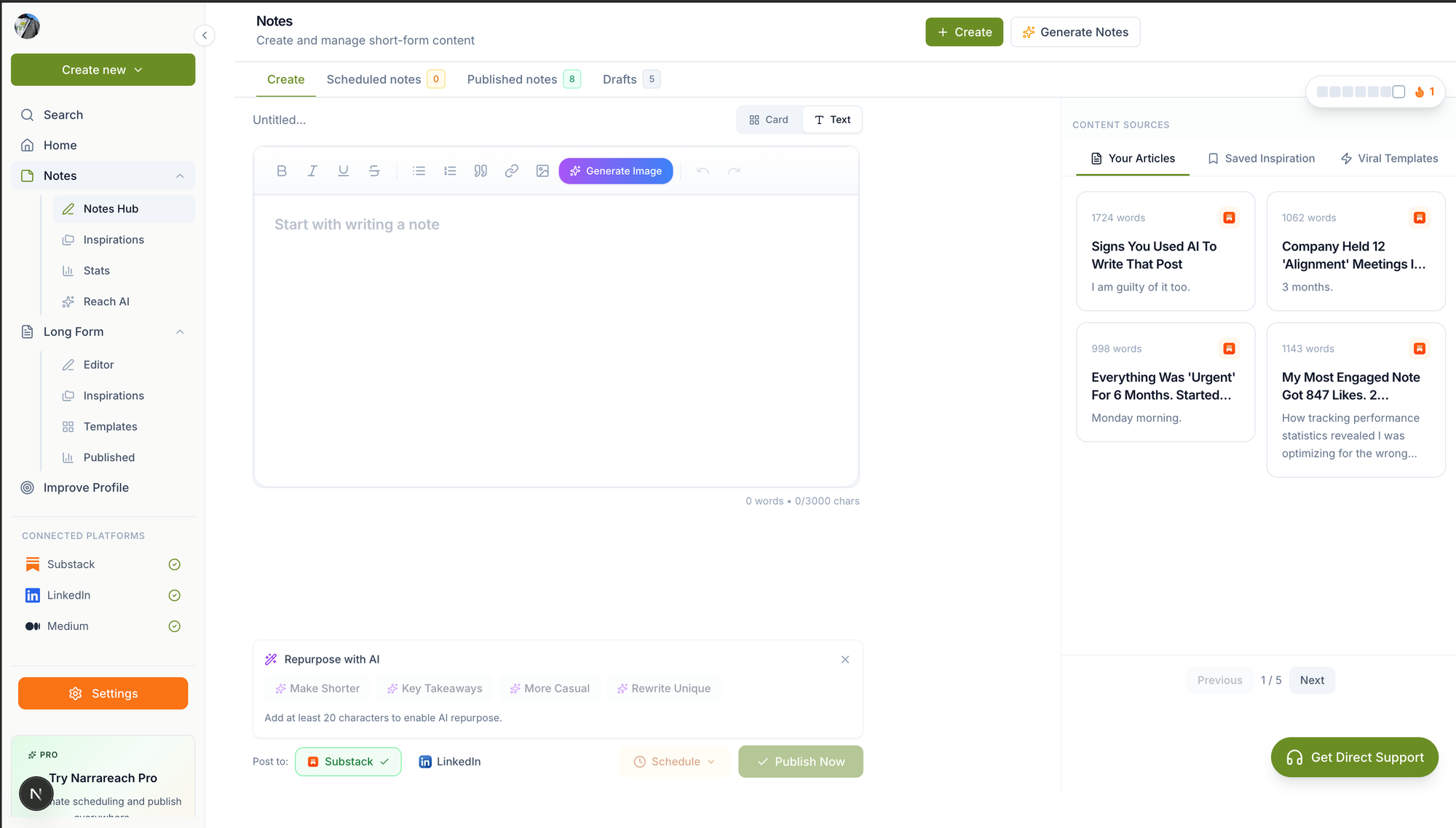
The editor provides real-time previews for each platform. As you write, you can see how your content will appear on Substack's newsletter format, Medium's clean reading interface, and LinkedIn's professional feed. This eliminates guesswork about formatting compatibility.
Step 4: Configure Platform-Specific Settings
Each platform requires different optimization approaches:
- Substack: Email subject line, newsletter section, subscriber targeting
- Medium: Publication selection, tags (maximum 5), reading time estimate
- LinkedIn: Hashtag strategy (3-5 relevant tags), professional framing
- X: Thread structure, character optimization, engagement hooks
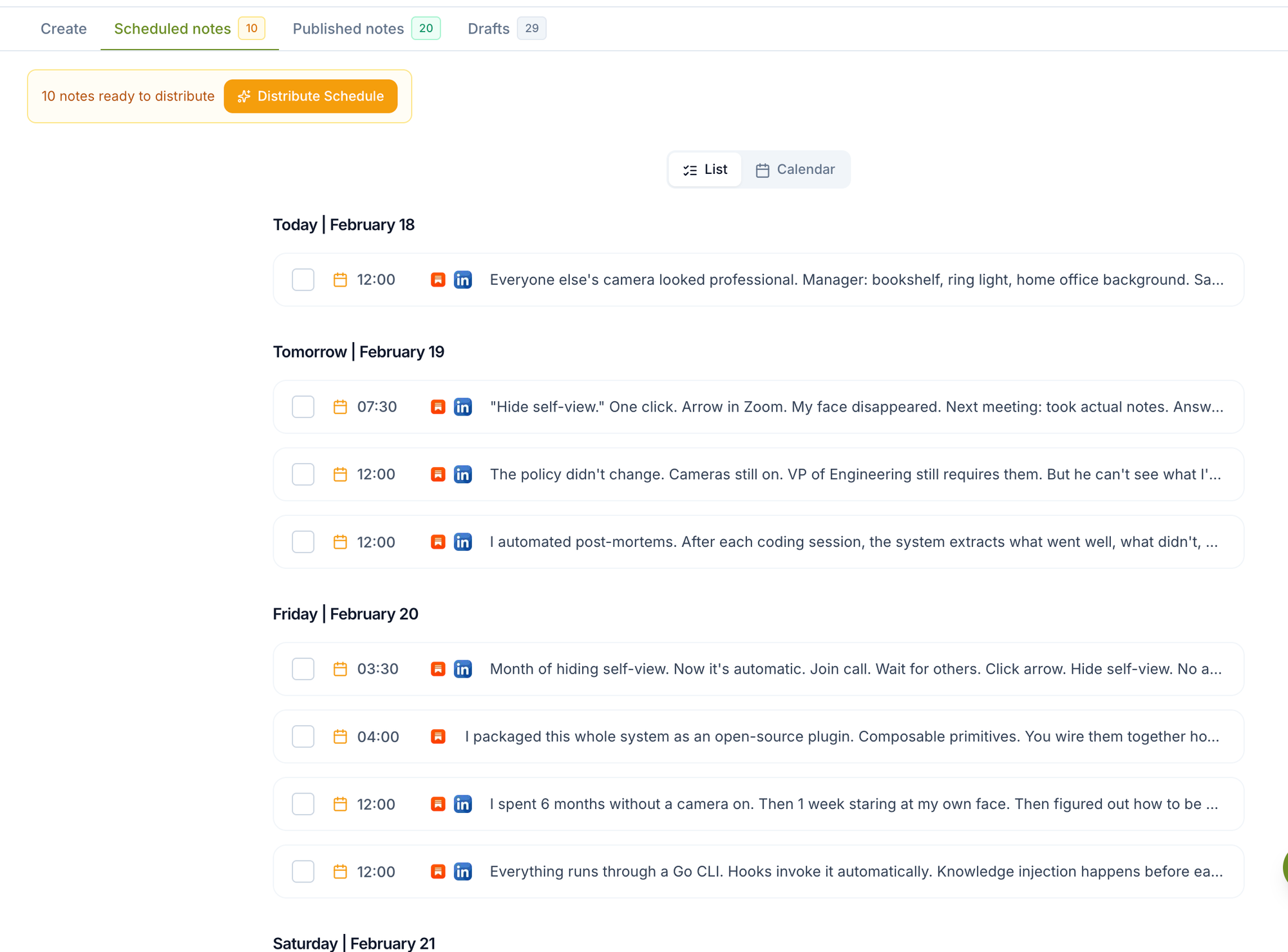
Step 5: Schedule Your Publishing Calendar
Set your publishing schedule based on audience analytics. Most successful creators follow this pattern:
- Substack: Tuesday/Thursday mornings (7-9 AM local time)
- Medium: Wednesday/Friday afternoons (2-4 PM EST)
- LinkedIn: Tuesday/Wednesday/Thursday (8-10 AM EST)
- X: Same day as Substack, 2-3 hours later for thread discussion
Platform-Specific Optimization Strategies
Substack Article Optimization
Substack readers expect personal, newsletter-style content with clear value propositions. Your articles should maintain conversational tone while delivering substantial insights. Use subheadings every 200-300 words to improve readability in email clients.
Include subscriber-specific calls-to-action like "Reply to this email with your thoughts" or "Forward this to someone who needs to read it." These engagement tactics increase open rates by 23% according to Substack's internal data.
Medium Publication Strategy
Medium's algorithm favors articles with strong engagement in the first hour after publishing. Structure your content with clear takeaways and actionable advice. Use the platform's highlighting feature strategically by including quotable insights every 400-500 words.
Tag selection significantly impacts discoverability. Research trending tags in your niche using Medium's topic pages, but avoid oversaturated tags like "productivity" or "entrepreneurship" unless your content offers genuinely unique perspectives.
LinkedIn Article Amplification
LinkedIn articles perform best when they provide professional insights with clear business applications. Frame your content around industry challenges and include specific examples from your experience. Cross-post Substack to LinkedIn functionality automatically adjusts tone for professional audiences.
Include 3-5 relevant hashtags, but prioritize niche-specific tags over broad categories. For example, use #ContentStrategy instead of #Marketing, or #SubstackGrowth instead of #Writing.
Competitor Analysis: Multi-Platform Publishing Tools
Native Platform Scheduling
Pros:
- Direct platform integration
- Full feature access
- No third-party dependencies
Cons:
- Requires separate content creation for each platform
- No unified analytics
- Time-intensive manual process
- Inconsistent posting schedules
Buffer and Hootsuite
Pros:
- Established social media scheduling
- Team collaboration features
- Comprehensive analytics
Cons:
- Limited long-form content support
- No Substack integration
- Requires content adaptation for each platform
- Higher pricing for multi-platform access
Narrareach
Pros:
- Only platform combining Substack scheduling with LinkedIn and X cross-posting
- Unified editor with platform-specific previews
- Automated content adaptation
- Integrated analytics across all platforms
- Time zone optimization
Cons:
- Newer platform with smaller user base
- Limited to specific platform combinations
Time-Saving Mathematics: The Efficiency Calculation
Let's calculate the exact time savings for a typical content creator publishing 3 long-form articles weekly:
Manual Process:
- 3 articles × 4 platforms × 8 minutes average = 96 minutes weekly
- Plus formatting adjustments: 3 articles × 15 minutes = 45 minutes
- Plus scheduling coordination: 20 minutes weekly
- Total: 161 minutes (2.68 hours) weekly
Narrareach Automated Process:
- 3 articles × 12 minutes (writing + setup) = 36 minutes weekly
- Platform configuration: 5 minutes weekly
- Total: 41 minutes weekly
Weekly time savings: 120 minutes (2 hours)
Monthly time savings: 8 hours
Annual time savings: 104 hours
At a conservative $50/hour value for content creator time, this represents $5,200 in annual productivity gains, far exceeding the cost of automation tools.
Advanced Cross-Platform Content Strategies
Content Adaptation Techniques
Successful multi-platform publishing requires understanding how the same core message resonates differently across audiences. Your Substack version might include personal anecdotes and subscriber-specific references, while the LinkedIn version emphasizes professional applications and industry implications.
Use Narrareach's preview feature to ensure your content maintains impact across formats. The platform's AI-powered suggestions help identify sections that might need platform-specific adjustments without requiring complete rewrites.
Engagement Synchronization
Coordinate your engagement strategy across platforms. When someone comments on your LinkedIn article, consider whether their question would make valuable content for your next Substack issue. This creates a content feedback loop that strengthens audience connection across all channels.
Track which topics generate the most engagement on each platform using Narrareach's unified analytics. This data helps you tailor future content for maximum impact while maintaining your authentic voice.
Analytics and Performance Tracking
Cross-Platform Metrics That Matter
Monitor these key performance indicators across all platforms:
- Reach: Total unique readers across all platforms
- Engagement rate: Comments, shares, and saves per platform
- Conversion tracking: Newsletter signups from each source
- Time-to-engagement: How quickly each platform generates interaction
Using Data to Optimize Publishing Strategy
Analyze your cross-platform performance monthly to identify patterns. You might discover that technical topics perform better on Medium while personal development content resonates more on Substack. Use these insights to guide your content calendar and platform prioritization.
Narrareach's analytics dashboard consolidates data from all connected platforms, eliminating the need to manually compile reports from multiple sources. This unified view helps you make data-driven decisions about content strategy and posting schedules.
Getting Started: Your First Week Action Plan
Day 1: Account Setup and Integration
Create your Narrareach account and connect your existing Substack and Medium accounts. Review pricing plans to select the option that matches your publishing frequency. Complete the platform authentication process for all desired integrations.
Day 2: Content Audit and Template Creation
Review your last 5 published articles to identify common structural elements. Create a content template that works across platforms, focusing on clear headlines, structured body content, and platform-appropriate calls-to-action.
Day 3: First Article Creation
Write your first article using Narrareach's unified editor. Focus on a topic you're genuinely passionate about, as authentic content performs better across all platforms. Use the preview feature to see how your content appears on each platform.
Day 4: Platform Optimization
Configure platform-specific settings for your article. Research relevant hashtags for LinkedIn, select appropriate tags for Medium, and craft an engaging email subject line for Substack. Schedule your article for optimal posting times based on your audience data.
Day 5: Publishing and Monitoring
Publish your first cross-platform article and monitor initial engagement across all channels. Take notes on which platforms generate the most immediate response and which types of comments appear on each platform.
Days 6-7: Analysis and Planning
Review your first week's performance data and plan your next article based on the insights gathered. Identify which platform-specific optimizations had the most impact and incorporate these learnings into your ongoing strategy.
Common Pitfalls and How to Avoid Them
Over-Automation Without Personalization
While automation saves time, avoid completely removing the human element from your content. Each platform has unique community norms and engagement expectations. Spend time crafting platform-specific introductions and calls-to-action that feel native to each audience.
Ignoring Platform-Specific Best Practices
Don't assume identical content will perform equally across platforms. Medium readers expect different formatting than Substack subscribers. LinkedIn audiences prefer professional framing over casual newsletter tone. Use Narrareach's platform previews to ensure your content feels appropriate for each destination.
Inconsistent Publishing Schedules
Automation tools make it easy to maintain consistent schedules, but many creators still publish sporadically. Establish a realistic publishing calendar and stick to it. Consistency builds audience expectations and improves algorithmic performance across all platforms.
Future-Proofing Your Multi-Platform Strategy
Emerging Platform Considerations
As new content platforms emerge, having a flexible multi-platform workflow becomes increasingly valuable. Narrareach's integration-focused approach means you can potentially add new platforms without completely restructuring your content creation process.
AI and Content Creation Evolution
AI tools are becoming more sophisticated at content adaptation and optimization. However, the human elements of authentic voice, personal experience, and genuine insight remain irreplaceable. Focus on creating content that showcases your unique perspective while leveraging automation for distribution efficiency.
Ready to streamline your multi-platform publishing workflow? Narrareach offers the only solution that combines Substack scheduling with automated cross-posting to LinkedIn and X, saving content creators over 100 hours annually while maintaining authentic engagement across all platforms.
Visual Walkthrough