How to Schedule Full Articles to Substack and Medium from One Editor: Complete 2026 Guide
You can schedule full articles to both Substack and Medium from a single editor, eliminating duplicate work and ensuring consistent publishing across...
By Ian Kiprono
You can schedule full articles to both Substack and Medium from a single editor, eliminating duplicate work and ensuring consistent publishing across platforms. Narrareach enables writers to compose once, then automatically distribute long-form content to Substack, Medium, and social platforms like LinkedIn, X, Bluesky, and Threads from one unified calendar.
Why Multi-Platform Article Scheduling Matters in 2026
Content creators who publish across multiple platforms see 67% higher engagement rates compared to single-platform publishers, according to Content Marketing Institute research. However, manually cross-posting articles consumes an average of 3.2 hours per week for active newsletter writers.
The Multi-Platform Publishing Challenge
Substack writers face a common dilemma: their audience exists across multiple platforms, but manually publishing to each one creates significant overhead. Medium reaches 100+ million monthly readers, while Substack's engaged newsletter audience offers higher conversion rates. LinkedIn provides professional networking opportunities, and X enables real-time conversation around your content.
Time Investment Reality
Publishing one article manually across platforms requires:
- Substack formatting and scheduling: 15 minutes
- Medium adaptation and publishing: 20 minutes
- LinkedIn post creation with excerpt: 10 minutes
- X thread development: 15 minutes
- Cross-platform engagement monitoring: 30 minutes
Total: 90 minutes per article. For writers publishing 3 articles weekly, that's 4.5 hours of distribution work alone.
Understanding the Substack-First Publishing Workflow
The most effective multi-platform strategy starts with Substack as your primary publishing hub, then cascades content to other platforms. This approach maintains your newsletter's primacy while expanding reach through strategic cross-posting.
Why Substack Should Be Your Content Hub
Substack provides direct subscriber relationships and higher monetization potential than other platforms. Substack's 2023 data shows paid newsletters average $9,000 annually, with top performers earning six figures. Using Narrareach's Substack Notes scheduler, you can build this foundation while simultaneously growing your presence elsewhere.
The Distribution Cascade Strategy
Effective content distribution follows this sequence:
- Publish full article to Substack (primary audience)
- Simultaneously publish to Medium (discovery audience)
- Share excerpt and link on LinkedIn (professional network)
- Create thread summary on X (engagement and discussion)
- Cross-post to Bluesky and Threads (emerging platforms)
Step-by-Step: Setting Up Multi-Platform Article Scheduling
Step 1: Connect Your Publishing Accounts
Begin by linking your Substack, Medium, and social media accounts to your scheduling platform. In Narrareach integrations, this process takes approximately 5 minutes per platform and requires API keys or OAuth authentication.
Required account permissions:
- Substack: Publishing and scheduling access
- Medium: Story creation and publication rights
- LinkedIn: Page or profile posting permissions
- X: Tweet and thread creation access
Step 2: Create Your Master Article Template
Develop a standardized format that works across all platforms. Your template should include:
- Compelling headline (60 characters or fewer for social sharing)
- Hook paragraph (2-3 sentences that work as social media excerpts)
- Main content with clear H2/H3 structure
- Call-to-action specific to each platform
- Author bio with platform-appropriate links
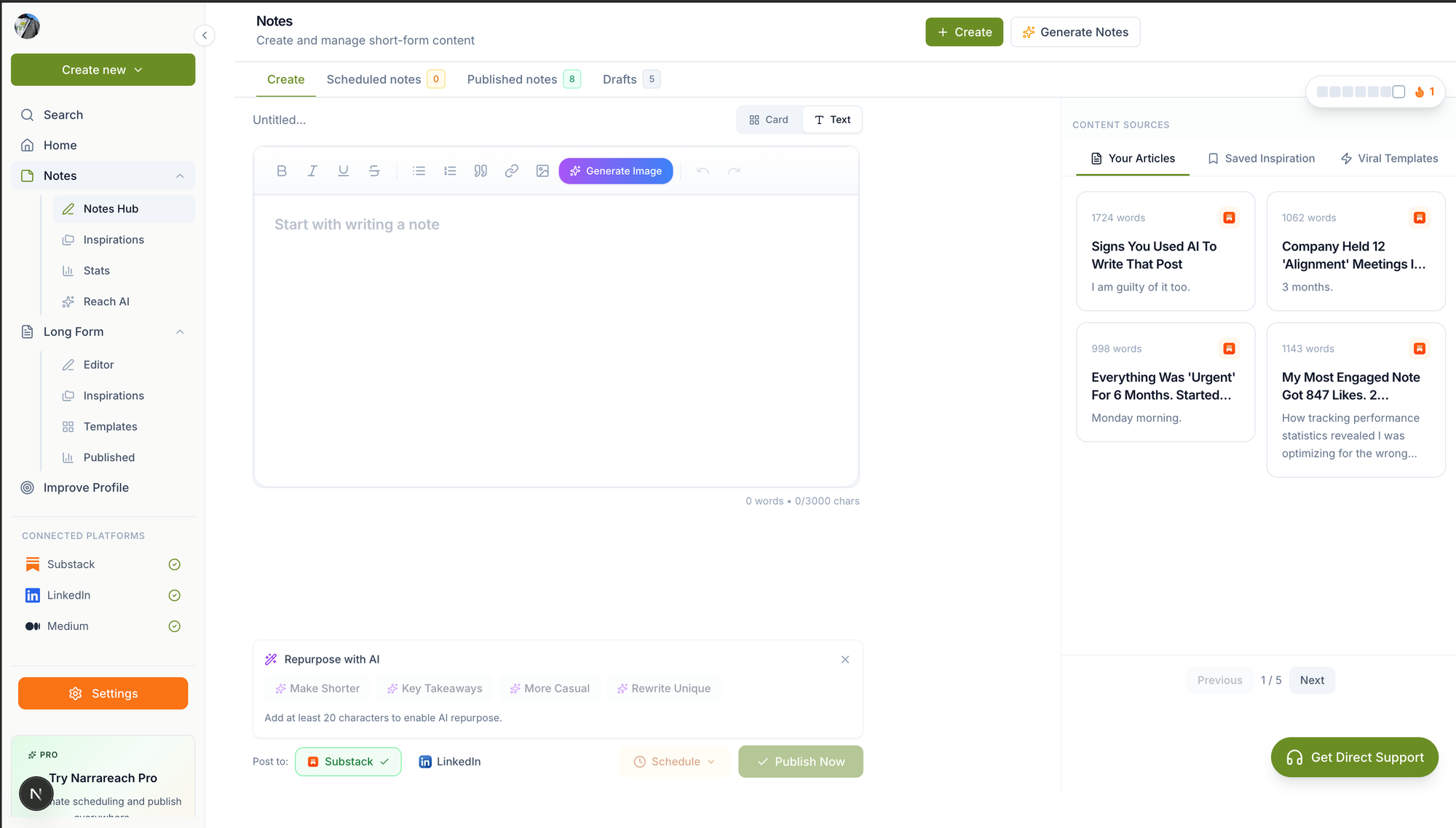
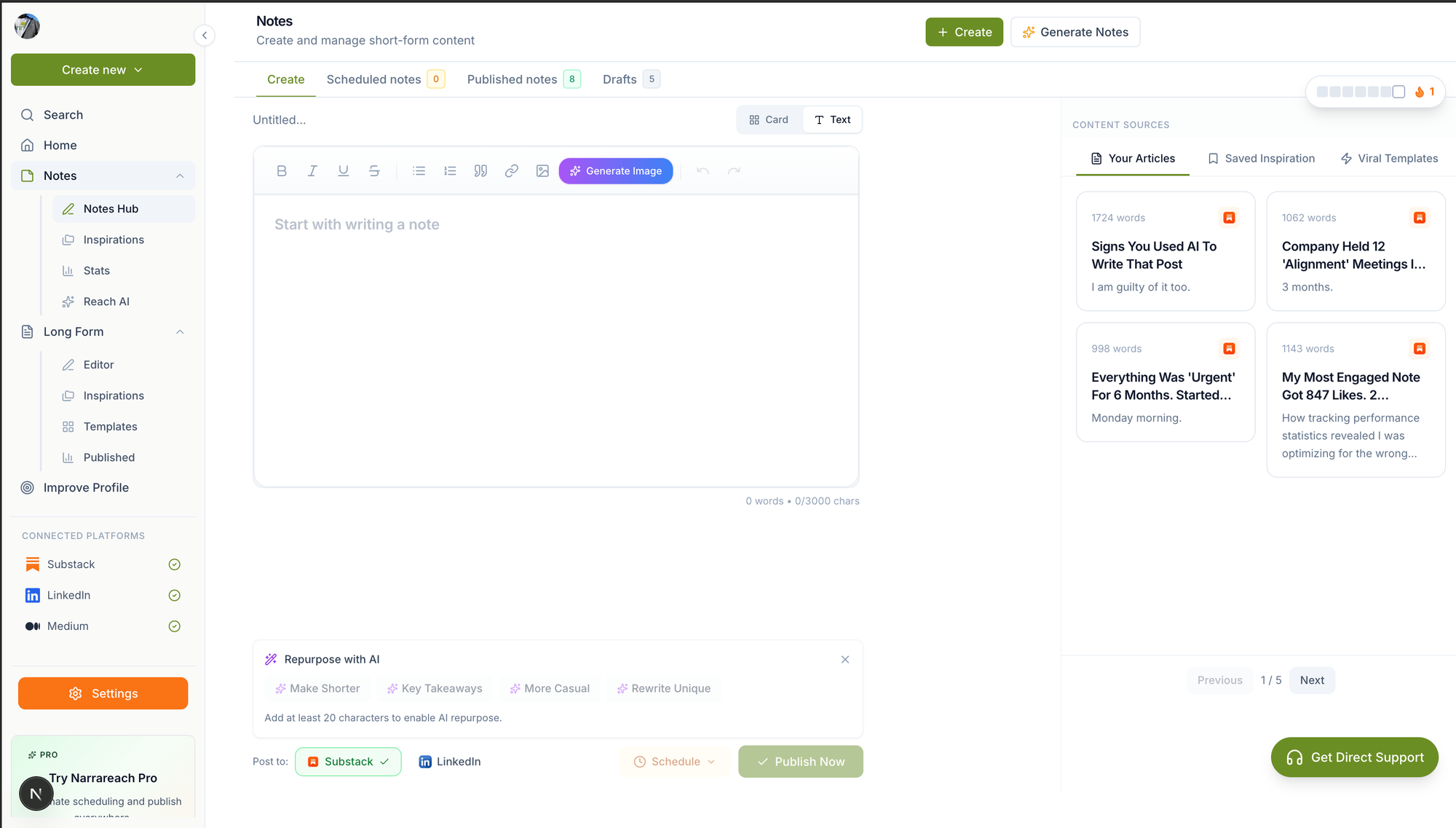
Step 3: Write Once in Your Unified Editor
Compose your article in a single editor that can format content for multiple platforms simultaneously. Focus on creating evergreen content that provides value regardless of where readers discover it. Include internal links, relevant statistics, and actionable insights that encourage sharing.
Step 4: Customize Platform-Specific Elements
While your core content remains consistent, tailor specific elements for each platform:
Substack customization:
- Add subscriber-specific CTAs
- Include newsletter-style formatting
- Reference previous issues when relevant
Medium customization:
- Optimize for Medium's algorithm with relevant tags
- Add a brief author introduction
- Include follow prompts for new readers
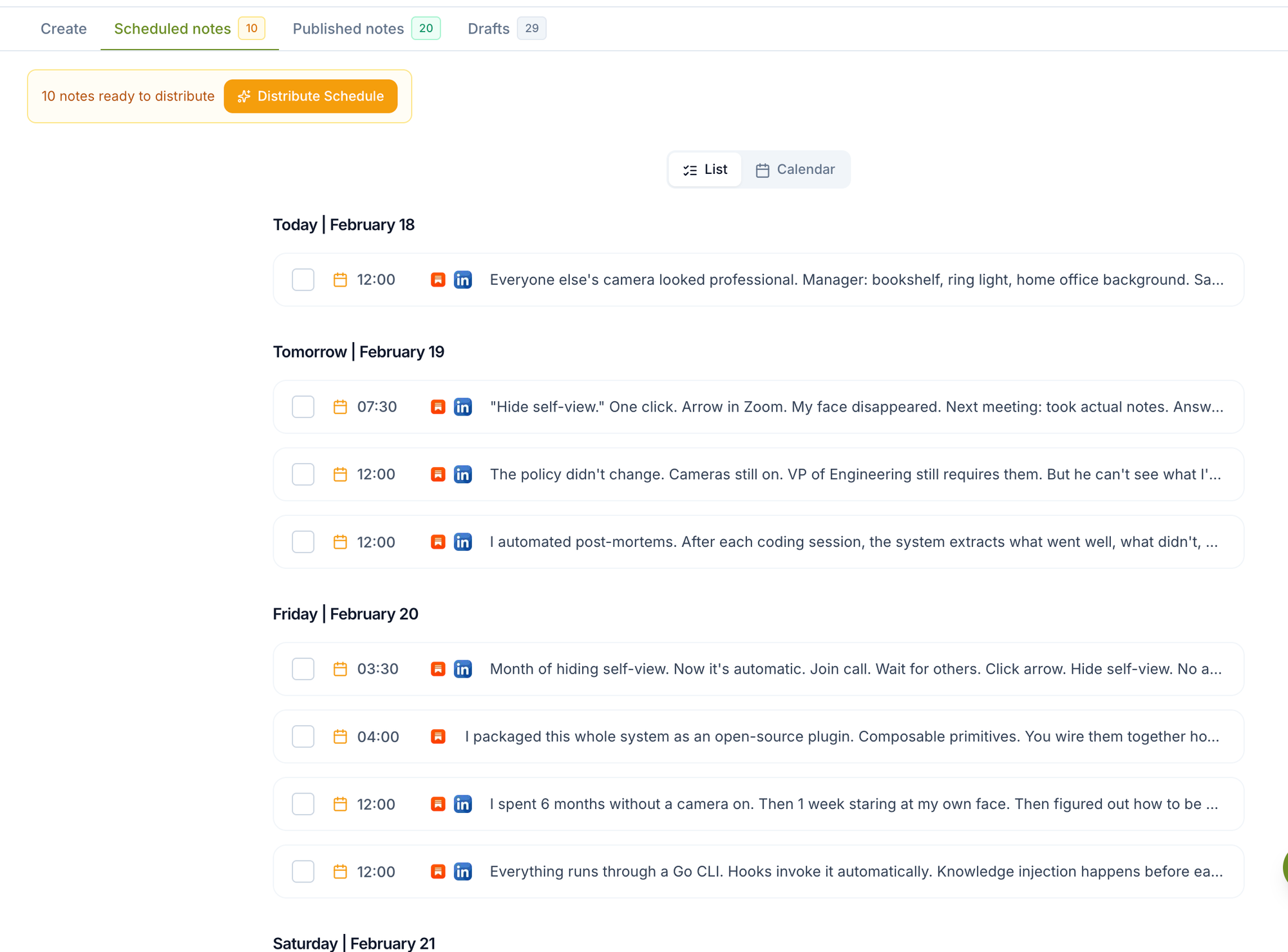
Step 5: Schedule Coordinated Publishing
Set your publishing schedule to maximize reach across time zones and platform-specific peak hours. Research from Sprout Social indicates optimal posting windows vary significantly by platform.
Recommended scheduling sequence:
- Substack: Tuesday-Thursday, 6-8 AM EST (highest open rates)
- Medium: Same day, 1-3 PM EST (peak reading hours)
- LinkedIn: Same day, 8-10 AM EST (professional browsing time)
- X: Same day, 12-3 PM EST (lunch break engagement)
Platform-Specific Optimization Strategies
Substack Article Optimization
Substack's algorithm favors consistent publishing schedules and high engagement rates. Structure your articles with clear value propositions in the first paragraph, as many readers decide whether to continue based on the opening lines.
Key Substack optimization tactics:
- Use compelling subject lines that avoid spam triggers
- Include subscriber polls or questions to boost engagement
- Add relevant internal links to previous newsletter issues
- End with clear next-issue previews to maintain anticipation
Medium Publication Strategy
Medium's Partner Program rewards articles that keep readers engaged for longer periods. Focus on comprehensive, well-researched content that provides genuine value to readers discovering your work for the first time.
Medium success factors:
- Choose 3-5 relevant tags from Medium's suggested list
- Submit to appropriate publications for wider distribution
- Include high-quality images or graphics to break up text
- Respond promptly to comments to boost engagement signals
Social Media Cross-Posting Approach
Social platforms require adapted content rather than direct article copies. Cross-post Substack to LinkedIn by creating compelling excerpts that drive traffic back to your full articles.
Effective social media adaptations:
- LinkedIn: Professional insights with industry-specific angles
- X: Key statistics or quotes formatted as engaging threads
- Bluesky: Community-focused discussions around your article themes
- Threads: Visual storytelling with behind-the-scenes content creation insights
Competitor Analysis: Multi-Platform Publishing Tools
Native Platform Scheduling
Substack Native Scheduling
Pros:
- Direct integration with Substack features
- No third-party dependencies
- Free with Substack account
Cons:
- Limited to Substack only
- No cross-platform distribution
- Manual social media posting required
- No unified analytics across platforms
Medium Native Tools
Pros:
- Built-in publication submission
- Integrated stats and earnings tracking
- No additional cost
Cons:
- Medium-only publishing
- Limited scheduling options
- No social media integration
- Requires separate workflow for other platforms
General Social Media Schedulers
Buffer/Hootsuite
Pros:
- Multiple social platform support
- Established user base and reliability
- Comprehensive analytics dashboard
Cons:
- No Substack or Medium integration
- Requires manual article publishing
- Higher cost for multiple platforms
- Not optimized for newsletter workflows
Narrareach: Unified Newsletter-First Approach
Pros:
- Substack-first workflow with automatic cross-posting
- Medium integration for simultaneous publishing
- LinkedIn, X, Bluesky, and Threads distribution
- Unified analytics across all platforms
- Newsletter-optimized scheduling and formatting
Cons:
- Newer platform with smaller user base
- Requires learning new workflow initially
Time-Saving Mathematics: Quantifying Your Efficiency Gains
Manual multi-platform publishing creates significant time overhead that compounds quickly for active content creators.
Manual Publishing Time Calculation
For a writer publishing 3 long-form articles per week across 5 platforms:
Weekly manual time investment:
- 3 articles × 90 minutes per article = 270 minutes (4.5 hours)
- Platform-specific formatting adjustments: +60 minutes
- Cross-platform engagement monitoring: +90 minutes
- Analytics review and optimization: +30 minutes
Total weekly time: 450 minutes (7.5 hours)
Monthly time investment: 30 hours
Annual time investment: 360 hours
Automated Publishing Time Savings
Using an integrated scheduling platform reduces this to:
- Initial setup and template creation: 2 hours (one-time)
- Weekly article creation and scheduling: 3 hours
- Weekly engagement and optimization: 1 hour
Weekly time with automation: 4 hours
Time saved per week: 3.5 hours
Annual time savings: 182 hours
ROI of Automation Investment
At a conservative $50/hour value for content creation time, automated publishing saves $9,100 annually in time costs. Even accounting for subscription fees, the ROI exceeds 300% for active publishers.
Advanced Multi-Platform Content Strategies
Content Repurposing Workflows
Maximize your article value by creating multiple content formats from single pieces. Transform long-form articles into:
- LinkedIn carousel posts highlighting key points
- X thread series with actionable insights
- Medium story series for complex topics
- Substack Notes with behind-the-scenes content
Audience-Specific Customization
While maintaining consistent core messaging, tailor your content presentation for each platform's unique audience expectations:
Substack audience: Expects in-depth analysis, personal insights, and subscriber-exclusive content
Medium audience: Values comprehensive tutorials, industry analysis, and evergreen reference material
LinkedIn audience: Seeks professional development, industry trends, and career-relevant insights
X audience: Prefers timely commentary, quick insights, and conversation starters
Cross-Platform Analytics Integration
Track performance metrics across all platforms to optimize your content strategy. Key metrics to monitor:
- Substack: Open rates, click-through rates, subscriber growth
- Medium: Read ratio, claps, follower conversion
- LinkedIn: Engagement rate, profile visits, connection requests
- X: Impressions, engagement rate, retweets
Getting Started: Your First Week Action Plan
Day 1: Platform Assessment and Goal Setting
Audit your current publishing workflow and identify time-consuming manual processes. Set specific goals for each platform, such as Substack subscriber targets, Medium follower growth, and social media engagement rates.
Action items:
- Document current time spent on manual publishing
- List all platforms where you currently publish or want to publish
- Set measurable 30-day goals for each platform
Day 2: Account Setup and Integration
Connect all your publishing accounts to your chosen scheduling platform. Verify that API connections work correctly and that you have appropriate publishing permissions for each account.
Action items:
- Sign up for Narrareach pricing plan that fits your publishing volume
- Connect Substack, Medium, and social media accounts
- Test publishing to each platform with a draft post
Day 3: Template Creation and Content Planning
Develop standardized templates for different article types and create a content calendar for the next month. Focus on topics that provide value across all your target platforms.
Action items:
- Create article templates for different content types
- Plan 4 weeks of content topics
- Write your first multi-platform article
Day 4: Scheduling and Optimization Setup
Schedule your first week of content across all platforms, paying attention to optimal posting times for each audience. Set up analytics tracking to measure performance from day one.
Action items:
- Schedule 3 articles for the coming week
- Set up analytics tracking for all platforms
- Create engagement monitoring workflow
Day 5: Launch and Monitor
Publish your first scheduled article and monitor performance across all platforms. Respond to comments and engagement promptly to boost algorithmic visibility.
Action items:
- Monitor first article performance across platforms
- Respond to comments and engagement
- Document lessons learned for optimization
Days 6-7: Analysis and Refinement
Review performance data from your first published articles and identify optimization opportunities. Adjust your templates and scheduling strategy based on initial results.
Action items:
- Analyze performance metrics across all platforms
- Identify top-performing content formats
- Refine templates and scheduling strategy
- Plan content for week two
Measuring Success Across Multiple Platforms
Key Performance Indicators by Platform
Different platforms require different success metrics. Focus on metrics that align with your overall content marketing goals rather than vanity metrics that don't drive business results.
Substack success metrics:
- Subscriber growth rate (aim for 5-10% monthly growth)
- Open rate consistency (target 40%+ for engaged lists)
- Click-through rates to external content
- Paid subscription conversion rates
Medium success metrics:
- Read ratio (percentage of people who read to completion)
- Follower growth and engagement
- Story views and external traffic generation
- Publication acceptance rates
Cross-Platform Attribution Tracking
Implement UTM parameters and tracking codes to understand how readers move between your different platforms. This data helps optimize your cross-posting strategy and identify which platforms drive the most valuable traffic.
ROI Calculation for Multi-Platform Publishing
Calculate the return on investment for your multi-platform strategy by tracking:
- Time saved through automation
- Increased subscriber/follower growth rates
- Higher engagement rates from broader reach
- Revenue generated from expanded audience
Troubleshooting Common Multi-Platform Publishing Issues
Content Formatting Inconsistencies
Different platforms handle formatting differently, which can cause articles to appear broken or unprofessional. Create platform-specific formatting guidelines and test thoroughly before scheduling.
Common solutions:
- Use standard HTML formatting that translates well across platforms
- Avoid platform-specific features in your master template
- Preview articles on each platform before publishing
- Maintain backup formatting for each platform
Engagement Management Across Platforms
Responding to comments and engagement across multiple platforms can become overwhelming. Develop a systematic approach to community management that maintains quality while staying efficient.
Engagement strategies:
- Set specific times for checking each platform
- Prioritize responses based on platform importance and engagement quality
- Use templates for common responses while maintaining personal touch
- Focus on meaningful conversations rather than responding to every comment
Platform Algorithm Changes
Social media and publishing platforms frequently update their algorithms, which can impact your content's reach. Stay informed about platform changes and adapt your strategy accordingly.
Adaptation strategies:
- Follow official platform blogs and announcements
- Monitor performance metrics for sudden changes
- Diversify your traffic sources to reduce platform dependency
- Focus on building direct relationships with your audience
Future-Proofing Your Multi-Platform Content Strategy
Emerging Platform Integration
New social media platforms and publishing channels emerge regularly. Build flexibility into your content creation workflow so you can quickly adapt to new opportunities without starting from scratch.
AI and Automation Trends
Artificial intelligence increasingly powers content distribution and optimization. Stay current with AI tools that can enhance your multi-platform publishing without replacing the human creativity that makes your content unique.
Audience Behavior Evolution
Reader preferences and platform usage patterns continue evolving. Regularly survey your audience and analyze performance data to ensure your multi-platform strategy remains aligned with how people actually consume content.
Conclusion: Streamline Your Publishing Workflow Today
Multi-platform article scheduling transforms content creation from a time-consuming manual process into an efficient, scalable system. By writing once and distributing everywhere, you maximize your content's reach while minimizing the time investment required to maintain multiple platform presences.
The key to success lies in choosing the right tools and developing consistent workflows that prioritize your primary platform (typically Substack for newsletter writers) while strategically expanding to complementary channels. With proper setup and optimization, you can save 3+ hours weekly while significantly expanding your audience reach.
Ready to streamline your content distribution workflow? Narrareach offers the most comprehensive solution for newsletter writers who want to schedule Substack articles and automatically cross-post to LinkedIn, X, Bluesky, Threads, and Medium from one unified platform. Start your free trial today and experience the efficiency of true multi-platform publishing automation.
Visual Walkthrough