How to Schedule Full Articles Across Substack, Medium, and LinkedIn: Complete 2025 Guide
Scheduling full articles across Substack, Medium, and LinkedIn requires a coordinated publishing strategy that maximizes reach while minimizing manual work...
By Ian Kiprono
Scheduling full articles across Substack, Medium, and LinkedIn requires a coordinated publishing strategy that maximizes reach while minimizing manual work. The most effective approach involves writing once in a centralized editor, then scheduling simultaneous or staggered publication across all three platforms to capture each platform's unique audience and optimal posting times.
Why Multi-Platform Article Scheduling Matters in 2025
Content creators who publish across multiple platforms see significantly higher engagement rates and subscriber growth. According to ConvertKit's 2024 State of Creator Economy report, newsletter creators who cross-post to at least two additional platforms grow their subscriber base 73% faster than single-platform publishers.
The numbers tell a compelling story:
- Substack has over 35 million active subscribers across 1 million publications
- Medium reaches 100+ million monthly readers seeking long-form content
- LinkedIn's 950+ million professionals actively engage with industry insights
- Cross-platform publishers report 2.4x higher content discovery rates
- Multi-channel content strategies increase brand recall by 89%
However, manually publishing the same article across three platforms consumes substantial time. A typical workflow involves 45-60 minutes per article when done manually: 15 minutes formatting for Substack, 20 minutes optimizing for Medium's editor, and 15 minutes adapting for LinkedIn's professional audience.
The Cross-Platform Content Challenge
Each platform has distinct formatting requirements, audience expectations, and optimal posting schedules. Substack readers expect newsletter-style formatting with clear sections and personal voice. Medium audiences prefer well-structured articles with compelling headlines and visual breaks. LinkedIn professionals engage with business-focused content that includes actionable insights and industry relevance.
Managing these differences manually creates bottlenecks that prevent consistent publishing schedules—the foundation of audience growth.
Time Investment vs. Growth Returns
Publishers who maintain consistent cross-platform schedules see measurable results. A study by Orbit Media found that bloggers who publish multiple times per week are 2x more likely to report 'strong results' from their content marketing efforts. When extended across three platforms, this consistency multiplies reach exponentially.
Understanding Platform-Specific Requirements
Before diving into scheduling workflows, it's crucial to understand what makes each platform unique and how to optimize content for maximum engagement on each.
Substack Article Optimization
Substack thrives on personal connection and newsletter-style formatting. Successful Substack articles typically include:
- Personal introductions that establish writer-reader relationship
- Clear section breaks with descriptive subheadings
- Conversational tone that feels like direct communication
- Call-to-action for comments and subscriber engagement
- Consistent publishing schedule (weekly or bi-weekly works best)
Optimal posting times for Substack fall between Tuesday-Thursday, 6-8 AM in your audience's primary timezone, when professionals check email before starting their workday.
Medium Article Strategy
Medium's algorithm favors well-researched, comprehensive articles that provide genuine value. Key optimization factors include:
- Compelling headlines that promise specific outcomes
- Strong opening paragraphs that hook readers immediately
- Strategic use of bold text, bullet points, and visual breaks
- Relevant tags that help with discoverability
- Engagement with comments to boost algorithmic visibility
Medium performs best with longer-form content (1,500+ words) published during weekday afternoons when professionals seek educational content during breaks.
LinkedIn Article Approach
LinkedIn's professional audience expects business-focused content with clear takeaways. Effective LinkedIn articles feature:
- Industry-relevant headlines with professional keywords
- Executive summary or key points upfront
- Data-driven insights and actionable recommendations
- Professional tone while maintaining personality
- Strategic hashtag usage for industry visibility
LinkedIn articles perform best when published Tuesday-Thursday between 8-10 AM, aligning with professional networking and learning habits.
Step-by-Step Multi-Platform Scheduling Workflow
Creating an efficient workflow for scheduling articles across all three platforms requires systematic planning and the right tools. Here's the complete process that saves successful content creators 15+ hours weekly.
Step 1: Content Planning and Calendar Setup
Start by establishing a content calendar that accounts for each platform's optimal posting schedule. Most successful cross-platform publishers follow this sequence:
- Substack: Tuesday 7 AM (primary newsletter audience)
- Medium: Wednesday 2 PM (afternoon discovery window)
- LinkedIn: Thursday 9 AM (professional networking peak)
This staggered approach maximizes fresh content visibility while allowing time for engagement monitoring and response.
Step 2: Draft Creation in Centralized Editor
Write your article once in a platform-agnostic editor that maintains formatting consistency. Focus on creating content that translates well across all three platforms:
- Clear headline that works professionally and personally
- Strong introduction that hooks both newsletter and discovery readers
- Well-structured body with logical flow and visual breaks
- Conclusion that encourages engagement across different audience types
The key is writing with universal appeal while maintaining your authentic voice.
Step 3: Platform-Specific Customization
While the core content remains consistent, each platform benefits from targeted customization:
Substack Version:
- Add personal greeting to newsletter subscribers
- Include subscriber-specific call-to-action
- Reference previous newsletter content for continuity
Medium Version:
- Optimize headline for discovery and SEO
- Add relevant tags for algorithmic visibility
- Include author bio and publication information
LinkedIn Version:
- Add professional context and industry relevance
- Include strategic hashtags for business visibility
- Craft professional summary for networking appeal
Step 4: Automated Scheduling Implementation
Using Narrareach or similar scheduling platforms, set up your multi-platform publishing workflow. The process involves:
- Uploading your base article to the scheduling dashboard
- Customizing versions for each platform
- Setting optimal posting times based on audience analytics
- Configuring cross-posting sequences and delays
This automation reduces manual publishing time from 60 minutes to approximately 10 minutes per article.
Step 5: Performance Monitoring and Optimization
Track engagement metrics across all platforms to refine your scheduling strategy:
- Monitor open rates and click-through rates on Substack
- Track claps, comments, and read-through rates on Medium
- Analyze likes, shares, and professional connections on LinkedIn
- Adjust posting times based on audience engagement patterns
Use these insights to continuously optimize your cross-platform content strategy.
Comparing Cross-Platform Scheduling Solutions
Several tools claim to handle multi-platform article scheduling, but their capabilities vary significantly. Here's an honest comparison of the leading options.
Native Platform Scheduling
Pros:
- Free to use with platform accounts
- Perfect integration with platform features
- No third-party reliability concerns
- Access to all native formatting options
Cons:
- Requires manual posting to each platform separately
- No cross-platform content synchronization
- Time-intensive workflow (45-60 minutes per article)
- Difficult to maintain consistent scheduling across platforms
- No centralized analytics or performance tracking
Best for: Single-platform publishers or those with unlimited time for manual processes.
Buffer and Hootsuite
Pros:
- Established social media scheduling platforms
- Strong analytics and reporting features
- Team collaboration capabilities
- Multiple pricing tiers for different needs
Cons:
- Limited support for long-form article publishing
- No native Substack integration
- Primarily designed for social media posts, not full articles
- Requires workarounds for article-length content
- Higher pricing for features needed for article publishing
Best for: Social media managers who occasionally publish articles but primarily focus on shorter content.
Narrareach
Pros:
- Purpose-built for article scheduling across Substack, Medium, and LinkedIn
- Unified editor that maintains formatting consistency
- Platform-specific customization options
- Automated cross-posting with intelligent timing
- Comprehensive analytics across all platforms
- Significant time savings (10 minutes vs 60 minutes per article)
Cons:
- Newer platform with smaller user base
- Subscription required for full feature access
- Limited to article publishing (not broader social media management)
Best for: Content creators and newsletter publishers who prioritize article scheduling efficiency and cross-platform growth.
Time-Saving Mathematics: The Real Cost of Manual Publishing
Let's calculate the actual time investment required for manual vs. automated article scheduling to understand the productivity impact.
Manual Publishing Time Breakdown
For a typical 2,000-word article published across all three platforms:
Substack:
- Content formatting and newsletter setup: 10 minutes
- Subscriber engagement optimization: 5 minutes
- Scheduling and final review: 5 minutes
- Substack total: 20 minutes
Medium:
- Article upload and formatting: 8 minutes
- Tag selection and SEO optimization: 7 minutes
- Publication selection and scheduling: 5 minutes
- Medium total: 20 minutes
LinkedIn:
- Professional formatting and customization: 12 minutes
- Hashtag research and selection: 5 minutes
- Professional network targeting: 3 minutes
- LinkedIn total: 20 minutes
Total manual time per article: 60 minutes
Automated Scheduling Time Investment
Using the Narrareach dashboard for the same article:
- Article upload to unified editor: 2 minutes
- Platform-specific customizations: 5 minutes
- Scheduling across all platforms: 2 minutes
- Review and confirmation: 1 minute
- Total automated time: 10 minutes
Weekly and Monthly Time Savings
For publishers maintaining consistent schedules:
Weekly Publishing (2 articles):
- Manual: 2 articles × 60 minutes = 120 minutes (2 hours)
- Automated: 2 articles × 10 minutes = 20 minutes
- Weekly savings: 100 minutes (1 hour 40 minutes)
Monthly Publishing (8 articles):
- Manual: 8 articles × 60 minutes = 480 minutes (8 hours)
- Automated: 8 articles × 10 minutes = 80 minutes (1 hour 20 minutes)
- Monthly savings: 400 minutes (6 hours 40 minutes)
Annual Publishing (104 articles):
- Manual: 104 articles × 60 minutes = 6,240 minutes (104 hours)
- Automated: 104 articles × 10 minutes = 1,040 minutes (17 hours 20 minutes)
- Annual savings: 5,200 minutes (86 hours 40 minutes)
This represents more than two full work weeks of time saved annually—time that can be reinvested in content creation, audience engagement, or business development.
Advanced Cross-Platform Optimization Strategies
Beyond basic scheduling, successful multi-platform publishers employ sophisticated strategies to maximize engagement and growth across all channels.
Timing Optimization Based on Audience Analytics
Rather than using generic 'best times to post' recommendations, analyze your specific audience behavior across platforms. Most scheduling tools provide detailed analytics showing when your readers are most active.
Key metrics to monitor:
- Open rates by hour and day of week (Substack)
- Read-through rates and engagement timing (Medium)
- Professional activity patterns (LinkedIn)
- Cross-platform referral traffic patterns
Use this data to create personalized posting schedules that align with your audience's actual behavior rather than industry averages.
Content Adaptation Strategies
While maintaining core content consistency, strategic adaptations can significantly improve platform-specific performance:
Substack Adaptations:
- Add personal anecdotes that strengthen subscriber relationships
- Include exclusive insights or bonus content for newsletter readers
- Reference subscriber comments or feedback from previous issues
- Use conversational language that feels like direct communication
Medium Adaptations:
- Optimize headlines for search discovery and curiosity
- Add data visualizations or infographics when relevant
- Include author credentials and expertise indicators
- Use Medium's native features like pull quotes and dividers
LinkedIn Adaptations:
- Lead with business implications and professional relevance
- Include industry-specific examples and case studies
- Add professional networking call-to-actions
- Use business-focused language and terminology
Cross-Platform Content Series Strategy
Develop content series that work across all platforms while leveraging each platform's unique strengths. For example:
- Announce series launch on LinkedIn for professional visibility
- Publish detailed installments on Substack for subscriber value
- Create comprehensive guides on Medium for search discovery
- Cross-reference between platforms to drive traffic and subscriptions
This approach creates a content ecosystem where each platform supports and amplifies the others.
Measuring Success Across Multiple Platforms
Effective multi-platform publishing requires comprehensive analytics that go beyond vanity metrics to measure genuine audience growth and engagement.
Key Performance Indicators by Platform
Substack Metrics:
- Subscriber growth rate and retention
- Open rates and click-through rates
- Comment engagement and community building
- Paid subscription conversion rates
- Email forwarding and sharing rates
Medium Metrics:
- Article views and read-through percentages
- Follower growth and story engagement
- Claps and highlight activity
- External traffic and referral sources
- Publication acceptance and feature rates
LinkedIn Metrics:
- Article views and professional engagement
- Connection requests and network growth
- Industry-specific reach and impressions
- Professional opportunity generation
- Thought leadership recognition and mentions
Cross-Platform Analytics Integration
The most valuable insights come from understanding how your platforms work together. Track:
- Cross-platform referral traffic patterns
- Subscriber acquisition sources across platforms
- Content performance correlation between platforms
- Audience overlap and unique reach expansion
- Overall brand awareness and recognition growth
Tools like Narrareach's dashboard provide unified analytics that show these cross-platform relationships, enabling more strategic content decisions.
Getting Started: Your First Week of Multi-Platform Publishing
Implementing a successful cross-platform article scheduling strategy requires systematic setup and gradual optimization. Here's a day-by-day action plan for your first week.
Day 1: Platform Audit and Goal Setting
Morning (2 hours):
- Audit current content performance across existing platforms
- Identify top-performing articles and engagement patterns
- Document current publishing workflow and time investment
- Set specific growth goals for each platform (subscribers, views, engagement)
Afternoon (1 hour):
- Research optimal posting times for your specific audience
- Create content calendar template for next 4 weeks
- Identify 3-5 article topics that work across all platforms
Day 2: Tool Setup and Integration
Morning (1.5 hours):
- Sign up for Narrareach or chosen scheduling platform
- Connect all platform accounts (Substack, Medium, LinkedIn)
- Configure basic scheduling preferences and timing
- Test connectivity with a draft post (don't publish yet)
Afternoon (1 hour):
- Set up analytics tracking and baseline measurements
- Create templates for platform-specific customizations
- Document your new workflow process
Day 3: First Article Creation and Scheduling
Morning (2 hours):
- Write your first multi-platform article (aim for 1,500-2,000 words)
- Focus on universal appeal while maintaining your authentic voice
- Create platform-specific customizations using your templates
Afternoon (30 minutes):
- Schedule article across all platforms using your chosen tool
- Set up monitoring alerts for engagement tracking
- Prepare response templates for common engagement scenarios
Day 4: Engagement and Community Building
Throughout the day (30 minutes total):
- Monitor article performance as it publishes across platforms
- Respond to comments and engagement promptly
- Share insights about cross-platform performance differences
- Document what works well and what needs adjustment
Day 5: Analysis and Optimization
Morning (1 hour):
- Analyze performance metrics from your first multi-platform article
- Compare engagement rates, reach, and audience response across platforms
- Identify the most successful platform-specific customizations
- Note timing optimization opportunities
Afternoon (1 hour):
- Plan your second article based on first-week learnings
- Refine your content templates and customization strategies
- Adjust scheduling times based on initial engagement patterns
Day 6-7: Content Planning and Workflow Refinement
Weekend planning (2 hours total):
- Plan next week's content topics and publishing schedule
- Create a sustainable weekly workflow that fits your schedule
- Set up content creation batching for efficiency
- Establish metrics tracking routine for ongoing optimization
By the end of week one, you'll have a functioning multi-platform publishing system, baseline performance data, and a clear understanding of what works best for your specific audience across all three platforms.
Advanced Automation and Scaling Strategies
Once you've mastered basic cross-platform scheduling, advanced automation strategies can further streamline your workflow and scale your content reach.
Content Repurposing Automation
Develop systematic approaches to extract maximum value from each piece of content:
- Transform long-form articles into LinkedIn carousel posts
- Create Twitter threads from article key points
- Develop email newsletter segments from article sections
- Generate social media quotes and graphics from article insights
Using Narrareach's Notes scheduler, you can automate the distribution of these repurposed content pieces across your social networks, creating a comprehensive content ecosystem from single articles.
Audience Segmentation and Targeting
As your multi-platform presence grows, segment your audience based on platform behavior and preferences:
- Identify subscribers who engage across multiple platforms
- Create platform-specific content tracks for different audience segments
- Develop cross-platform funnels that guide readers to your primary monetization platform
- Use platform-specific analytics to inform content strategy across all channels
Collaborative Content Workflows
For teams or collaborative content creation:
- Set up approval workflows for multi-platform publishing
- Create role-based access for different team members
- Implement content calendars that coordinate across multiple contributors
- Establish quality control processes that maintain consistency across platforms
Common Pitfalls and How to Avoid Them
Multi-platform publishing comes with specific challenges that can undermine your strategy if not properly addressed.
Platform-Specific Etiquette Violations
Each platform has unwritten rules about content style and community interaction. Common mistakes include:
- Using overly promotional language on Medium
- Publishing impersonal content on Substack
- Ignoring professional tone requirements on LinkedIn
- Cross-posting identical content without platform-specific optimization
Solution: Maintain platform-specific customization even when using automated scheduling tools.
Engagement Management Overwhelm
Publishing across multiple platforms multiplies engagement opportunities but also management complexity. Avoid:
- Delayed responses that hurt algorithmic visibility
- Inconsistent voice across platform interactions
- Neglecting smaller platforms in favor of high-traffic ones
- Automated responses that feel impersonal
Solution: Establish engagement response schedules and maintain authentic interaction across all platforms.
Content Cannibalization
Publishing identical content simultaneously can sometimes reduce overall reach if platforms detect duplicate content. Strategies to avoid this:
- Stagger publication times by 24-48 hours
- Create meaningful platform-specific variations
- Use different headlines and introductions across platforms
- Add platform-exclusive content or insights
Future-Proofing Your Multi-Platform Strategy
The content publishing landscape continues evolving, with new platforms emerging and existing ones changing algorithms and features. Build adaptability into your strategy.
Platform Diversification
While focusing on Substack, Medium, and LinkedIn provides excellent coverage, consider how emerging platforms might fit your strategy:
- Monitor new professional networking platforms
- Evaluate newsletter platform alternatives and integrations
- Stay informed about algorithm changes across existing platforms
- Maintain flexibility in your content creation and distribution workflow
Technology Integration Evolution
Scheduling and automation tools continue improving. Stay current with:
- AI-powered content optimization features
- Advanced analytics and audience insights
- Cross-platform integration improvements
- New automation capabilities that save additional time
Platforms like Narrareach regularly add features that enhance multi-platform publishing efficiency, so staying updated with tool improvements can provide competitive advantages.
Frequently Asked Questions
Can I publish the same article simultaneously across all three platforms?
While technically possible, staggered publishing (24-48 hours apart) typically performs better. This approach avoids potential duplicate content issues and allows you to optimize engagement timing for each platform's unique audience behavior. Most successful publishers release on Substack first, followed by Medium, then LinkedIn.
How much customization is necessary for each platform?
Minimal but strategic customization yields the best results. Focus on adapting the introduction and conclusion for each platform's audience expectations, adjusting headlines for platform-specific discovery, and including relevant tags or hashtags. The core content can remain consistent while these elements are tailored.
What's the minimum time investment for effective multi-platform publishing?
Using automated scheduling tools like Narrareach, you can effectively manage multi-platform publishing in approximately 2-3 hours per week, including content creation, customization, scheduling, and engagement management. Manual publishing typically requires 6-8 hours weekly for the same output.
Should I focus on growing one platform before expanding to others?
Starting with one platform to establish your voice and audience is often wise, but expanding to additional platforms within 2-3 months accelerates overall growth. Cross-platform publishing creates multiple discovery paths for new readers and provides audience diversification that protects against algorithm changes.
How do I measure ROI from multi-platform publishing efforts?
Track both quantitative metrics (subscriber growth, engagement rates, traffic) and qualitative outcomes (professional opportunities, brand recognition, community building). Most publishers see measurable results within 3-6 months of consistent multi-platform publishing, with subscriber growth rates 2-3x higher than single-platform strategies.
Start Your Multi-Platform Publishing Journey
Scheduling full articles across Substack, Medium, and LinkedIn transforms content creation from a time-intensive manual process into a strategic growth engine. The combination of expanded reach, improved audience diversification, and significant time savings creates compound benefits that accelerate your publishing success.
The key to success lies in systematic implementation: start with proper tool selection, establish platform-specific customization workflows, and maintain consistent publishing schedules. As demonstrated by the time-saving calculations, even modest automation investments pay substantial dividends in productivity and reach.
Ready to streamline your multi-platform publishing workflow? Explore Narrareach's pricing plans and discover how automated scheduling can transform your content strategy. With purpose-built tools for article scheduling across Substack, Medium, and LinkedIn, you can focus on creating great content while automation handles the distribution complexity.
Start with your first multi-platform article this week. The audience growth and time savings you'll experience will compound quickly, creating the foundation for sustained publishing success across all your chosen platforms.
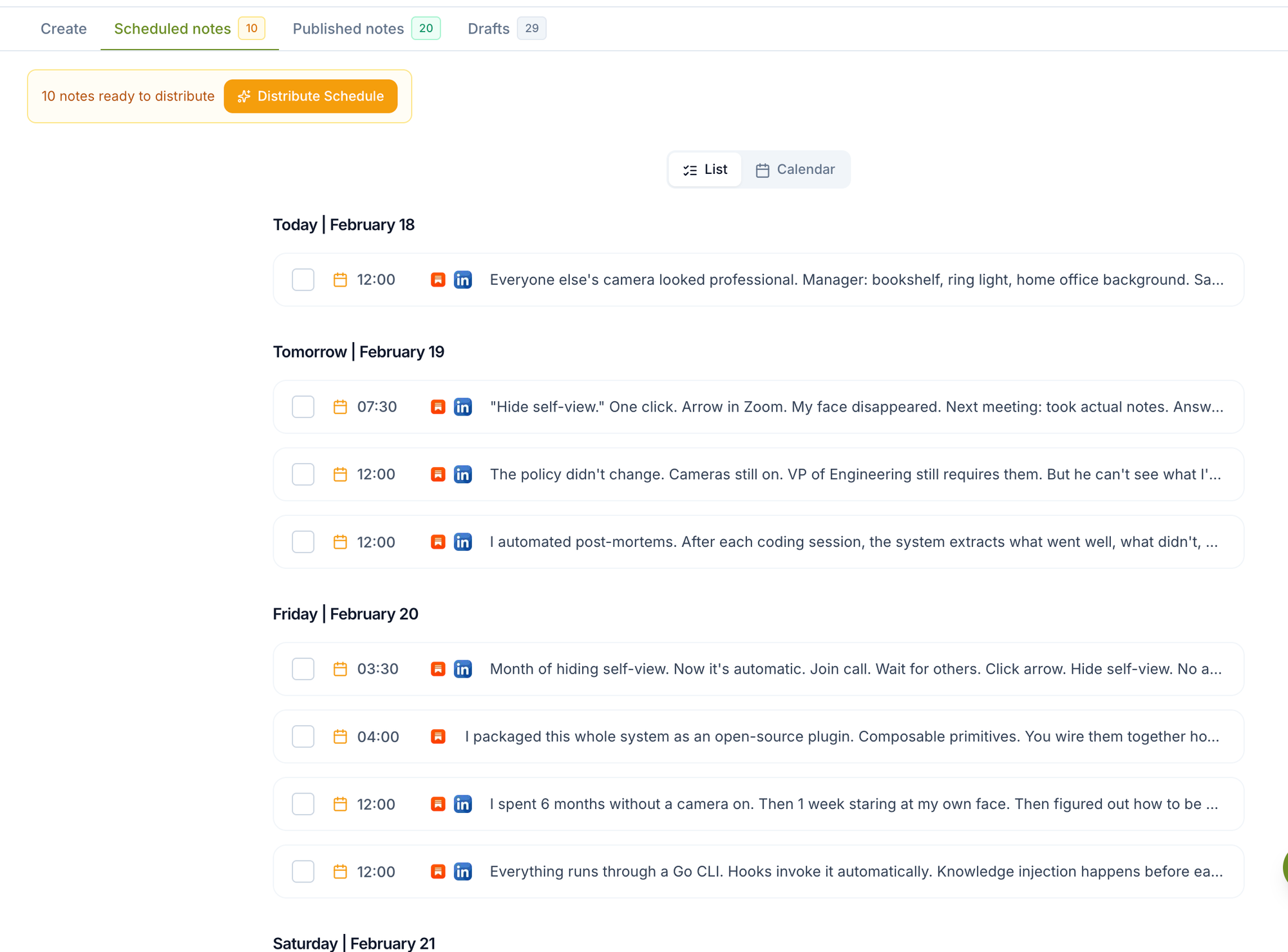
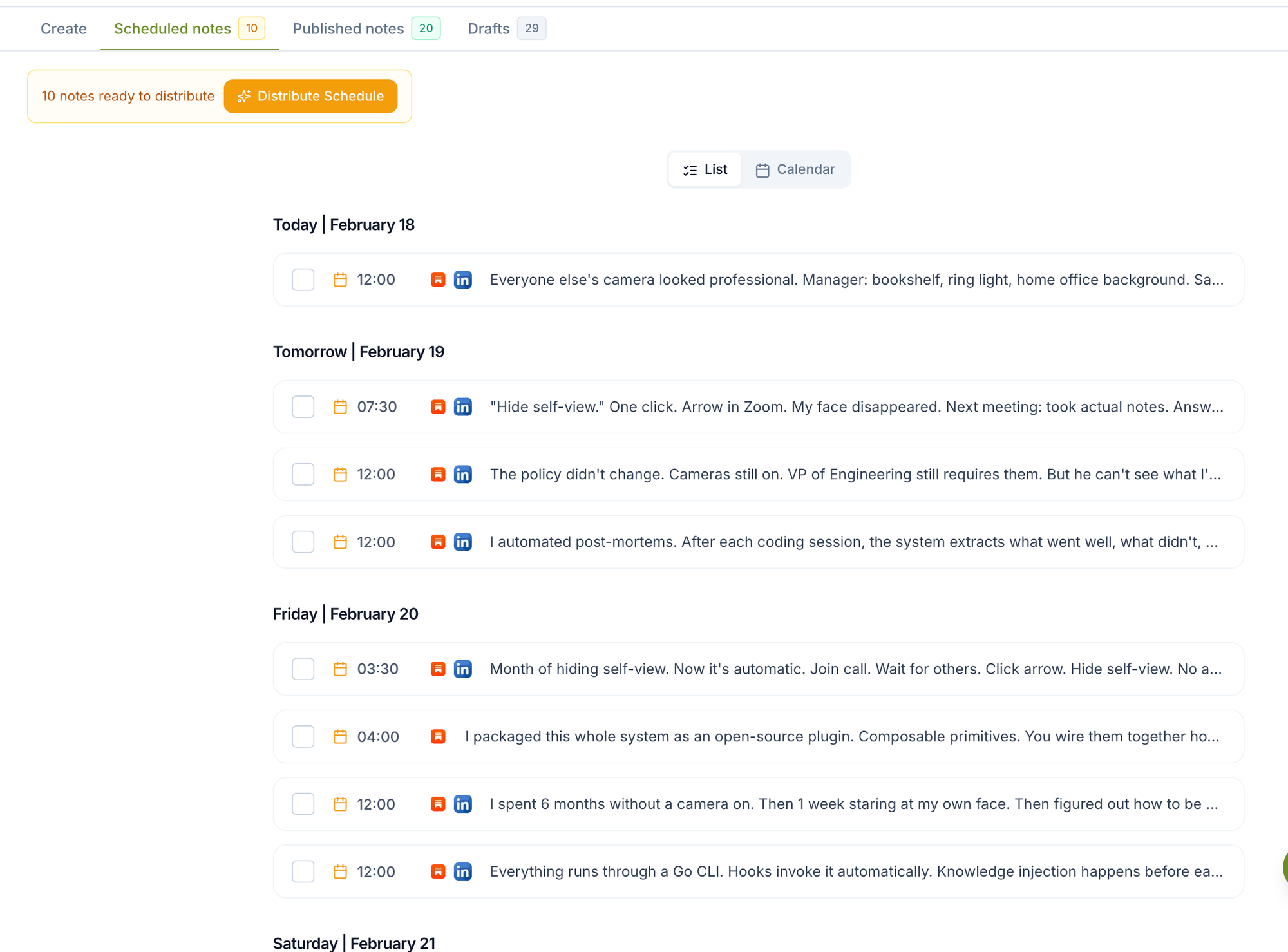
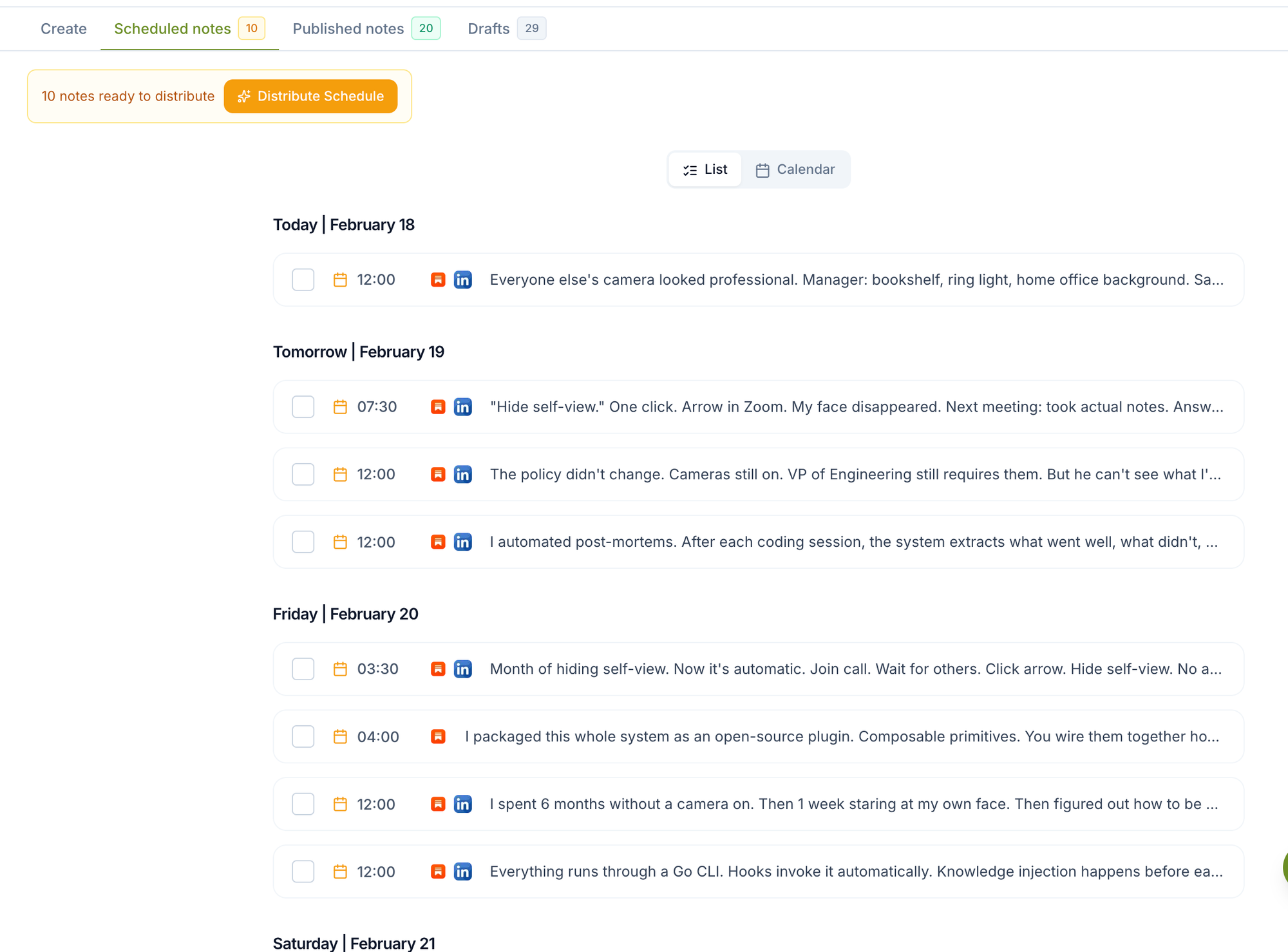
The Narrareach Workflow: Schedule on Substack, Cross-Post to LinkedIn and X
The most effective content distribution starts with Substack. Schedule your Notes weeks in advance, then let Narrareach automatically cross-post each one to LinkedIn and X at the perfect time. No manual copying, no forgotten posts — one calendar for every platform.
Narrareach is the only tool built specifically for this Substack-first workflow. Schedule once, reach everywhere.
Visual Walkthrough