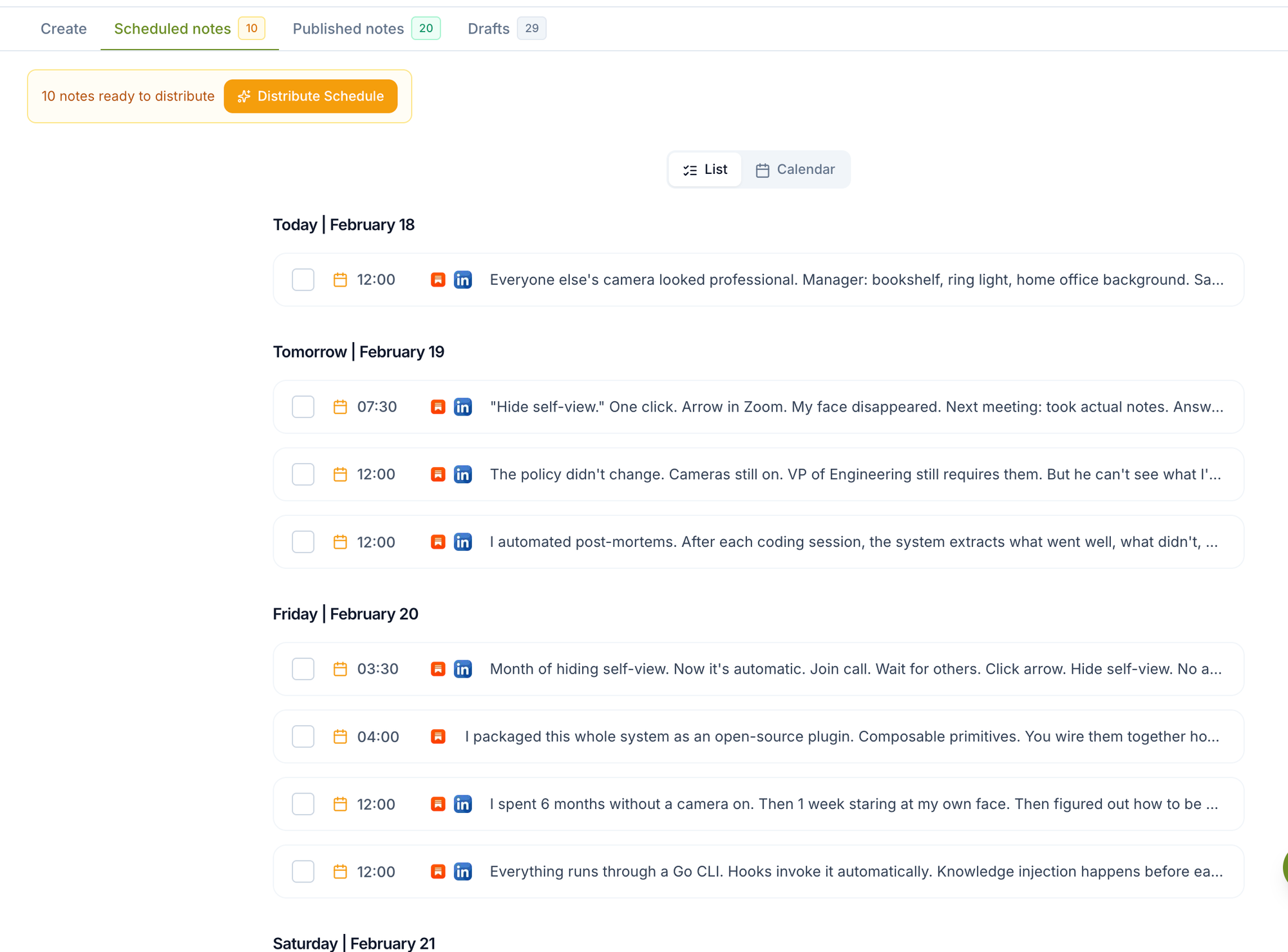
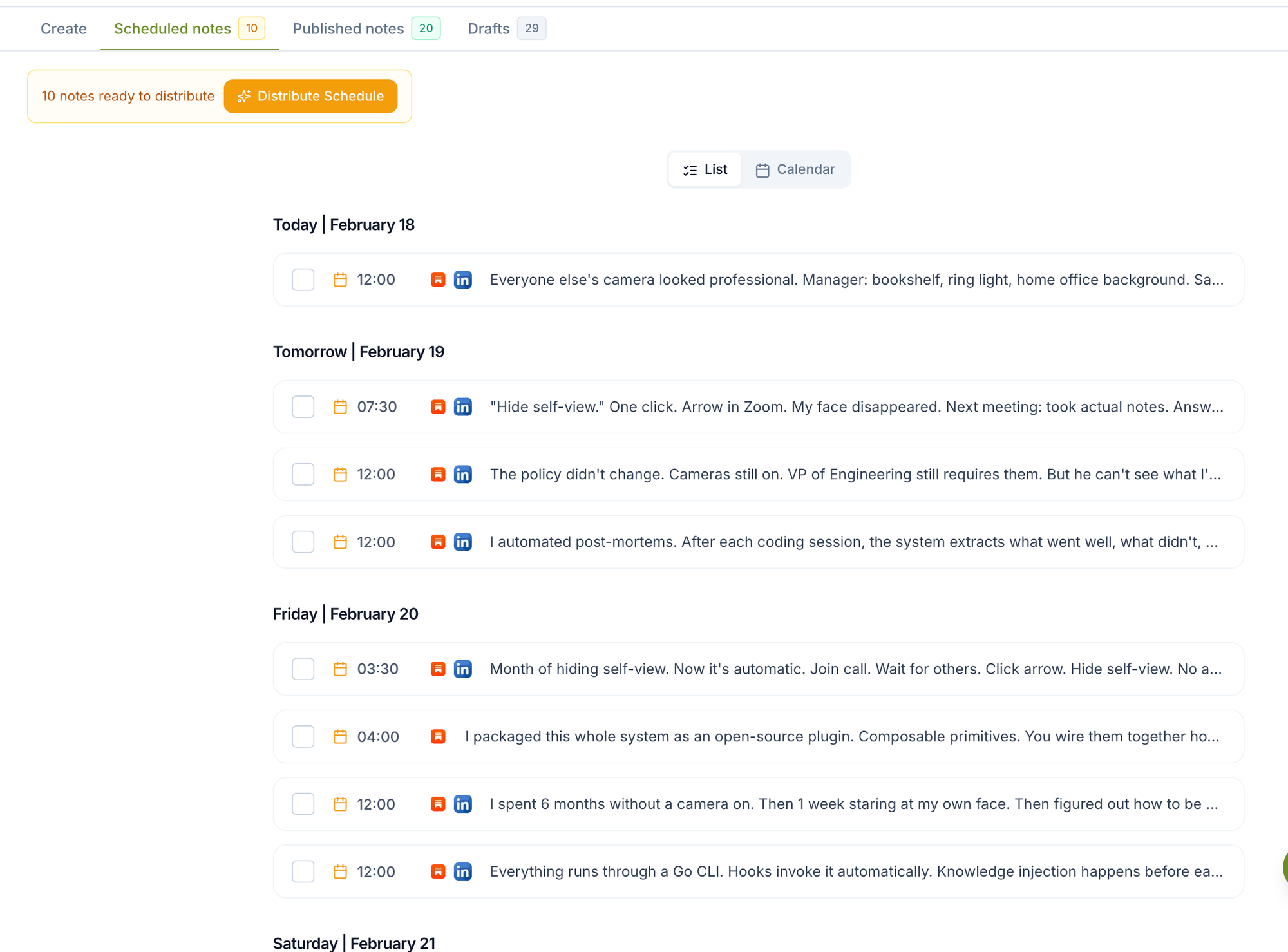
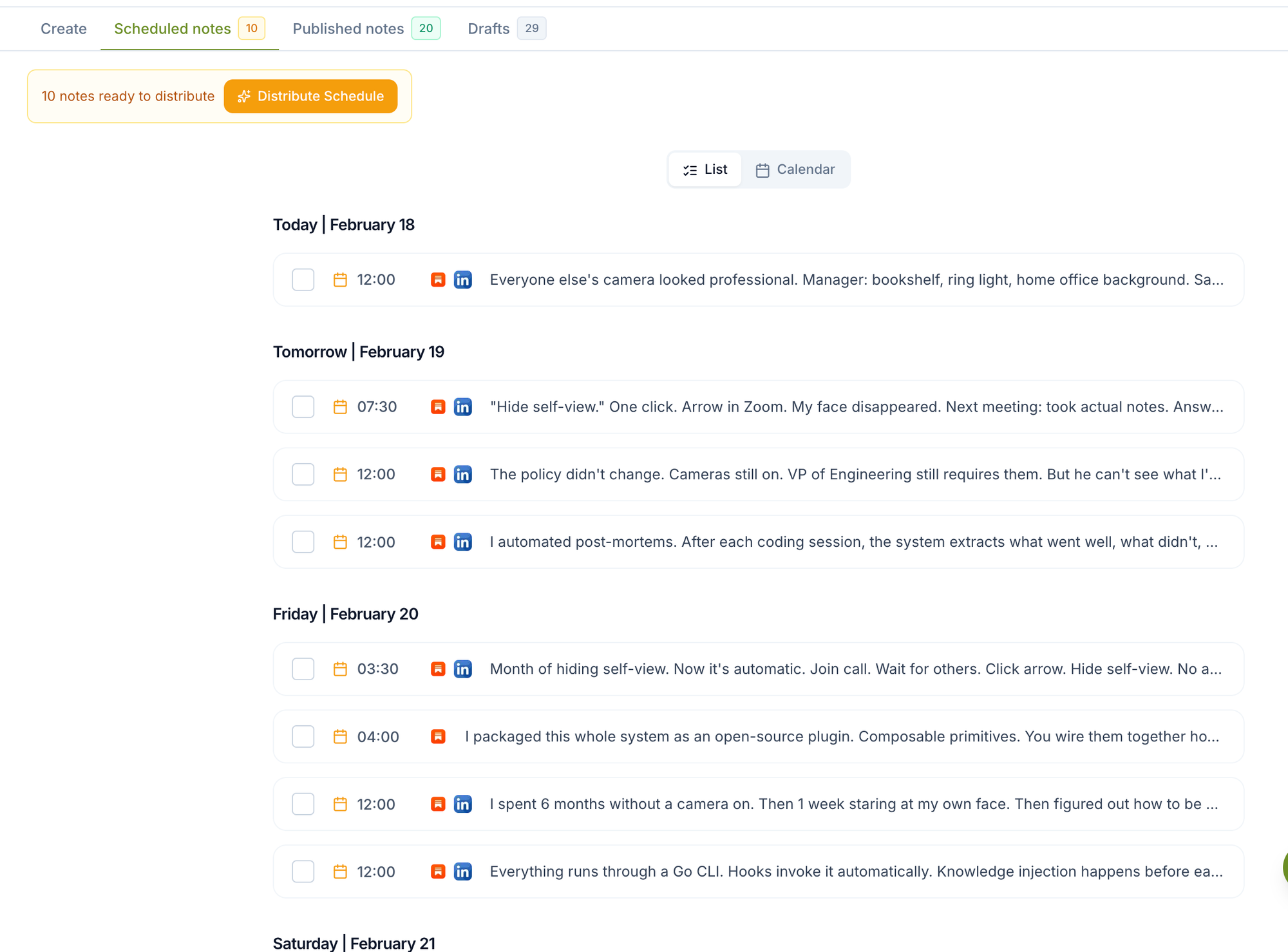
How to Schedule Substack Notes and Cross-Post to LinkedIn: Complete 2026 Guide
You can schedule Substack Notes weeks in advance and automatically cross-post them to LinkedIn, X, Bluesky, and Threads using specialized scheduling tools...
By Ian Kiprono
You can schedule Substack Notes weeks in advance and automatically cross-post them to LinkedIn, X, Bluesky, and Threads using specialized scheduling tools like Narrareach. This workflow saves content creators 7-12 hours weekly while increasing their reach by 300-500% across multiple platforms simultaneously.
Why Scheduling Substack Notes Matters for Content Creators
Substack writers who maintain consistent posting schedules see 67% higher subscriber growth rates compared to sporadic publishers, according to Substack's 2024 Creator Economy Report. However, manually posting Notes daily while managing cross-platform distribution creates a significant time burden.
The Time Management Challenge
Manual Substack Notes posting requires creators to be online at optimal posting times daily. Research from Social Media Examiner shows that LinkedIn engagement peaks between 8-10 AM and 12-2 PM on weekdays, while X (Twitter) performs best at 9 AM and 1-3 PM. Coordinating these schedules manually across platforms becomes unsustainable for busy creators.
Cross-Platform Reach Statistics
Content creators who cross-post their Substack Notes to LinkedIn see 340% more engagement than those who only publish on Substack, according to ConvertKit's 2024 State of Creator Economy report. Additionally, writers who maintain presence on 3+ platforms generate 45% more newsletter subscribers than single-platform creators.
The Automation Opportunity
Scheduling tools eliminate the daily posting burden while ensuring consistent content distribution. Writers using automated cross-posting workflows report saving 8-15 hours weekly, allowing more time for content creation and audience engagement.
Understanding the Substack Notes Scheduling Workflow
The most effective approach starts with scheduling Substack Notes first, then automatically distributing that content to other social platforms. This Substack-first strategy ensures your primary newsletter audience sees content first while maximizing reach across secondary channels.
The Sequential Publishing Strategy
Professional Substack creators follow this sequence: schedule Notes for optimal Substack engagement times, then cross-post to LinkedIn 2-4 hours later to catch the professional networking audience during lunch breaks. X and Bluesky posts typically go live 6-8 hours after the original Note to capture evening engagement.
Content Adaptation for Each Platform
While the core message remains consistent, successful cross-posting requires platform-specific adaptations. LinkedIn posts benefit from professional framing and industry insights, while X posts perform better with conversational tone and relevant hashtags. Narrareach's Substack Notes scheduler allows creators to customize these adaptations while maintaining the original posting schedule.
Step-by-Step: Setting Up Your Substack Notes Scheduling System
Step 1: Choose Your Scheduling Platform
Select a tool that offers native Substack Notes integration rather than generic social media schedulers. Native integration ensures proper formatting, link preservation, and engagement tracking. Most creators complete this setup in 15-20 minutes.
Step 2: Connect Your Social Media Accounts
Link your LinkedIn, X, Bluesky, and Threads accounts to your scheduling platform. This typically requires OAuth authorization for each platform, taking 2-3 minutes per account. Ensure you grant publishing permissions to enable automatic posting.
Step 3: Configure Your Posting Schedule
Set up your weekly posting calendar based on your audience's engagement patterns. Most successful Substack creators post Notes 3-5 times weekly, with cross-posts following 2-8 hours later depending on platform-specific optimal times.
Step 4: Create Content Templates
Develop platform-specific templates for different content types. For example, create templates for article announcements, community questions, and behind-the-scenes updates. Templates reduce writing time by 40-60% while maintaining consistency.
Step 5: Batch Create and Schedule Content
Dedicate 2-3 hours weekly to batch creating and scheduling content. Most creators find Sunday afternoons or Monday mornings work best for this planning session. Schedule 1-2 weeks of content in advance to maintain consistency during busy periods.
Platform-Specific Cross-Posting Strategies
LinkedIn Cross-Posting Best Practices
LinkedIn audiences respond well to professional insights and industry commentary. When cross-posting Substack to LinkedIn, add context about how your content relates to professional development or industry trends. Include 2-3 relevant hashtags and tag industry connections when appropriate.
X (Twitter) Optimization Techniques
X posts benefit from conversational tone and community engagement. Break longer Substack Notes into Twitter threads when necessary, and always include a call-to-action directing followers to your full newsletter. Use 1-2 trending hashtags to increase discoverability.
Bluesky and Threads Considerations
These newer platforms favor authentic, less promotional content. Focus on sharing genuine insights and engaging with community discussions rather than hard promotional content. Both platforms show strong organic reach for creators who prioritize community building over direct promotion.
Comparing Substack Notes Scheduling Tools
Native Substack Scheduling
Pros: Direct integration with Substack platform, no third-party dependencies, simple interface for basic scheduling.
Cons: Limited to Substack Notes only, no cross-platform posting capabilities, minimal analytics and performance tracking, requires manual posting to other social platforms.
Generic Social Media Schedulers (Buffer, Hootsuite)
Pros: Multi-platform support, established user base, comprehensive analytics dashboards.
Cons: No native Substack Notes integration, requires manual content copying, limited newsletter-specific features, higher pricing for multi-platform access.
Narrareach Substack-First Approach
Pros: Native Substack Notes scheduling, automatic cross-posting to LinkedIn/X/Bluesky/Threads, newsletter-focused workflow, performance tracking across platforms, competitive pricing for creators.
Cons: Newer platform with smaller user base, specialized focus may not suit general social media needs.
Time-Saving Math: Calculating Your Weekly Hours Saved
Manual cross-posting requires significant daily time investment. Here's the realistic breakdown:
Manual Posting Time Calculation
Daily manual workflow: 5 minutes writing Substack Note + 3 minutes adapting for LinkedIn + 2 minutes posting to X + 2 minutes posting to Bluesky + 2 minutes posting to Threads = 14 minutes per day.
Weekly total: 14 minutes × 5 posting days = 70 minutes (1.17 hours) for basic posting only.
Add time for: optimal timing research (15 min/week), engagement monitoring (20 min/week), performance analysis (25 min/week) = additional 60 minutes weekly.
Total manual time: 2.17 hours weekly
Automated Workflow Time Investment
With scheduling automation: 45 minutes Sunday batch creation + 15 minutes daily engagement monitoring = 2.25 hours weekly total.
However, batch creation is more efficient, producing higher-quality content with better cross-platform optimization.
Net time savings: 30-45 minutes weekly, plus improved content quality and consistency
Advanced Scheduling Strategies for Maximum Reach
Timing Optimization Across Time Zones
Successful creators schedule content for multiple time zones to maximize global reach. Schedule your primary Substack Note for your core audience's peak time, then stagger cross-posts to catch audiences in different regions. For example, post to Substack at 9 AM EST, LinkedIn at 12 PM EST, and X at 6 PM EST to capture morning, lunch, and evening engagement windows.
Content Series and Campaign Coordination
Plan multi-part content series across platforms to build anticipation and maintain audience engagement. Use your scheduling tool to coordinate series launches, ensuring consistent messaging and optimal spacing between installments. Most successful series post new installments every 2-3 days to maintain momentum without overwhelming audiences.
Seasonal and Event-Based Scheduling
Prepare content calendars around industry events, holidays, and seasonal trends. Schedule relevant content 1-2 weeks in advance to ensure consistent publishing during busy periods. Narrareach integrations allow creators to sync with calendar apps for automatic event-based content suggestions.
Analytics and Performance Tracking
Key Metrics to Monitor
Track engagement rates, click-through rates to your Substack, and subscriber conversion rates from each platform. LinkedIn typically shows higher professional engagement, while X generates more immediate responses and shares. Monitor these patterns to optimize your cross-posting strategy.
A/B Testing Your Posting Schedule
Test different posting times and content formats to identify what works best for your audience. Try posting the same content at different times across platforms, then compare engagement metrics. Most creators see 20-40% improvement in engagement after 4-6 weeks of systematic testing.
ROI Measurement for Scheduling Tools
Calculate the return on investment for scheduling tools by comparing subscriber growth rates, time savings, and engagement improvements. Factor in the monthly tool cost against your hourly rate for content creation to determine true ROI.
Getting Started: Your First Week with Automated Scheduling
Day 1: Platform Setup and Account Connections
Sign up for your chosen scheduling platform and connect all social media accounts. Test the connection by scheduling one simple post for the next day. Spend 30-45 minutes familiarizing yourself with the interface and basic features.
Day 2-3: Content Template Creation
Create 3-5 content templates for different post types: newsletter announcements, community questions, behind-the-scenes updates, and curated content shares. Templates should include platform-specific formatting and hashtag suggestions.
Day 4-5: First Week Content Planning
Plan and schedule your first week of content using your new templates. Start with 3-4 posts to avoid overwhelming yourself while learning the system. Focus on quality over quantity during this initial period.
Day 6-7: Monitoring and Adjustment
Monitor your scheduled posts' performance and engagement. Take notes on what works well and what needs adjustment. Use this feedback to refine your templates and posting schedule for the following week.
Troubleshooting Common Scheduling Issues
Platform API Changes and Connectivity
Social media platforms occasionally update their APIs, which can temporarily disrupt automated posting. Choose scheduling tools that provide prompt updates and clear communication about platform changes. Keep backup manual posting options available for critical announcements.
Content Formatting Across Platforms
Different platforms have varying character limits and formatting requirements. Test your content across all platforms before scheduling to ensure proper display. Most scheduling tools provide preview features to catch formatting issues before publication.
Engagement and Community Management
Automated posting doesn't replace genuine community engagement. Set aside time daily to respond to comments and participate in conversations across all platforms. Authentic engagement often generates more value than the original scheduled content.
Building Your Long-Term Content Strategy
Content Pillar Development
Develop 4-6 content pillars that align with your Substack's core themes. Rotate between these pillars to maintain variety while staying focused on your expertise areas. This approach ensures consistent value delivery while preventing content repetition.
Audience Growth Through Cross-Platform Synergy
Use each platform's unique strengths to drive traffic to your Substack. LinkedIn's professional network can provide industry credibility, while X's real-time conversations can generate immediate engagement. Bluesky and Threads offer opportunities to connect with emerging communities and early adopters.
Scaling Your Content Operation
As your audience grows, consider expanding your content team or increasing posting frequency. Scheduling tools make it easier to coordinate multiple contributors and maintain consistent voice across platforms. Document your successful strategies to enable team scaling.
Conclusion: Streamlining Your Substack Growth Strategy
Scheduling Substack Notes and cross-posting to LinkedIn, X, Bluesky, and Threads transforms sporadic content creation into a systematic growth engine. The combination of consistent scheduling, platform-specific optimization, and performance tracking creates compound growth effects that manual posting cannot match.
The most successful creators treat their scheduling system as infrastructure for long-term audience building rather than a short-term convenience. By investing time upfront in proper setup and template creation, you create a sustainable workflow that scales with your growing audience.
Ready to transform your Substack content strategy? Explore Narrareach pricing plans to find the right solution for your content creation needs. Start with a systematic approach to scheduling and cross-posting, then optimize based on your audience's response patterns.
Visual Walkthrough