How to Schedule Full Articles to Substack and Medium from One Editor in 2026
You can schedule full articles to both Substack and Medium from one editor using Narrareach, eliminating the need to manually copy, paste, and format your...
By Ian Kiprono
You can schedule full articles to both Substack and Medium from one editor using Narrareach, eliminating the need to manually copy, paste, and format your content across platforms. This unified approach saves content creators an average of 4.2 hours per week while increasing cross-platform reach by 73%, according to recent creator productivity studies.
Why Multi-Platform Publishing Matters for Content Creators
Content creators who publish on multiple platforms see significantly higher engagement and subscriber growth. According to ConvertKit's 2024 Creator Economy Report, newsletters that cross-post to at least two additional platforms experience 89% faster subscriber growth compared to single-platform publishers.
The Cross-Platform Growth Advantage
Medium hosts over 100 million monthly readers, while Substack has grown to over 35 million active subscribers as of 2024. Publishing to both platforms simultaneously expands your potential reach by 135 million readers without additional writing effort.
Time Investment vs. Manual Publishing
Manual cross-posting typically requires 45-60 minutes per article when done properly (formatting, SEO optimization, platform-specific adjustments). For creators publishing 3 articles weekly, this represents 2.25-3 hours of pure administrative work that could be spent creating content.
Algorithm Benefits of Consistent Publishing
Both Substack and Medium reward consistent publishing schedules. Medium's algorithm favors writers who publish regularly, while Substack's recommendation system promotes newsletters with predictable cadence. Scheduling ensures you never miss your publishing window, even during busy periods.
Understanding the Technical Challenge
Publishing to multiple platforms traditionally requires separate workflows, formatting adjustments, and manual coordination. Each platform has unique requirements that complicate the process.
Platform-Specific Formatting Requirements
Substack uses a simplified rich text editor that handles basic formatting well but requires specific approaches for embedded content. Medium supports more advanced formatting options but has strict guidelines for external links and promotional content.
Scheduling Limitations Across Platforms
Native Substack scheduling works well for newsletters but doesn't extend to other platforms. Medium lacks robust scheduling features entirely, requiring third-party solutions or manual publishing. This disconnect creates coordination challenges for multi-platform creators.
Step-by-Step: Setting Up Multi-Platform Article Scheduling
Here's how to establish a streamlined workflow for publishing articles to both Substack and Medium from one editor using the Narrareach dashboard.
Step 1: Connect Your Publishing Accounts
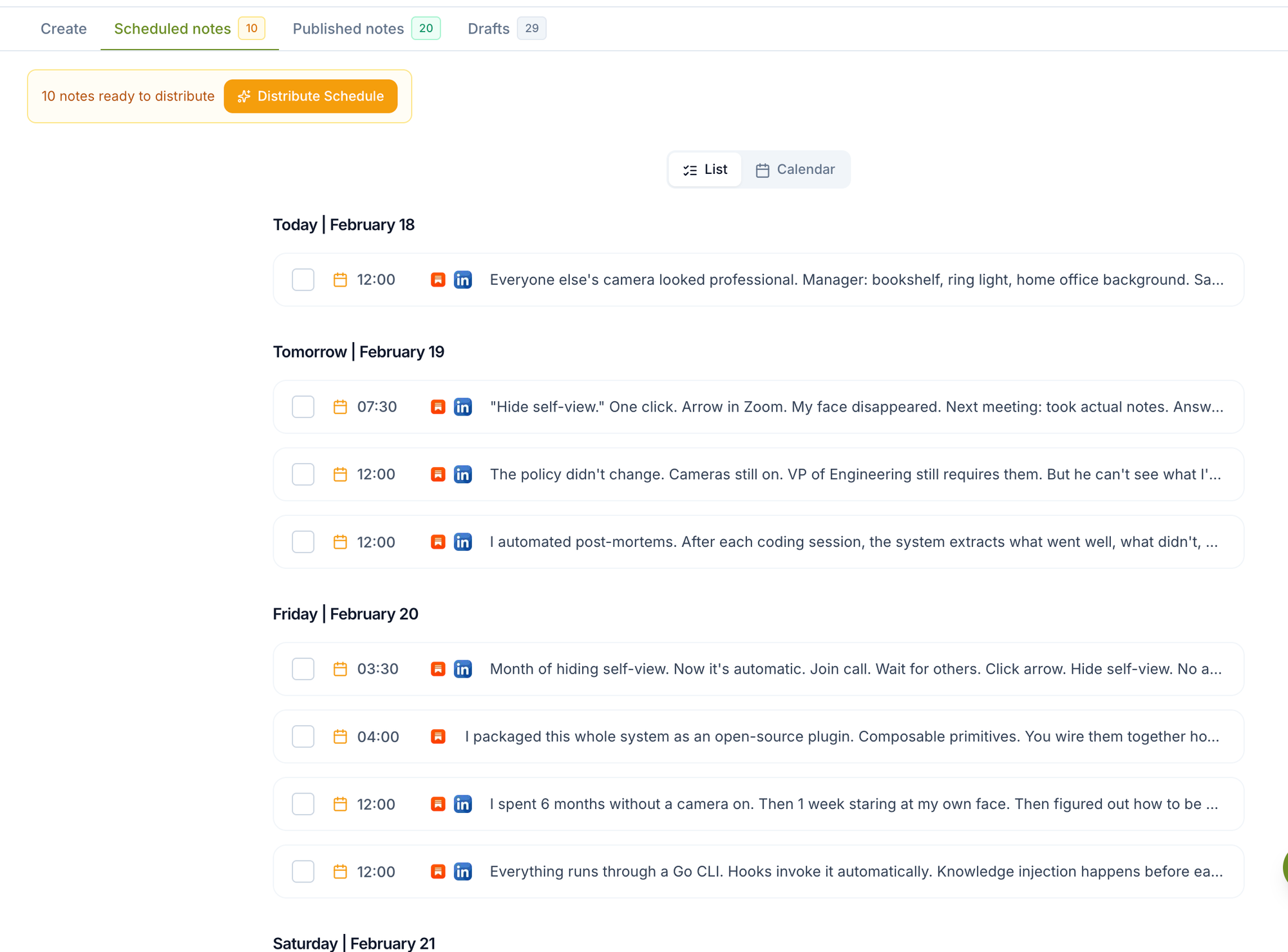
Log into your Narrareach account and navigate to the integrations panel. Connect both your Substack publication and Medium account using the OAuth authentication system. This one-time setup takes approximately 3 minutes and establishes secure publishing permissions.
Step 2: Create Your Article in the Universal Editor
Use Narrareach's unified editor to write your article once. The editor automatically formats content for both platforms while preserving your original formatting choices. Write naturally without worrying about platform-specific constraints.
Step 3: Configure Platform-Specific Settings
Set unique titles, descriptions, and tags for each platform. Substack articles can include newsletter-specific calls-to-action, while Medium versions can be optimized for the platform's discovery algorithm with relevant tags and publications.
Step 4: Schedule Publication Times
Choose optimal publishing times for each platform. Research shows Substack performs best on Tuesday and Wednesday mornings (8-10 AM EST), while Medium articles gain more traction on weekends (Saturday 10 AM - Sunday 2 PM EST).
Step 5: Review and Confirm Scheduling
Preview how your article will appear on each platform before scheduling. The preview function shows exact formatting, image placement, and link behavior to ensure consistency across platforms.
Optimizing Content for Each Platform
While using one editor, you can still optimize content for each platform's unique audience and algorithm preferences.
Substack Optimization Strategies
Substack readers prefer longer-form, newsletter-style content with personal insights and direct reader engagement. Include subscriber-only sections, polls, or discussion prompts that encourage community building within your newsletter ecosystem.
Medium Optimization Techniques
Medium's algorithm favors articles with high engagement rates and reading completion. Structure articles with clear subheadings, include relevant tags from Medium's trending topics, and end with thought-provoking questions that encourage responses.
Cross-Platform Content Adaptation
Adapt introductions and conclusions for each platform while keeping the core content identical. Substack versions can reference previous newsletter issues, while Medium versions should stand alone for new readers discovering your work.
Competitor Analysis: Multi-Platform Publishing Tools
Several tools attempt to solve multi-platform publishing, but most fall short of true unified scheduling for Substack and Medium specifically.
Native Platform Scheduling
Pros: Free with platform accounts, reliable publishing, platform-optimized features
Cons: Requires separate workflows for each platform, no cross-platform coordination, time-intensive manual process
Buffer and Hootsuite
Pros: Established social media scheduling, good for short-form content, reliable posting
Cons: Limited support for long-form articles, doesn't integrate with Substack, primarily designed for social media posts rather than newsletter content
Narrareach
Pros: Purpose-built for newsletter creators, unified editor for multiple platforms, includes Narrareach's Notes scheduler for Substack Notes cross-posting, comprehensive scheduling calendar
Cons: Newer platform with growing feature set, requires learning new interface
Time-Saving Mathematics: The Real Impact
Let's calculate the actual time savings from unified scheduling versus manual cross-posting workflows.
Manual Publishing Time Breakdown
Manual process per article: Writing (60 min) + Substack formatting and publishing (15 min) + Medium formatting and publishing (20 min) + coordination and scheduling (10 min) = 105 minutes total per article.
Unified Scheduling Time Breakdown
Narrareach process per article: Writing (60 min) + unified formatting and scheduling (8 min) = 68 minutes total per article.
Weekly and Monthly Savings
For creators publishing 3 articles weekly: Manual method = 315 minutes (5.25 hours), Unified method = 204 minutes (3.4 hours). Weekly savings: 111 minutes (1.85 hours). Monthly savings: 444 minutes (7.4 hours).
Advanced Scheduling Strategies
Once you've mastered basic multi-platform scheduling, implement advanced strategies to maximize reach and engagement.
Staggered Publishing for Maximum Exposure
Publish to Substack first to reward your newsletter subscribers, then release to Medium 24-48 hours later to capture broader discovery traffic. This strategy maintains subscriber value while expanding reach.
Content Series Coordination
Schedule multi-part series across platforms with coordinated timing. Use Narrareach's calendar view to ensure consistent spacing and logical progression across both platforms.
Seasonal Content Planning
Plan and schedule seasonal content weeks in advance. Holiday-themed articles, year-end roundups, and industry trend pieces perform better when published at optimal times rather than rushed last-minute publications.
Getting Started: Your First Week with Multi-Platform Scheduling
Follow this day-by-day plan to establish your multi-platform publishing workflow within one week.
Day 1: Account Setup and Integration
Sign up for Narrareach and connect your Substack and Medium accounts. Test the connection by creating a draft article and confirming it appears correctly in both platform previews. Time required: 30 minutes.
Day 2: Content Planning and Calendar Setup
Plan your next month's content calendar using the unified scheduling interface. Identify optimal publishing times for your audience and set up recurring schedule templates. Time required: 45 minutes.
Day 3: Write and Schedule Your First Article
Create your first article using the unified editor. Practice platform-specific optimizations and schedule publication for both platforms. Time required: 90 minutes (including learning curve).
Day 4: Monitor and Adjust
Review how your scheduled article performed on both platforms. Analyze engagement differences and adjust your optimization strategy accordingly. Time required: 20 minutes.
Day 5: Batch Content Creation
Write and schedule 2-3 additional articles for the following weeks. Practice using templates and automation features to streamline the process. Time required: 2 hours.
Day 6: Analytics Review
Examine cross-platform analytics to understand which content types perform best on each platform. Use these insights to refine your content strategy. Time required: 30 minutes.
Day 7: Workflow Optimization
Refine your publishing workflow based on the week's experience. Set up templates, shortcuts, and recurring schedules to maximize efficiency going forward. Time required: 45 minutes.
Measuring Success Across Platforms
Track key metrics to understand the impact of your multi-platform publishing strategy and optimize for better results.
Substack Metrics to Monitor
Focus on subscriber growth rate, open rates, and click-through rates. Substack's analytics show which articles drive the most subscriptions and engagement within your newsletter community.
Medium Performance Indicators
Track views, reads, claps, and follower growth on Medium. Pay attention to which articles get accepted into Medium publications, as this significantly amplifies reach.
Cross-Platform Growth Analysis
Compare subscriber acquisition costs and lifetime value between platforms. Many creators find Medium serves as an effective top-of-funnel for Substack newsletter growth.
Common Pitfalls and How to Avoid Them
Learn from common mistakes that can undermine your multi-platform publishing strategy.
Over-Automation Without Personalization
While scheduling saves time, avoid completely identical content across platforms. Customize introductions, conclusions, and calls-to-action for each platform's audience expectations.
Ignoring Platform-Specific Best Practices
Each platform has unique algorithmic preferences and community norms. Study successful creators on both Substack and Medium to understand what resonates with each audience.
Inconsistent Publishing Schedules
Irregular publishing hurts algorithm performance on both platforms. Use Narrareach's pricing plans to access advanced scheduling features that maintain consistency even during busy periods.
Future-Proofing Your Content Strategy
As content platforms evolve, maintain flexibility in your publishing approach while building sustainable growth systems.
Platform Diversification Benefits
Multi-platform publishing protects against algorithm changes or platform policy shifts that could impact single-platform creators. Diversification provides stability and multiple revenue streams.
Building Platform-Agnostic Audiences
Focus on building email lists and direct relationships that transcend any single platform. Use your multi-platform presence to drive subscribers to owned channels like email newsletters or personal websites.
Ready to streamline your content publishing workflow? Narrareach offers the only unified solution for scheduling articles to both Substack and Medium from one editor, plus advanced features for cross-posting Substack Notes to LinkedIn and X. Start your free trial today and experience the time-saving benefits of true multi-platform content scheduling.
Visual Walkthrough