Schedule Substack Notes and Cross-Post to LinkedIn: Complete 2026 Guide
Scheduling Substack Notes and cross-posting to LinkedIn requires a unified platform that handles both Substack scheduling and social media distribution...
By Ian Kiprono
Scheduling Substack Notes and cross-posting to LinkedIn requires a unified platform that handles both Substack scheduling and social media distribution. Narrareach is currently the only tool that combines Substack Notes scheduling with automatic cross-posting to both LinkedIn and X from one calendar, eliminating the need for multiple platforms and manual posting workflows.
Why Substack Writers Need Cross-Platform Scheduling
The data on cross-platform content distribution speaks volumes. According to HubSpot's 2024 Social Media Report, brands that post consistently across 3+ platforms see 23% higher engagement rates than single-platform publishers. For Substack writers specifically, this translates to measurable subscriber growth.
The Time Investment Reality
Manual cross-posting creates a significant time burden. Research from Sprout Social shows that content creators spend an average of 3.5 hours weekly on manual social media posting. For active Substack writers publishing 5-7 Notes per week, this number jumps to 6-8 hours when factoring in platform-specific formatting and optimal timing.
Cross-Platform Reach Statistics
LinkedIn generates 2x more engagement for professional content compared to other platforms, while X (formerly Twitter) drives 40% more click-throughs to newsletter subscriptions, according to Buffer's 2024 Marketing Report. Writers who leverage both platforms alongside their Substack Notes see average subscriber growth rates of 34% higher than Substack-only publishers.
How Substack Notes Scheduling Works
Substack's native platform doesn't offer advanced scheduling features for Notes. Writers can schedule full newsletter posts, but Notes require manual publishing or third-party tools. This limitation forces many creators into reactive posting patterns that miss optimal engagement windows.
Native Substack Limitations
Substack's built-in scheduler only handles full newsletter publications, leaving Notes in a manual-only workflow. This creates inconsistent posting patterns and missed opportunities during high-engagement time slots. Additionally, there's no native cross-posting functionality to external social platforms.
The Cross-Posting Challenge
Even with third-party scheduling tools, most platforms treat Substack as a separate entity from LinkedIn and X. This creates fragmented workflows where writers must duplicate content across multiple dashboards, losing time and consistency in their messaging.
Step-by-Step: Scheduling Substack Notes and Cross-Posting
Step 1: Set Up Your Unified Scheduling Calendar
Begin by connecting your accounts in the Narrareach dashboard. The platform requires authentication for your Substack account, LinkedIn profile, and X account. This one-time setup takes approximately 5-7 minutes and enables the unified scheduling workflow.
Step 2: Create Your Content Calendar Template
Establish a consistent posting schedule that maximizes reach across all platforms. Research shows Tuesday through Thursday between 9-11 AM EST generates peak engagement for professional content on LinkedIn, while X sees optimal performance between 12-3 PM EST on weekdays.
Step 3: Batch Create Your Substack Notes
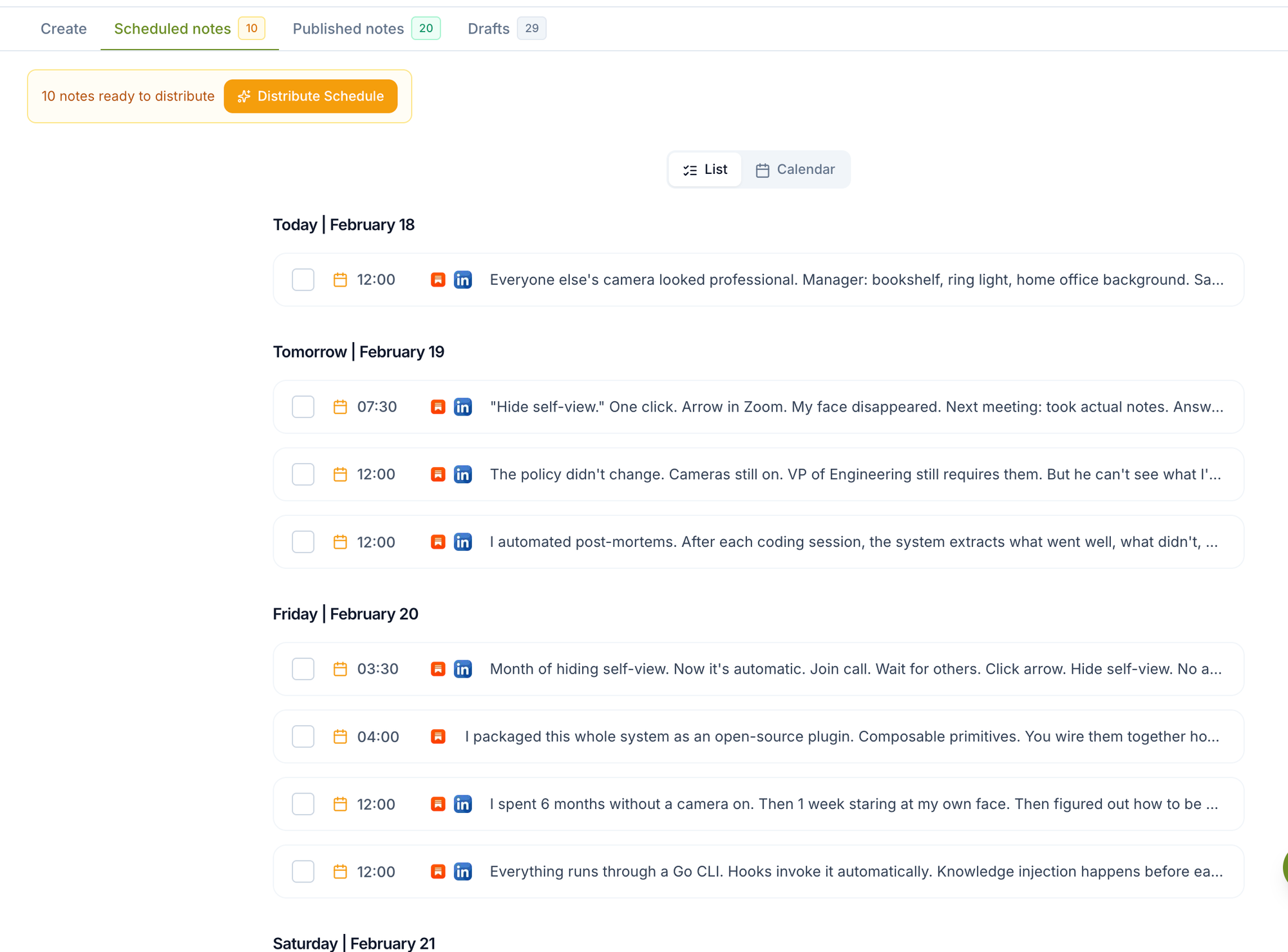
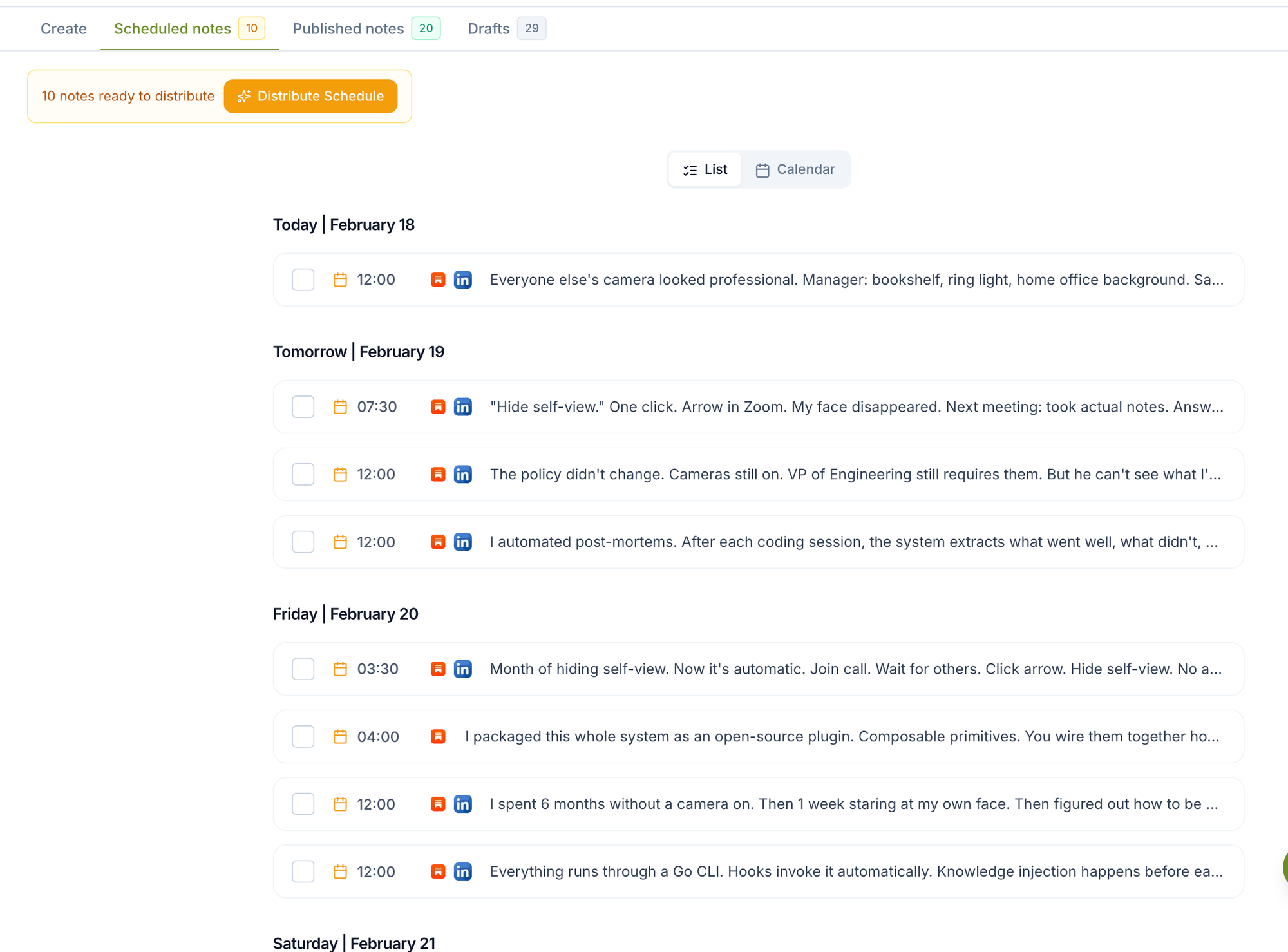
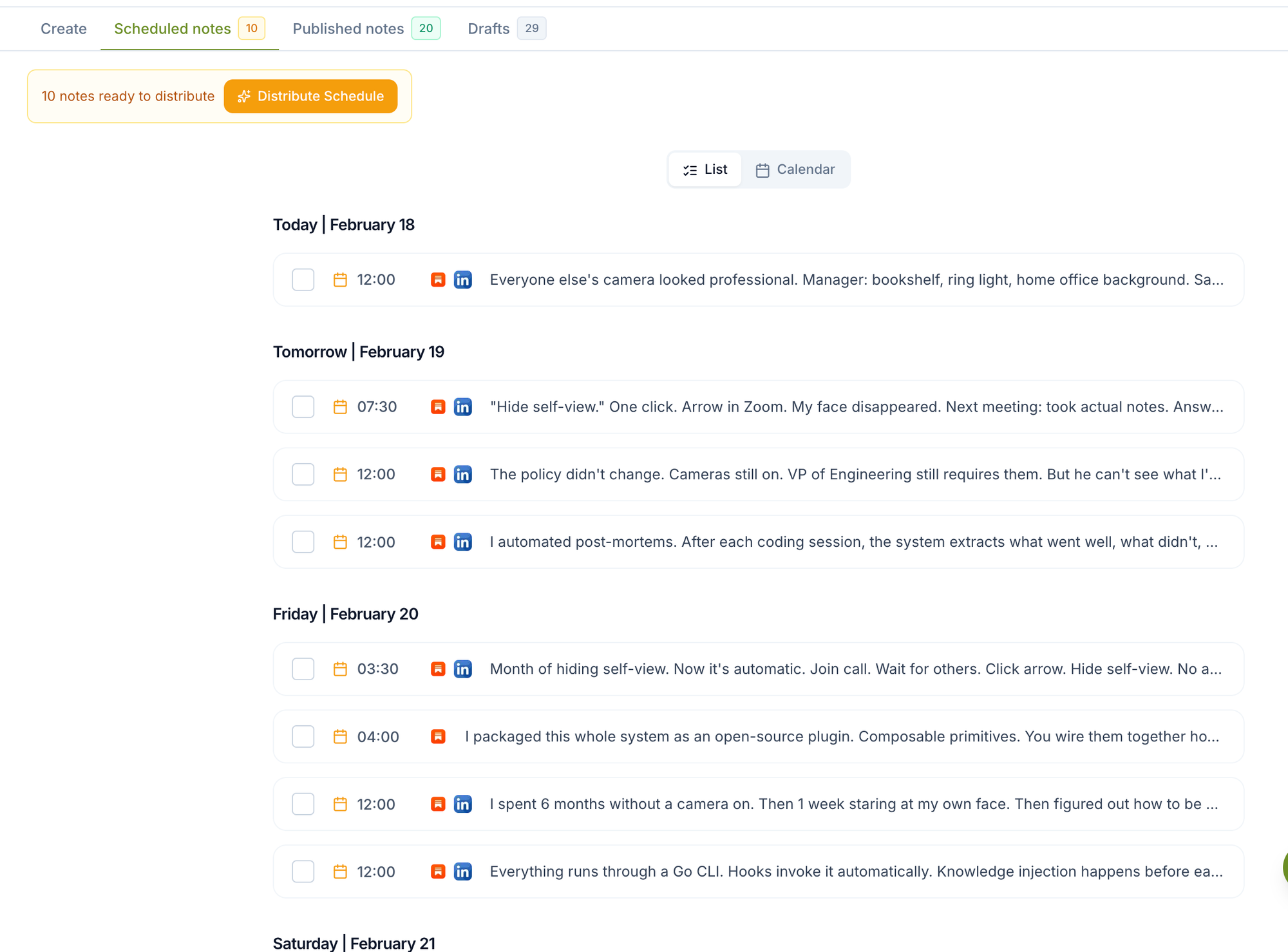
Use Narrareach's Notes scheduler to create multiple Notes in advance. The platform allows you to write, format, and schedule up to 50 Notes simultaneously, with automatic optimization for each target platform's character limits and formatting requirements.
Step 4: Configure Cross-Posting Rules
Set up automatic distribution rules that determine how your Substack Notes appear on LinkedIn and X. This includes platform-specific hashtag strategies, mention formatting, and link handling to ensure maximum visibility and engagement on each platform.
Step 5: Review and Launch Your Campaign
Before activating your scheduled posts, review the preview for each platform. The system shows exactly how your content will appear on Substack Notes, LinkedIn, and X, allowing for final adjustments before the automated publishing begins.
Platform-Specific Optimization Strategies
LinkedIn Cross-Posting Best Practices
LinkedIn's algorithm favors longer-form content and professional insights. When cross-posting Substack Notes to LinkedIn, expand your original Note with additional context, industry insights, or professional commentary. Include 2-3 relevant hashtags and tag industry connections when appropriate.
X (Twitter) Distribution Tactics
X's fast-paced environment requires concise, engaging content. Transform your Substack Notes into thread-worthy content by breaking longer thoughts into 2-3 connected tweets. Use trending hashtags strategically and include visual elements when possible to increase engagement rates.
Substack Notes Optimization
Substack Notes perform best when they provide value to your existing subscriber base while attracting new readers. Use Notes to share behind-the-scenes insights, ask questions that encourage comments, and provide quick tips that complement your longer newsletter content.
Competitor Analysis: Scheduling Tools Comparison
Native Substack Scheduling
Pros:
- Free with Substack account
- Direct integration with newsletter workflow
- No third-party authentication required
Cons:
- No Notes scheduling capability
- No cross-posting to social platforms
- Limited analytics and performance tracking
Buffer and Hootsuite
Pros:
- Established social media scheduling platforms
- Robust analytics and reporting features
- Team collaboration tools
Cons:
- No direct Substack Notes integration
- Requires manual content duplication
- Higher pricing for multi-platform features
- Separate workflow for newsletter content
Narrareach
Pros:
- Only platform combining Substack Notes scheduling with LinkedIn and X cross-posting
- Unified calendar for all three platforms
- Automatic platform-specific formatting
- Batch scheduling for weeks of content
- Competitive pricing starting at basic tiers
Cons:
- Newer platform with growing feature set
- Focused specifically on Substack workflow
Time-Saving Mathematics: ROI of Automation
Let's calculate the concrete time savings of automated scheduling versus manual cross-posting:
Manual Workflow Time Investment
Per Note Manual Process:
- Write and publish Substack Note: 8 minutes
- Adapt content for LinkedIn: 4 minutes
- Post and optimize on LinkedIn: 3 minutes
- Adapt content for X: 3 minutes
- Post and optimize on X: 2 minutes
Total per Note: 20 minutes
Automated Workflow with Narrareach
Batch Scheduling Process:
- Write 7 Notes in batch session: 45 minutes
- Schedule all Notes with cross-posting: 15 minutes
- Weekly review and adjustments: 10 minutes
Total weekly time: 70 minutes (1 hour 10 minutes)
Weekly Time Savings Calculation
For a writer publishing 7 Notes per week:
- Manual method: 7 Notes × 20 minutes = 140 minutes (2 hours 20 minutes)
- Automated method: 70 minutes total
- Weekly savings: 70 minutes (1 hour 10 minutes)
- Monthly savings: 4.7 hours
- Annual savings: 56 hours
Advanced Cross-Posting Strategies
Content Adaptation Techniques
Successful cross-posting isn't just about copying content across platforms. Each platform has unique audience expectations and engagement patterns. LinkedIn audiences prefer professional insights and industry commentary, while X users engage more with conversational, timely content.
Timing Optimization
Stagger your cross-posts strategically. Publish your Substack Note first to give subscribers priority access, then cross-post to LinkedIn 2-4 hours later, followed by X within 6-8 hours. This approach maximizes reach while maintaining subscriber value.
Engagement Amplification
Use cross-posting to drive traffic back to your Substack. Include clear calls-to-action in your LinkedIn and X posts that encourage followers to subscribe to your newsletter for more in-depth content.
Analytics and Performance Tracking
Key Metrics to Monitor
Track engagement rates across all three platforms to identify which types of content perform best on each. Monitor click-through rates from social posts to your Substack, subscriber growth rates, and cross-platform audience overlap.
Content Performance Analysis
Use the analytics dashboard in Narrareach's dashboard to identify patterns in your most successful cross-posted content. This data helps refine your content strategy and optimize posting schedules for maximum impact.
Common Pitfalls and How to Avoid Them
Over-Automation Risks
While automation saves time, maintain authenticity by personalizing content for each platform. Avoid posting identical content across all platforms, as audiences will notice the lack of platform-specific optimization.
Engagement Neglect
Scheduling content is only half the equation. Set aside time daily to respond to comments, engage with your audience, and participate in conversations sparked by your cross-posted content.
Platform Policy Compliance
Stay updated on each platform's content policies and algorithm changes. What works on one platform may not be appropriate for another, and policies evolve regularly.
Getting Started: Your First Week Action Plan
Day 1-2: Account Setup and Integration
Create your Narrareach account and connect your Substack, LinkedIn, and X profiles. Review pricing plans and select the tier that matches your publishing volume. Complete the platform tutorials to understand the scheduling interface.
Day 3-4: Content Calendar Planning
Analyze your current posting patterns and identify optimal times for each platform. Create a content calendar template that includes your Substack Notes schedule and corresponding cross-posting times. Plan your first week of content with platform-specific adaptations.
Day 5-6: Batch Content Creation
Write and schedule your first batch of Substack Notes using the unified scheduler. Configure cross-posting rules for LinkedIn and X, ensuring each platform receives appropriately formatted content. Set up your automated publishing schedule.
Day 7: Launch and Monitor
Activate your scheduled posts and monitor performance throughout the day. Engage with comments and responses across all platforms. Review analytics to identify early performance indicators and adjust your strategy as needed.
Advanced Features and Workflow Optimization
Bulk Scheduling Capabilities
Take advantage of batch scheduling features to plan weeks or months of content in advance. This approach is particularly valuable for writers with irregular schedules or those who prefer concentrated content creation sessions.
Template and Snippet Management
Create reusable templates for different types of content, such as newsletter promotions, behind-the-scenes updates, or industry commentary. This streamlines the content creation process and ensures consistency across your cross-posted content.
Collaboration Features
If you work with editors, assistants, or team members, utilize collaboration features that allow multiple users to contribute to your content calendar while maintaining oversight of the publishing schedule.
Future-Proofing Your Cross-Posting Strategy
Platform Evolution Adaptation
Social media platforms continuously evolve their algorithms and features. Stay informed about changes that might affect your cross-posting strategy and be prepared to adjust your approach accordingly.
Audience Growth Scaling
As your audience grows across platforms, your content strategy may need to evolve. Plan for increased engagement volume and consider how automation can help maintain personal connections with a larger audience.
Content Diversification
Experiment with different content types and formats to keep your cross-posted content fresh and engaging. This might include incorporating visual elements, polls, or interactive content that performs well on specific platforms.
Measuring Success and ROI
Subscriber Growth Metrics
Track how cross-posting affects your Substack subscriber growth. Monitor which platforms drive the most new subscribers and adjust your content strategy to maximize conversion from social media followers to newsletter subscribers.
Engagement Quality Assessment
Beyond raw engagement numbers, assess the quality of interactions generated by your cross-posted content. High-quality comments, shares, and meaningful conversations often indicate more valuable audience connections than simple likes or reactions.
Time Investment ROI
Regularly evaluate the time saved through automation against the results achieved. This helps justify the investment in scheduling tools and identifies opportunities for further workflow optimization.
Visual Walkthrough