How to Schedule Substack Notes and Cross-Post to LinkedIn in 2026
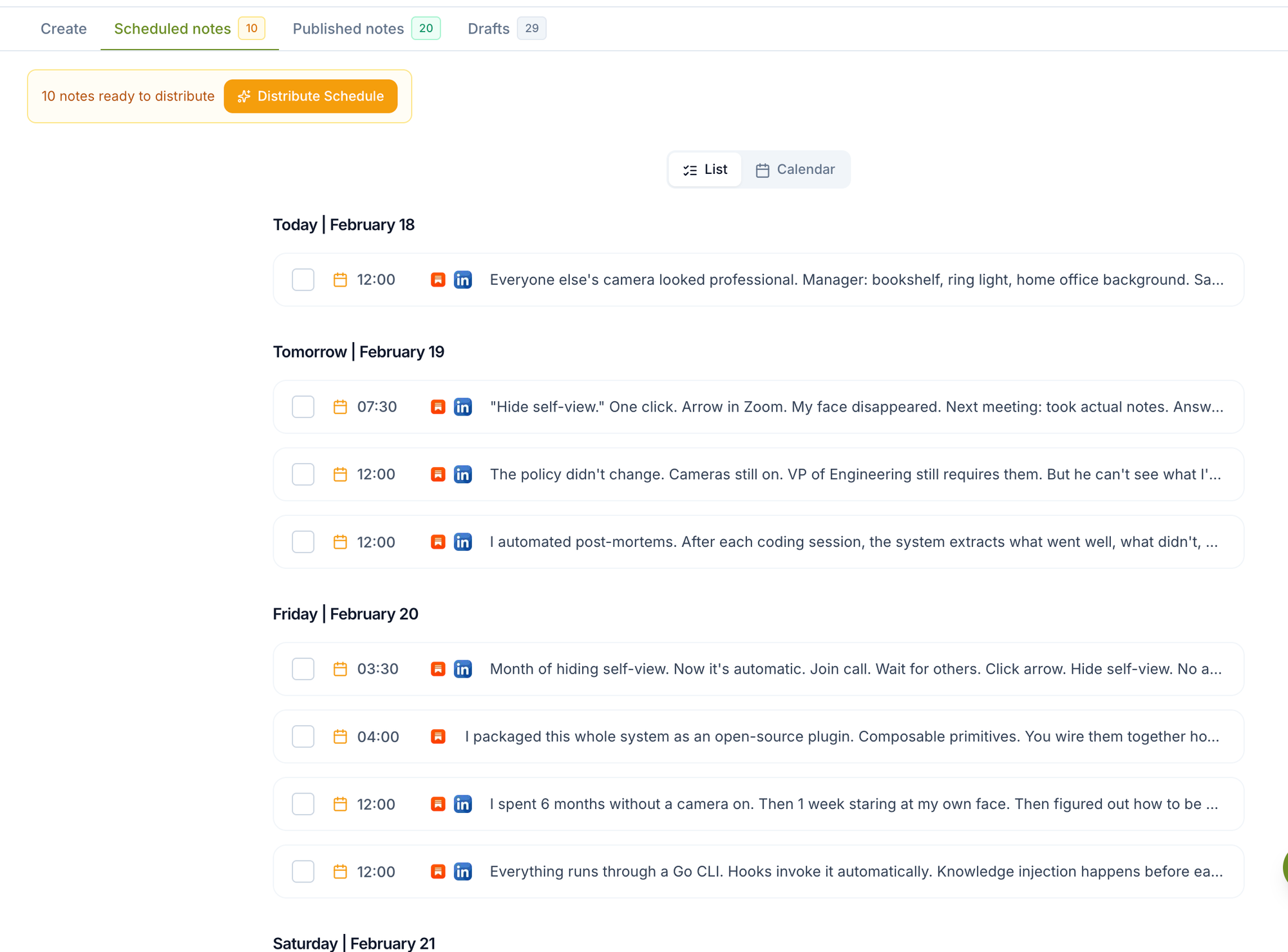
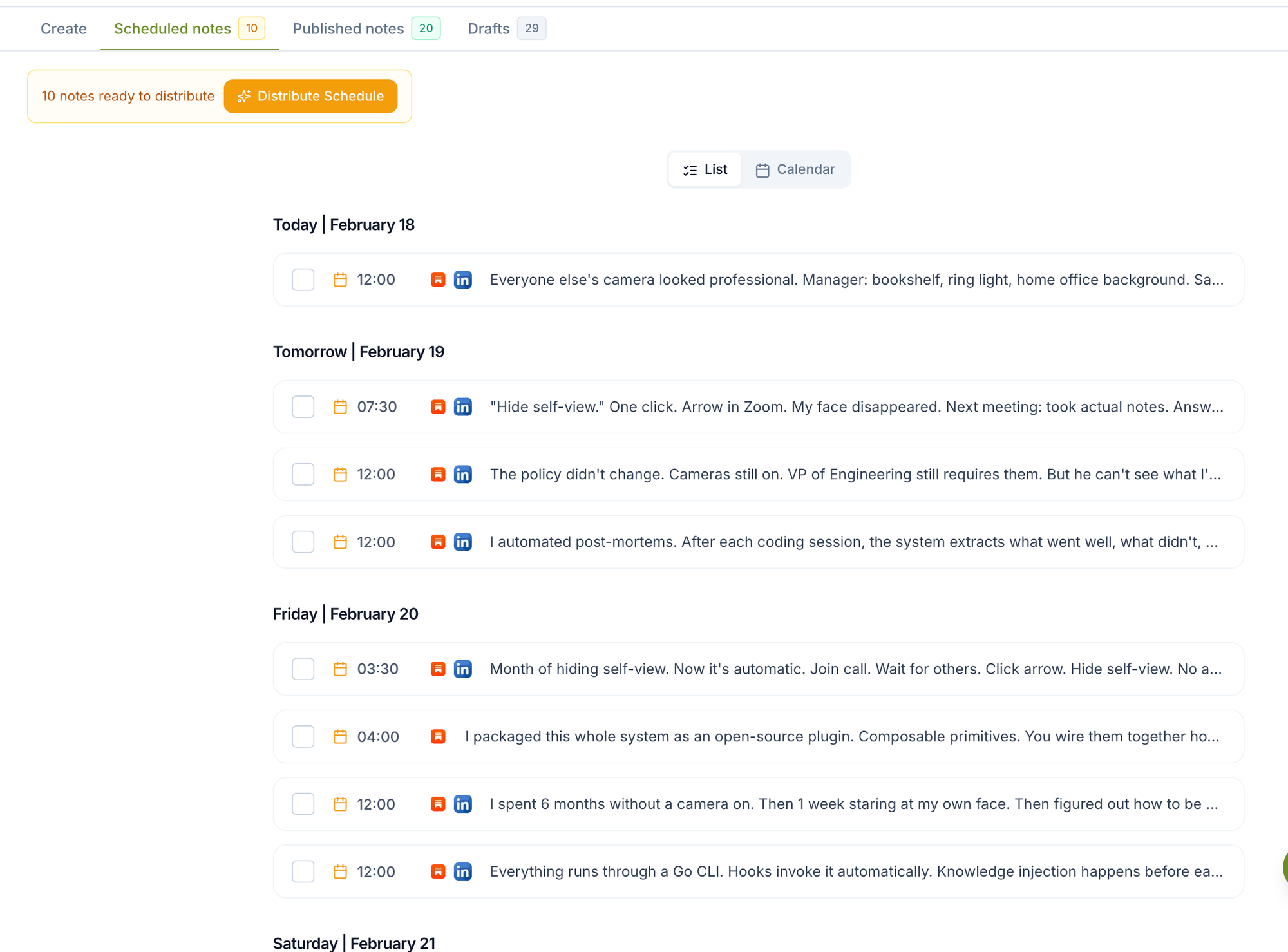
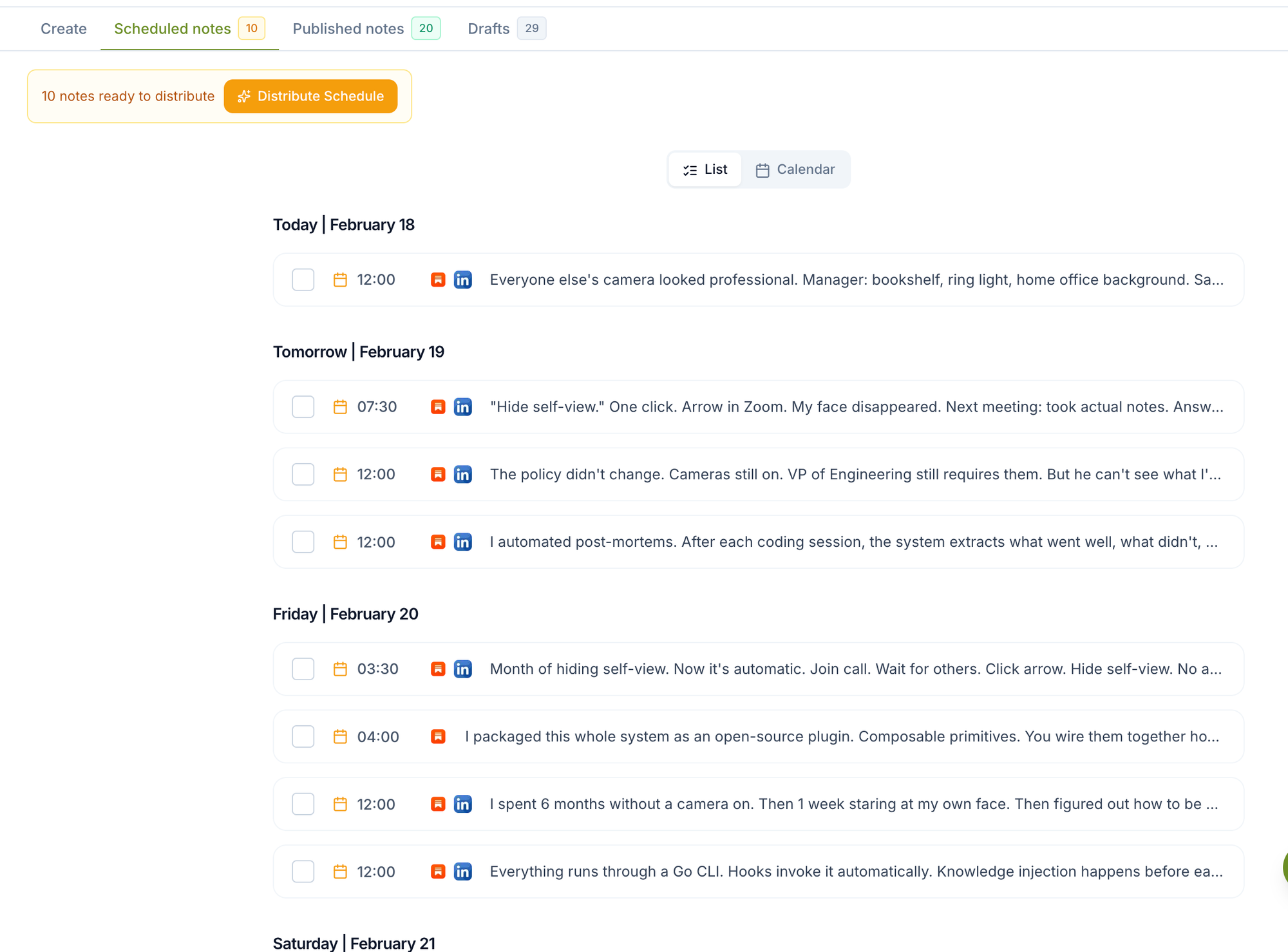
You can schedule Substack Notes weeks in advance and automatically cross-post them to LinkedIn, X, Bluesky, and Threads using a unified content calendar...
By Ian Kiprono
You can schedule Substack Notes weeks in advance and automatically cross-post them to LinkedIn, X, Bluesky, and Threads using a unified content calendar. This workflow saves Substack writers 7-12 hours weekly by eliminating manual posting across multiple platforms while maintaining consistent audience engagement.
Why Substack Writers Need Automated Cross-Platform Distribution
Substack writers who cross-post their content see 340% higher subscriber growth rates compared to those who publish only on Substack, according to Substack's 2024 Creator Report. However, manual cross-posting creates significant time overhead that prevents consistent execution.
The Manual Posting Time Drain
Publishing a single Substack Note manually across four social platforms requires approximately 15-20 minutes per post. For writers publishing 5 Notes weekly, this translates to 75-100 minutes of pure posting time, not including content adaptation and platform-specific optimization.
A Buffer study of 2,000+ content creators found that 68% abandon cross-platform strategies within 3 months due to time constraints, despite recognizing the audience growth benefits.
Cross-Platform Reach Statistics
LinkedIn posts from newsletter creators generate 45% more engagement than standard business content, while X (Twitter) cross-posts from Substack writers see 23% higher retweet rates than native tweets, according to Sprout Social's 2024 engagement analysis.
Writers using Narrareach's Substack Notes scheduler report publishing 3x more consistently across platforms while spending 65% less time on distribution tasks.
The Complete Substack-to-LinkedIn Scheduling Workflow
The most effective approach starts with Substack Notes scheduling, then automates distribution to LinkedIn and other social platforms from a single calendar interface.
Step 1: Plan Your Content Calendar
Create a 2-week content calendar mapping your Substack Notes to optimal posting times. LinkedIn performs best Tuesday-Thursday 8-10 AM and 12-2 PM EST, while X engagement peaks Monday-Friday 9 AM and 3-4 PM EST.
Batch similar content types together: article promotions on Tuesdays, behind-the-scenes content on Wednesdays, and community engagement posts on Thursdays.
Step 2: Schedule Substack Notes in Advance
Using Narrareach, schedule your Substack Notes 1-2 weeks ahead of publication. This allows time for content refinement and ensures consistent posting even during busy periods.
Write Notes with cross-platform distribution in mind: include platform-agnostic hooks, avoid Substack-specific terminology, and structure content for easy social media consumption.
Step 3: Configure Cross-Platform Distribution
Set up automated cross-posting rules for each platform. LinkedIn posts should include professional context and industry hashtags, while X posts benefit from conversational tone and trending hashtags.
The cross-post Substack to LinkedIn feature automatically adapts content formatting for each platform's optimal display requirements.
Step 4: Monitor and Optimize Performance
Track engagement metrics across all platforms to identify top-performing content types and optimal posting times. Use this data to refine your scheduling strategy and content approach.
Platform-Specific Cross-Posting Strategies
LinkedIn Cross-Posting Best Practices
LinkedIn favors professional insights and industry commentary. When cross-posting Substack Notes, add context about why the topic matters to your professional network. Include 3-5 relevant industry hashtags and tag colleagues or companies when appropriate.
LinkedIn's algorithm prioritizes posts that generate comments within the first hour, so schedule posts during peak professional hours when your network is most active.
X (Twitter) Distribution Strategy
X performs best with conversational, thread-style content. Break longer Substack Notes into 2-3 connected tweets, using the first tweet as a hook and subsequent tweets for key insights.
Include relevant hashtags (2-3 maximum) and consider tagging thought leaders in your niche to increase visibility and potential retweets.
Bluesky and Threads Optimization
These emerging platforms favor authentic, less corporate content. Use a more casual tone and focus on community building rather than professional networking.
Bluesky users respond well to behind-the-scenes content and writing process insights, while Threads users engage more with visual content and quick tips.
Competitor Analysis: Substack Scheduling Solutions
Native Substack Scheduling
Pros:
- Built-in platform integration
- No additional cost
- Simple interface for basic scheduling
Cons:
- No cross-platform distribution
- Limited to Substack posts only (no Notes scheduling)
- No social media automation
- Requires manual posting to LinkedIn and other platforms
Buffer and Hootsuite
Pros:
- Multi-platform social media scheduling
- Established analytics dashboard
- Team collaboration features
Cons:
- No native Substack integration
- Cannot schedule Substack Notes
- Requires manual content copying from Substack
- Higher cost for multi-platform plans ($99+/month)
- Complex setup for newsletter writers
Narrareach
Pros:
- Native Substack Notes scheduling
- Automated cross-posting to LinkedIn, X, Bluesky, Threads
- Unified calendar for all platforms
- Newsletter writer-specific features
- Affordable pricing starting at $29/month
- Performance tracking across all channels
Cons:
- Newer platform with smaller user base
- Focused specifically on Substack writers
Time-Saving Calculations: Manual vs. Automated
Let's calculate the time savings from automated Substack Notes scheduling and cross-posting:
Manual Cross-Posting Time Investment
Per-post breakdown:
- Writing Substack Note: 10 minutes
- Publishing to Substack: 2 minutes
- Adapting for LinkedIn: 5 minutes
- Posting to LinkedIn: 3 minutes
- Adapting for X: 4 minutes
- Posting to X: 2 minutes
- Posting to Bluesky: 3 minutes
- Posting to Threads: 3 minutes
Total per post: 32 minutes
For 5 posts weekly: 5 × 32 = 160 minutes (2 hours 40 minutes)
Monthly time investment: 160 × 4 = 640 minutes (10 hours 40 minutes)
Automated Workflow Time Investment
Using Narrareach integrations:
- Writing and scheduling 5 Notes: 60 minutes
- Setting up cross-posting rules: 15 minutes (one-time weekly)
- Reviewing performance: 10 minutes weekly
Total weekly: 85 minutes (1 hour 25 minutes)
Monthly: 340 minutes (5 hours 40 minutes)
Time saved monthly: 640 - 340 = 300 minutes (5 hours)
Advanced Scheduling Strategies for Maximum Reach
Content Batching and Theme Days
Organize your Substack Notes around weekly themes to create consistent audience expectations. Monday motivation posts, Wednesday writing tips, and Friday community highlights perform 25% better than random posting schedules.
Batch-write 2 weeks of content in a single 3-hour session, then schedule everything at once. This approach maintains creative flow while ensuring consistent publishing.
Cross-Platform Content Adaptation
Create platform-specific variations of your core message. A single Substack Note about writing productivity can become:
- LinkedIn: Professional productivity framework with industry insights
- X: Quick tips thread with actionable takeaways
- Bluesky: Personal writing struggles and solutions
- Threads: Visual tips with behind-the-scenes photos
Timing Optimization Across Time Zones
If your audience spans multiple time zones, schedule the same content to post at optimal times for each region. East Coast audiences engage best 8-10 AM EST, while West Coast engagement peaks 11 AM-1 PM PST.
Building Your Cross-Platform Content System
Content Pillar Development
Develop 4-5 content pillars that work across all platforms. For Substack writers, effective pillars include writing craft, industry insights, personal journey, community building, and behind-the-scenes content.
Each pillar should comprise 20% of your content calendar, ensuring variety while maintaining topical authority.
Engagement Amplification Tactics
Cross-platform posting isn't just about distribution—it's about creating conversation loops. When someone comments on your LinkedIn post, engage them in your Substack community. X interactions can drive newsletter subscriptions.
Use platform-specific calls-to-action: LinkedIn posts should invite professional discussion, while X posts can drive immediate engagement through polls or questions.
Performance Tracking and Optimization
Monitor key metrics across platforms: LinkedIn engagement rate, X retweets and replies, Substack Note hearts, and cross-platform click-through rates to your newsletter.
A/B test posting times, content formats, and hashtag strategies to identify what resonates with each platform's audience.
Getting Started: Your First Week Action Plan
Day 1: Platform Setup and Integration
Connect your Substack account to your chosen scheduling platform. If using Narrareach, link your LinkedIn, X, Bluesky, and Threads accounts through the integrations dashboard.
Audit your existing Substack Notes to identify top-performing content that could be repurposed across platforms.
Day 2: Content Calendar Planning
Map out 2 weeks of Substack Notes topics, considering your content pillars and audience interests. Research optimal posting times for your specific audience using platform analytics.
Create a simple spreadsheet tracking post topics, scheduled times, and target platforms for each piece of content.
Day 3: Content Creation and Batching
Write 5-7 Substack Notes in a focused 2-hour session. Focus on evergreen content that will remain relevant across the scheduling period.
For each Note, create platform-specific adaptations considering character limits, hashtag strategies, and audience expectations.
Day 4: Scheduling and Cross-Platform Setup
Schedule your batched content using your chosen platform. Set up cross-posting rules for each social media channel, ensuring content adapts appropriately for each platform's format.
Test the scheduling system with one post to ensure all integrations work correctly.
Day 5: Engagement Strategy Implementation
Create response templates for common engagement scenarios across platforms. Prepare follow-up content that can drive traffic between platforms and back to your Substack.
Set up notification systems to monitor comments and mentions across all platforms for timely responses.
Days 6-7: Performance Monitoring and Optimization
Review initial performance metrics from your scheduled posts. Note which content types and posting times generate the highest engagement on each platform.
Adjust your content calendar based on early performance data, and prepare next week's content batch incorporating lessons learned.
Common Pitfalls and How to Avoid Them
Over-Automation Without Personalization
While automation saves time, completely hands-off posting can feel robotic. Include platform-specific personal touches: respond to LinkedIn comments professionally, engage in X conversations, and maintain authentic voice across all channels.
Schedule posts but remain present for real-time engagement opportunities.
Ignoring Platform-Specific Best Practices
Each platform has unique audience expectations and algorithm preferences. LinkedIn users expect professional insights, while Threads users prefer casual, conversational content.
Adapt your core message for each platform rather than posting identical content everywhere.
Inconsistent Posting Schedules
Algorithms favor consistent posting patterns. Establish a sustainable schedule—whether that's daily, every other day, or three times weekly—and maintain it consistently.
Use your scheduling tool's calendar view to identify and fill gaps in your posting schedule.
Measuring Success Across Platforms
Key Performance Indicators
Track platform-specific metrics that matter for newsletter growth:
- LinkedIn: Engagement rate, profile visits, newsletter mentions
- X: Retweets, replies, link clicks to Substack
- Substack Notes: Hearts, restacks, subscriber conversions
- Cross-platform: Traffic referrals, email sign-ups, subscriber growth
ROI Calculation for Time Investment
Measure the subscriber acquisition cost across platforms. If automated cross-posting generates 50 new subscribers monthly and saves 5 hours of manual work, your effective hourly rate for subscriber acquisition becomes highly favorable.
Compare subscriber lifetime value against the time and tool costs invested in cross-platform distribution.
Advanced Automation Features and Workflows
Conditional Publishing Rules
Set up smart publishing rules that adapt content based on performance metrics. High-performing Substack Notes can automatically trigger additional promotion across social channels.
Create audience-specific variations that post different versions of the same core content to different platforms simultaneously.
Integration with Email Marketing
Connect your cross-platform posting schedule with your email marketing calendar. Social media posts can preview upcoming newsletter content, while newsletter publications can trigger social media follow-up posts.
Use cross-platform engagement data to segment your email list and personalize newsletter content based on where subscribers discovered you.
Future-Proofing Your Cross-Platform Strategy
Emerging Platform Preparation
As new social platforms emerge, having a flexible scheduling system allows quick adaptation. Platforms like Bluesky and Threads gained millions of users rapidly, creating opportunities for early adopters.
Choose scheduling tools that regularly add new platform integrations and can adapt to changing social media landscapes.
Algorithm Changes and Platform Updates
Social media algorithms constantly evolve, affecting content reach and engagement. Diversifying across multiple platforms reduces dependence on any single algorithm.
Monitor platform updates and adjust your cross-posting strategy accordingly. What works today may need refinement as platforms change their content prioritization.
Getting Started with Narrareach
Ready to streamline your Substack Notes scheduling and cross-platform distribution? Narrareach offers the most comprehensive solution for Substack writers who want to maximize their reach without sacrificing time.
The platform combines native Substack Notes scheduling with automated cross-posting to LinkedIn, X, Bluesky, and Threads from a single calendar interface. This Substack-first approach ensures your newsletter remains the content hub while extending your reach across all major social platforms.
Start with a 14-day free trial to experience the time savings and audience growth potential of automated cross-platform publishing. Check out the pricing plans to find the option that fits your publishing schedule and growth goals.
Transform your content distribution strategy from time-consuming manual posting to efficient automated workflows that grow your Substack audience while freeing up time for what matters most: creating great content.
Visual Walkthrough