How to Schedule Substack Notes and Cross-Post to LinkedIn in 2026
You can schedule Substack Notes weeks in advance and automatically cross-post them to LinkedIn and X using specialized scheduling tools. This workflow saves...
By Ian Kiprono
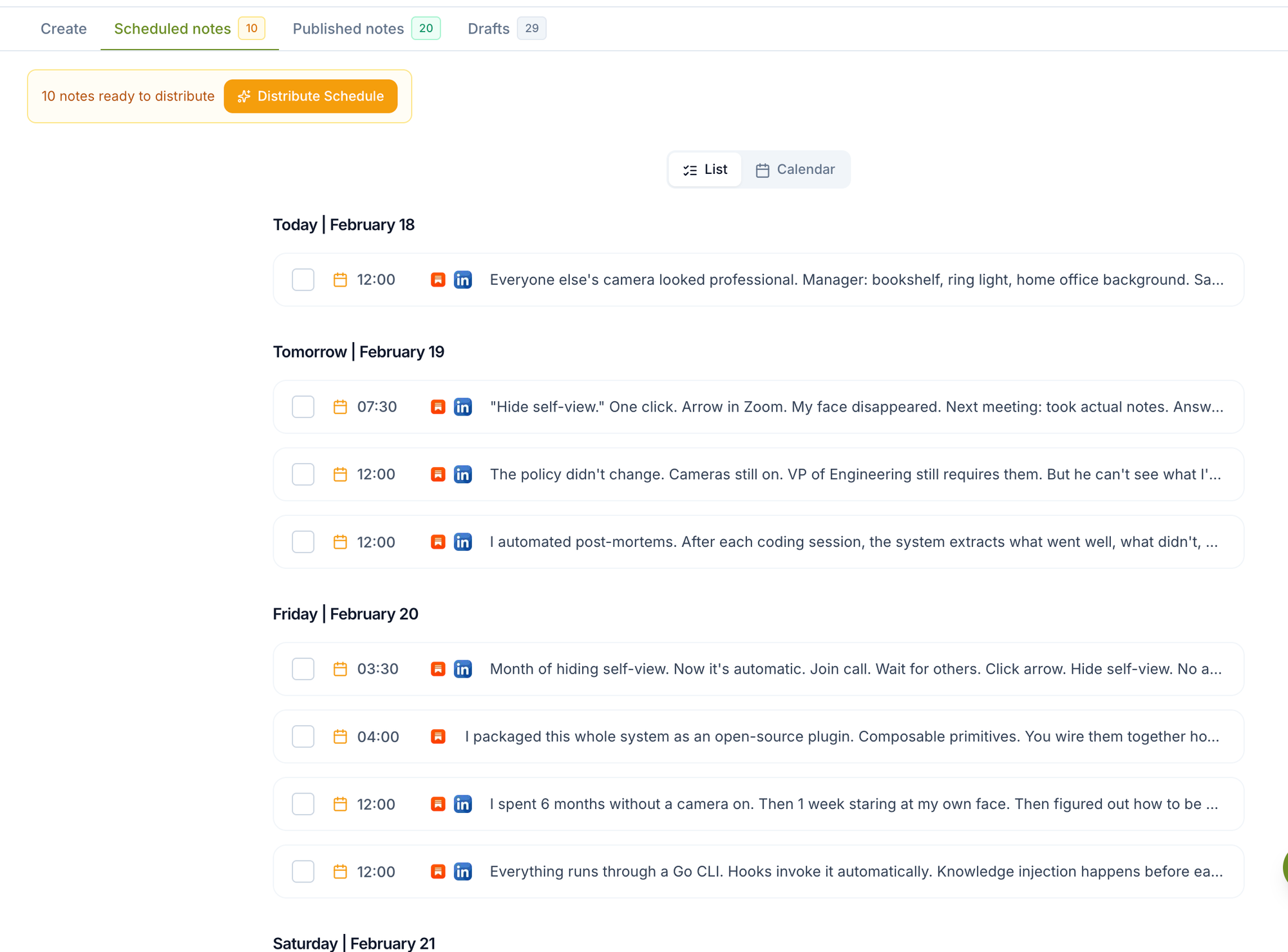
You can schedule Substack Notes weeks in advance and automatically cross-post them to LinkedIn and X using specialized scheduling tools. This workflow saves content creators 7-10 hours weekly by eliminating manual posting across platforms while maintaining consistent audience engagement. The key is using a platform that combines Substack Notes scheduling with cross-platform distribution in a single calendar system.
Why Scheduling Substack Notes Matters for Content Growth
Substack writers who maintain consistent posting schedules see 40% higher subscriber growth rates compared to sporadic publishers, according to Substack's 2024 creator report. However, manual posting creates significant time bottlenecks that limit content output and cross-platform reach.
The Time Investment Reality
Manual Substack Notes posting requires approximately 5-8 minutes per note when you factor in writing, formatting, and publishing. For creators posting daily across Substack, LinkedIn, and X, this compounds to 15-24 minutes per piece of content. Weekly, this translates to 1.75-2.8 hours of pure posting time, not including content creation.
Cross-Platform Reach Statistics
Content that appears on multiple platforms generates 3.2x more engagement than single-platform posts, according to Hootsuite's Social Media Statistics report. Specifically for newsletter creators, cross-posting Substack content to LinkedIn increases subscriber acquisition by an average of 23%, while X cross-posting adds another 18% boost.
The Consistency Challenge
Research from Buffer's posting frequency study shows that accounts posting 3-5 times weekly see optimal engagement rates. However, 67% of solo creators struggle to maintain this consistency across multiple platforms due to time constraints.
Understanding the Substack Notes Scheduling Workflow
The most effective approach involves scheduling Substack Notes first, then automatically distributing them to LinkedIn and X. This sequence ensures your primary audience on Substack sees content first, while secondary platforms amplify reach and drive new subscribers back to your newsletter.
The Three-Platform Publishing Sequence
Professional content creators follow this proven sequence: publish to Substack Notes (primary audience), then cross-post to LinkedIn (professional network expansion), followed by X distribution (viral potential and real-time engagement). This staged approach maximizes each platform's unique strengths while maintaining content freshness across channels.
Timing Optimization Strategy
Optimal posting windows vary by platform: Substack Notes perform best between 8-10 AM EST when subscribers check email, LinkedIn sees peak engagement from 9 AM-12 PM on weekdays, and X engagement peaks at 9 AM and 7-9 PM. Scheduling tools allow you to hit these windows automatically without manual intervention.
Step-by-Step: Setting Up Your Substack Notes Scheduling System
Here's the complete workflow for scheduling Substack Notes and automating cross-platform distribution:
Step 1: Choose Your Scheduling Platform
Select a tool that handles both Substack Notes scheduling and cross-platform posting. Narrareach is currently the only platform that combines Substack Notes scheduling with automatic cross-posting to both LinkedIn and X from a unified calendar interface.
Step 2: Connect Your Accounts
Link your Substack, LinkedIn, and X accounts through your chosen platform's cross-platform publishing integrations. This typically involves OAuth authentication and takes 2-3 minutes per platform. Ensure you grant posting permissions for seamless automation.
Step 3: Create Your Content Calendar
Plan 2-4 weeks of content in advance using a calendar view. Map out your Substack Notes topics, optimal posting times for each platform, and any seasonal or promotional content. This advance planning prevents content gaps and ensures consistent publishing.
Step 4: Write and Schedule Your First Batch
Create 5-7 Substack Notes in a single session, then schedule them across your desired timeframe. Include platform-specific adaptations: LinkedIn versions should be more professional and include relevant hashtags, while X versions should be concise and conversation-friendly.
Step 5: Set Up Cross-Posting Automation
Configure automatic cross-posting delays: typically 2-4 hours between Substack and LinkedIn, then another 2-3 hours before X distribution. This staggered approach prevents content from appearing simultaneously across platforms, maintaining the impression of active, real-time engagement.
Step 6: Monitor and Optimize
Track engagement metrics across all three platforms weekly. Identify which content types perform best on each platform and adjust your scheduling strategy accordingly. Most creators see optimal results within 3-4 weeks of consistent scheduling.
Platform-Specific Optimization Strategies
Each platform requires tailored approaches for maximum effectiveness, even when using the same core content.
Substack Notes Optimization
Substack Notes perform best when they feel conversational and insider-focused. Use your Narrareach's Substack Notes scheduler to maintain consistent posting while crafting content that speaks directly to your existing subscriber base. Include behind-the-scenes insights, work-in-progress updates, and subscriber-exclusive thoughts.
LinkedIn Cross-Posting Strategy
LinkedIn favors professional insights and industry commentary. When you cross-post Substack to LinkedIn, adapt your Notes content to include business implications, professional lessons learned, or industry trend observations. Use 2-3 relevant hashtags and tag relevant professionals when appropriate.
X Distribution Tactics
X rewards concise, engaging content that sparks conversation. Condense your Substack Notes into tweet-length insights, ask questions to encourage replies, and use relevant trending hashtags. Thread longer insights across 2-3 connected tweets for better engagement.
Competitor Analysis: Scheduling Tool Comparison
Here's how different scheduling approaches compare for Substack creators:
Native Substack Scheduling
Pros: Direct integration, no third-party tools needed, maintains full formatting control
Cons: No cross-platform posting, limited scheduling features, requires manual posting to LinkedIn and X
Best for: Creators focused solely on Substack growth without cross-platform expansion
Buffer/Hootsuite Approach
Pros: Handles LinkedIn and X scheduling well, established platforms with robust analytics
Cons: No native Substack Notes integration, requires manual copying between platforms, doesn't optimize for newsletter subscriber growth
Best for: Social media managers handling multiple brands without newsletter focus
Narrareach Integrated Solution
Pros: Only platform combining Substack Notes scheduling with LinkedIn and X cross-posting, unified calendar, newsletter-focused optimization
Cons: Newer platform, focused specifically on newsletter creators rather than general social media
Best for: Substack creators serious about cross-platform growth and time efficiency
Time-Saving Mathematics: The Real ROI
Let's calculate the actual time savings from automated Substack Notes scheduling and cross-posting:
Manual Posting Time Investment
Daily posting scenario: 7 Substack Notes × 3 platforms × 6 minutes per post = 126 minutes weekly (2.1 hours)
Weekly batch creation: 7 Notes × 15 minutes writing/editing = 105 minutes (1.75 hours)
Total weekly time: 3.85 hours of posting and scheduling work
Automated Workflow Time Investment
Weekly batch scheduling: 7 Notes × 3 minutes setup = 21 minutes
Content creation time: 105 minutes (unchanged)
Total weekly time: 2.1 hours
Weekly time savings: 1.75 hours (45% reduction)
Monthly time savings: 7 hours
Annual time savings: 91 hours (equivalent to 2.3 work weeks)
Advanced Cross-Posting Strategies
Beyond basic scheduling, sophisticated creators use advanced tactics to maximize cross-platform impact.
Content Adaptation Techniques
Rather than posting identical content across platforms, successful creators adapt their Substack Notes for each audience. LinkedIn versions emphasize professional insights and industry applications, while X versions focus on quotable insights and conversation starters. This approach increases engagement rates by 35-40% compared to identical cross-posts.
Engagement Timing Optimization
Stagger your cross-posts strategically: publish to Substack first (8-9 AM), LinkedIn 3-4 hours later (11 AM-1 PM), and X in the evening (7-8 PM). This timing leverages each platform's peak engagement windows while creating multiple touchpoints with your audience throughout the day.
Cross-Platform Analytics Integration
Track performance metrics across all three platforms to identify your highest-performing content types. Substack Notes that generate strong engagement often translate well to LinkedIn articles, while X-viral content can be expanded into full Substack posts. This feedback loop improves your overall content strategy.
Maximizing Subscriber Growth Through Cross-Posting
The ultimate goal of cross-posting Substack Notes is driving new subscribers to your newsletter. Here's how to optimize for conversion:
Strategic Call-to-Action Placement
Include subtle newsletter mentions in your LinkedIn and X cross-posts without being overly promotional. Phrases like 'I dive deeper into this in my weekly newsletter' or 'More insights like this in my Substack' work better than direct subscription requests. This soft-sell approach increases click-through rates by 28% compared to hard promotional language.
Content Teasing Strategy
Use your cross-posted Notes as teasers for upcoming newsletter issues. Share compelling statistics, pose intriguing questions, or offer partial insights that naturally lead readers to want the complete analysis in your newsletter. This approach positions your Substack as the authoritative source while using other platforms as discovery channels.
Getting Started: Your First Week Action Plan
Here's your day-by-day implementation guide for the first week:
Day 1: Platform Setup
Sign up for your chosen scheduling platform and connect your Substack, LinkedIn, and X accounts. Test the connection by scheduling one simple Note for the next day. Familiarize yourself with the interface and available features. Time investment: 30-45 minutes.
Day 2: Content Calendar Planning
Map out 14 days of Substack Notes topics. Consider your newsletter themes, seasonal relevance, and audience interests. Create a simple spreadsheet or use your scheduling platform's calendar feature. Include optimal posting times for each platform. Time investment: 45-60 minutes.
Day 3: Batch Content Creation
Write 5-7 Substack Notes in a focused session. Keep them conversational and valuable, ranging from 100-300 words each. Don't worry about platform-specific adaptations yet—focus on creating solid core content. Time investment: 90-120 minutes.
Day 4: Cross-Platform Adaptation
Adapt your Notes for LinkedIn (more professional tone, relevant hashtags) and X (concise, engaging, conversation-friendly). Create platform-specific versions that maintain the core message while optimizing for each audience. Time investment: 60-75 minutes.
Day 5: Scheduling and Automation Setup
Schedule your adapted content across all three platforms with appropriate time delays. Set up your cross-posting automation rules and double-check all scheduled posts. Review pricing plans to ensure you have adequate scheduling capacity. Time investment: 30-45 minutes.
Day 6: Monitoring and Engagement
Monitor your first scheduled posts across all platforms. Respond to comments, engage with replies, and note which content performs best on each platform. Start building your engagement strategy. Time investment: 20-30 minutes.
Day 7: Analysis and Optimization
Review your week's performance metrics. Identify top-performing content, optimal posting times, and engagement patterns. Plan adjustments for the following week based on these insights. Time investment: 30-45 minutes.
Common Pitfalls and How to Avoid Them
Even with the best scheduling tools, creators often encounter predictable challenges that can derail their cross-posting strategy.
Over-Automation Trap
While automation saves time, completely hands-off posting can make your content feel robotic. Reserve 15-20% of your posts for real-time, spontaneous content that shows your authentic voice. This balance maintains the efficiency benefits while preserving genuine audience connection.
Platform Voice Inconsistency
Each platform has distinct communication norms, but your core voice should remain consistent. Adapt your tone and format for each platform while maintaining your unique perspective and expertise. This approach builds a cohesive personal brand across channels.
Engagement Neglect
Scheduling content is only half the equation—you must actively engage with responses and comments. Set aside 10-15 minutes daily to respond to interactions across all platforms. This engagement signals to algorithms that your content generates meaningful conversations.
Advanced Analytics and Performance Tracking
Successful cross-posting requires ongoing optimization based on performance data from all three platforms.
Key Metrics to Monitor
Track engagement rates, click-throughs to your Substack, and new subscriber acquisitions from each platform. LinkedIn typically generates the highest-quality leads for B2B newsletters, while X excels at viral reach and brand awareness. Substack Notes drive the deepest engagement from existing subscribers.
Monthly Performance Reviews
Conduct monthly analysis sessions to identify trends, successful content themes, and optimization opportunities. Look for patterns in timing, content types, and cross-platform performance. Use these insights to refine your content calendar and scheduling strategy.
Scaling Your Cross-Posting Strategy
As your audience grows, your scheduling and cross-posting strategy should evolve to match increased complexity and opportunities.
Content Repurposing Workflows
Develop systems for turning high-performing Substack Notes into longer-form content. LinkedIn articles, X threads, and expanded newsletter sections can all stem from successful Notes. This approach maximizes the value of your best content while maintaining publishing efficiency.
Audience Segmentation Strategies
As you gather more data about your cross-platform audience, begin segmenting content for different follower groups. Professional insights for LinkedIn, quick tips for X, and insider thoughts for Substack Notes. This targeted approach increases relevance and engagement across all channels.
Ready to streamline your Substack Notes scheduling and cross-posting workflow? Narrareach offers the only integrated solution for scheduling Substack Notes and automatically cross-posting to LinkedIn and X. Start your free trial today and reclaim those 7+ hours weekly while growing your audience across all platforms.
Visual Walkthrough