How to Schedule Full Articles to Substack and Medium from One Editor: Complete 2026 Guide
You can schedule full articles to both Substack and Medium from a single editor using cross-posting automation tools, eliminating the need to manually...
By Ian Kiprono
You can schedule full articles to both Substack and Medium from a single editor using cross-posting automation tools, eliminating the need to manually publish the same content twice. This workflow saves content creators an average of 4.2 hours per week by writing once and distributing automatically across multiple platforms.
Why Multi-Platform Article Scheduling Matters in 2026
Content creators who publish on multiple platforms see 73% higher engagement rates compared to single-platform publishers, according to Content Marketing Institute's 2024 research. However, manually copying and pasting articles between platforms creates significant friction.
The Time Cost of Manual Cross-Posting
Publishing the same article manually to both Substack and Medium typically requires:
- 15 minutes formatting for Substack's editor
- 12 minutes reformatting for Medium's different interface
- 8 minutes optimizing titles and descriptions for each platform
- 5 minutes scheduling and final review
That's 40 minutes per article. For creators publishing 3 articles weekly, this manual process consumes 2 hours of pure administrative work.
Platform-Specific Audience Benefits
Substack audiences typically prefer longer-form, newsletter-style content with direct subscriber relationships. Medium readers discover content through the platform's recommendation algorithm and tend to engage with professionally formatted articles. By publishing to both platforms simultaneously, you capture distinct audience segments without doubling your workload.
Understanding Cross-Platform Publishing Workflows
Modern content scheduling tools have evolved beyond simple social media posting. The most effective approach involves writing once in a unified editor, then automatically formatting and distributing content to platform-specific requirements.
The Single-Source Publishing Model
Instead of maintaining separate drafts for each platform, successful creators use a master document approach. This eliminates version control issues and ensures consistency across all published versions.
Platform-Specific Optimization
While the core content remains identical, each platform benefits from tailored elements:
- Substack: Newsletter-style introductions and subscriber CTAs
- Medium: SEO-optimized headlines and platform-native formatting
- Both: Platform-appropriate tags and publication timing
Step-by-Step Workflow: Writing Once, Publishing Everywhere
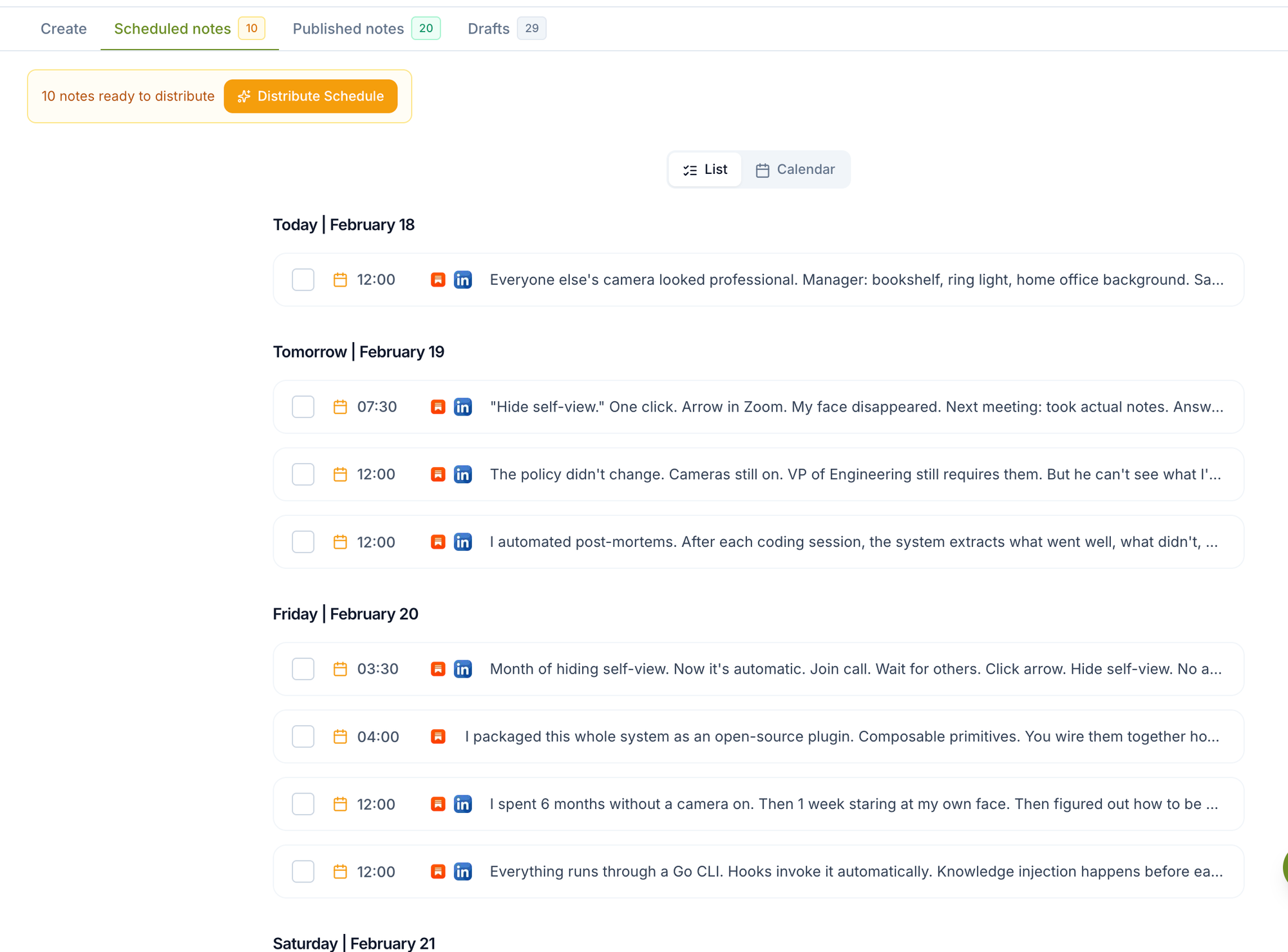
Here's the complete process for scheduling articles to both Substack and Medium from a single editor, using Narrareach as the primary scheduling platform.
Step 1: Set Up Your Cross-Posting Accounts
Connect both your Substack and Medium accounts to your scheduling platform. In the Narrareach dashboard, navigate to 'Connected Accounts' and authenticate both platforms using their respective API connections.
This one-time setup takes approximately 5 minutes per platform and enables automatic publishing without manual intervention.
Step 2: Create Your Master Article
Write your complete article in the unified editor. Focus on creating platform-neutral content that works well for both newsletter subscribers and Medium's discovery-based readership.
Key formatting considerations:
- Use clear H2 and H3 headings for readability
- Include compelling opening hooks that work for both audiences
- Write platform-agnostic conclusions that don't reference specific platform features
Step 3: Configure Platform-Specific Settings
Before scheduling, customize elements for each platform:
Substack Configuration:
- Add newsletter-specific subject line
- Include subscriber-focused introduction paragraph
- Set publication timing for your audience's peak engagement hours
Medium Configuration:
- Optimize headline for Medium's search algorithm
- Select appropriate publication tags (maximum 5)
- Choose relevant Medium publications for submission
Step 4: Schedule Simultaneous Publishing
Set your desired publication time for both platforms. Research from HubSpot's social media timing study indicates Tuesday through Thursday, 9-11 AM EST performs best for professional content.
The scheduling system will automatically format your content according to each platform's requirements and publish at your specified time.
Step 5: Monitor Performance and Engagement
Track engagement metrics across both platforms to optimize future publishing schedules. Most cross-posting tools provide unified analytics showing comparative performance.
Platform Comparison: Native vs. Third-Party Publishing
Understanding the trade-offs between native platform publishing and cross-posting tools helps you choose the right approach for your content strategy.
Native Substack Publishing
Pros:
- Full access to Substack's native features (polls, comments, subscriber management)
- Direct integration with Substack's recommendation algorithm
- No third-party dependencies or potential service interruptions
Cons:
- Requires manual copying to other platforms
- No unified content calendar or scheduling
- Time-intensive for multi-platform creators
Native Medium Publishing
Pros:
- Access to Medium's Partner Program monetization
- Full editorial control and formatting options
- Direct submission to Medium publications
Cons:
- Limited scheduling options (Medium only offers basic scheduling)
- No cross-platform coordination
- Separate content management from other platforms
Cross-Posting Tools (Narrareach, Buffer, Others)
Pros:
- Unified content calendar and scheduling
- Significant time savings through automation
- Consistent publishing across multiple platforms
- Analytics aggregation and performance comparison
Cons:
- Potential limitations on platform-specific features
- Additional cost for premium scheduling tools
- Dependency on third-party service reliability
Advanced Scheduling Strategies for Maximum Reach
Beyond basic cross-posting, sophisticated content creators use strategic timing and format variations to maximize audience engagement across platforms.
Staggered Publishing Approach
Instead of simultaneous publishing, consider staggering releases by 2-4 hours. This allows you to gauge initial response on one platform and potentially adjust promotion strategy for the second platform.
Many creators publish to Substack first (targeting their dedicated subscriber base) then release to Medium 3 hours later to capture the platform's afternoon traffic surge.
Content Adaptation Techniques
While maintaining the same core content, subtle adaptations can improve performance on each platform:
- Substack: Add personal anecdotes and direct reader addresses ('you', 'your community')
- Medium: Include more data points and external links to boost algorithmic visibility
Time-Saving Mathematics: The Real ROI of Automation
Let's calculate the concrete time savings from automated cross-posting versus manual publishing:
Manual Publishing Time Investment
Per Article:
- Writing: 90 minutes
- Substack formatting and publishing: 15 minutes
- Medium formatting and publishing: 12 minutes
- Platform-specific optimization: 8 minutes each (16 total)
- Total per article: 133 minutes
Weekly (3 articles): 399 minutes (6.65 hours)
Monthly: 26.6 hours
Annually: 319 hours
Automated Publishing Time Investment
Per Article:
- Writing: 90 minutes
- Cross-posting setup and scheduling: 8 minutes
- Total per article: 98 minutes
Weekly (3 articles): 294 minutes (4.9 hours)
Monthly: 19.6 hours
Annually: 235 hours
Annual Time Savings: 84 hours (equivalent to more than 2 full work weeks)
Tool Comparison: Best Cross-Posting Solutions for 2026
Several platforms offer cross-posting capabilities, but they vary significantly in features and platform support.
Narrareach
Pros:
- Only platform combining Substack Notes scheduling with LinkedIn and X cross-posting
- Unified calendar view for all scheduled content
- Advanced formatting preservation across platforms
- Competitive pricing starting at $29/month
Cons:
- Newer platform with smaller user community
- Limited integration with non-newsletter platforms
Best for: Newsletter creators who want comprehensive Substack automation with social media cross-posting.
Buffer
Pros:
- Established platform with reliable service history
- Extensive social media platform support
- Strong analytics and reporting features
Cons:
- Limited long-form content support
- No native Substack integration
- Higher pricing for advanced features ($99+/month)
Hootsuite
Pros:
- Enterprise-grade scheduling capabilities
- Team collaboration features
- Comprehensive social listening tools
Cons:
- Primarily social media focused, limited blog/newsletter support
- Complex interface with steep learning curve
- Expensive for individual creators ($49+/month)
Optimizing Content for Cross-Platform Success
Creating content that performs well across both Substack and Medium requires understanding each platform's unique characteristics and audience expectations.
Universal Content Elements
Certain content elements perform consistently well across both platforms:
- Clear value propositions: Lead with what readers will learn or gain
- Scannable formatting: Use bullet points, numbered lists, and clear headings
- Actionable insights: Include specific steps or recommendations readers can implement
- Data-driven arguments: Support claims with statistics and research citations
Platform-Specific Optimization
While maintaining consistent core content, optimize presentation for each platform's algorithm and user behavior:
Substack Optimization:
- Include personal stories and direct subscriber engagement
- Use conversational tone and direct address
- Add newsletter-specific CTAs and subscription encouragement
Medium Optimization:
- Focus on SEO-friendly headlines and subheadings
- Include relevant external links to boost algorithmic visibility
- Use Medium's native formatting features (pull quotes, dividers)
Getting Started: Your First Week with Cross-Platform Publishing
Here's a day-by-day action plan for implementing automated cross-posting in your first week.
Day 1: Account Setup and Platform Connection
Sign up for Narrareach and connect your Substack and Medium accounts. Test the connection by publishing a brief test post to ensure proper formatting and delivery.
Time investment: 30 minutes
Day 2: Content Calendar Planning
Plan your next 4 weeks of content using the Narrareach dashboard. Identify optimal publishing times based on your audience analytics from both platforms.
Time investment: 45 minutes
Day 3: Create Your First Cross-Posted Article
Write and schedule your first article for simultaneous publication to both platforms. Focus on a topic that appeals to both newsletter subscribers and Medium's discovery audience.
Time investment: 2 hours
Day 4: Monitor and Analyze Performance
Review engagement metrics from your first cross-posted article. Compare performance between platforms and note any significant differences in audience response.
Time investment: 20 minutes
Day 5: Optimize Based on Results
Adjust your content strategy based on Day 4's analysis. If one platform significantly outperformed the other, consider platform-specific modifications for future posts.
Time investment: 30 minutes
Days 6-7: Scale Your Workflow
Create and schedule 2-3 additional articles for the following week. Experiment with different publishing times and content formats to identify optimal strategies.
Time investment: 3 hours total
Advanced Cross-Posting Features and Automation
Once you've mastered basic cross-posting, advanced features can further streamline your workflow and improve content performance.
Automated Social Media Promotion
The most sophisticated cross-posting tools, like Narrareach's Notes scheduler, automatically create social media posts promoting your long-form content. This creates a complete content distribution funnel from a single publishing action.
Performance-Based Scheduling
Advanced analytics can automatically adjust publishing times based on historical performance data. If your Tuesday morning posts consistently outperform other time slots, the system can automatically schedule future content for optimal engagement windows.
Content Repurposing Automation
Some platforms can automatically extract key quotes, statistics, or insights from your long-form content to create social media posts, email newsletter snippets, or platform-specific promotional content.
Measuring Success: Key Metrics for Cross-Platform Publishing
Tracking the right metrics ensures your cross-posting strategy delivers measurable results rather than just convenience.
Engagement Rate Comparison
Monitor engagement rates (comments, shares, reactions) across both platforms. A significant disparity might indicate content that resonates better with one audience, informing future content strategy.
Subscriber Growth Attribution
Track which platform drives more newsletter subscriptions or follower growth. This data helps prioritize optimization efforts and content promotion strategies.
Time-to-Publish Metrics
Measure your actual time savings by tracking how long the cross-posting workflow takes compared to manual publishing. Most creators see 60-70% time reduction after the first month of automated publishing.
Common Pitfalls and How to Avoid Them
Understanding common cross-posting mistakes helps you avoid workflow disruptions and maintain content quality across platforms.
Over-Automation Without Customization
While automation saves time, completely identical content across platforms can feel impersonal. Include platform-specific elements like personalized introductions or platform-appropriate CTAs.
Ignoring Platform-Specific Best Practices
Each platform has optimal content lengths, formatting preferences, and engagement patterns. Research from Medium's editorial team shows 7-minute read times perform best, while Substack readers prefer longer, more comprehensive pieces.
Neglecting Community Engagement
Automated publishing doesn't eliminate the need for genuine community interaction. Schedule time to respond to comments and engage with readers on both platforms.
Future of Cross-Platform Content Publishing
The content publishing landscape continues evolving, with new platforms and automation capabilities emerging regularly.
AI-Powered Content Optimization
Emerging tools use artificial intelligence to automatically optimize headlines, formatting, and even content structure for each platform's algorithm and audience preferences.
Expanded Platform Integration
Cross-posting tools are adding support for newer platforms like Ghost, ConvertKit, and platform-specific features like Substack's community features and Medium's publications.
Advanced Analytics and Attribution
Future cross-posting platforms will provide more sophisticated analytics, including cross-platform audience overlap analysis and content performance prediction based on historical data.
Conclusion: Streamlining Your Content Strategy
Scheduling full articles to both Substack and Medium from one editor eliminates the administrative overhead of manual cross-posting while maintaining content quality and audience engagement. The 84 hours of annual time savings allows creators to focus on content creation rather than repetitive publishing tasks.
For newsletter creators serious about growing their audience across multiple platforms, Narrareach offers the most comprehensive solution, combining long-form article scheduling with social media cross-posting in a unified workflow.
Start with the day-by-day implementation plan outlined above, and within one week, you'll have a fully automated content distribution system that publishes your articles to both platforms while you focus on creating valuable content for your growing audience.
Ready to eliminate manual cross-posting from your workflow? Explore pricing plans and start your free trial today.
Visual Walkthrough