
7 Newsletter Article Examples That Grow Audiences
Staring at a blank newsletter draft again? You've spent hours shaping an idea, rewriting the opening, and checking the preview. Then you publish, see 3 new...
By Ian Kiprono
Staring at a blank newsletter draft again? You've spent hours shaping an idea, rewriting the opening, and checking the preview. Then you publish, see 3 new subscribers, and wonder whether the work was worth it. Your best ideas stay buried in an inbox while LinkedIn and X sit untouched. The next deadline arrives before you've figured out what readers wanted from the last issue.
Finding inspiration doesn't necessarily help. A beautiful promotional email won't teach you how to write a personal essay, and a daily business briefing can leave a solo writer copying a cadence they can't sustain. You need examples you can borrow from, not another folder of attractive screenshots.
These 7 newsletter article examples offer different models for structure, voice, and distribution. The practical experiment is to borrow a format, publish your version, and measure what readers do, without pretending someone else's results are yours. Start with the editorial problem before investigating digital product platform migration options or rebuilding your publishing setup.
1. Email Love, Newsletter Inspiration
Email Love's newsletter gallery is the strongest starting point when your draft contains useful material but looks like an undifferentiated wall of text. Its collection includes 415 examples from 279 brands, with industry filtering, linked subject lines, reader favorites, and editorial breakdowns of selected emails.
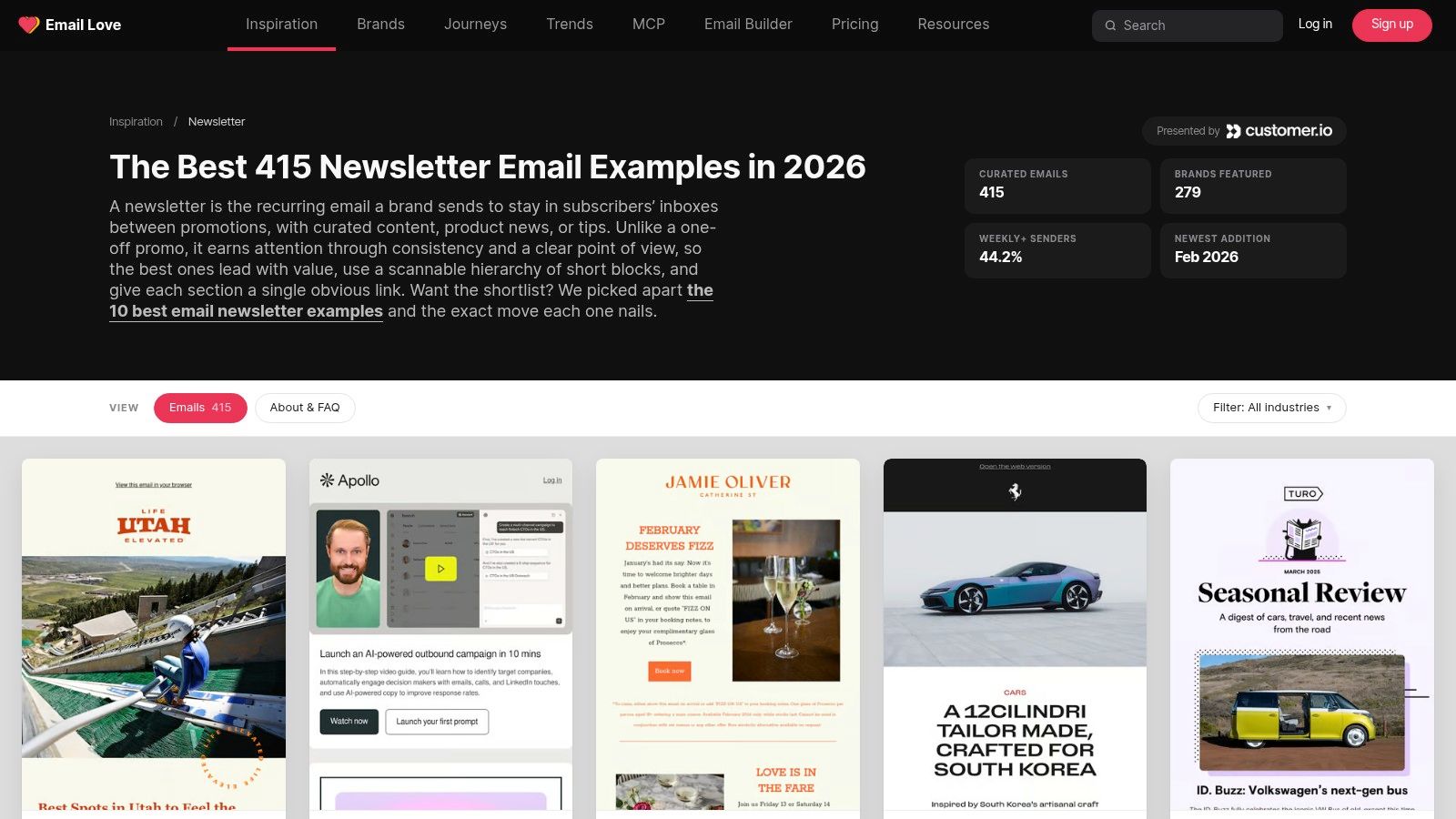
Best fit: commerce, brand publishing, and visually organized newsletters. Compare how publishers separate the opening message, supporting material, and primary action rather than collecting designs because they look polished.
Borrow the Hierarchy, Not the Decoration
For a product-adjacent article, try a practical sequence: name the reader's problem, explain a useful technique, show the relevant product in context, then offer a next step. That keeps the educational promise visible instead of turning the whole issue into a promotion.
- On Substack: Translate visual modules into descriptive headings and short paragraphs.
- On Medium: Expand the useful technique into a self-contained article rather than reproducing an email promotion.
- On LinkedIn: Extract the reader's problem and strongest practical lesson into a standalone post.
The trade-off is editorial depth. Email Love helps you compare layout and recurring formats, but it's less useful for developing a distinctive essay voice; some examples are primarily promotional.
Practical rule: Borrow the order in which readers encounter information. Don't assume you need the original design assets.
If the underlying idea still feels vague, work through your newsletter topics before choosing a layout. Better spacing won't rescue an issue that doesn't answer a recognizable reader question.
2. Really Good Emails, Newsletter Emails
A prominent button can make an email easy to scan. It can't supply a reason to click. Really Good Emails is useful for examining that distinction through its dedicated newsletter category and broader collection of welcome, launch, and other lifecycle emails.
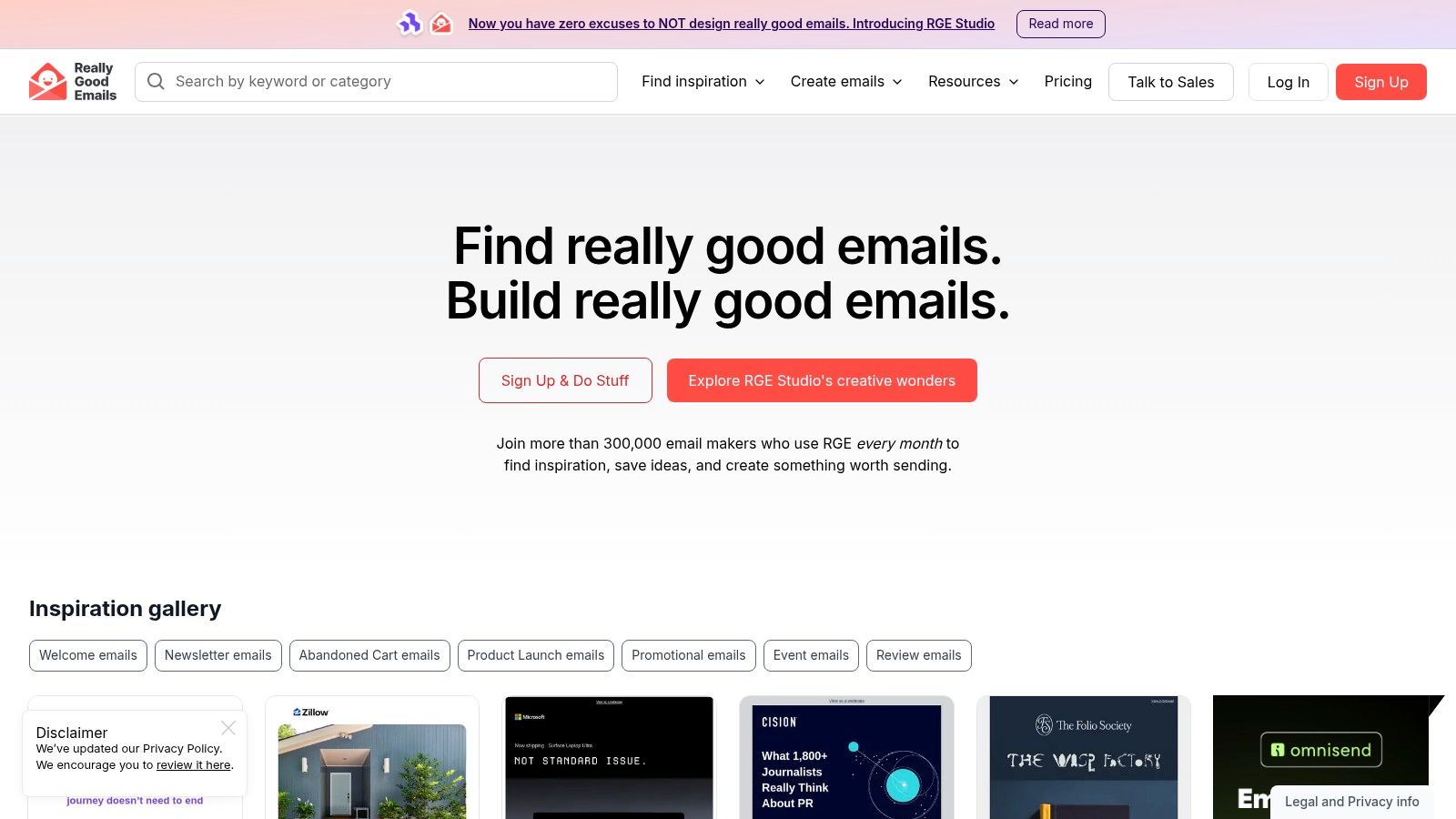
You can save individual examples and use them as concrete references when discussing hierarchy, imagery, and calls to action with a collaborator. The connection to RGE Studio, an email-building product, also makes this a more design-oriented resource than an essay archive.
Study the Distance Between Promise and Action
The GDMA email benchmark reported an average confirmed open rate of 32.40% and a click-through rate of 2.91%. Opening and acting are different outcomes, so inspect whether an example delivers on its subject line before asking readers to leave the email.
For a professional-services newsletter, borrow a clear progression: describe the problem, show an example, explain the implication, and offer a relevant next step. Pair that exercise with subject-line optimization, rather than treating the headline and body as separate projects.
The limitation: many examples are designed brand campaigns, not recurring editorial articles. Don't mistake an attractive product launch for a sustainable newsletter format.
On Substack, retain the reading hierarchy without copying every graphic. On Medium, make the explanation complete without requiring a click elsewhere. For LinkedIn-specific comparisons, RedactAI's breakdown of seven LinkedIn newsletters provides a separate reference point.
3. Marketing Examples, Newsletter and Copywriting Examples
A repeatable structure removes decisions from draft day. Marketing Examples makes that benefit tangible with a newsletter organized around three short examples, two copywriting tips, and one favorite tweet.
Its archive spans copywriting, content, advertising, landing pages, and growth, with explanations of the marketing ideas behind examples. Short estimated reading times and concise presentation make it useful for creators teaching practical skills.
Instead of borrowing the exact categories, borrow the editorial contract: readers know what kind of value they'll receive. A specialist consultant could alternate a real artifact, an explanation of what works, and an application readers can try.
Make the Example Carry the Lesson
A useful teardown doesn't merely call a headline compelling. It identifies the wording, explains the reader's likely question, and shows how a different writer could apply the principle without copying the original.
- What works: Concrete examples followed by concise explanations.
- What doesn't: Generic tips attached to screenshots that don't demonstrate the claim.
- The trade-off: Marketing lessons won't automatically transfer to literary, scientific, or community newsletters.
There's relevant proof for specificity: a documented personal publishing experiment reported that a case study of LinkedIn post formats generated more than 800 newsletter subscribers, exceeding the writer's previous 10 generic how-to articles combined. That's an individual result, not a forecast for your publication.
For distribution, preserve the example-led logic. Keep the full analysis on Substack, develop the broader lesson on Medium, and isolate a useful contrast for LinkedIn. These content repurposing examples can help turn that approach into a repeatable workflow.
4. The Hustle, Past Newsletters
Start with a story that creates a question. Then answer it without making readers fight through unnecessary background. The Hustle's past newsletters provide a business-and-technology reference for that approach through dated editions, conversational headlines, and concise narratives.
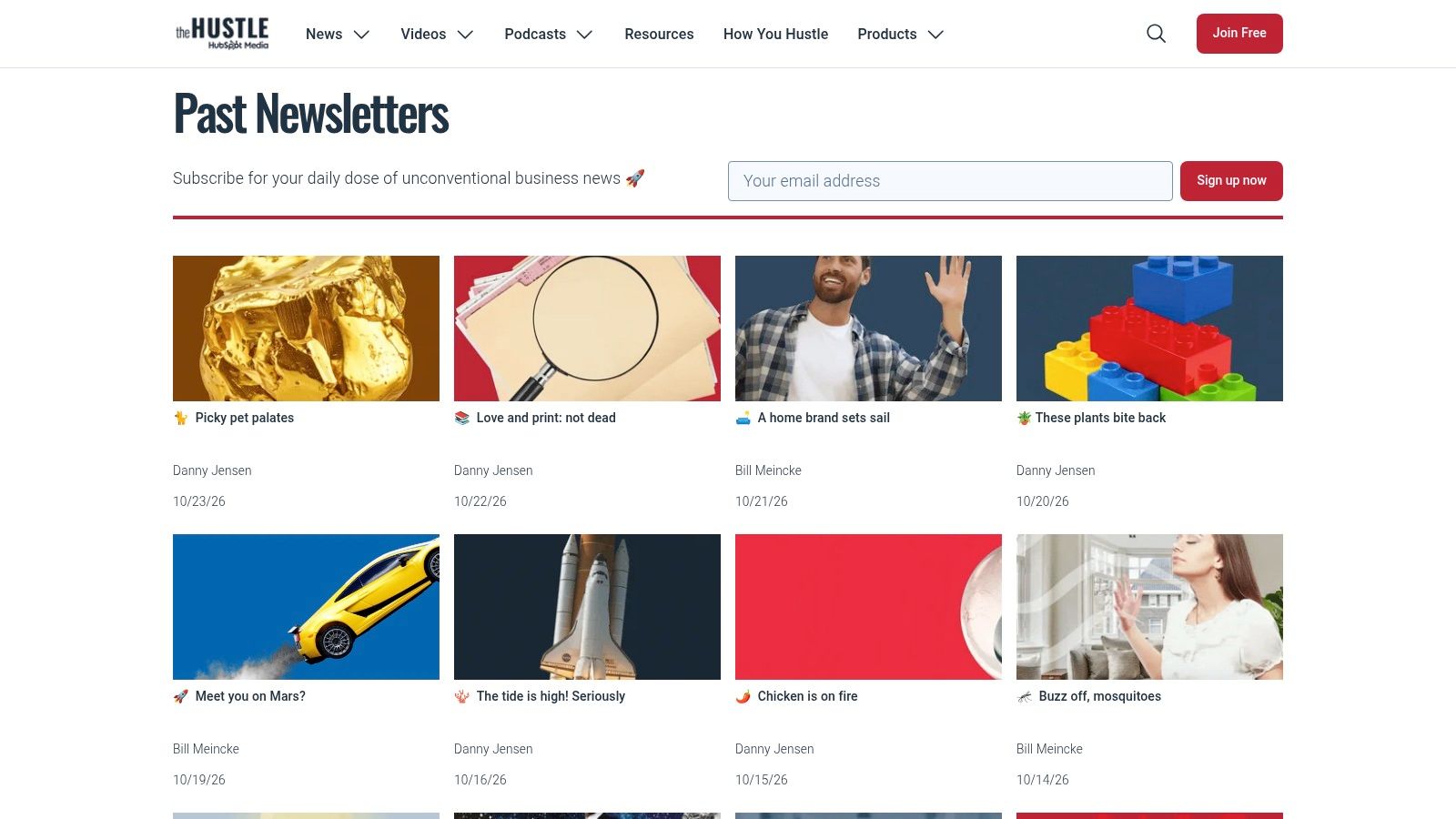
Best fit: startup writers, business commentators, and specialists explaining an industry development. The archive is more useful than an isolated screenshot because you can compare how a recognizable voice carries across different subjects.
Separate Curiosity From Withholding
For your own article, introduce a surprising business decision, explain the constraint behind it, and finish with the implication for your reader. Curiosity should come from the situation, not from hiding information that belongs in the opening.
A strong hook gives readers a reason to continue. It doesn't make them guess what the article is about.
On Substack, use the opening to establish the central tension, then provide enough context for readers unfamiliar with the story. On Medium, add explanatory headings and source context so the piece works outside the newsletter relationship. On LinkedIn, lead with the decision or consequence, then explain your interpretation.
The trade-off is cadence and voice. The Hustle's daily-news format may not suit a reflective personal newsletter, and borrowed slang can make your writing sound imitative. Its site is also part of HubSpot, so readers may encounter related product promotion.
Use the archive to practice compression: remove background that doesn't change the reader's understanding. Keep the caveats that do. A shorter story isn't better if you've edited out the reason it matters.
5. Morning Brew, Issue Archive
Morning Brew's public archive is a reference for consistency across issues, not just clever individual articles. Its dated business briefings show how concise summaries and recurring sections can give readers a recognizable routine.
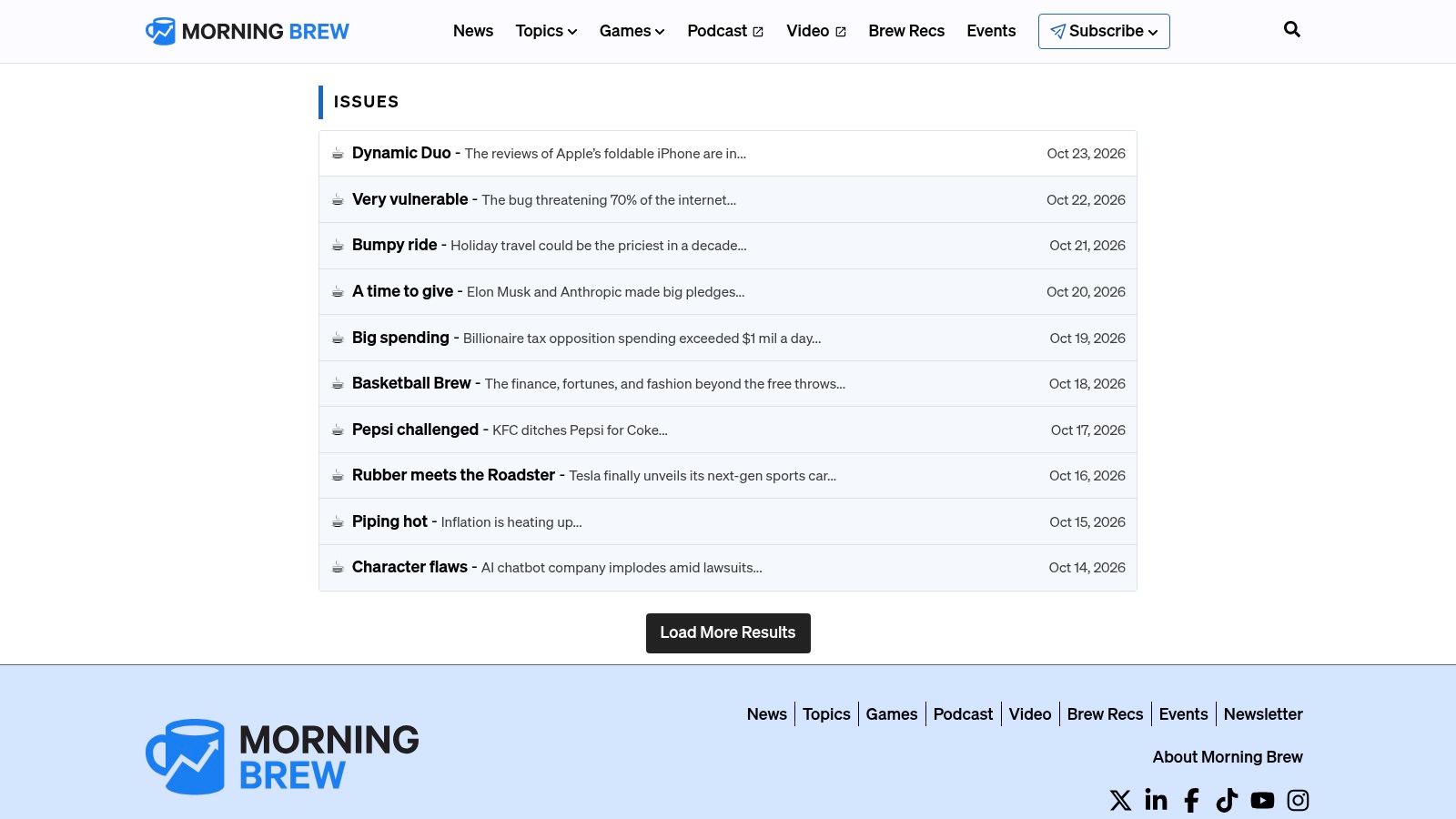
For a niche briefing, the useful question is simple: what should readers understand after scanning each section? A summary should explain the development and its relevance, rather than merely announce that something happened.
Build a Routine You Can Sustain
A specialist writer could organize an issue around a lead development, supporting updates, and a practical implication. That's a proposed structure, not a reason to copy Morning Brew's daily schedule.
- Substack adaptation: Keep recurring section names so returning readers can find what they need quickly.
- Medium adaptation: Develop the lead story into a focused analysis instead of publishing a disconnected digest.
- LinkedIn adaptation: Publish the most consequential implication with enough context to stand alone.
The audience-growth lesson extends beyond copy. In the Lenfest Institute's Unapologetically ATL case study, simplifying signup generated 1,000 subscribers by the end of launch week, and the newsletter contributed 30% of new users to AJC.com.
That case doesn't establish a conversion rate for your briefing. It does show why the subscription path deserves attention alongside the article itself.
Morning Brew is less applicable to personal essays and specialist deep dives, and its U.S. business-news orientation won't suit every audience. Use its consistency as a reference while building a realistic cadence and a clear path for growing newsletter subscribers.
6. Dense Discovery, Issue Archive
Curation becomes valuable when readers understand why you selected something. Dense Discovery offers a weekly, human-curated mix of design, technology, culture, and art, with recurring categories spanning tools, books, media, and inspiration.
Its magazine-style structure is useful for writers whose expertise shows through selection rather than a continuous argument. The point isn't to reproduce the editor's interests. It's to understand how an editorial perspective can connect otherwise unrelated links.
Write the Annotation Before Adding Another Link
For a design newsletter, an effective annotation might explain the problem a tool addresses, the limitation a reader should consider, and the kind of project where it could help. That gives subscribers value even if they don't click.
What works: recurring categories, selective recommendations, and commentary that explains the choice. What doesn't: collecting links without telling readers why they deserve attention.
Audience fit matters here. A survey of newsletter professionals found that 34% align format experiments with how their core demographic prefers to consume content. Treat format as something to test against reader needs, not as a permanent choice based on taste.
Editorial test: If you remove the destination link, does your annotation still teach the reader something?
For Substack, retain the curated issue and invite replies about the selections. For Medium, connect related recommendations through a complete argument. For LinkedIn, develop a recommendation into a practical observation rather than posting a bare link.
Dense Discovery is free to read and subscribe to, but it's a curated link magazine, not primarily a single-article newsletter. Choose it as a model when your readers want discovery and perspective, not exhaustive instruction.
7. The Marginalian, Newsletter Examples
Not every newsletter needs to be compressed into a briefing. The Marginalian's newsletter page offers a writer-led alternative: a Sunday digest of new essays and a separate Wednesday edition revisiting archive material.
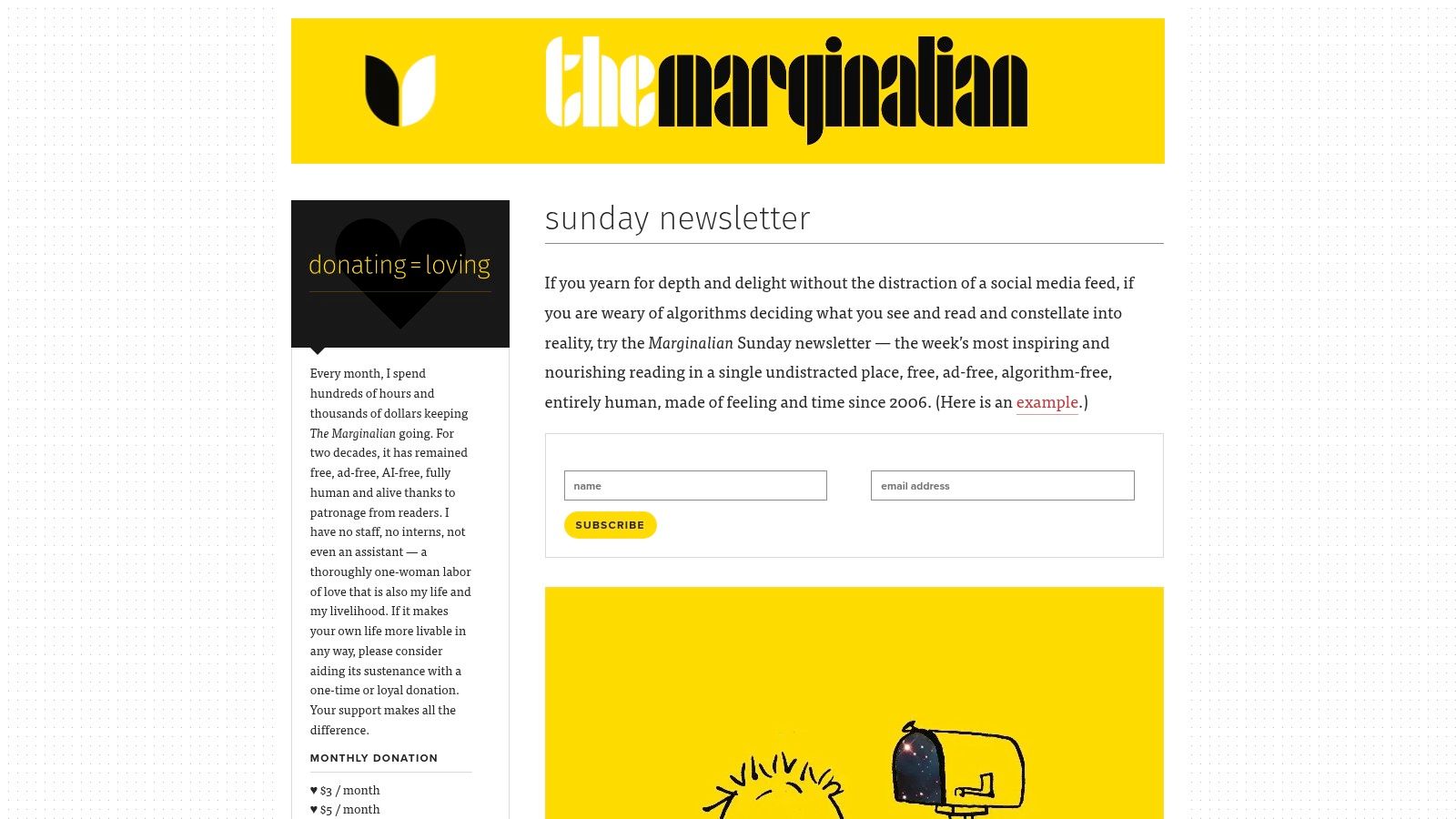
The page also links to an example issue, making it a useful reference for thoughtful, literary newsletter writing. Its free, ad-free model places the emphasis on the work and the relationship with readers.
Give Older Work a New Reason to Be Read
The transferable technique is editorial resurfacing. Instead of dropping an old link into a new email, explain why the piece deserves attention now and what a returning reader might notice differently.
- On Substack: Introduce an archive essay with fresh context rather than presenting it as newly written.
- On Medium: Revise dated references and make the essay complete for readers encountering you for the first time.
- On LinkedIn: Develop a central observation in your own words, preserving the nuance that makes it useful.
The trade-off is substantial. This model depends heavily on a distinctive authorial voice and an archive worth revisiting; literary length won't suit every business audience.
Don't imitate the surface style by making practical advice more ornate. Borrow the deeper habit of connecting ideas and explaining why they matter to a particular reader.
If you're still deciding what you can publish consistently, start with how to start a newsletter. Establish a clear promise before committing to an essay-led format that requires sustained research and reflection.
Comparison of 7 Newsletter Article Examples
| Newsletter example | 🔄 Focus and complexity | ⚡ Effort to explore | 📊 Expected learning | ⭐ Ideal use and key advantage |
|---|---|---|---|---|
| Email Love, Newsletter Inspiration | Browse real email layouts, subject lines, and editorial breakdowns; low complexity | Low; filter and scan the gallery | Compare design patterns and subject lines across industries | Email design research; broad collection of real examples |
| Really Good Emails, Newsletter Emails | Inspect visual hierarchy, imagery, and calls to action; low complexity | Low; browse or save examples | Understand design choices and compare newsletter formats with other email types | Visual inspiration and team discussion; searchable, wider email gallery |
| Marketing Examples, Newsletter and Copywriting Examples | Study concise marketing examples and a repeatable newsletter format; low complexity | Low; skim short, practical pieces | Learn example-led writing and issue planning | Marketing writers and creators; clear, reusable structure |
| The Hustle, Past Newsletters | Review daily business stories, headlines, and conversational storytelling; low complexity | Low; browse dated issues | Learn curiosity-driven openings and concise narratives | Business and startup newsletters; practical archive of published issues |
| Morning Brew, Issue Archive | Examine recurring sections, summaries, and consistent voice; low complexity | Low; compare dated editions | Learn digest structure and consistency across issues | Business-news newsletters; easy comparison across a daily archive |
| Dense Discovery, Issue Archive | Study human curation, recurring categories, and magazine-style structure; low complexity | Low; browse weekly issues | Learn how a distinct point of view connects varied links | Curated newsletters; strong model for issue structure and voice |
| The Marginalian, Newsletter Examples | Explore long-form essays, editorial voice, and archive reuse; moderate complexity | Low; read example issues and newsletter details | Learn essay-led writing and ways to resurface evergreen work | Writer-led publications; distinctive voice and dual-edition model |
Turn One Winning Newsletter Into a Week of Growth
The best newsletter article examples solve different problems. Email Love and Really Good Emails help with hierarchy; Marketing Examples supplies a repeatable teaching format; The Hustle and Morning Brew demonstrate story packaging and consistency; Dense Discovery and The Marginalian show how editorial judgment can connect an issue.
Choose the model that matches your reader's job. Then judge your version by what readers do, not how closely it resembles the original.
Use a Measurable Publishing Loop
- Find the strongest article: Compare clicks, replies, attributed signups, and downstream engagement. In an Inbox Collective case study, acquisition-source analysis found TikTok readers opened at rates 10% higher than Facebook-acquired readers, while Facebook readers clicked at rates 10% higher. Different channels can produce different kinds of engagement.
- Extract standalone ideas: Turn the article's central claim into a Substack Note, its practical lesson into a LinkedIn post, and its supporting argument into an X thread. Each adaptation should deliver value without requiring the original.
- Schedule and review: Substack's official Notes documentation confirms scheduling on web, iOS, and Android, with scheduled drafts editable before publication. Batch the preparation, check the platform-specific formatting, and review results after release.
You can run that workflow manually. Narrareach is an option when switching between publishing tools becomes the bottleneck: it helps identify resonating content, repurpose it in your voice, and schedule Substack Notes, Medium articles, LinkedIn posts, and X content from a shared dashboard.
For Substack, prepare the main article and its supporting Notes together, then assign publication times rather than interrupting your writing to post each adaptation manually. Use cross-platform analytics to identify which adaptations bring subscribers back to your work.
That's the route to faster audience growth worth testing: distribute useful ideas more consistently, preserve source attribution, and expand what produces meaningful reader actions. Scheduling supports the experiment; it doesn't guarantee the outcome.
Narrareach helps you turn strong newsletter articles into platform-specific Notes, posts, and threads, with scheduling and cross-platform tracking in one workflow. Ready to put a winning article to work? Visit Narrareach to start free with no credit card required, or, if you're not ready to try it, stay connected through its blog and use these teardowns to plan your next issue.