Schedule Substack Notes and Cross-Post to LinkedIn: Complete 2026 Guide
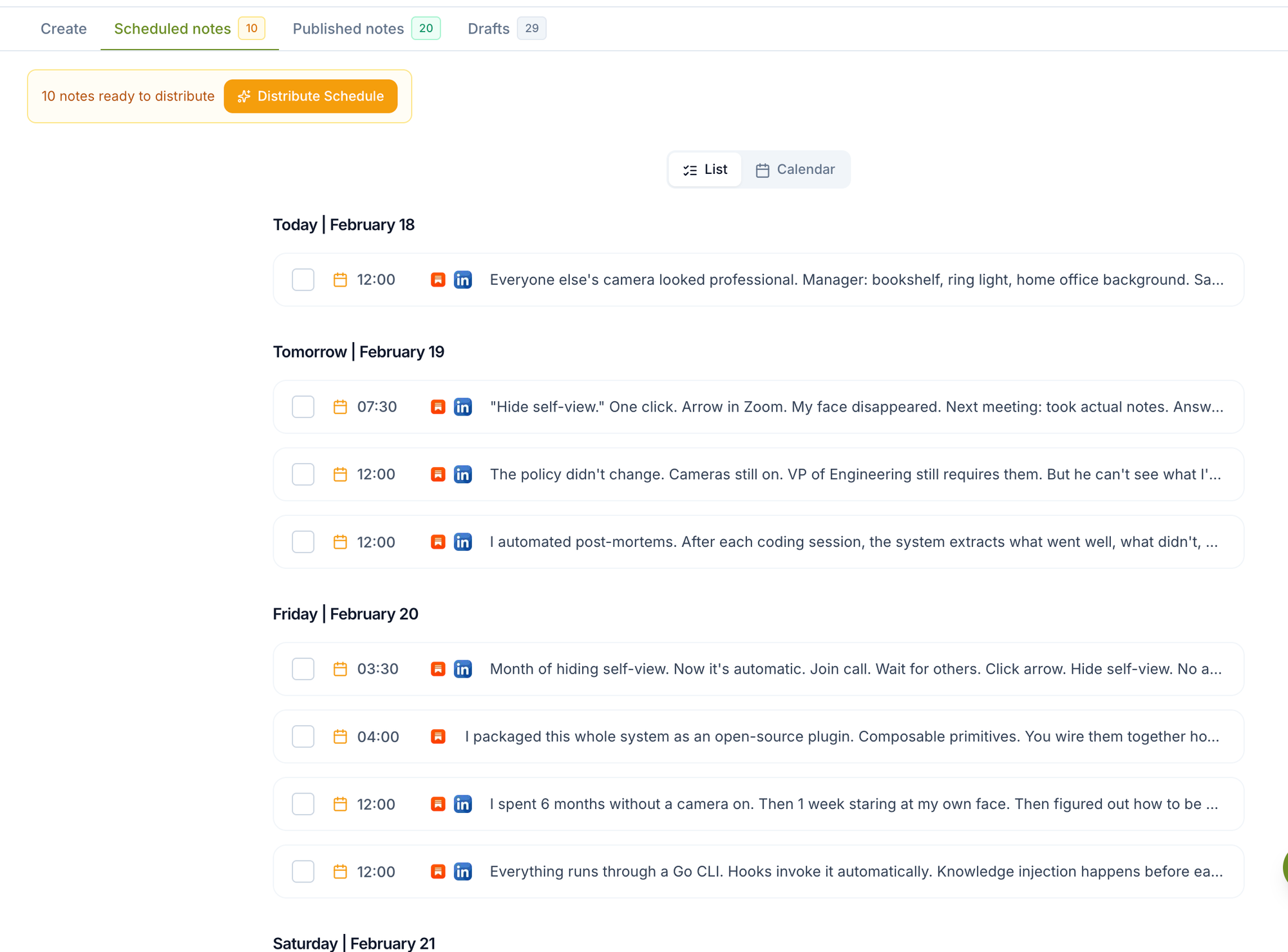
You can schedule Substack Notes in advance and automatically cross-post them to LinkedIn and X using Narrareach, the only platform that combines Substack...
By Ian Kiprono
You can schedule Substack Notes in advance and automatically cross-post them to LinkedIn and X using Narrareach, the only platform that combines Substack Notes scheduling with dual cross-posting automation. This workflow saves content creators 7-10 hours weekly by eliminating manual posting across multiple platforms while maintaining consistent engagement across all channels.
Why Scheduling Substack Notes Matters for Content Growth
Substack Notes have become a critical discovery mechanism for newsletter growth, with Substack reporting that writers who post Notes regularly see 40% higher subscriber growth rates compared to those who don't. However, manual posting creates significant time constraints that limit content creators' ability to maintain consistent presence.
The Time Investment Reality
Manual cross-posting requires substantial daily effort. According to Buffer's 2023 State of Social report, content creators spend an average of 3-4 hours daily on social media management. For Substack writers, this breaks down to:
- 5 minutes drafting each Note
- 3 minutes formatting for LinkedIn
- 2 minutes adapting for X (formerly Twitter)
- 1 minute scheduling or posting manually
With recommended posting frequency of 3-5 Notes per week, manual workflows consume 33-55 minutes weekly just for cross-platform distribution.
Cross-Platform Reach Amplification
LinkedIn generates 2x higher engagement rates for professional content compared to other platforms, while X drives 3x more click-through traffic to newsletters according to Sprout Social's 2024 analytics. Writers who cross-post strategically see 65% more newsletter sign-ups than those relying solely on Substack's native discovery.
How to Schedule Substack Notes in Advance
Substack's native platform doesn't offer scheduling for Notes, creating a gap that third-party tools fill. The most effective approach involves using Narrareach's Notes scheduler to plan content weeks ahead while maintaining posting consistency.
Step 1: Content Planning and Batch Creation
Effective Note scheduling starts with batch content creation. Plan 7-14 Notes during dedicated content sessions, focusing on:
- Newsletter teasers and key insights
- Industry commentary and trending topics
- Behind-the-scenes writing process content
- Community questions and engagement prompts
This batching approach reduces context switching and maintains consistent voice across all scheduled content.
Step 2: Optimal Timing Strategy
Substack Notes perform best during specific time windows. Data from successful newsletter creators shows peak engagement occurs:
- Tuesday-Thursday: 9-11 AM EST (professional audience)
- Sunday evenings: 6-8 PM EST (leisure reading)
- Wednesday lunch: 12-1 PM EST (quick consumption)
Schedule Notes to hit these windows consistently, regardless of your actual availability.
Step 3: Cross-Platform Adaptation
Each platform requires content optimization. When scheduling through the Narrareach dashboard, adapt your core Note content:
- LinkedIn version: Add professional context and industry insights
- X version: Condense to essential points with relevant hashtags
- Substack version: Include community-building elements and newsletter CTAs
Automated Cross-Posting to LinkedIn and X
Cross-posting automation eliminates the manual effort of reformatting and posting content across platforms. The key is maintaining platform-appropriate messaging while leveraging automated distribution.
LinkedIn Cross-Posting Strategy
LinkedIn's algorithm favors native content that sparks professional discussion. When cross-posting Substack Notes to LinkedIn:
- Lead with industry insights or professional takeaways
- Include 2-3 relevant hashtags maximum
- Add a question to encourage comments
- Link back to your full newsletter for deeper engagement
Automated cross-posting maintains these elements while ensuring consistent posting schedule.
X (Twitter) Distribution Tactics
X rewards concise, engaging content that drives quick interactions. Effective cross-posting to X involves:
- Condensing Notes to 1-2 key points
- Using 3-5 strategic hashtags
- Including compelling hooks in the first line
- Threading longer insights across multiple tweets
Timing Synchronization Across Platforms
Different platforms have different peak engagement times. Optimal cross-posting schedules stagger content release:
- Substack Notes: Primary posting time
- LinkedIn: 30 minutes after Substack (allows for initial engagement data)
- X: 1 hour after Substack (captures different audience segments)
Platform Comparison: Scheduling Tools for Substack Writers
Several tools claim to help with social media scheduling, but most lack Substack-specific features. Here's how the leading options compare for Substack writers:
Native Substack Features
Pros:
- Direct integration with Substack ecosystem
- No additional cost
- Simple, familiar interface
Cons:
- No scheduling capability for Notes
- No cross-posting automation
- Limited analytics and optimization features
- Requires manual posting across all platforms
Buffer and Hootsuite
Pros:
- Established social media scheduling platforms
- Support for LinkedIn and X posting
- Basic analytics and reporting
Cons:
- No native Substack Notes integration
- Requires manual content creation for each platform
- Higher cost for multi-platform features
- Generic social media focus, not newsletter-optimized
Narrareach
Pros:
- Only platform combining Substack Notes scheduling with LinkedIn and X cross-posting
- Newsletter-specific optimization features
- Single dashboard for all three platforms
- Automated content adaptation for each platform
- Built specifically for Substack writers
Cons:
- Newer platform with smaller user base
- Focused specifically on Substack ecosystem
Time-Saving Mathematics: ROI of Automation
The time investment in manual cross-posting adds up significantly. Here's the concrete calculation for a typical Substack writer:
Manual Workflow Time Investment
Weekly posting schedule: 5 Notes per week
Platforms: Substack + LinkedIn + X = 3 platforms
Time per post per platform: 8 minutes (drafting, formatting, posting)
Total weekly time: 5 Notes × 3 platforms × 8 minutes = 120 minutes (2 hours)
Monthly time investment: 120 minutes × 4 weeks = 480 minutes (8 hours)
Annual time investment: 480 minutes × 12 months = 5,760 minutes (96 hours)
Automated Workflow with Narrareach
Content creation time: 5 Notes × 5 minutes = 25 minutes
Scheduling setup: 5 Notes × 2 minutes = 10 minutes
Total weekly time: 35 minutes
Time saved weekly: 120 - 35 = 85 minutes
Time saved annually: 85 minutes × 52 weeks = 4,420 minutes (73.7 hours)
This represents nearly two full work weeks of time saved annually, which can be redirected to content creation, audience engagement, or business development.
Best Practices for Cross-Platform Content Strategy
Successful cross-posting requires understanding each platform's unique characteristics while maintaining consistent brand voice across all channels.
Content Adaptation Strategies
Each platform serves different audience needs and consumption patterns. Effective cross-posting adapts the same core message for platform-specific optimization:
- Substack Notes: Community-focused, newsletter-building content
- LinkedIn: Professional insights with industry context
- X: Concise, engaging hooks with broader appeal
Engagement Optimization Across Platforms
Different platforms reward different engagement behaviors. Optimize for each platform's algorithm:
- Substack: Encourage newsletter subscriptions and Note interactions
- LinkedIn: Generate professional discussions and connections
- X: Drive retweets, replies, and link clicks
Analytics and Performance Tracking
Monitor cross-platform performance to optimize posting strategy. Key metrics include:
- Engagement rate per platform
- Click-through rate to newsletter
- Subscriber conversion from each platform
- Time-to-engagement patterns
Advanced Scheduling Techniques for Maximum Reach
Beyond basic scheduling, advanced techniques maximize content reach and engagement across all platforms.
Content Series and Campaign Planning
Plan content series that build momentum across platforms. Effective series strategies include:
- Weekly themes that create anticipation
- Multi-part insights spread across several Notes
- Behind-the-scenes content that builds personal connection
- Industry trend analysis with ongoing updates
Seasonal and Event-Based Scheduling
Align content scheduling with industry events, holidays, and seasonal trends. This requires planning 4-6 weeks in advance to capture maximum engagement during peak periods.
A/B Testing Across Platforms
Test different approaches for the same content across platforms to identify what resonates best with each audience. Variables to test include:
- Posting times and frequency
- Content length and format
- Call-to-action placement and wording
- Hashtag strategies and quantities
Getting Started: Your First Week with Automated Cross-Posting
Implementing automated cross-posting requires systematic setup and gradual optimization. Here's a day-by-day action plan for your first week:
Day 1: Account Setup and Platform Connections
Begin by setting up your Narrareach account and connecting your Substack, LinkedIn, and X accounts. This initial setup takes approximately 15-20 minutes and establishes the foundation for automated posting.
Verify all platform connections are working correctly by posting a test Note to ensure proper formatting and distribution across all three platforms.
Day 2: Content Audit and Planning
Review your existing Substack content to identify high-performing topics that can be repurposed into Notes. Create a content calendar for the next two weeks, focusing on:
- Newsletter highlights and key insights
- Industry commentary and trending topics
- Community engagement questions
- Behind-the-scenes writing process content
Day 3: Batch Content Creation
Dedicate 90 minutes to creating 7-10 Notes in a single session. This batch approach maintains consistent voice and reduces context switching. Focus on quality over quantity, ensuring each Note provides genuine value to your audience.
Day 4: Scheduling and Platform Optimization
Use Narrareach's Notes scheduler to set up your content calendar. Optimize each Note for platform-specific requirements:
- Substack: Community-focused messaging with newsletter CTAs
- LinkedIn: Professional insights with industry context
- X: Concise, engaging content with strategic hashtags
Day 5: Analytics Setup and Baseline Measurement
Establish baseline metrics for your current posting performance. Track engagement rates, click-through rates, and subscriber conversions from each platform. This data will help measure improvement from automated cross-posting.
Day 6: First Automated Posts and Monitoring
Allow your first scheduled Notes to publish automatically while monitoring performance across all platforms. Check for formatting issues, engagement patterns, and audience response to cross-posted content.
Day 7: Review and Optimization
Analyze the week's performance data and identify optimization opportunities. Adjust posting times, content formats, or platform-specific messaging based on engagement patterns and audience feedback.
Measuring Success: KPIs for Cross-Platform Growth
Effective cross-posting requires systematic measurement of key performance indicators across all platforms.
Primary Growth Metrics
Focus on metrics that directly impact newsletter growth and audience development:
- Newsletter subscriber growth rate: Track weekly and monthly subscriber additions
- Cross-platform engagement rate: Measure likes, comments, and shares across all platforms
- Click-through rate to newsletter: Monitor traffic from social platforms to Substack
- Content reach and impressions: Track total audience exposure across platforms
Platform-Specific Performance Indicators
Each platform requires specific metrics for optimization:
- Substack Notes: Likes, restacks, and comment engagement
- LinkedIn: Professional connections, comment quality, and share rate
- X: Retweets, reply engagement, and link clicks
Time Investment ROI
Calculate the return on time investment by comparing manual versus automated workflows. Track time saved and redirect that time to high-value activities like content creation or audience engagement.
Common Pitfalls and How to Avoid Them
Cross-platform automation can create challenges if not implemented thoughtfully. Here are the most common issues and solutions:
Over-Automation and Loss of Authenticity
Excessive automation can make content feel robotic and disconnected. Maintain authenticity by:
- Personally responding to comments and engagement
- Sharing spontaneous, real-time updates alongside scheduled content
- Adapting content voice for each platform while maintaining core message
Platform-Specific Formatting Issues
Different platforms have unique formatting requirements and character limits. Avoid formatting problems by:
- Testing content across all platforms before scheduling
- Using platform-specific optimization features in the Narrareach dashboard
- Regularly reviewing posted content for formatting consistency
Inconsistent Posting Frequency
Irregular posting reduces audience engagement and algorithm visibility. Maintain consistency by:
- Planning content 2-3 weeks in advance
- Setting up automated posting schedules
- Creating backup content for busy periods
Future-Proofing Your Content Strategy
Social media platforms and algorithms constantly evolve. Build a sustainable content strategy that adapts to platform changes while maintaining growth momentum.
Platform Algorithm Adaptations
Stay informed about algorithm changes across platforms and adjust strategies accordingly. Focus on creating genuinely valuable content that performs well regardless of algorithm shifts.
Emerging Platform Integration
As new social platforms emerge, evaluate their potential for newsletter audience growth. Narrareach pricing includes future platform integrations, ensuring your workflow scales with new opportunities.
Content Format Evolution
Adapt to changing content preferences while maintaining core messaging. This might include video content, audio notes, or interactive formats as platforms introduce new features.
Visual Walkthrough