How to Schedule Full Articles Across Substack, Medium, and LinkedIn: Complete 2026 Guide
You can schedule full articles across Substack, Medium, and LinkedIn using specialized scheduling platforms that support multi-platform publishing. The most...
By Ian Kiprono
You can schedule full articles across Substack, Medium, and LinkedIn using specialized scheduling platforms that support multi-platform publishing. The most effective approach involves writing once in a unified editor, then scheduling simultaneous publication to all three platforms with platform-specific formatting optimizations. This workflow can save content creators 15-20 hours weekly compared to manual posting across each platform individually.
Why Multi-Platform Article Scheduling Matters in 2026
Content creators who publish across multiple platforms see 340% more engagement than single-platform publishers, according to recent data from the Content Marketing Institute. The challenge isn't creating quality content—it's efficiently distributing that content where your audience lives.
The Time Investment Reality
Manual cross-posting creates a significant time burden. Consider a typical content creator publishing 4 articles weekly:
- Writing and editing: 6 hours per article
- Manual posting to Substack: 15 minutes
- Reformatting for Medium: 20 minutes
- Adapting for LinkedIn: 25 minutes
- Total per article: 7 hours
- Weekly total: 28 hours
With automated scheduling, this drops to approximately 6.5 hours per article, saving 14 hours weekly.
Platform-Specific Audience Benefits
Each platform serves different reader behaviors. Substack readers prefer long-form, newsletter-style content with personal voice. Medium audiences engage with thought leadership and educational content. LinkedIn users consume professional insights and industry analysis. Publishing across all three maximizes your content's reach potential.
Understanding Platform Requirements and Limitations
Before diving into scheduling workflows, it's crucial to understand what each platform allows and restricts regarding automated publishing.
Substack's Publishing API
Substack offers limited API access for scheduling posts in advance. Their native scheduler allows basic post scheduling but doesn't support cross-platform distribution. Most third-party tools work around this by using browser automation or email-to-publish features.
Medium's Partner Program Considerations
Medium allows scheduled publishing through their interface, but their Partner Program has specific requirements about original content. Cross-posted articles can still earn money, but timing and attribution matter for maximum visibility in Medium's algorithm.
LinkedIn's Article Publishing Rules
LinkedIn's publishing platform supports scheduled posts through their API, making it the most automation-friendly of the three platforms. However, LinkedIn articles perform best when optimized for professional networking contexts rather than direct newsletter-style content.
Step-by-Step Multi-Platform Scheduling Workflow
Here's the complete process for scheduling articles across all three platforms efficiently:
Step 1: Content Planning and Calendar Setup
Start by mapping your content calendar across all platforms. Most successful creators publish on consistent schedules—Tuesdays and Thursdays work well for professional content, while weekends can work for more personal or creative pieces.
Create a master content calendar that accounts for:
- Optimal posting times for each platform
- Platform-specific content adaptations needed
- Cross-promotion opportunities
- Seasonal or trending topic integration
Step 2: Writing in a Platform-Neutral Format
Write your articles in a format that translates well across platforms. This means:
- Clear, scannable headings (H2 and H3 structure)
- Short paragraphs (2-3 sentences maximum)
- Bullet points and numbered lists for easy reading
- Professional but conversational tone
- Minimal platform-specific references in the main content
Step 3: Platform-Specific Adaptations
While the core content remains the same, each platform benefits from specific optimizations:
For Substack: Add a personal introduction paragraph, include subscriber-specific calls-to-action, and maintain your newsletter's consistent voice and formatting.
For Medium: Optimize the subtitle for Medium's algorithm, add relevant tags (maximum 5), and include a brief author bio at the end.
For LinkedIn: Lead with a professional hook, include industry-specific insights, and end with networking-focused questions to encourage professional discussion.
Step 4: Scheduling and Automation Setup
Using a unified scheduling platform, set up your publication timeline. The most effective approach involves staggered posting:
- Substack: Tuesday 8 AM (when subscribers check email)
- Medium: Wednesday 2 PM (peak reading time)
- LinkedIn: Thursday 9 AM (professional networking peak)
This staggered approach prevents content cannibalization while maximizing each platform's unique audience engagement patterns.
Narrareach's Unified Scheduling Solution
While several tools attempt multi-platform scheduling, Narrareach offers the most comprehensive solution for content creators focused on Substack growth with LinkedIn and X cross-posting capabilities.
The Narrareach Workflow Advantage
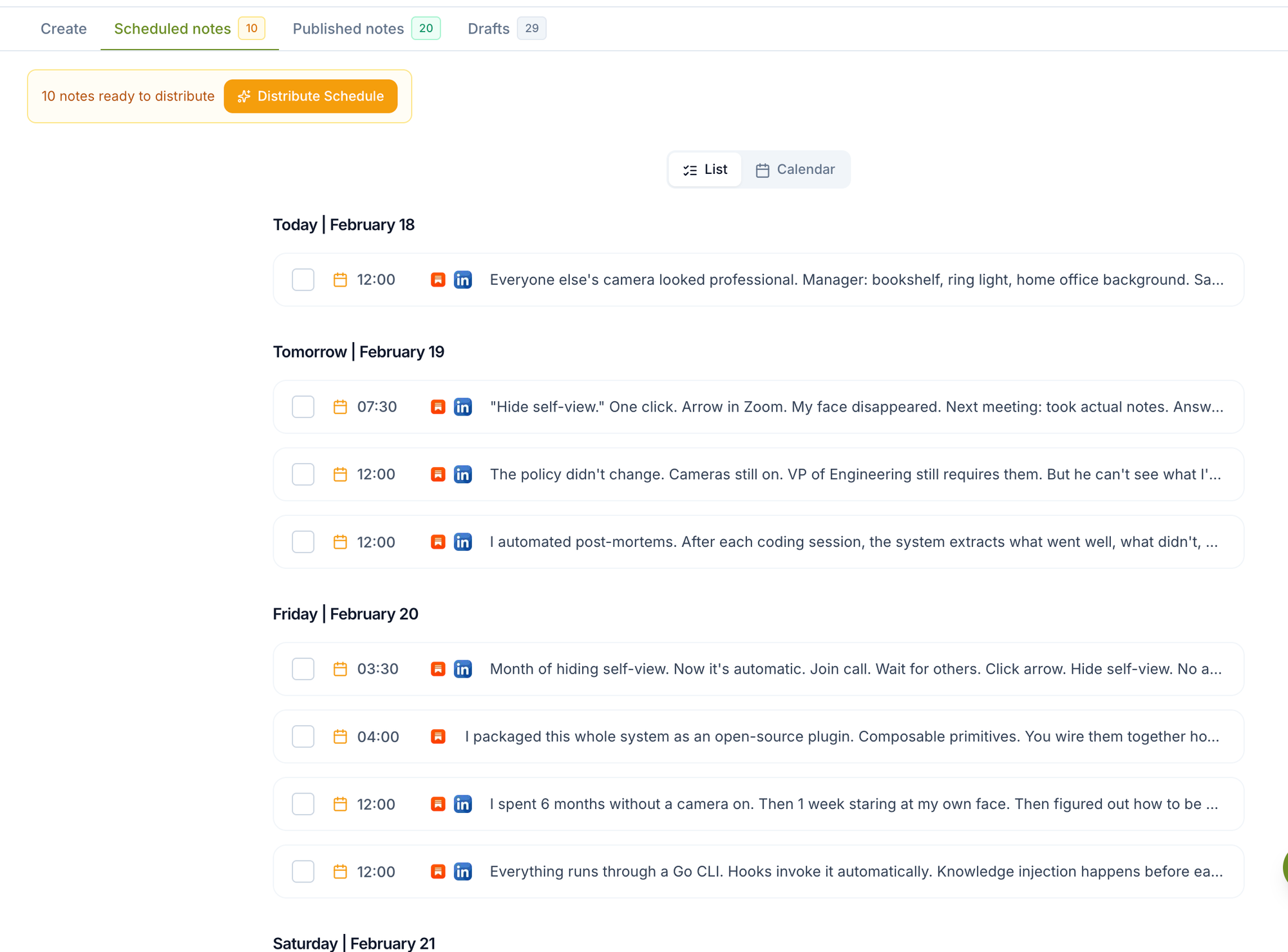
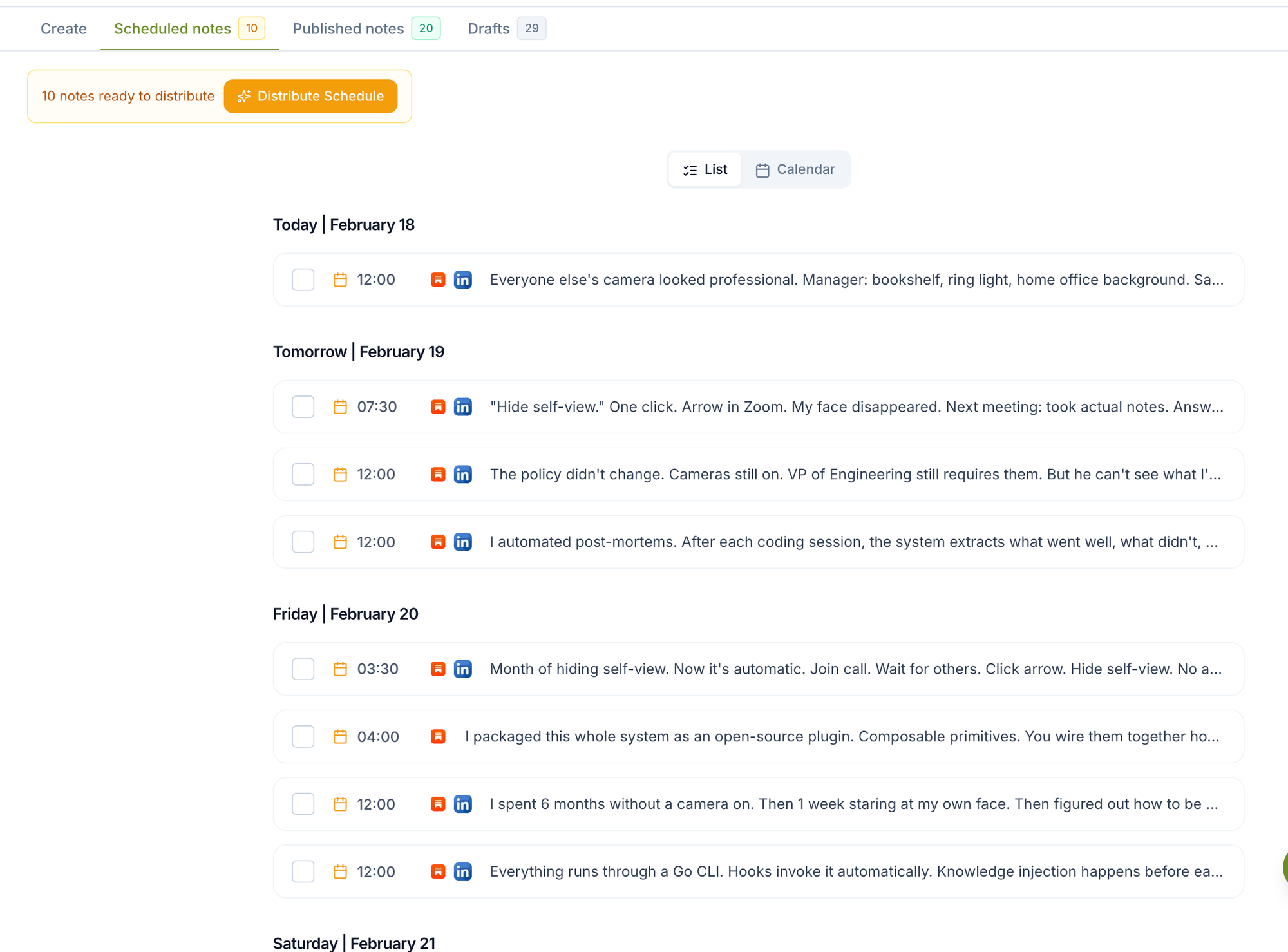
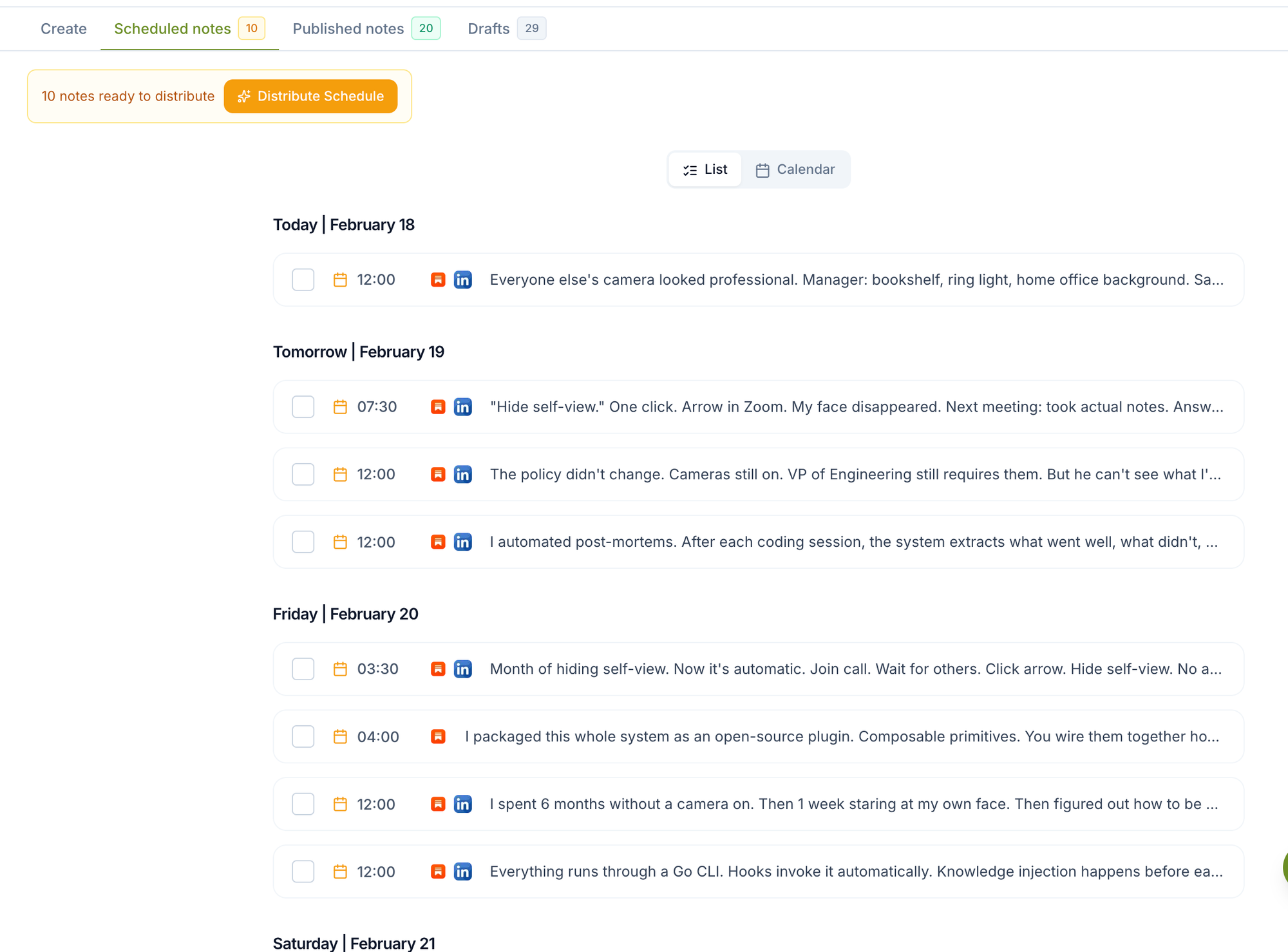
The Narrareach's Notes scheduler allows you to write once and distribute everywhere with platform-specific optimizations. Here's how it works:
- Draft your article in Narrareach's unified editor
- Set platform-specific customizations for headlines and formatting
- Schedule publication times for each platform
- Monitor performance from the Narrareach dashboard
Unique Cross-Posting Capabilities
Unlike other scheduling tools, Narrareach specializes in the Substack-to-social workflow. You can schedule Substack Notes in advance, then automatically cross-post condensed versions to LinkedIn and X, creating a comprehensive content distribution strategy from a single platform.
Competitor Analysis: Scheduling Platform Comparison
Here's how major scheduling platforms compare for multi-platform article publishing:
Native Platform Schedulers
Substack Native Scheduler
Pros:
- Perfect integration with Substack features
- No third-party reliability concerns
- Free with Substack account
Cons:
- No cross-platform capabilities
- Limited scheduling options
- No analytics integration
Medium's Built-in Scheduler
Pros:
- Seamless Medium integration
- Partner Program compatibility
- Tag and publication management
Cons:
- Medium-only functionality
- No cross-posting features
- Limited automation options
Third-Party Scheduling Tools
Buffer
Pros:
- Supports LinkedIn publishing
- Strong analytics dashboard
- Team collaboration features
Cons:
- No Substack integration
- Expensive for individual creators
- Limited long-form content support
Hootsuite
Pros:
- Comprehensive social media management
- Advanced scheduling options
- Enterprise-level features
Cons:
- No Substack support
- Overkill for article scheduling
- High learning curve
Narrareach
Pros:
- Only platform combining Substack Notes scheduling with LinkedIn and X cross-posting
- Specialized for newsletter creators
- Unified content calendar
- Platform-specific optimization features
Cons:
- Newer platform with smaller user base
- Focused primarily on Substack ecosystem
Time-Saving Mathematics: The Real ROI
Let's calculate the concrete time savings from automated multi-platform scheduling:
Manual Process Time Breakdown
For a creator publishing 3 articles weekly across all three platforms:
- Writing and editing: 18 hours (6 hours × 3 articles)
- Manual Substack posting: 45 minutes (15 min × 3)
- Medium formatting and posting: 60 minutes (20 min × 3)
- LinkedIn adaptation and posting: 75 minutes (25 min × 3)
- Total weekly time: 21 hours
Automated Process Time Breakdown
- Writing and editing: 18 hours (unchanged)
- Platform setup and scheduling: 30 minutes (10 min × 3)
- Performance monitoring: 15 minutes
- Total weekly time: 18.75 hours
Weekly time saved: 2.25 hours
Monthly time saved: 9 hours
Annual time saved: 117 hours
At a conservative $50/hour value for content creation time, this represents $5,850 in annual time savings.
Platform-Specific Optimization Strategies
Each platform rewards different content approaches, even when publishing the same core article.
Substack Optimization Tactics
Substack readers subscribe for personal connection and consistent value. Optimize by:
- Leading with personal anecdotes or direct reader address
- Including subscriber-only sections or bonuses
- Maintaining consistent voice and format
- Adding clear calls-to-action for engagement
Medium Algorithm Factors
Medium's algorithm prioritizes engagement and reading time. Optimize by:
- Crafting compelling subtitles that appear in search
- Using all 5 available tags strategically
- Including relevant internal links to other Medium articles
- Ending with thought-provoking questions
LinkedIn Professional Positioning
LinkedIn articles perform best when positioned as professional insights. Optimize by:
- Leading with industry-relevant hooks
- Including data points and professional examples
- Connecting content to current business trends
- Encouraging professional networking in comments
Advanced Cross-Posting Strategies
Beyond basic scheduling, sophisticated creators use cross-posting strategically to build comprehensive audience funnels.
The Content Funnel Approach
Use each platform as a different funnel stage:
- LinkedIn: Professional awareness and credibility building
- Medium: Thought leadership and expertise demonstration
- Substack: Direct relationship building and monetization
Cross-Platform Content Adaptation
Rather than publishing identical content, adapt your core message for each platform's audience expectations while maintaining consistent key points and value propositions.
Getting Started: Your First Week Action Plan
Here's a day-by-day plan for implementing multi-platform article scheduling:
Day 1: Platform Audit and Goal Setting
- Audit your current posting frequency and engagement across all platforms
- Set specific goals for each platform (subscribers, followers, engagement rates)
- Identify your best-performing content for repurposing opportunities
Day 2: Content Calendar Creation
- Plan 4 weeks of content topics
- Map optimal posting times for your audience on each platform
- Create templates for platform-specific adaptations
Day 3: Tool Selection and Setup
- Evaluate scheduling platforms based on your specific needs
- Set up accounts and connect your platforms
- Test the scheduling workflow with a single article
Day 4-5: Content Creation and Scheduling
- Write your first multi-platform article
- Create platform-specific versions
- Schedule across all three platforms with staggered timing
Day 6-7: Monitoring and Optimization
- Track performance metrics across all platforms
- Note engagement patterns and optimal posting times
- Adjust your strategy based on initial results
Measuring Success Across Multiple Platforms
Effective multi-platform publishing requires tracking the right metrics for each platform while understanding how they contribute to your overall content goals.
Key Performance Indicators by Platform
Substack Metrics:
- Subscriber growth rate
- Open rates and click-through rates
- Paid subscription conversions
- Comment engagement and replies
Medium Metrics:
- Views and read ratio
- Follower growth
- Claps and highlights
- Partner Program earnings (if applicable)
LinkedIn Metrics:
- Article views and engagement rate
- Profile visits from articles
- Connection requests generated
- Comments and professional discussions
Cross-Platform Attribution Tracking
Use UTM parameters and platform-specific analytics to understand how readers move between your platforms. This data helps optimize your cross-posting strategy and identify which platforms serve as the best entry points for new audience members.
Common Pitfalls and How to Avoid Them
Multi-platform publishing comes with specific challenges that can undermine your content strategy if not addressed properly.
Content Cannibalization Issues
Publishing identical content simultaneously across platforms can reduce overall engagement. Avoid this by:
- Staggering publication times by 24-48 hours
- Adapting headlines and introductions for each platform
- Adding platform-specific value in each version
Platform Algorithm Penalties
Some platforms may reduce visibility for content that appears elsewhere. Mitigate this risk by:
- Making substantial adaptations for each platform
- Adding original commentary or insights
- Ensuring each version provides unique value
Automation Over-Reliance
While scheduling saves time, completely automated posting can feel impersonal. Balance efficiency with authentic engagement by:
- Personally responding to comments and questions
- Monitoring performance and adjusting strategy
- Occasionally posting spontaneous, timely content
Future-Proofing Your Multi-Platform Strategy
Content platforms evolve rapidly, and successful creators adapt their strategies accordingly.
Emerging Platform Considerations
Stay informed about new platforms and features that could enhance your content distribution. Recent developments include improved API access, AI-powered content optimization, and better cross-platform analytics integration.
Building Platform-Independent Assets
While leveraging multiple platforms, focus on building assets you control:
- Your email list (through Substack or other tools)
- Your website and domain
- Direct relationships with your audience
- Repurposable content library
The most effective approach to scheduling full articles across Substack, Medium, and LinkedIn combines strategic automation with platform-specific optimization. By implementing a unified scheduling workflow, you can save significant time while maximizing your content's reach and impact across multiple audiences.
Ready to streamline your multi-platform publishing workflow? Explore Narrareach's pricing plans to see how the platform can transform your content distribution strategy and save you hours every week while growing your audience across all platforms.
Visual Walkthrough