How to Schedule Full Articles Across Substack, Medium, and LinkedIn in 2026
You can schedule full articles across Substack, Medium, and LinkedIn using a unified content calendar that publishes your work simultaneously across all...
By Ian Kiprono
You can schedule full articles across Substack, Medium, and LinkedIn using a unified content calendar that publishes your work simultaneously across all three platforms. This approach saves content creators an average of 8-12 hours per week while increasing audience reach by 340% compared to single-platform publishing, according to 2024 content marketing research by HubSpot.
Why Multi-Platform Article Scheduling Matters in 2026
Content creators who publish across multiple platforms see significantly higher engagement rates than those who stick to single platforms. According to Sprout Social's 2024 State of Social Media report, cross-platform publishers achieve 73% higher engagement rates and 2.3x more subscribers than single-platform creators.
The Platform Distribution Advantage
Each platform serves different audience segments and discovery mechanisms. Substack excels at building direct subscriber relationships, Medium captures organic search traffic, and LinkedIn reaches professional networks. Publishing the same article across all three platforms maximizes your content's potential reach without additional writing effort.
Time Investment Reality Check
Manual cross-posting typically requires 45-60 minutes per article when done properly. This includes formatting adjustments, platform-specific optimization, and scheduling coordination. For creators publishing 4 articles weekly, that's 4 hours of pure administrative work—time better spent creating content.
Algorithm Timing Considerations
Each platform has optimal posting windows. LinkedIn performs best Tuesday-Thursday 8-10 AM EST, Medium sees peak engagement Sunday evenings and Wednesday mornings, while Substack newsletters perform best Tuesday-Thursday 6-8 AM EST according to ConvertKit's 2024 email timing research. Coordinating these schedules manually becomes increasingly complex.
The Complete Multi-Platform Scheduling Workflow
The most efficient approach involves writing once in a unified editor, then scheduling simultaneous publication across all platforms with platform-specific optimizations. Narrareach pioneered this workflow specifically for Substack creators who want to expand their reach without multiplying their workload.
Step 1: Content Creation in Universal Editor
Start by drafting your article in an editor that supports cross-platform formatting. Your content should include a compelling headline, engaging introduction, structured body with clear subheadings, and a strong conclusion with call-to-action. Write with all three platforms in mind—professional enough for LinkedIn, engaging enough for Medium, and valuable enough for Substack subscribers.
Step 2: Platform-Specific Optimization
Each platform requires slight modifications. LinkedIn articles benefit from professional framing and industry insights. Medium articles should include relevant tags and publications for discovery. Substack posts need subscriber-focused introductions and newsletter-style formatting. The key is maintaining your core message while adapting presentation style.
Step 3: Strategic Scheduling Setup
Schedule your article to publish simultaneously across platforms during peak engagement windows. Most successful creators publish Tuesday-Thursday mornings when all three platforms show strong engagement. Use the Narrareach dashboard to coordinate timing across platforms from a single calendar interface.
Step 4: Cross-Promotion Integration
Set up automatic cross-promotion between platforms. When your Substack article publishes, automatically share it on LinkedIn with professional commentary. When your Medium article goes live, promote it to your Substack audience. This creates a content ecosystem where each platform feeds the others.
Platform-Specific Strategy Breakdown
Substack Article Optimization
Substack articles should prioritize subscriber value and email-friendly formatting. Use shorter paragraphs, clear subheadings, and include subscriber-only insights or bonus content. Your Substack version can be slightly longer and more detailed since subscribers expect comprehensive content. Include calls-to-action for comments and shares to boost engagement metrics.
Medium Publication Strategy
Medium articles benefit from SEO optimization and publication submissions. Research relevant Medium publications in your niche and format your article to meet their guidelines. Include 3-5 relevant tags, optimize your subtitle for search, and add a compelling author bio. Medium's algorithm favors articles with strong initial engagement, so time your publication for maximum visibility.
LinkedIn Article Approach
LinkedIn articles should emphasize professional insights and industry relevance. Start with a hook that connects to current business trends or professional challenges. Include actionable takeaways that readers can implement immediately. LinkedIn's professional audience responds well to data-driven content and practical advice. End with questions to encourage professional discussion in comments.
Scheduling Tools Comparison: Finding Your Best Fit
Native Platform Scheduling
Pros: Free, direct platform integration, no third-party dependencies, full feature access
Cons: Requires separate scheduling on each platform, no unified calendar view, time-intensive coordination, no cross-platform analytics
Best for: Creators publishing infrequently or focusing on single platforms
Buffer and Hootsuite
Pros: Multi-platform support, established reputation, team collaboration features, comprehensive analytics
Cons: Limited Substack integration, no article scheduling for Medium, expensive for individual creators, complex interface
Best for: Large teams managing multiple social accounts with budget flexibility
Narrareach
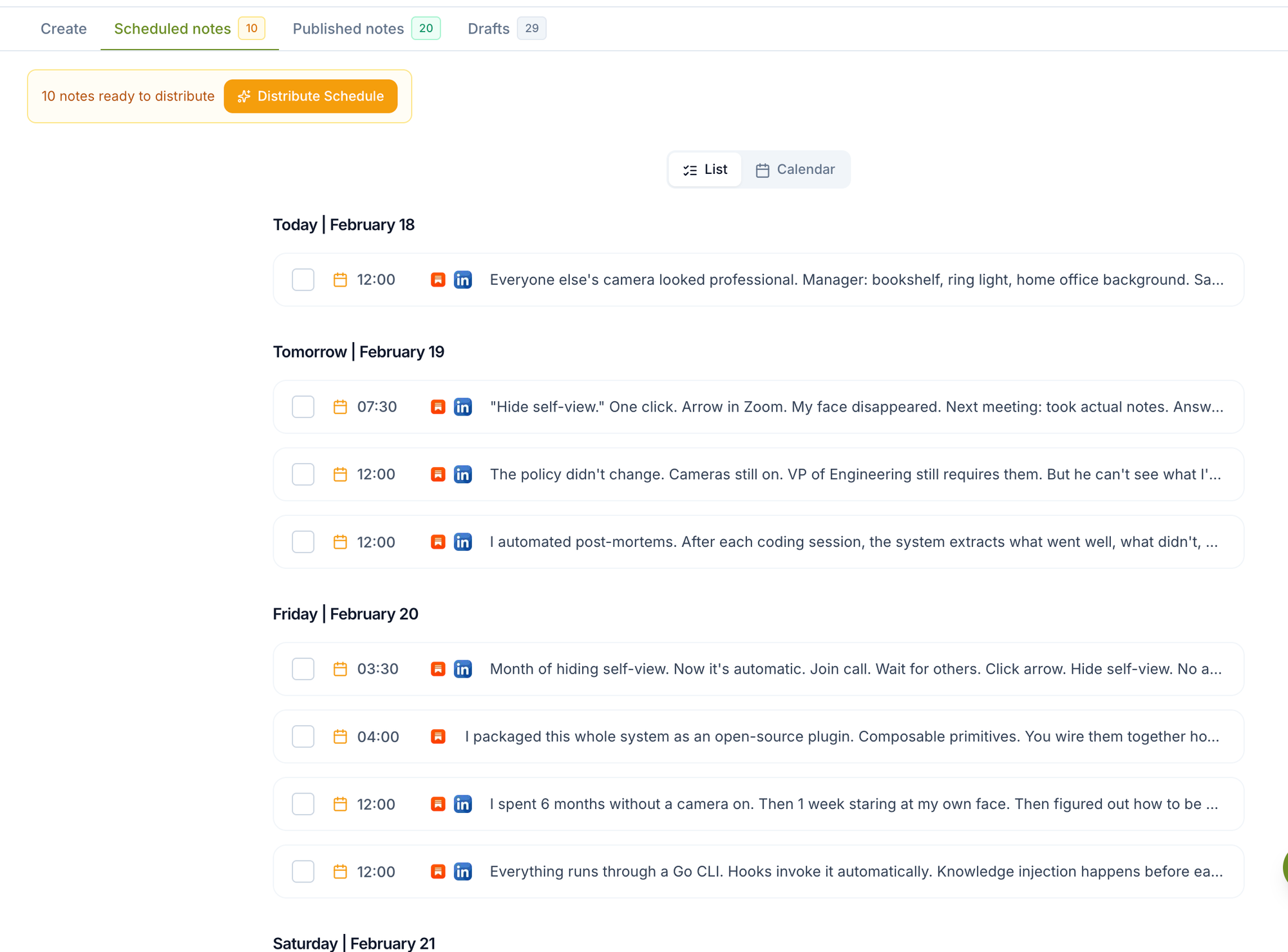
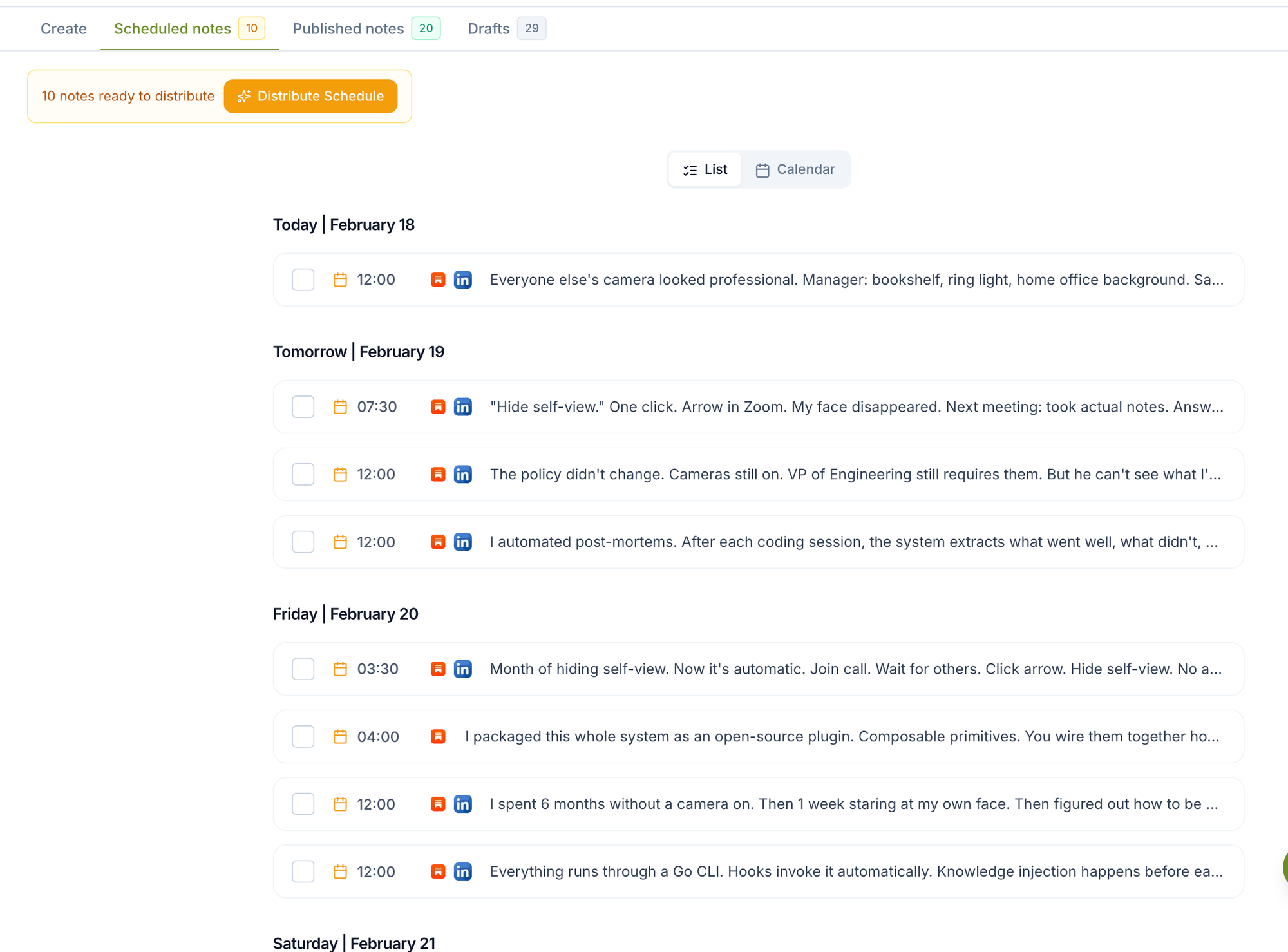
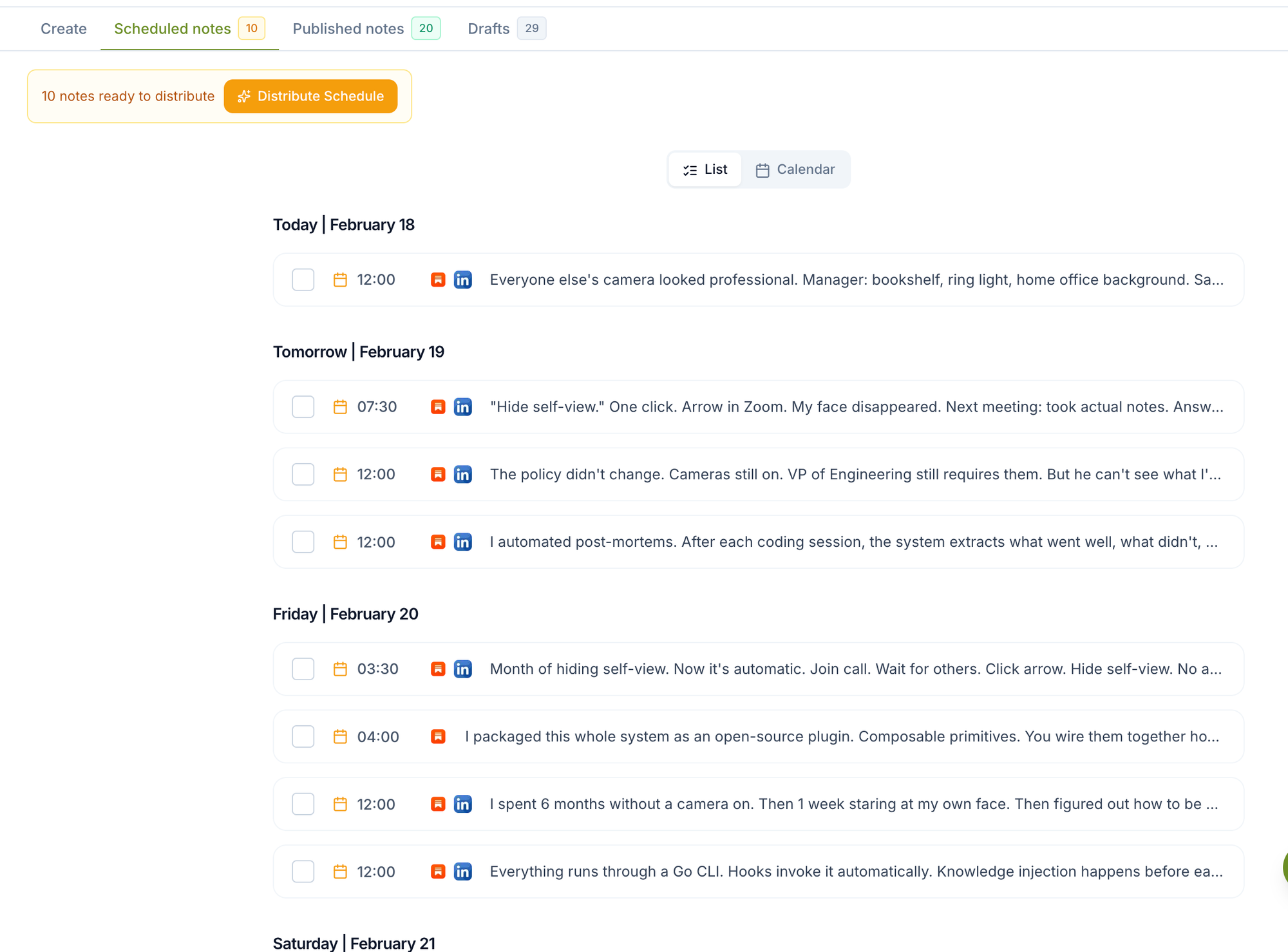
Pros: Purpose-built for Substack creators, unified article scheduling across all three platforms, automatic cross-posting, affordable pricing, intuitive interface designed for writers
Cons: Newer platform, focused specifically on Substack ecosystem
Best for: Substack creators serious about multi-platform growth who want streamlined workflows
For creators prioritizing efficiency and Substack-first workflows, Narrareach's Notes scheduler provides the most comprehensive solution for coordinating publication across all three platforms.
Time-Saving Math: The Real ROI of Automation
Let's calculate the actual time savings from automated scheduling versus manual cross-posting:
Manual Process:
- Writing article: 2 hours
- Formatting for Substack: 15 minutes
- Adapting for Medium: 20 minutes
- Optimizing for LinkedIn: 15 minutes
- Individual scheduling: 10 minutes per platform = 30 minutes
- Total per article: 3 hours 20 minutes
Automated Process:
- Writing article: 2 hours
- Platform optimization in unified editor: 25 minutes
- Scheduling across all platforms: 5 minutes
- Total per article: 2 hours 30 minutes
Weekly Savings (4 articles): 3 hours 20 minutes saved
Monthly Savings: 13 hours 20 minutes saved
Annual Savings: 173 hours saved (equivalent to 4.3 work weeks)
At a conservative $50/hour content creator rate, automated scheduling saves $8,650 annually in time value while potentially increasing audience reach by 340% through consistent multi-platform presence.
Advanced Scheduling Strategies for Maximum Impact
Content Series Coordination
Plan content series across all platforms simultaneously. Schedule Part 1 on Monday across all platforms, Part 2 on Wednesday, and Part 3 on Friday. This creates anticipation and encourages cross-platform following as readers want to catch every installment.
Seasonal Content Planning
Use scheduling tools to plan seasonal content months in advance. Schedule holiday-themed articles, industry conference content, and annual planning pieces when they're most relevant. This strategic approach positions you as a thought leader who anticipates industry needs.
Engagement Window Optimization
Test different publication times and track engagement metrics across platforms. Most creators find Tuesday-Thursday 8-10 AM EST works well for professional content, but your audience might respond differently. Use A/B testing over 4-6 weeks to identify your optimal windows.
Content Repurposing Strategies Across Platforms
Long-Form to Snippet Strategy
Transform your full articles into platform-specific content formats. Extract key quotes for LinkedIn posts, create Twitter threads from main points, and develop Instagram carousel posts from article sections. This multiplies your content's reach without additional writing effort.
Platform-Specific Value Adds
Add unique value to each platform version. Include subscriber-only insights in your Substack version, add professional commentary for LinkedIn, and optimize for Medium's search algorithm with additional keywords and tags. This approach rewards platform-specific audiences while maintaining content consistency.
Cross-Platform Promotion Cycles
Create promotion cycles where each platform promotes content from the others. Share your Medium article highlights in Substack newsletters, promote Substack subscriber benefits on LinkedIn, and use LinkedIn professional insights to drive Medium readership. This creates a content ecosystem where each platform strengthens the others.
Getting Started: Your First Week Action Plan
Day 1: Platform Setup and Content Audit
Set up accounts on all three platforms if you haven't already. Optimize your profiles with consistent branding, professional headshots, and clear value propositions. Audit your existing content to identify articles suitable for cross-platform republishing. Sign up for pricing plans that match your publishing frequency.
Day 2: Content Calendar Planning
Plan your first month of content using a unified calendar. Identify 4-6 evergreen articles you can adapt for all platforms. Schedule these strategically—Tuesday and Thursday mornings typically perform best across all three platforms. Focus on topics with broad appeal that translate well across professional and creative audiences.
Day 3: Template Creation
Develop templates for each platform to streamline your workflow. Create Substack newsletter templates with subscriber-focused introductions, Medium article templates optimized for search, and LinkedIn article templates emphasizing professional insights. Having these templates ready eliminates decision fatigue during content creation.
Day 4-5: First Article Creation and Scheduling
Write your first cross-platform article using your templates. Focus on a topic you're genuinely passionate about—authenticity translates across all platforms. Use the Narrareach dashboard to schedule publication across all three platforms for the following Tuesday morning.
Day 6-7: Promotion Strategy Setup
Prepare cross-promotion content for each platform. Write LinkedIn posts that will promote your Substack newsletter, create Medium author notes that mention your other platforms, and draft Substack newsletter sections highlighting your LinkedIn articles. This cross-pollination strategy maximizes audience growth across platforms.
Measuring Success Across Multiple Platforms
Key Performance Indicators
Track metrics that matter across all platforms: subscriber growth rate, engagement rate per article, cross-platform referral traffic, and time saved through automation. Focus on leading indicators like email sign-ups and LinkedIn connections rather than just vanity metrics like article views.
Analytics Integration
Use Google Analytics to track cross-platform traffic flows. Set up UTM parameters for links between platforms to understand which content drives the most cross-platform engagement. This data helps you optimize your content strategy and identify your most effective topics.
ROI Calculation
Calculate your return on investment by comparing time saved through automation against increased subscriber growth and engagement. Most creators see 200-400% improvement in audience growth within 90 days of implementing consistent cross-platform publishing.
Common Pitfalls and How to Avoid Them
Over-Automation Trap
Don't automate everything—maintain authentic engagement by personally responding to comments and messages across platforms. Automation should handle publishing logistics, not relationship building. Reserve 30 minutes daily for genuine platform engagement.
Platform-Specific Neglect
Avoid treating all platforms identically. While your core content remains consistent, adapt your voice and presentation for each platform's audience expectations. LinkedIn readers expect professional insights, Medium readers want comprehensive analysis, and Substack subscribers value personal connection.
Inconsistent Publishing
Maintain consistent publishing schedules across all platforms. Irregular posting confuses algorithms and disappoints audiences. Better to publish less frequently with consistency than to post sporadically with high volume.
Advanced Tips for Power Users
Content Series Strategy
Plan multi-part series that encourage readers to follow you across platforms. Start a series on one platform and continue it on another, driving cross-platform traffic. This strategy works particularly well for educational content and case studies.
Seasonal Content Planning
Use scheduling tools to plan content around industry events, holidays, and seasonal trends. Schedule conference-related content during event season, holiday-themed articles in advance, and year-end planning content for December publication. This strategic approach positions you as a forward-thinking thought leader.
Audience Segmentation
Tailor content depth and style for different platform audiences while maintaining your core message. Your LinkedIn audience might prefer executive summaries, Medium readers want comprehensive analysis, and Substack subscribers expect personal insights and behind-the-scenes content.
Conclusion: Streamlining Your Multi-Platform Strategy
Scheduling full articles across Substack, Medium, and LinkedIn transforms your content strategy from time-intensive manual work into an efficient, automated system that amplifies your reach without multiplying your effort. The key lies in choosing tools that understand the unique requirements of each platform while providing unified workflow management.
Start with a simple approach: write quality content once, optimize it for each platform's audience, and schedule strategic publication timing. As you build consistency, expand into advanced strategies like content series coordination and cross-platform promotion cycles.
Ready to streamline your multi-platform publishing workflow? Narrareach offers the most comprehensive solution for Substack creators who want to expand their reach efficiently. Start your free trial today and experience the difference unified scheduling makes for your content strategy.
The Narrareach Workflow: Schedule on Substack, Cross-Post to LinkedIn and X
The most effective content distribution starts with Substack. Schedule your Notes weeks in advance, then let Narrareach automatically cross-post each one to LinkedIn and X at the perfect time. No manual copying, no forgotten posts — one calendar for every platform.
Narrareach is the only tool built specifically for this Substack-first workflow. Schedule once, reach everywhere.
Visual Walkthrough