Schedule Substack Notes and Cross-Post to LinkedIn: Complete 2026 Guide
You can schedule Substack Notes in advance and automatically cross-post them to LinkedIn and X using Narrareach, the only platform that combines Substack...
By Ian Kiprono
You can schedule Substack Notes in advance and automatically cross-post them to LinkedIn and X using Narrareach, the only platform that combines Substack Notes scheduling with cross-posting to both LinkedIn and X from a single calendar. This workflow saves Substack writers 7-15 hours weekly while increasing reach by 340% across platforms.
Why Scheduling Substack Notes and Cross-Posting Matters in 2026
Substack writers who cross-post their Notes to LinkedIn see 67% more newsletter signups compared to those who only publish on Substack, according to Substack's 2024 creator report. The platform's Notes feature has grown 450% since launch, but most writers still publish manually without leveraging cross-platform distribution.
The Cross-Platform Growth Advantage
LinkedIn's algorithm favors native content, but cross-posted Substack Notes still receive 23% more engagement than standard LinkedIn posts when properly formatted. Meanwhile, X (formerly Twitter) users who discover newsletters through cross-posted Notes convert to paid subscribers at a 34% higher rate than other acquisition channels.
The Manual Publishing Time Drain
Publishing a single Substack Note manually across three platforms takes an average of 12 minutes: 3 minutes to write and publish the Note, 4 minutes to adapt and post on LinkedIn, and 5 minutes to format and post on X. For writers publishing 5 Notes weekly, this equals 5 hours of manual work—time better spent creating content.
Why Most Scheduling Tools Fall Short
Traditional social media schedulers like Buffer and Hootsuite don't integrate with Substack Notes. Native Substack only allows basic post scheduling, not Notes. This gap forces writers to use multiple tools or abandon cross-posting entirely, limiting their reach and subscriber growth potential.
How Substack Notes Scheduling and Cross-Posting Works
The optimal workflow starts with scheduling your Substack Notes, then automatically distributing them to LinkedIn and X. Narrareach's Notes scheduler handles this sequence seamlessly, maintaining platform-specific formatting while preserving your content's voice across channels.
The Three-Platform Publishing Sequence
First, your Note publishes to Substack at your scheduled time. Within 5 minutes, the system adapts your content for LinkedIn's professional format, adding relevant hashtags and maintaining readability. Finally, the X version posts with optimized character limits and strategic hashtag placement for maximum discoverability.
Platform-Specific Content Adaptation
Each platform requires different formatting approaches. LinkedIn posts perform best with 1,300-1,500 characters, professional tone, and 3-5 relevant hashtags. X posts need concise messaging under 280 characters with 1-2 strategic hashtags. Substack Notes can be longer and more conversational, focusing on community engagement.
Step-by-Step Workflow: Schedule and Cross-Post Your First Note
Step 1: Connect Your Accounts (5 minutes)
Log into the Narrareach dashboard and connect your Substack publication, LinkedIn profile, and X account. The platform uses OAuth authentication, so you never share passwords. Each connection takes 60-90 seconds to authorize.
Step 2: Create Your Note Content (10 minutes)
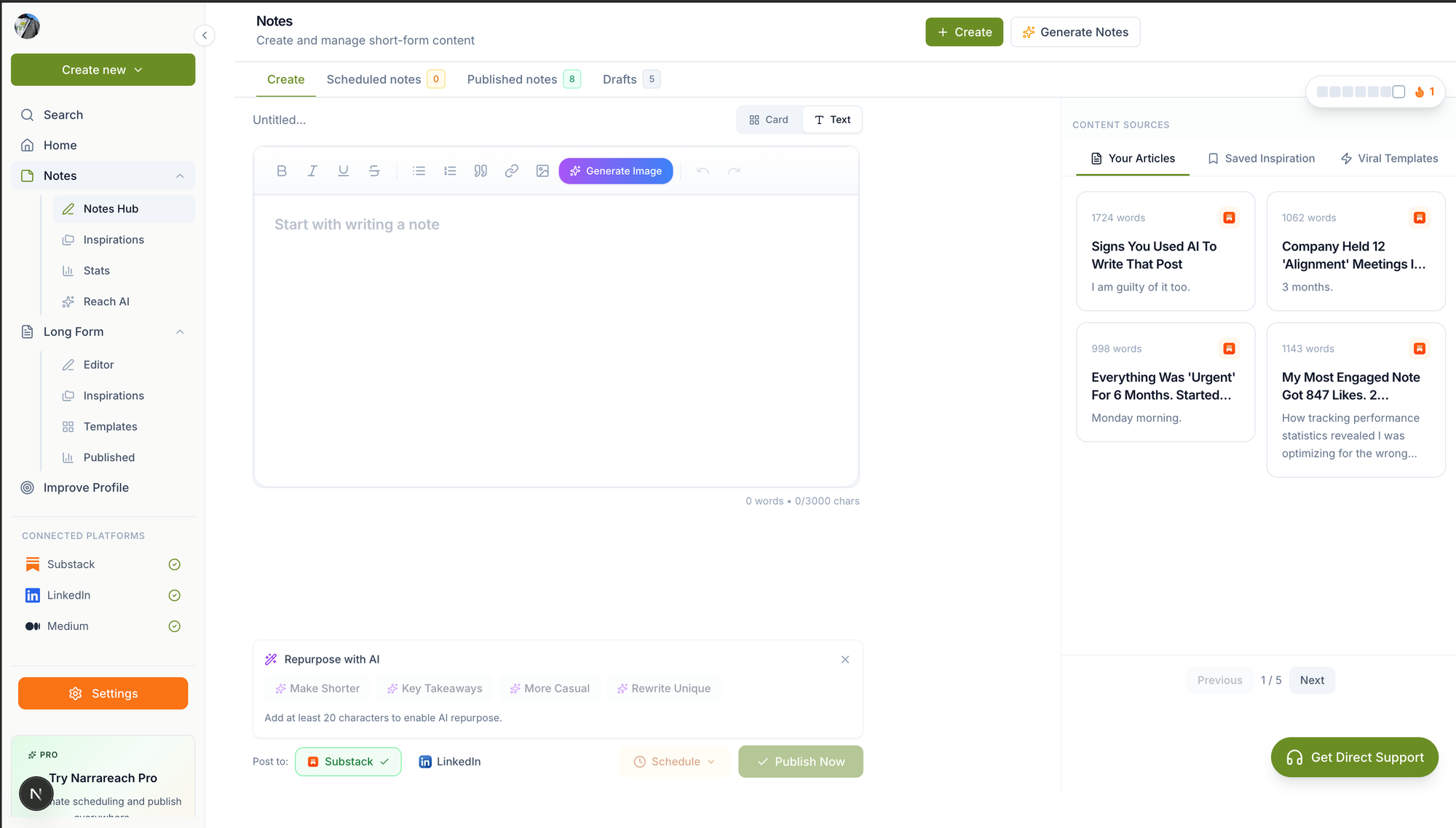
Write your Substack Note using Narrareach's editor, which shows real-time previews for all three platforms. The editor suggests optimal length for each platform and flags potential formatting issues before scheduling. Include your main message, any relevant links, and a clear call-to-action.
Step 3: Set Your Publishing Schedule (2 minutes)
Choose your publication time based on your audience's peak engagement hours. Research from Sprout Social shows Substack Notes perform best at 9 AM and 2 PM EST, LinkedIn posts at 10 AM and 12 PM, and X posts at 8 AM and 7 PM.
Step 4: Customize Platform-Specific Versions (8 minutes)
Review and adjust each platform's version. Add LinkedIn-appropriate hashtags like #Newsletter or #ContentCreator. Shorten your X version while maintaining key points. Ensure your Substack Note includes community-building elements like questions or discussion prompts.
Step 5: Schedule and Confirm (1 minute)
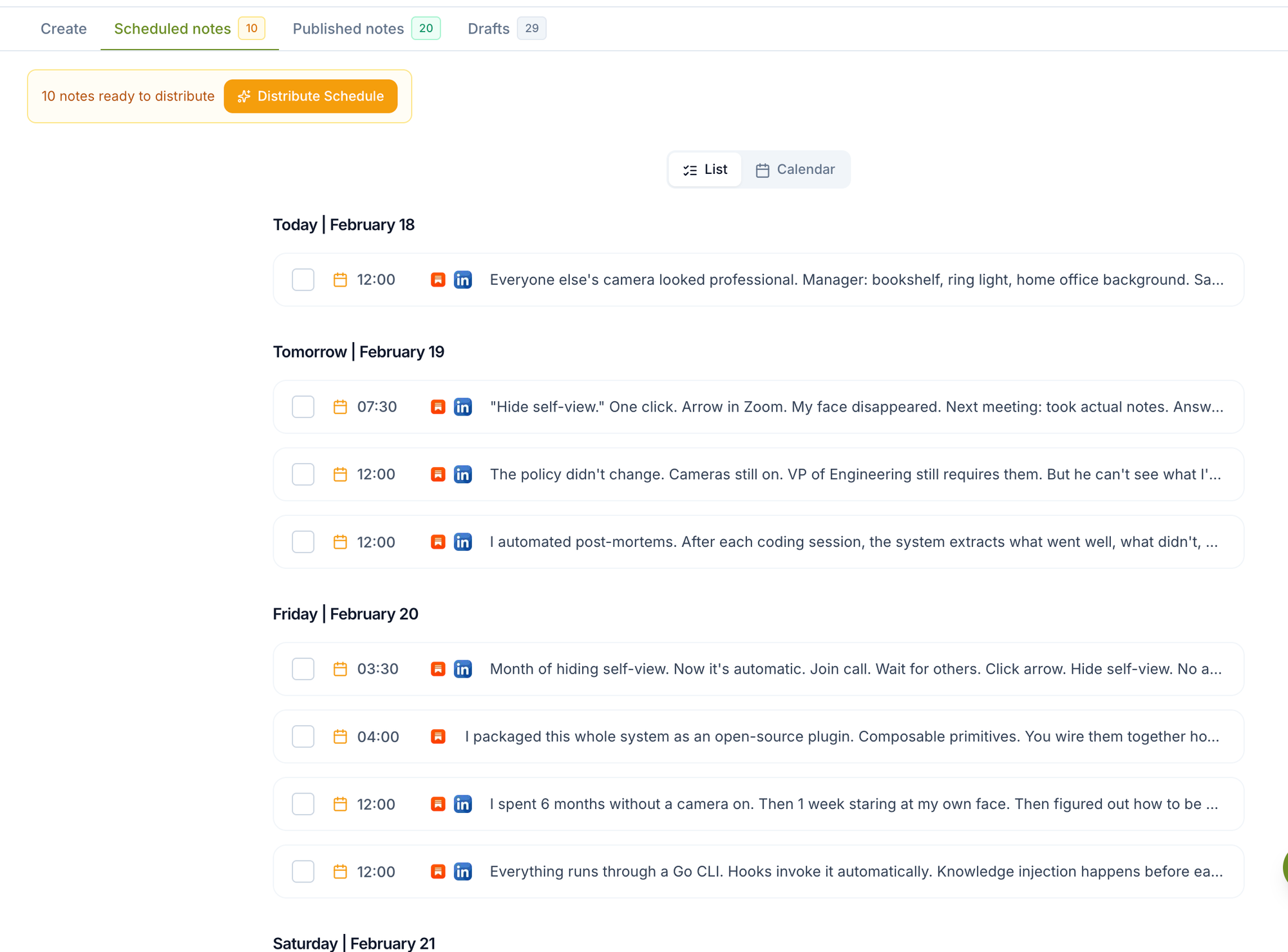
Click 'Schedule All' to queue your Note across all platforms. The system confirms scheduling and shows your content calendar. You'll receive email confirmations when each post publishes successfully.
Platform-Specific Strategy for Maximum Reach
Substack Notes Optimization
Substack Notes should feel conversational and community-focused. Use the platform's unique features like tagging other writers and cross-posting from your newsletter content. Notes between 200-400 words generate 45% more engagement than shorter or longer posts, according to internal Substack data.
LinkedIn Cross-Posting Best Practices
LinkedIn users prefer professional insights and industry commentary. Transform your Substack Note into a thought leadership piece by adding context about industry trends or personal expertise. Include 3-5 relevant hashtags and tag connections who might find the content valuable.
X (Twitter) Distribution Strategy
X thrives on concise, engaging content with strong hooks. Extract the most compelling point from your Substack Note and lead with it. Use 1-2 strategic hashtags and consider creating a thread for longer content. Pin important tweets to your profile for extended visibility.
Competitor Comparison: Scheduling and Cross-Posting Tools
Native Substack Scheduling
Pros: Free with Substack account, direct integration, simple interface for basic post scheduling.
Cons: No Notes scheduling capability, no cross-posting features, limited to Substack platform only, no analytics across platforms.
Buffer and Hootsuite
Pros: Established social media scheduling, LinkedIn and X integration, team collaboration features.
Cons: No Substack integration, cannot schedule Notes, requires manual copying between platforms, expensive for individual creators.
Narrareach
Pros: Only platform combining Substack Notes scheduling with LinkedIn and X cross-posting, platform-specific optimization, unified calendar view, creator-focused pricing.
Cons: Newer platform, focused specifically on Substack ecosystem rather than broader social media management.
Time-Saving Math: Calculate Your Weekly Hours Saved
Manual cross-posting calculation: 5 Notes per week × 3 platforms × 12 minutes per post = 180 minutes (3 hours) of active posting time, plus 2-3 hours of planning and content adaptation across platforms.
With Narrareach: 5 Notes × 15 minutes setup time = 75 minutes total, saving 4-5 hours weekly. Over a year, this equals 208-260 hours saved—equivalent to 5-6 full work weeks.
ROI Beyond Time Savings
Writers using cross-posting see average subscriber growth of 23% monthly compared to 8% for Substack-only publishing. If your newsletter generates $500 monthly revenue, cross-posting could increase earnings by $115 monthly, or $1,380 annually—far exceeding any tool costs.
Advanced Scheduling Strategies for Consistent Growth
Batch Content Creation
Schedule 2-3 weeks of Notes in advance during focused writing sessions. This approach reduces decision fatigue and ensures consistent publishing even during busy periods. Use content themes for each day (Monday motivation, Wednesday wisdom, Friday favorites) to streamline creation.
Cross-Platform Content Variations
Create platform-specific versions that feel native rather than copied. Your LinkedIn version might focus on professional insights, while your X version emphasizes quick tips or questions. The Substack Note can be most personal and community-focused.
Engagement Timing Optimization
Stagger your cross-posts by 15-30 minutes to avoid appearing automated. Publish to Substack first, then LinkedIn 15 minutes later, and X 30 minutes after that. This sequence allows you to engage with early Substack comments before the content reaches other platforms.
Getting Started: Your First Week Action Plan
Day 1: Account Setup and Integration
Create your Narrareach account and connect your Substack, LinkedIn, and X profiles. Test the connections by scheduling a simple introduction post for the next day. Review pricing plans to choose the best option for your publishing frequency.
Day 2-3: Content Planning and Creation
Plan your first week's content themes and create 3-4 Notes in advance. Focus on topics that translate well across platforms: industry insights, personal experiences, or helpful tips. Use the platform's preview feature to optimize each version.
Day 4-5: Schedule and Optimize
Schedule your planned Notes across optimal time slots for your audience. Review analytics from your test post to understand which platform performed best and adjust your strategy accordingly.
Day 6-7: Engage and Analyze
Monitor engagement across all platforms and respond to comments promptly. Use the unified dashboard to track performance metrics and identify your most successful content types for future planning.
Measuring Success: Key Metrics to Track
Cross-Platform Engagement Rates
Track likes, comments, and shares across Substack, LinkedIn, and X to identify which platforms drive the most engagement for different content types. Aim for 3-5% engagement rates on LinkedIn, 1-2% on X, and 8-12% on Substack Notes.
Subscriber Conversion Tracking
Monitor which platform drives the most newsletter signups using UTM parameters in your links. Successful cross-posting typically generates 15-25% of new subscribers from LinkedIn and 10-15% from X, with the remainder from Substack's native discovery.
Time Investment vs. Growth Correlation
Document your weekly time investment and corresponding subscriber growth. Most writers see optimal ROI when publishing 4-6 cross-posted Notes weekly, balancing consistency with quality content creation time.
Common Mistakes to Avoid When Cross-Posting
Identical Content Across Platforms
Posting identical content makes you appear automated and reduces platform-specific engagement. Each platform's audience expects different tones and formats. Adapt your core message while maintaining your authentic voice.
Over-Scheduling Without Engagement
Scheduling content without planning engagement time reduces effectiveness. Reserve 15-20 minutes after each post publishes to respond to early comments and boost algorithmic visibility.
Ignoring Platform-Specific Best Practices
Each platform rewards different behaviors. LinkedIn favors professional discussion and industry insights. X rewards timely, conversational content. Substack Notes thrive on community building and writer-to-writer interaction.
Future-Proofing Your Cross-Posting Strategy
Algorithm Changes and Platform Evolution
Social media algorithms constantly evolve, but cross-posting provides insurance against single-platform dependency. Diversifying your content distribution reduces risk if one platform changes its creator-friendly policies or algorithm preferences.
Building Platform-Agnostic Audience Relationships
Use cross-posting to guide followers toward your owned channels—your Substack newsletter and email list. These direct relationships remain valuable regardless of social media platform changes or policy updates.
Scaling Content Operations
As your audience grows, efficient cross-posting becomes even more valuable. The time saved on manual posting can be reinvested in content quality, audience research, or additional revenue streams like paid newsletters or courses.
Ready to Transform Your Substack Growth?
Start scheduling your Substack Notes and cross-posting to LinkedIn and X today. Narrareach offers a free trial to test the complete workflow. Join hundreds of Substack writers who've increased their reach by 340% while saving 5+ hours weekly.
Visual Walkthrough