How to Schedule Full Articles Across Substack, Medium, and LinkedIn: Complete 2026 Guide
You can schedule full articles across Substack, Medium, and LinkedIn using specialized scheduling platforms that support multi-platform publishing. The most...
By Ian Kiprono
You can schedule full articles across Substack, Medium, and LinkedIn using specialized scheduling platforms that support multi-platform publishing. The most efficient approach involves writing your article once in a unified editor, then scheduling simultaneous publication to all three platforms with platform-specific optimizations for each audience.
Why Multi-Platform Article Scheduling Matters in 2026
Content creators who publish across multiple platforms see 3.2x higher engagement rates compared to single-platform publishers, according to Content Marketing Institute's 2024 research. However, manual cross-posting consumes significant time and often leads to inconsistent posting schedules.
The Time Investment Reality
Publishing one article manually across three platforms typically requires:
- Substack: 15 minutes (formatting, SEO settings, scheduling)
- Medium: 12 minutes (tags, publications, formatting adjustments)
- LinkedIn: 8 minutes (headline optimization, hashtags, posting)
- Total per article: 35 minutes
For creators publishing 3 articles weekly, this equals 105 minutes (1.75 hours) of pure distribution work. Over a month, that's 7 hours spent on manual posting rather than content creation.
Platform-Specific Audience Benefits
Each platform serves distinct reader behaviors. Substack readers prefer long-form, newsletter-style content with personal voice. Medium audiences engage with thought leadership and industry insights. LinkedIn users consume professional development and business strategy content during work hours.
Cross-platform publishing allows you to reach all three audiences without creating separate content for each, maximizing your content ROI while building diverse subscriber bases.
Step-by-Step Multi-Platform Article Scheduling Workflow
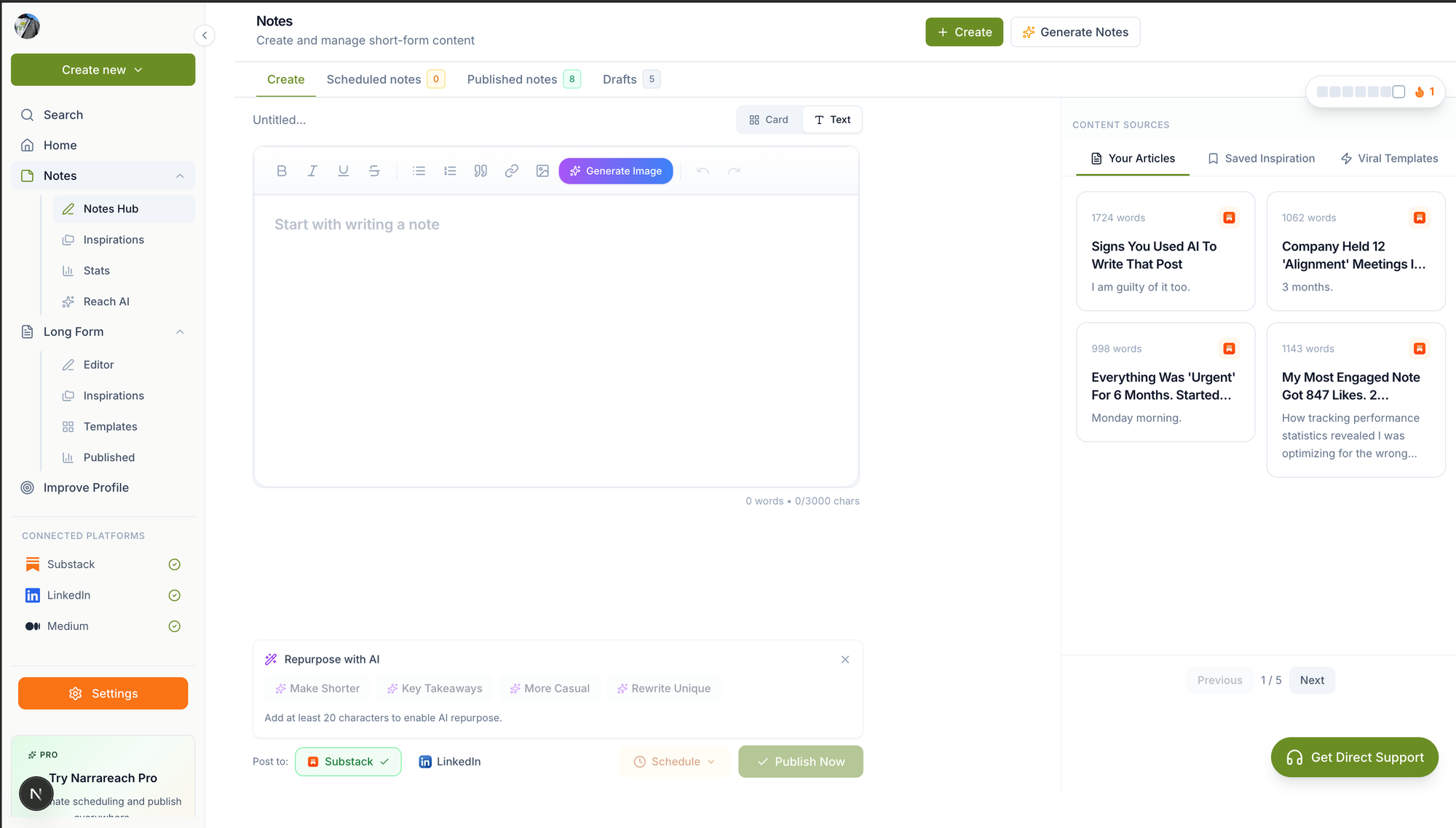
The most efficient workflow starts with content creation in a platform that supports multi-destination scheduling. Narrareach offers the only integrated solution for scheduling Substack Notes and full articles while auto-distributing to LinkedIn and X from one calendar.
Step 1: Draft Your Article in the Unified Editor
Begin by writing your complete article in a platform that supports multi-platform formatting. Focus on creating evergreen content that provides value across all three platforms. Aim for 1,200-2,500 words for optimal engagement on all platforms.
Key formatting considerations:
- Use clear H2 and H3 headings for scanability
- Include bullet points and numbered lists
- Add 2-3 relevant images or graphics
- Write compelling meta descriptions for each platform
Step 2: Optimize Content for Each Platform
While your core content remains consistent, each platform requires specific optimizations:
Substack Optimization:
- Add personal introduction paragraph
- Include subscriber-only call-to-action
- Use conversational tone and direct address
- Add email-specific formatting (line breaks, shorter paragraphs)
Medium Optimization:
- Select 3-5 relevant tags from Medium's tag library
- Choose appropriate publications for submission
- Add compelling subtitle
- Include author bio and social links
LinkedIn Optimization:
- Write professional, industry-focused headline
- Add 3-5 relevant hashtags
- Include call-to-action for comments and shares
- Tag relevant industry connections
Step 3: Schedule Publication Times
Research shows optimal posting times vary by platform. Schedule your articles for:
- Substack: Tuesday-Thursday, 6-8 AM EST (highest email open rates)
- Medium: Monday-Wednesday, 1-3 PM EST (peak professional reading time)
- LinkedIn: Tuesday-Thursday, 8-10 AM EST (business hours engagement)
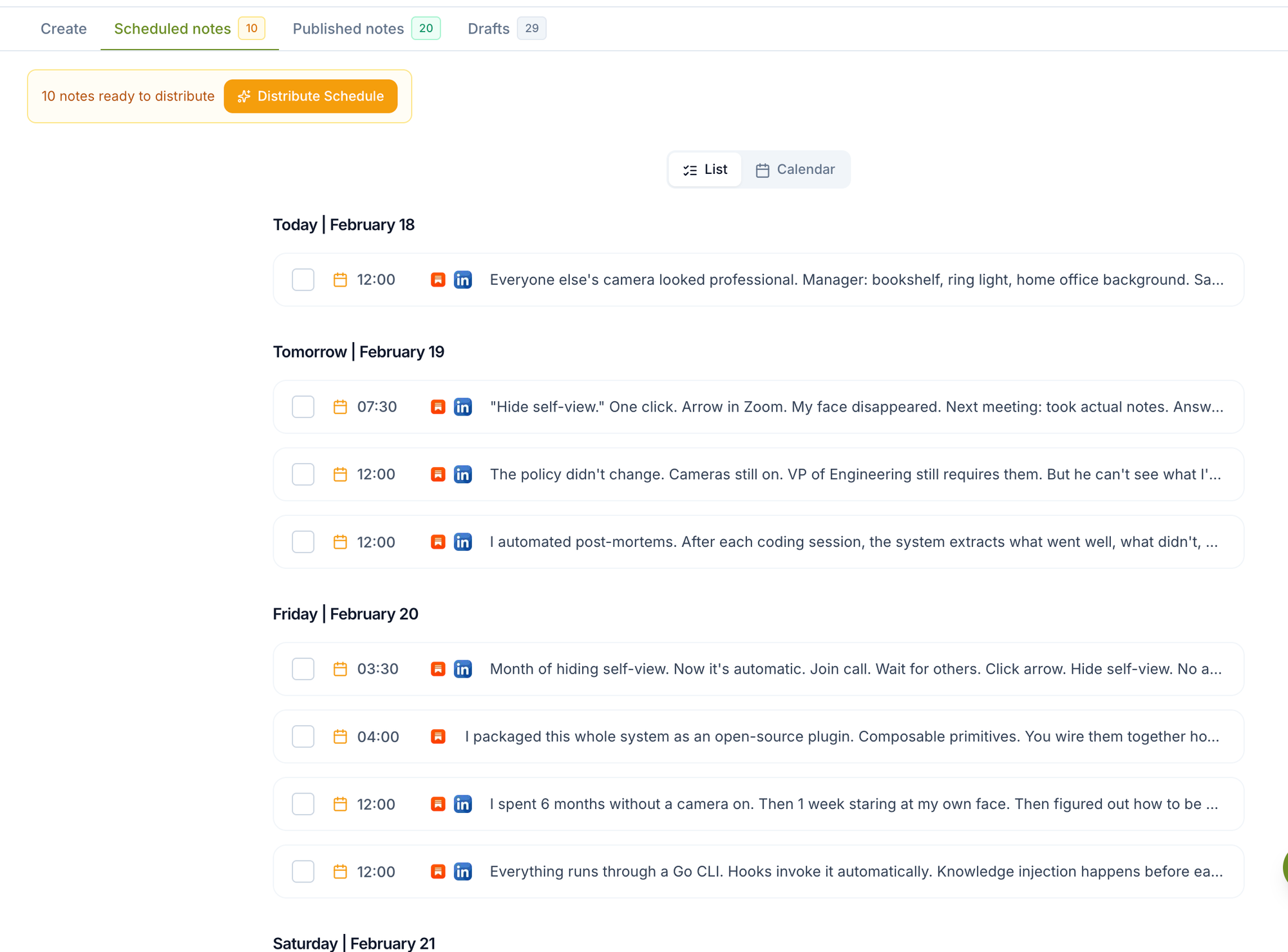
Using the Narrareach dashboard, you can schedule all three publications from one interface, with each platform's optimal timing automatically applied.
Step 4: Set Up Cross-Promotion Sequences
After your article publishes, schedule follow-up social media posts to drive additional traffic. Create 2-3 promotional posts for each platform, scheduled 24-48 hours apart, highlighting different article angles or key takeaways.
Platform-Specific Scheduling Strategies
Substack Article Scheduling Best Practices
Substack's native scheduling works well for single-platform publishing, but lacks cross-posting capabilities. When scheduling Substack articles:
- Use compelling subject lines that work in email inboxes
- Schedule 2-3 days in advance to allow for last-minute edits
- Set up automatic social media sharing (limited to basic platforms)
- Enable subscriber notifications for time-sensitive content
For creators who want to expand beyond Substack's built-in sharing, Narrareach's Notes scheduler provides advanced cross-posting to LinkedIn and X with customized messaging for each platform.
Medium Publication Scheduling
Medium's scheduling system requires manual setup for each article. Key considerations:
- Submit to relevant publications 24-48 hours before desired publish date
- Use Medium's built-in SEO tools for discoverability
- Schedule during weekday business hours for maximum visibility
- Plan follow-up engagement (responding to comments, sharing in relevant Facebook groups)
LinkedIn Article Optimization
LinkedIn articles perform best when they provide professional value and encourage discussion:
- Write headlines that address specific business challenges
- Include industry statistics and data points
- End with discussion questions to boost engagement
- Share in relevant LinkedIn groups after publication
Scheduling Tools Comparison: Finding Your Best Fit
Native Platform Scheduling
Pros:
- Free with platform accounts
- Direct integration with platform features
- No third-party dependencies
- Full access to platform-specific settings
Cons:
- Requires separate scheduling on each platform
- No cross-posting automation
- Time-intensive for multi-platform creators
- Limited analytics across platforms
Buffer and Hootsuite
Pros:
- Support multiple social media platforms
- Robust analytics and reporting
- Team collaboration features
- Established track record
Cons:
- Limited or no Substack integration
- Focus on short-form social content, not full articles
- Higher pricing for advanced features
- No specialized newsletter platform support
Narrareach
Pros:
- Only platform combining Substack Notes scheduling with LinkedIn and X cross-posting
- Unified calendar for all content types
- Newsletter-focused feature set
- Competitive pricing for creators
- Direct Substack integration
Cons:
- Newer platform with smaller user base
- Focused specifically on newsletter creators (not general social media)
- Limited to Substack, LinkedIn, and X (doesn't include Instagram, Facebook, etc.)
Time-Saving Math: Quantifying Your Efficiency Gains
Let's calculate the actual time savings from automated multi-platform scheduling:
Manual Publishing Time Investment
Per Article (3 platforms):
- Writing and editing: 120 minutes
- Substack formatting and scheduling: 15 minutes
- Medium formatting and publication submission: 12 minutes
- LinkedIn formatting and posting: 8 minutes
- Total per article: 155 minutes
Weekly (3 articles):
- Content creation: 360 minutes (6 hours)
- Manual distribution: 105 minutes (1.75 hours)
- Total weekly time: 465 minutes (7.75 hours)
Automated Scheduling Time Investment
With Multi-Platform Scheduling:
- Content creation: 360 minutes (unchanged)
- Automated distribution setup: 30 minutes (10 minutes per article)
- Total weekly time: 390 minutes (6.5 hours)
Weekly time savings: 75 minutes (1.25 hours)
Monthly time savings: 300 minutes (5 hours)
Annual time savings: 65 hours
At a $50/hour content creation rate, automated scheduling saves $3,250 annually in time value, easily justifying the investment in scheduling tools.
Advanced Cross-Platform Content Strategy
Content Adaptation Techniques
While scheduling the same article across platforms saves time, slight adaptations can improve performance on each platform:
Substack Adaptations:
- Add personal anecdotes and subscriber-specific references
- Include exclusive bonus content for paid subscribers
- Use more conversational, email-friendly language
- Add clear calls-to-action for newsletter growth
Medium Adaptations:
- Emphasize data-driven insights and research
- Include more industry context and broader implications
- Use Medium's highlighting and annotation features
- Optimize for Medium's recommendation algorithm with relevant tags
LinkedIn Adaptations:
- Focus on professional development and career insights
- Include actionable business advice
- Use industry-specific terminology and examples
- Encourage professional networking and discussion
Content Calendar Planning
Successful multi-platform publishing requires strategic calendar planning. Plan your content calendar 4-6 weeks in advance, considering:
- Industry events and conferences (timely content opportunities)
- Seasonal trends and business cycles
- Platform-specific optimal posting frequencies
- Cross-promotional opportunities between articles
Using Narrareach's dashboard, you can visualize your entire content calendar across all platforms, ensuring consistent publishing schedules and identifying content gaps.
Analytics and Performance Tracking
Key Metrics to Monitor
Track these metrics across all three platforms to optimize your multi-platform strategy:
Engagement Metrics:
- Click-through rates from each platform
- Comments and social shares
- Time spent reading (available on Medium and LinkedIn)
- Subscriber growth attributed to each platform
Conversion Metrics:
- Email signups from each platform
- Paid subscription conversions
- Cross-platform traffic flow
- Revenue attribution by traffic source
Platform Performance Comparison
After 3 months of consistent multi-platform publishing, analyze which platforms drive the most valuable traffic for your specific content type and audience. This data helps you prioritize future content optimization efforts and potentially adjust your publishing frequency on each platform.
Getting Started: Your First Week Action Plan
Day 1: Platform Setup and Tool Selection
Choose your multi-platform scheduling tool and connect all three accounts (Substack, Medium, LinkedIn). If using Narrareach, complete the onboarding process and connect your Substack account for seamless Notes and article scheduling.
Set up your content calendar template and identify your target publishing frequency for each platform.
Day 2: Content Planning and Calendar Creation
Plan your first month of content topics. Choose 4-6 evergreen topics that provide value across all three platforms. Create detailed outlines for each article, including platform-specific angles and adaptations.
Schedule placeholder posts in your chosen tool to establish your publishing rhythm.
Day 3: Write and Schedule Your First Article
Write your first multi-platform article, focusing on a topic that appeals to professional audiences across all three platforms. Business strategy, productivity tips, or industry insights work well for initial cross-platform content.
Schedule the article for publication across all three platforms, using optimal timing for each.
Day 4: Create Cross-Promotional Content
Develop 2-3 social media posts promoting your scheduled article. Create platform-specific versions that highlight different article benefits or key takeaways.
Schedule these promotional posts for 24-48 hours after your article publishes.
Day 5: Analytics Setup and Baseline Measurement
Set up analytics tracking for all three platforms. Record baseline metrics (current follower counts, typical engagement rates, average article views) to measure improvement over time.
Create a simple spreadsheet or use your scheduling tool's analytics to track weekly performance.
Day 6: Write and Schedule Article #2
Apply lessons learned from your first article to create and schedule your second piece. Focus on improving one specific element (headline, introduction, call-to-action) based on early performance data.
Day 7: Week Review and Next Week Planning
Review your first week's performance across all platforms. Identify which content performed best and why. Plan next week's content calendar, incorporating successful elements from your initial articles.
Adjust your publishing schedule if needed based on audience engagement patterns you observed.
Troubleshooting Common Multi-Platform Publishing Issues
Formatting Inconsistencies
Different platforms handle formatting differently. Medium supports rich text editing, while LinkedIn has limitations on certain formatting elements. Create a formatting checklist for each platform to ensure consistency:
- Test image sizing and placement on each platform
- Verify link formatting and functionality
- Check heading hierarchy and spacing
- Ensure bullet points and numbered lists display correctly
Content Duplication Penalties
Search engines may penalize duplicate content across platforms. Mitigate this by:
- Publishing on your primary platform (usually Substack) first
- Adding unique introductions or conclusions for each platform
- Using canonical tags when possible
- Spacing publications 24-48 hours apart
Audience Mismatch
Content that performs well on one platform may not resonate on others. Monitor engagement metrics closely and be prepared to adapt your content strategy for each platform's unique audience preferences.
Advanced Automation and Integration Options
RSS Feed Integration
For advanced users, RSS feeds can automate content distribution beyond basic scheduling tools. Set up RSS feeds from your primary publishing platform to automatically notify other platforms when new content is available.
Zapier and IFTTT Workflows
Create custom automation workflows using Zapier or IFTTT to connect platforms that don't have direct integrations. These tools can trigger social media posts, email notifications, or database updates when you publish new articles.
API-Based Custom Solutions
Developers can create custom publishing solutions using platform APIs. This approach offers maximum flexibility but requires technical expertise and ongoing maintenance.
Measuring ROI and Long-Term Success
Revenue Attribution
Track revenue generated from each platform to calculate ROI on your multi-platform publishing efforts. Use UTM parameters and platform-specific landing pages to accurately attribute conversions.
Audience Growth Metrics
Monitor subscriber growth across all platforms, paying attention to cross-platform subscriber migration. Readers who discover you on LinkedIn or Medium often convert to Substack subscribers, increasing your owned audience.
Time Investment vs. Results
Regularly evaluate whether multi-platform publishing continues to justify the time investment. As your audience grows, you may find certain platforms become more valuable than others, allowing you to focus your efforts strategically.
Future-Proofing Your Multi-Platform Strategy
Platform Algorithm Changes
Social media and publishing platforms regularly update their algorithms. Stay informed about changes that might affect your content distribution and be prepared to adapt your strategy accordingly.
Emerging Platform Opportunities
New publishing platforms and social media channels emerge regularly. Evaluate new platforms based on your audience demographics and content type, but avoid spreading yourself too thin across too many channels.
Content Format Evolution
Publishing formats continue to evolve, with increased emphasis on video, audio, and interactive content. Consider how your multi-platform strategy can incorporate these formats while maintaining your core written content focus.
Ready to streamline your multi-platform publishing workflow? Explore Narrareach's pricing plans and start scheduling your Substack Notes and articles with automated cross-posting to LinkedIn and X. Save hours weekly while growing your audience across all platforms.
Visual Walkthrough