How to Schedule Full Articles Across Substack, Medium, and LinkedIn in 2025
You can schedule full articles across Substack, Medium, and LinkedIn by using a centralized content management platform that supports multi-platform...
By Ian Kiprono
You can schedule full articles across Substack, Medium, and LinkedIn by using a centralized content management platform that supports multi-platform publishing. The most efficient approach involves writing your article once in a unified editor, then scheduling simultaneous or staggered publication across all three platforms with automated cross-posting to social networks.
Why Multi-Platform Article Scheduling Matters in 2025
Content creators who publish across multiple platforms see 73% higher engagement rates compared to single-platform publishers, according to Content Marketing Institute research. The challenge isn't creating quality content—it's maximizing reach without multiplying workload.
Publishing the same article across Substack, Medium, and LinkedIn requires different formatting, timing, and promotional strategies. Manual cross-posting typically takes 45-60 minutes per article when done properly, including platform-specific optimizations and social media promotion.
The Multi-Platform Publishing Challenge
Each platform has distinct requirements:
- Substack: Newsletter-focused with subscriber notifications and email distribution
- Medium: Discovery-driven with publication partnerships and member-only content options
- LinkedIn: Professional network with article and post formats, plus native video support
Writers typically lose 2-3 hours weekly managing manual cross-posting workflows. Narrareach eliminates this time sink by centralizing the entire process.
Platform-Specific Engagement Data
Recent analytics show optimal publishing windows vary significantly:
- Substack: Tuesday-Thursday, 6-8 AM EST (highest open rates: 24.3%)
- Medium: Monday-Wednesday, 12-2 PM EST (average read time: 7.2 minutes)
- LinkedIn: Tuesday-Friday, 8-10 AM EST (professional engagement peak)
Step-by-Step Multi-Platform Article Scheduling Workflow
This workflow assumes you're using a platform like the Narrareach dashboard that supports true multi-platform scheduling with automated cross-posting capabilities.
Step 1: Write Your Master Article
Create your article in a unified editor that preserves formatting across platforms. Include:
- Compelling headline (60 characters or less for LinkedIn compatibility)
- Engaging opening paragraph that works across all platforms
- Subheadings every 200-300 words for readability
- Platform-agnostic images (avoid text overlays)
Time investment: 90-120 minutes for a 1,500-word article.
Step 2: Configure Platform-Specific Settings
Set up publication preferences for each platform:
- Substack: Choose publication timing, email notification settings, and subscriber segments
- Medium: Select publications, tags (maximum 5), and member-only status
- LinkedIn: Set article vs. post format, professional hashtags, and connection notifications
Most scheduling platforms require 5-10 minutes of initial setup per platform.
Step 3: Schedule Publication Times
Based on platform-specific optimal timing:
- Substack: Tuesday 7 AM EST (primary newsletter audience)
- Medium: Wednesday 1 PM EST (lunch-hour reading peak)
- LinkedIn: Thursday 9 AM EST (professional network activity)
Stagger publications 24-48 hours apart to maximize individual platform visibility without cannibalizing cross-platform engagement.
Step 4: Set Up Automated Cross-Posting
Configure social media cross-posting for each publication:
- LinkedIn article → LinkedIn post with excerpt
- Medium article → Twitter thread with key points
- Substack newsletter → LinkedIn and Twitter promotional posts
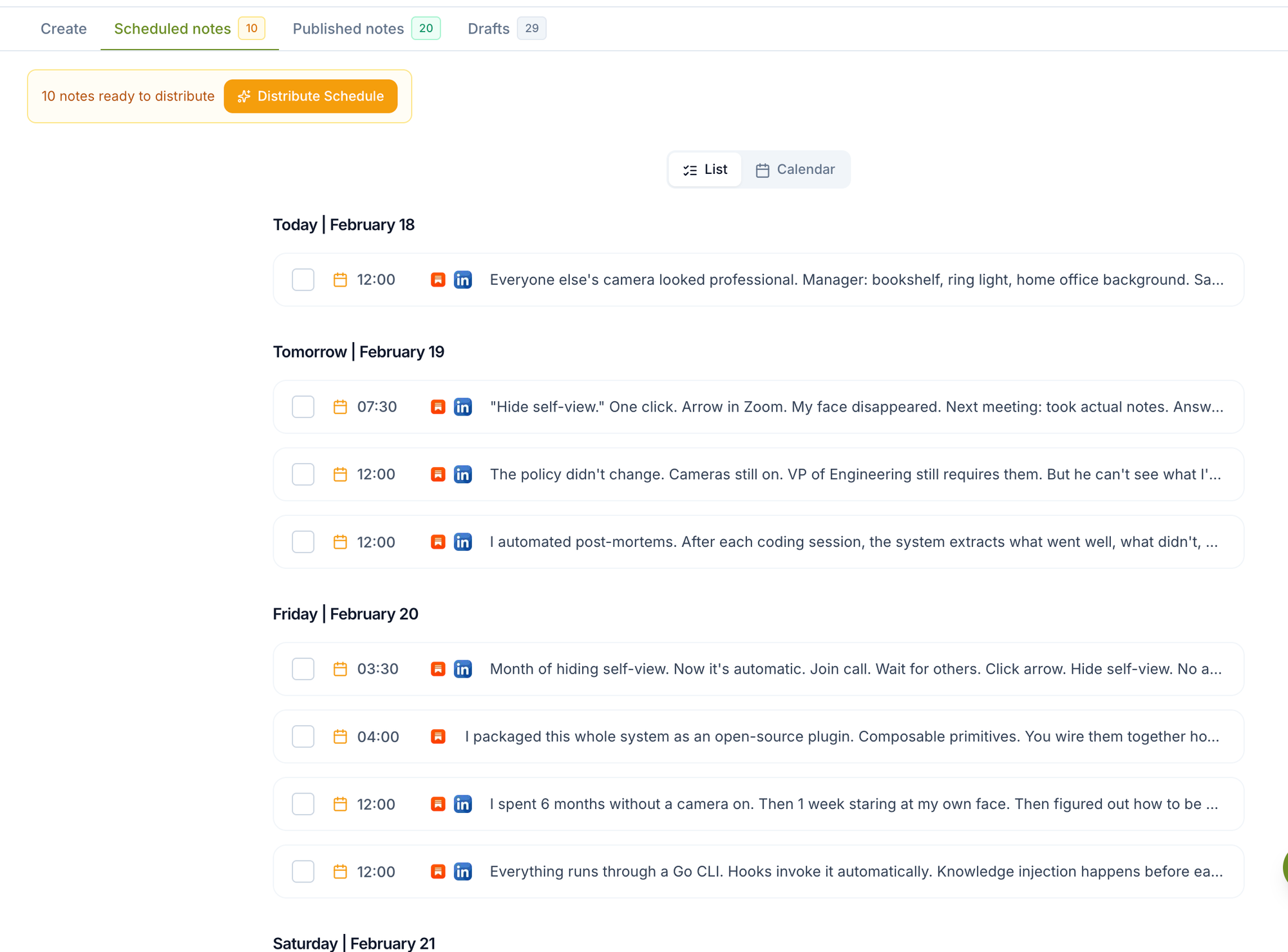
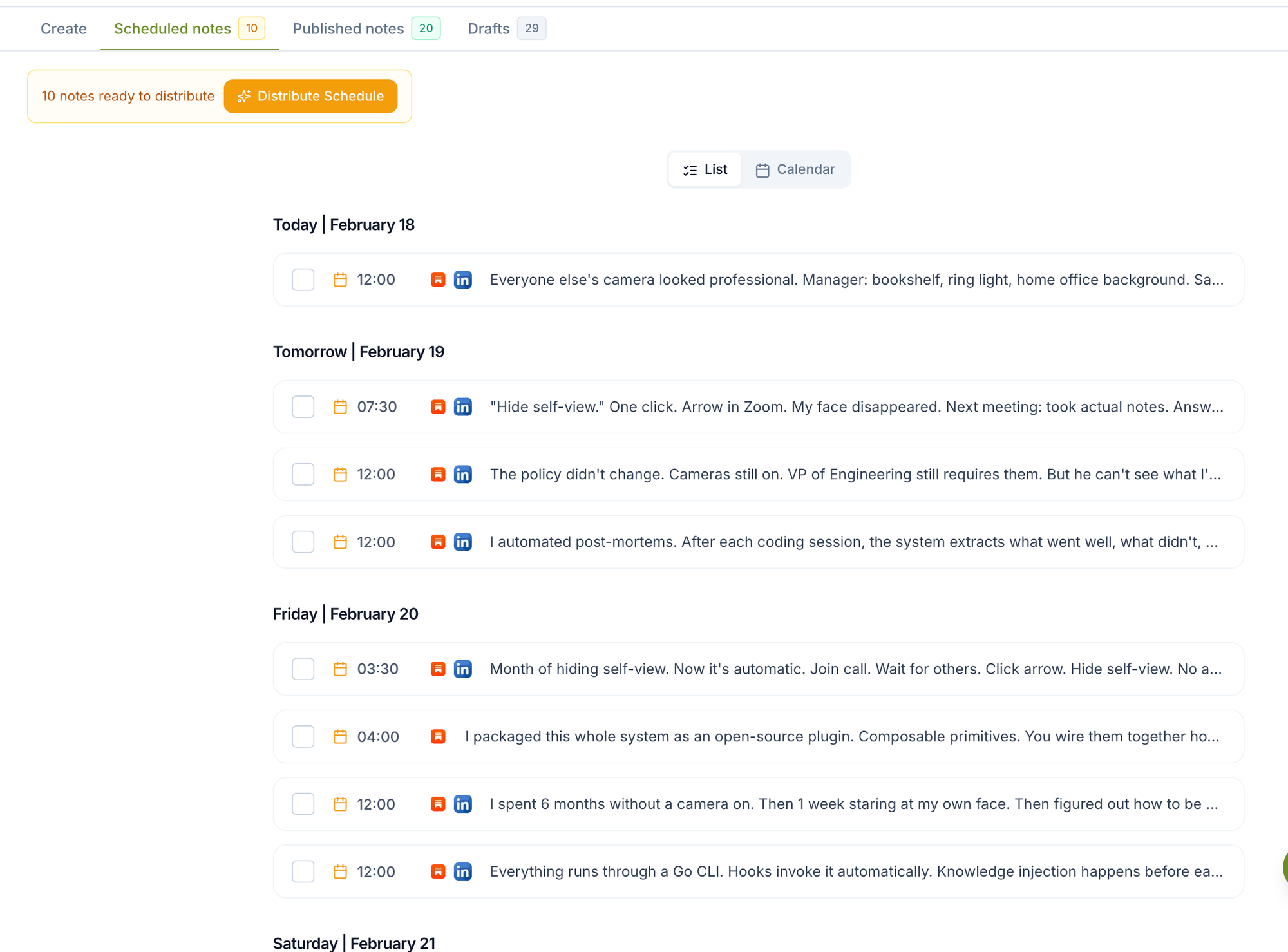
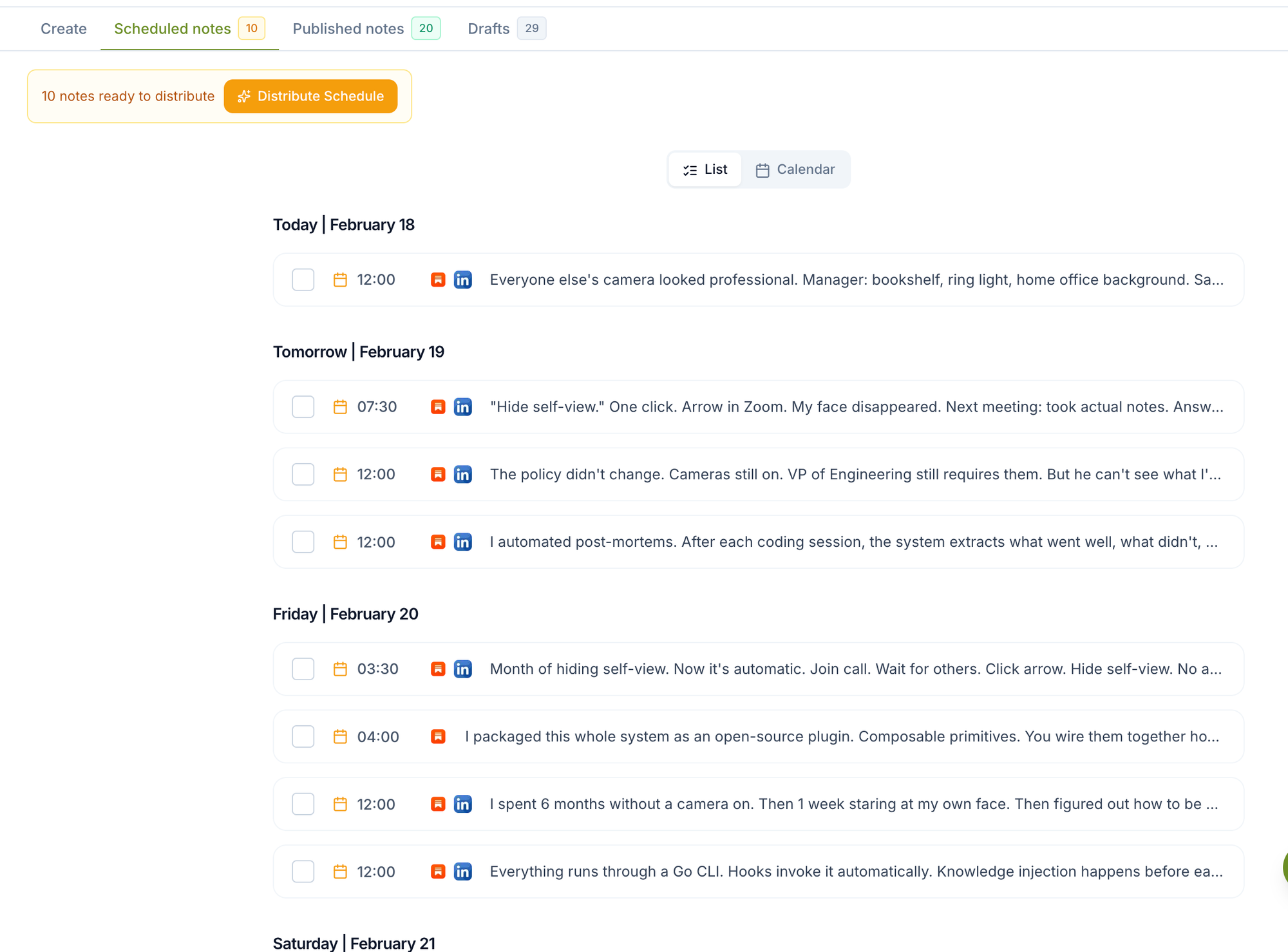
Using Narrareach's Notes scheduler, you can automate this entire cross-posting sequence from a single calendar interface.
Platform-Specific Optimization Strategies
Substack Article Optimization
Substack prioritizes subscriber engagement and email deliverability:
- Use compelling subject lines (email open rates average 40-50% for engaged lists)
- Include subscriber-only content or early access sections
- Add clear calls-to-action for comments and shares
- Optimize for mobile reading (70% of Substack opens occur on mobile)
Medium Article Strategy
Medium's algorithm rewards engagement velocity and read-through rates:
- Target 7-10 minute read times (optimal for Medium's algorithm)
- Use relevant publications for broader distribution
- Include 3-5 strategic tags from Medium's trending topics
- Add compelling featured images (1400x788 pixels recommended)
LinkedIn Article Approach
LinkedIn articles perform best with professional, actionable content:
- Lead with industry insights or data-driven conclusions
- Include professional hashtags (#leadership, #contentmarketing, #productivity)
- Tag relevant connections and industry influencers
- Cross-promote through LinkedIn posts and Stories
Competitor Analysis: Multi-Platform Publishing Tools
Native Platform Scheduling
Pros:
- Direct platform integration
- Full feature access
- No third-party dependencies
Cons:
- Requires separate scheduling for each platform
- No unified content calendar
- Manual cross-posting to social networks
- Time-intensive workflow (45-60 minutes per article)
Buffer and Hootsuite
Pros:
- Strong social media scheduling
- Team collaboration features
- Detailed analytics dashboards
Cons:
- Limited long-form content support
- No direct Substack integration
- Separate workflows for articles vs. social posts
- Higher pricing for multi-platform access ($99+/month)
Narrareach
Pros:
- Only platform combining Substack Notes scheduling with LinkedIn and X cross-posting
- Unified content calendar for articles and social promotion
- Automated cross-posting workflows
- Purpose-built for newsletter creators and content writers
Cons:
- Newer platform with smaller user base
- Focused specifically on Substack ecosystem
For writers prioritizing Substack growth with LinkedIn and X distribution, Narrareach offers the most streamlined workflow available.
Time-Saving Mathematics: Manual vs. Automated Publishing
Let's calculate the real time investment for multi-platform article publishing:
Manual Cross-Posting Time Breakdown
Per Article (Manual Process):
- Platform formatting adjustments: 15 minutes
- Individual platform scheduling: 10 minutes
- Social media cross-posting: 20 minutes
- Total per article: 45 minutes
Weekly Publishing (4 articles):
- 4 articles × 45 minutes = 180 minutes (3 hours)
- Monthly: 12 hours
- Annually: 144 hours (3.6 work weeks)
Automated Publishing with Narrareach
Per Article (Automated Process):
- Initial setup and scheduling: 8 minutes
- Automated cross-posting: 0 minutes
- Total per article: 8 minutes
Weekly Time Savings:
- Manual: 180 minutes
- Automated: 32 minutes
- Weekly savings: 148 minutes (2.5 hours)
- Annual savings: 128 hours (3.2 work weeks)
This time savings allows content creators to focus on writing quality content rather than managing distribution logistics.
Advanced Cross-Posting Strategies
Content Adaptation Techniques
While automated scheduling handles distribution, strategic content adaptation maximizes platform-specific engagement:
- Substack: Add subscriber-exclusive insights or behind-the-scenes content
- Medium: Include data visualizations and research citations for credibility
- LinkedIn: Frame content with professional implications and industry context
Timing Optimization
Stagger publication timing to maximize cumulative reach:
- Day 1: Publish on Substack (newsletter audience first)
- Day 2: Cross-post to Medium with additional research context
- Day 3: Share LinkedIn version with professional insights
- Day 4-7: Automated social media promotion across all platforms
Getting Started: Your First Week with Multi-Platform Publishing
Day 1: Platform Setup and Integration
Connect your Substack, Medium, and LinkedIn accounts to your chosen scheduling platform. For the Narrareach dashboard, this process takes approximately 15 minutes total.
Configure basic settings:
- Default publication times for each platform
- Automated cross-posting preferences
- Content formatting templates
Day 2-3: Content Creation and Scheduling
Write your first multi-platform article using the unified editor. Focus on evergreen content that performs well across all three platforms—industry insights, how-to guides, or data-driven analysis work particularly well.
Schedule publication across all platforms with 24-hour intervals between each.
Day 4-5: Social Media Cross-Posting Setup
Configure automated social media promotion for each article publication:
- LinkedIn article → LinkedIn post with key takeaways
- Medium article → Twitter thread highlighting main points
- Substack newsletter → Promotional posts on both LinkedIn and Twitter
Day 6-7: Performance Monitoring and Optimization
Track engagement metrics across all platforms:
- Substack: Open rates, click-through rates, subscriber growth
- Medium: Views, reads, claps, and follower acquisition
- LinkedIn: Article views, comments, shares, and connection requests
Use this data to refine your content strategy and publication timing for week two.
Measuring Multi-Platform Success
Key Performance Indicators
Track these metrics to evaluate your multi-platform publishing success:
- Reach Metrics: Total views across all platforms
- Engagement Rates: Comments, shares, and reactions per platform
- Audience Growth: New subscribers, followers, and connections
- Cross-Platform Traffic: Referrals between platforms
Monthly Performance Review
Conduct monthly analysis to optimize your strategy:
- Identify top-performing content themes across platforms
- Adjust publication timing based on engagement patterns
- Refine cross-posting frequency and format
- Update content templates based on platform algorithm changes
Common Multi-Platform Publishing Mistakes to Avoid
Content Duplication Without Adaptation
Publishing identical content across platforms without platform-specific optimization reduces engagement. Each platform's audience has different expectations and consumption patterns.
Ignoring Platform-Specific Best Practices
Medium rewards longer-form content (1,500+ words), while LinkedIn articles perform better at 1,000-1,200 words. Substack newsletters should prioritize subscriber value and email deliverability.
Over-Automation Without Human Oversight
While automation saves time, successful multi-platform publishing requires human oversight for community engagement, comment responses, and strategy adjustments.
Future of Multi-Platform Content Distribution
Emerging Trends for 2025
Content distribution is evolving toward more sophisticated automation and personalization:
- AI-Powered Content Adaptation: Automatic platform-specific content optimization
- Cross-Platform Analytics Integration: Unified performance dashboards
- Audience Segmentation: Platform-specific audience targeting within unified workflows
Platform Integration Developments
Major platforms are developing better integration capabilities, making tools like Narrareach increasingly valuable for content creators who want to maintain presence across multiple channels without multiplying their workload.
Conclusion: Streamline Your Multi-Platform Publishing
Multi-platform article scheduling transforms content creation from a time-intensive distribution challenge into a streamlined growth strategy. By writing once and publishing everywhere, you maximize reach while minimizing repetitive work.
The key is choosing the right platform for your workflow. For Substack creators who want to grow their audience through LinkedIn and X cross-posting, Narrareach pricing offers the most comprehensive solution available.
Start with one article scheduled across all three platforms, then scale your publishing frequency as you refine your workflow. The time savings compound quickly—those 2.5 hours saved weekly add up to over three weeks of additional writing time annually.
Ready to streamline your content distribution? Try Narrareach and experience the difference unified scheduling makes for your content strategy.
Visual Walkthrough