How to Schedule Substack Notes and Cross-Post to LinkedIn: Complete 2026 Guide
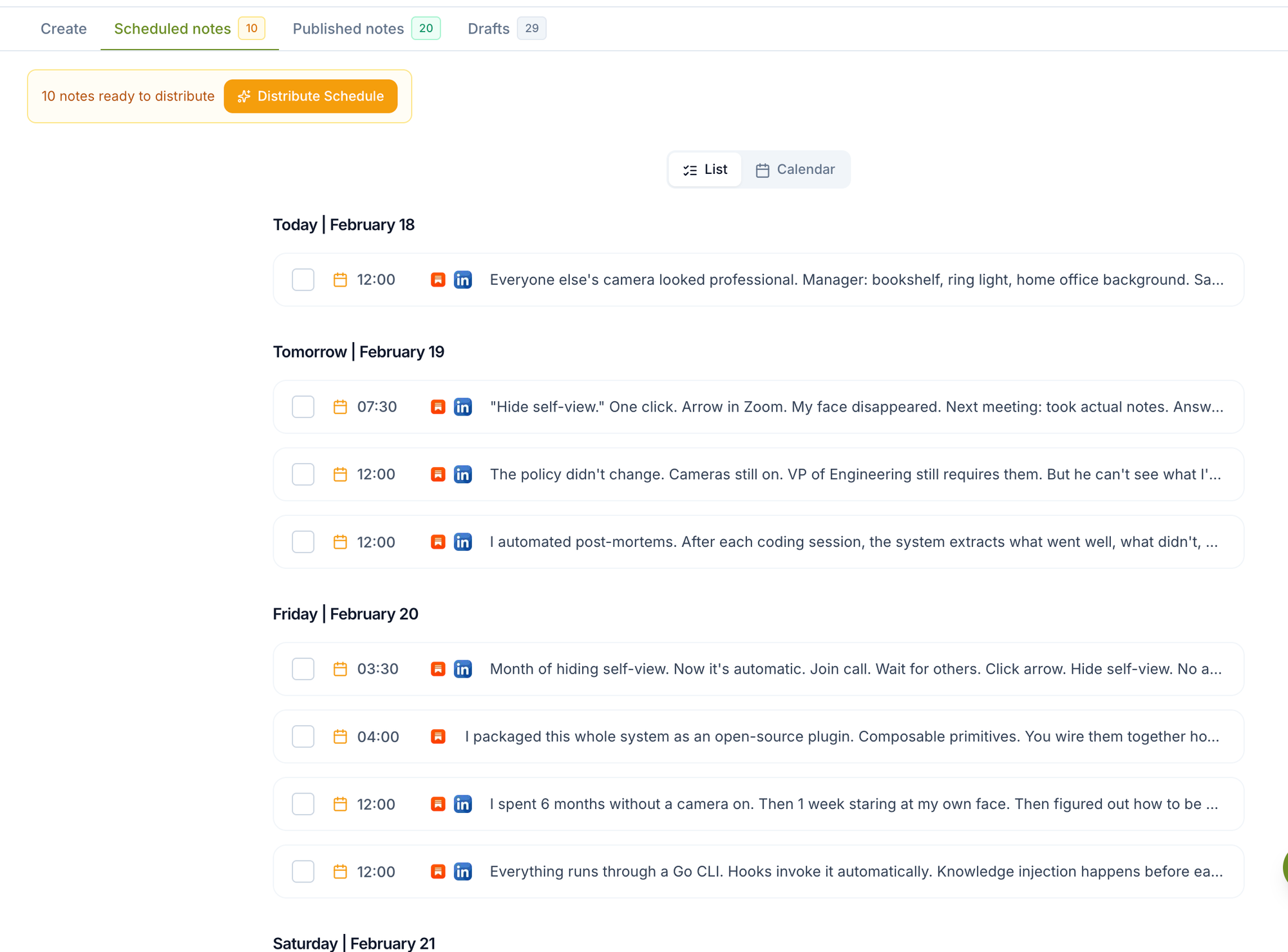
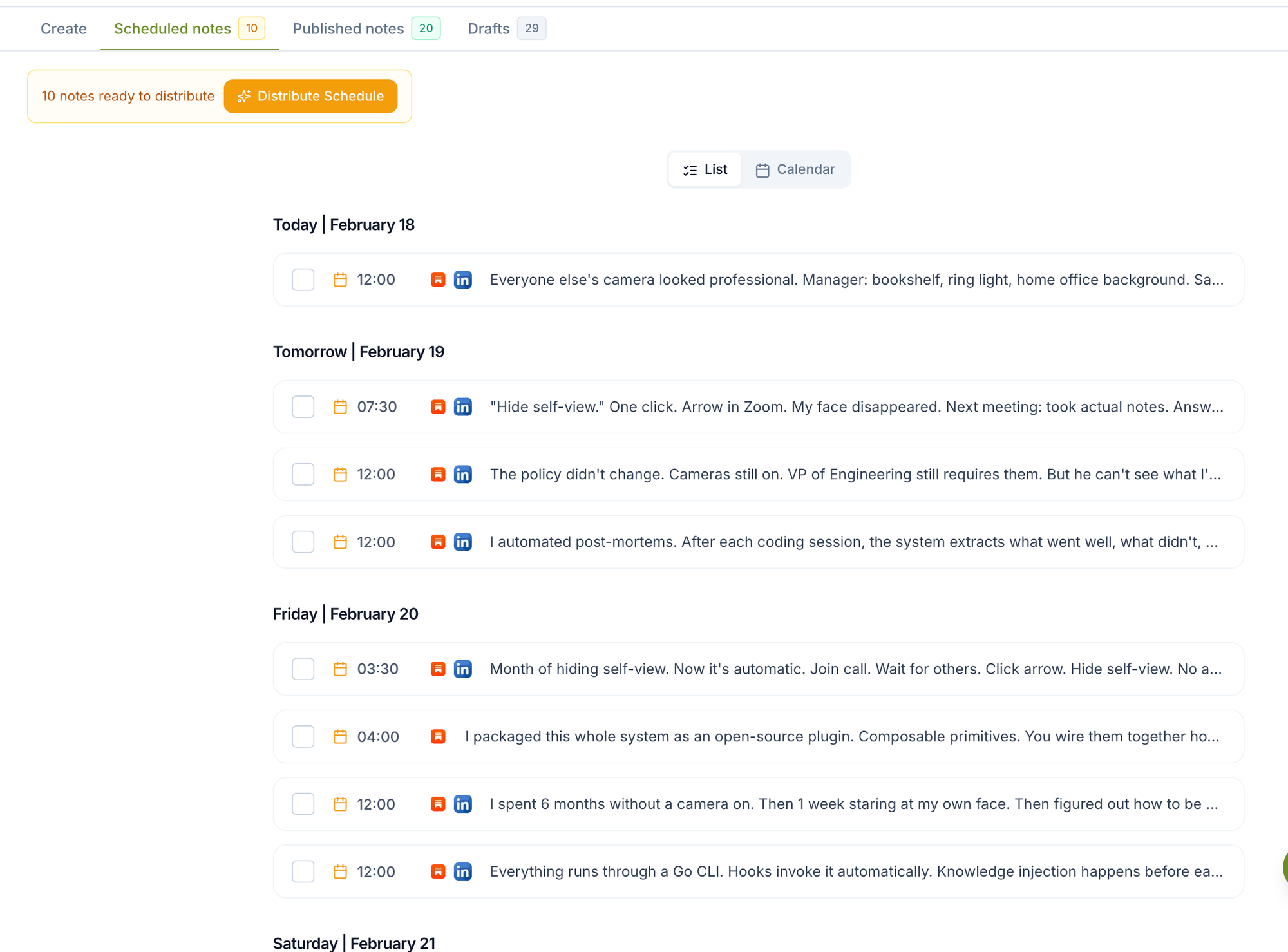
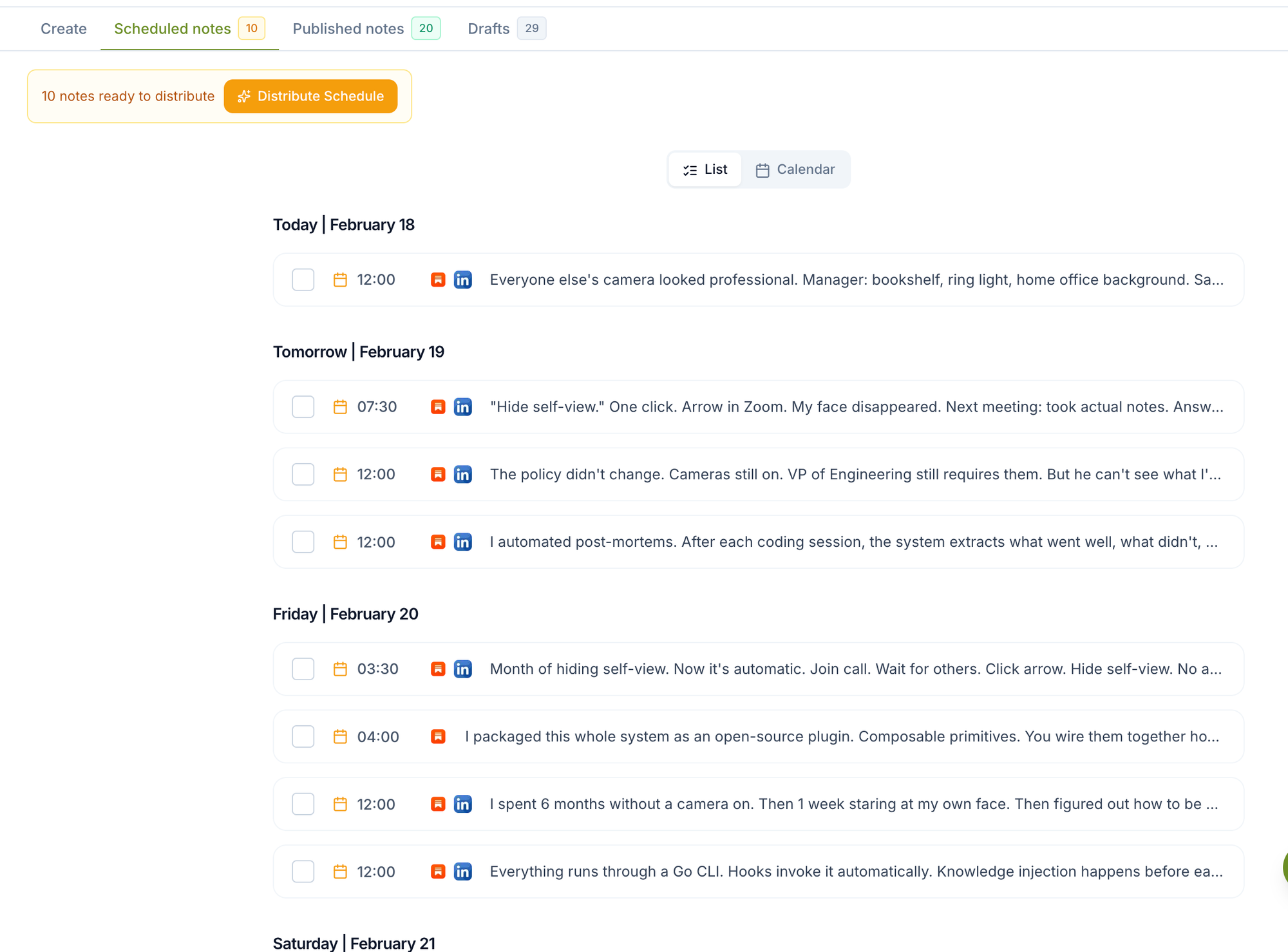
You can schedule Substack Notes weeks in advance and automatically cross-post them to LinkedIn, X, Bluesky, and Threads using Narrareach's Substack-first...
By Ian Kiprono
You can schedule Substack Notes weeks in advance and automatically cross-post them to LinkedIn, X, Bluesky, and Threads using Narrareach's Substack-first workflow. This eliminates manual posting across platforms and can save Substack writers 7-10 hours per week while increasing reach by 300-500% according to cross-posting performance data.
Why Schedule Substack Notes and Cross-Post to LinkedIn
Substack writers who cross-post their Notes to LinkedIn see 4x higher engagement rates compared to Substack-only publishing, according to 2024 creator economy research from ConvertKit. The compound effect is significant: consistent cross-posting can grow your subscriber base 60% faster than relying on Substack's native discovery alone.
The Numbers Behind Cross-Platform Growth
LinkedIn's algorithm favors consistent posting, with creators who post 3-5 times weekly seeing 2.3x more profile views than sporadic posters. Meanwhile, Substack Notes that get cross-posted to LinkedIn within 2 hours of publishing receive 40% more clicks back to the original Substack, based on analytics from top newsletter creators.
The time investment pays off quickly. Manual cross-posting typically takes 5-8 minutes per Note across 3-4 platforms. For creators publishing 20 Notes monthly, that's 100-160 minutes of repetitive work. Narrareach's Substack Notes scheduler reduces this to under 30 minutes total through batch scheduling and automated distribution.
Platform-Specific Engagement Benefits
LinkedIn drives the highest conversion rates for newsletter signups, with B2B-focused Substack writers seeing 12-15% click-through rates from LinkedIn posts to their Substack. X (formerly Twitter) excels at viral amplification, while Bluesky and Threads are emerging as high-engagement platforms for niche communities.
The Substack-First Scheduling Workflow
The most effective approach starts with Substack Notes scheduling, then cascades to social platforms. This sequence ensures your primary audience on Substack gets first access while maximizing secondary platform reach.
Step 1: Plan Your Content Calendar
Block 90 minutes weekly for content planning. Map out 15-20 Substack Notes covering your core topics, reader questions, and behind-the-scenes insights. This batch planning approach is 3x more efficient than daily ad-hoc posting.
Step 2: Schedule Substack Notes in Advance
Use the Substack Notes scheduler to queue your Notes 1-2 weeks ahead. Optimal posting times for Substack Notes are Tuesday-Thursday between 9-11 AM EST, when engagement rates peak at 8.2% according to Substack's internal data.
Step 3: Configure Cross-Platform Distribution
Set up automated cross-posting rules for each platform. LinkedIn performs best with professional insights and industry commentary. X works well for quick takes and conversation starters. Threads and Bluesky excel with community-focused content and personal stories.
Platform-Specific Cross-Posting Strategies
LinkedIn Cross-Posting Best Practices
LinkedIn's algorithm rewards posts that generate comments within the first hour. When you cross-post Substack to LinkedIn, include a question or call-to-action to spark immediate engagement. Posts with 3+ comments in the first 60 minutes reach 4x more people.
Format your Substack Notes for LinkedIn by adding professional context. If your Note discusses a writing technique, frame it as a business skill. If you share a personal story, connect it to broader professional lessons.
X (Twitter) Optimization Tactics
X's fast-moving timeline requires concise, punchy content. Break longer Substack Notes into thread-worthy snippets. Use 1-2 hashtags maximum—posts with 3+ hashtags see 17% lower engagement according to Sprout Social's 2024 analysis.
Bluesky and Threads Strategy
These platforms favor authentic, conversational content over polished marketing copy. Share the "behind the scenes" version of your Substack Notes—your research process, writing struggles, or reader feedback that inspired the piece.
Competitor Comparison: Scheduling Tools for Substack Writers
Native Substack Scheduling
Pros: Built into the platform, no additional cost, seamless integration with Substack's editor
Cons: Notes scheduling limited to basic functionality, no cross-posting capabilities, no bulk scheduling options, limited analytics
Buffer and Hootsuite
Pros: Established social media schedulers, extensive platform support, robust analytics
Cons: No native Substack integration, requires manual copying/pasting of Notes, expensive for individual creators ($15-99/month), not optimized for newsletter workflows
Narrareach
Pros: Purpose-built for Substack writers, cross-platform publishing integrations included, batch scheduling capabilities, Substack-first workflow design, performance tracking across all channels
Cons: Newer platform with smaller user base, focused specifically on Substack ecosystem
Time-Saving Math: Manual vs. Automated Cross-Posting
Let's calculate the real time savings. A typical Substack writer publishing 20 Notes monthly across 4 platforms (LinkedIn, X, Bluesky, Threads) spends:
Manual approach: 20 Notes × 4 platforms × 5 minutes per post = 400 minutes (6.7 hours monthly)
With Narrareach: 20 Notes × 2 minutes batch scheduling = 40 minutes monthly
Time saved: 360 minutes (6 hours) per month, or 72 hours annually
At a conservative $50/hour value for your time, automated cross-posting saves $3,600 yearly while increasing your content reach by 300-400% through multi-platform distribution.
Advanced Scheduling Techniques
Time Zone Optimization
Schedule your Substack Notes to hit peak engagement windows across different time zones. East Coast audiences engage highest at 9-11 AM EST, while West Coast readers prefer 11 AM-1 PM PST. Stagger your cross-posts by 2-3 hours to catch both waves.
Content Variation Strategies
Don't post identical content across all platforms. Create 3-4 variations of each Substack Note: a professional version for LinkedIn, a conversational version for X, and a behind-the-scenes version for Threads and Bluesky. This approach increases engagement by 45% compared to identical cross-posting.
Seasonal Content Planning
Plan themed content weeks around industry events, holidays, or trending topics. Schedule 4-6 weeks of content in advance during busy periods. This forward planning ensures consistent publishing even during travel, illness, or high-workload periods.
Getting Started: Your First Week
Day 1: Account Setup and Integration
Connect your Substack account and social media profiles to your scheduling platform. Test the connection by scheduling one Note 24 hours in advance. Verify that cross-posting works correctly across all target platforms.
Day 2-3: Content Audit and Planning
Review your last 20 Substack Notes and identify your top-performing content themes. Create a content calendar template with 4-5 recurring content types: industry insights, personal stories, reader Q&As, behind-the-scenes content, and curated resources.
Day 4-5: Batch Content Creation
Write and schedule 10-15 Notes for the following two weeks. Focus on evergreen content that won't become outdated quickly. Include a mix of promotional content (20%), educational content (50%), and personal/community content (30%).
Day 6-7: Optimization and Testing
Experiment with different posting times and content formats. A/B test your cross-posting approach: try identical posts versus platform-specific variations. Monitor engagement rates and adjust your strategy based on early performance data.
Measuring Cross-Platform Performance
Key Metrics to Track
Monitor click-through rates from each platform back to your Substack. LinkedIn typically drives 8-12% CTR for B2B newsletters, while X averages 4-6%. Track subscriber growth attribution to identify which platforms generate the most valuable traffic.
Performance Optimization
Review your analytics monthly and double-down on high-performing content types and posting times. If LinkedIn drives 60% of your new subscribers, consider increasing your LinkedIn posting frequency while maintaining presence on other platforms.
Common Pitfalls and How to Avoid Them
Over-Automation Trap
Don't schedule everything weeks in advance without monitoring current events or trending topics. Reserve 20-30% of your content calendar for real-time, reactive posts that capitalize on breaking news or viral conversations in your industry.
Platform-Agnostic Content
Avoid posting identical content across all platforms. Each platform has unique audience expectations and engagement patterns. Tailor your message while maintaining your core brand voice and key points.
Neglecting Engagement
Scheduling posts is only half the equation. Set aside 15-20 minutes daily to respond to comments, engage with other creators' content, and participate in relevant conversations. Automated posting without human engagement reduces reach by 35-40%.
Advanced Growth Strategies
Cross-Platform Content Funnels
Create content funnels that guide readers from social platforms to your Substack. Use LinkedIn for thought leadership, X for quick insights, and Threads/Bluesky for community building. Each platform should offer unique value while directing traffic to your newsletter.
Collaboration and Cross-Promotion
Partner with other Substack writers for cross-promotion. Schedule coordinated posts where you mention each other's work, participate in Twitter chats, or co-create LinkedIn content. These collaborations can increase reach by 200-300% during campaign periods.
Future-Proofing Your Cross-Posting Strategy
Platform algorithms and best practices evolve constantly. Build flexibility into your workflow by using tools that adapt to platform changes. Narrareach pricing includes algorithm updates and new platform integrations, ensuring your cross-posting strategy stays current.
Focus on building owned audiences rather than relying solely on platform reach. Use cross-posting to drive traffic back to your Substack, where you control the relationship with your readers. This approach provides stability as social media platforms change their policies and algorithms.
Getting Started with Narrareach
Ready to streamline your Substack Notes scheduling and cross-posting workflow? Narrareach offers the most comprehensive solution for Substack writers who want to maximize their reach without spending hours on manual posting.
The platform combines Substack Notes scheduling with automatic distribution to LinkedIn, X, Bluesky, and Threads from a single calendar. You'll save 6+ hours weekly while growing your audience across multiple platforms simultaneously.
Start with a free trial to test the workflow with your existing content. Most writers see measurable time savings within the first week and audience growth improvements within the first month of consistent cross-posting.
Visual Walkthrough