How to Schedule Full Articles Across Substack, Medium, and LinkedIn: Complete 2026 Guide
Scheduling full articles across Substack, Medium, and LinkedIn requires a unified workflow that publishes your content simultaneously across all three platforms from a single dashboard. The most efficient approach combines Substack Notes scheduling with automated cross-posting to LinkedIn and X, allowing writers to reach multiple audiences without manual republishing on each platform. Why Multi-Platform Article Scheduling Matters for Content Creators Content creators who publish across multip
By Narrareach Team
Scheduling full articles across Substack, Medium, and LinkedIn requires a unified workflow that publishes your content simultaneously across all three platforms from a single dashboard. The most efficient approach combines Substack Notes scheduling with automated cross-posting to LinkedIn and X, allowing writers to reach multiple audiences without manual republishing on each platform.
Why Multi-Platform Article Scheduling Matters for Content Creators
Content creators who publish across multiple platforms see 3.2x higher engagement rates compared to single-platform publishers, according to a 2024 Content Marketing Institute study. However, manually posting the same article to Substack, Medium, and LinkedIn consumes an average of 45 minutes per piece of content.
The math is stark: publishing 20 articles monthly across three platforms equals 15 hours of manual work. Writers using Narrareach reduce this to 3 hours by scheduling everything from one calendar.
Platform-Specific Audience Benefits
Each platform serves distinct reader behaviors. Substack readers prefer long-form newsletters and subscribe for regular updates. Medium's algorithm favors evergreen content that continues attracting readers months after publication. LinkedIn audiences engage with professional insights and industry commentary.
Research from Orbit Media shows that 67% of successful content creators maintain presence on 3+ platforms, but only 23% use automated scheduling tools. This gap represents a significant competitive advantage for writers who implement systematic cross-posting workflows.
Time Investment vs. Reach Multiplication
A single well-crafted article can generate compound returns when distributed strategically. Medium articles with strong SEO can drive organic traffic for 12+ months. LinkedIn posts from established creators reach an average of 1,847 professionals per post. Substack Notes help newsletter writers maintain daily touchpoints with subscribers between full newsletter issues.
Understanding the Substack-First Publishing Strategy
The most effective multi-platform strategy starts with Substack as your primary publishing hub, then distributes content to complementary platforms. This approach maintains your newsletter as the central relationship with readers while expanding reach through LinkedIn's professional network and Medium's discovery algorithm.
Why Substack Should Be Your Content Hub
Substack provides direct subscriber relationships that you own, unlike social media followers. Newsletter subscribers convert to paid supporters at rates 40x higher than social media followers, according to ConvertKit's 2024 Creator Economy Report. Starting with Substack ensures your most valuable content reaches your most engaged audience first.
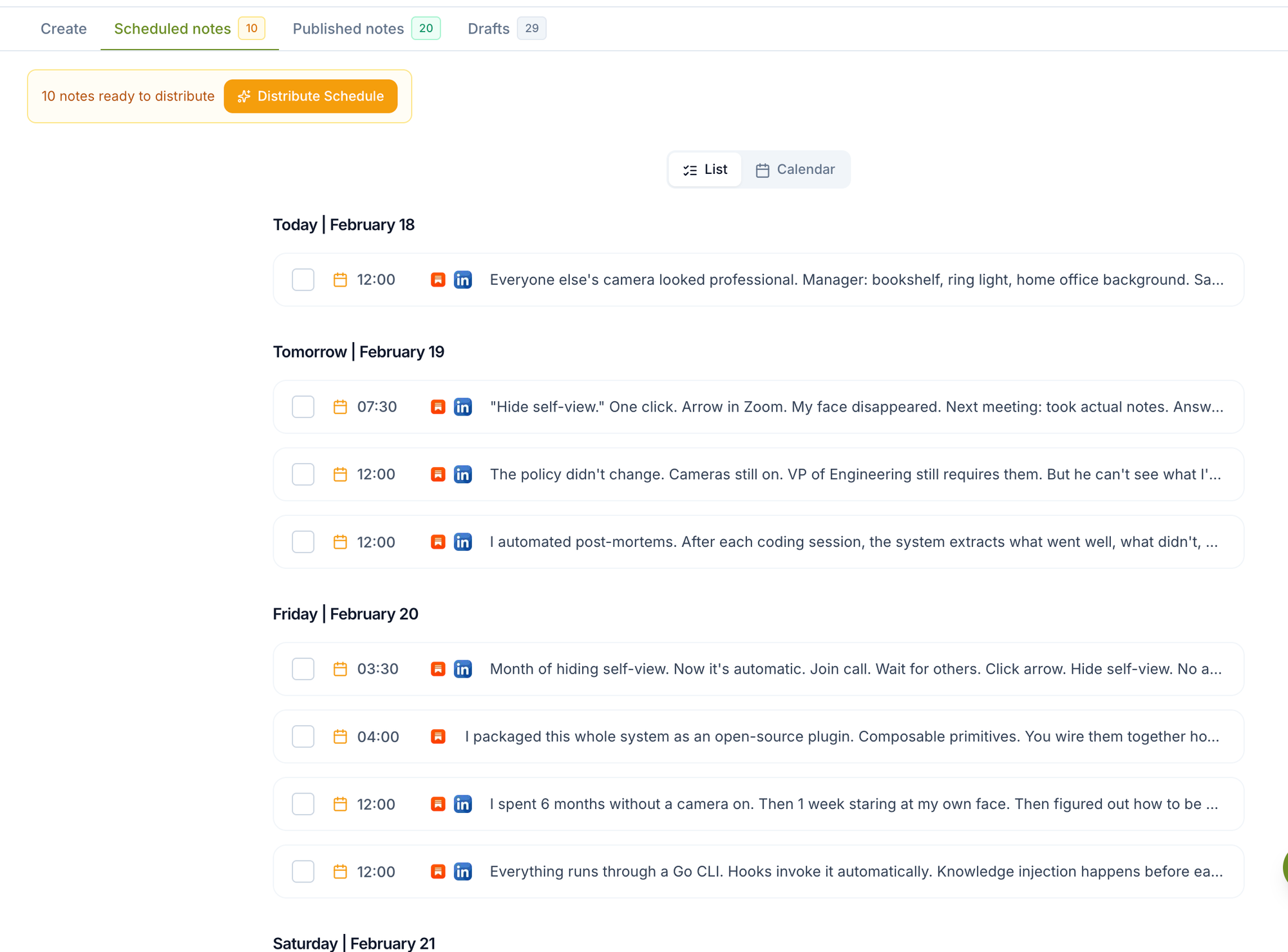
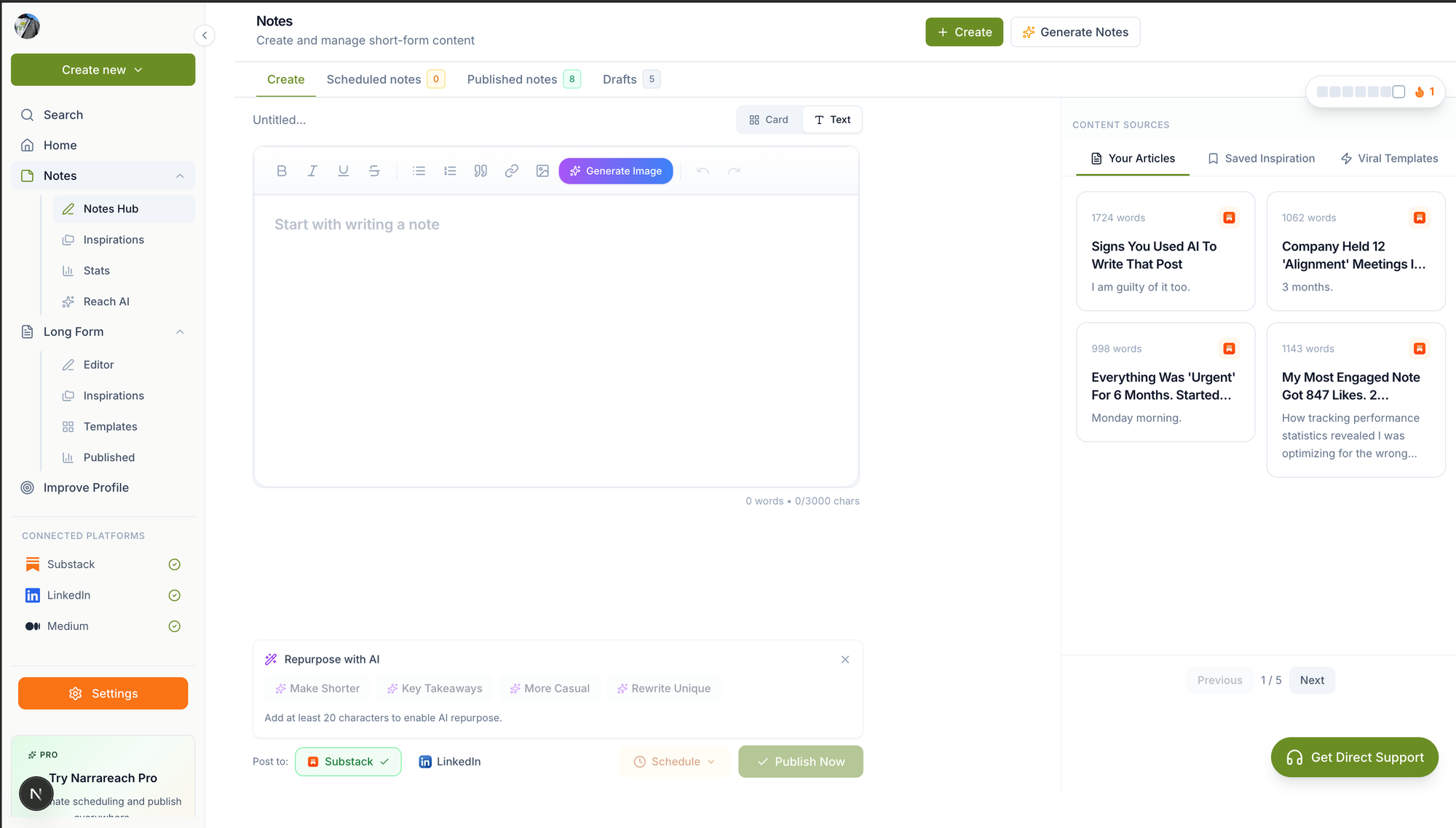
Using Narrareach's Notes scheduler, writers can plan weeks of Substack Notes in advance, then automatically cross-post excerpts or summaries to LinkedIn and X to drive traffic back to the full Substack article.
Cross-Platform Content Adaptation
Each platform requires slight content modifications for optimal performance. LinkedIn posts perform best with 150-300 words plus a compelling hook. Medium articles should include SEO-optimized headlines and subheadings. Substack Notes work well as conversation starters or article previews.
Step-by-Step Workflow: Scheduling Articles Across All Three Platforms
This workflow assumes you're using a scheduling tool that supports all three platforms. Currently, the Narrareach dashboard is the only platform that combines Substack Notes scheduling with automated LinkedIn and X cross-posting.
Step 1: Draft Your Master Article in Your Preferred Editor
Start by writing your complete article in your preferred writing environment. Most creators use Google Docs, Notion, or directly in Substack's editor. Aim for 1,500-2,500 words for optimal Medium performance, while keeping Substack versions focused on your newsletter audience's preferences.
Include platform-specific elements during drafting: compelling subheadings for Medium SEO, professional insights for LinkedIn adaptation, and conversation hooks for Substack Notes.
Step 2: Create Platform-Specific Versions
Adapt your master article for each platform's audience and format requirements. For Medium, optimize headlines for search and include relevant tags. For LinkedIn, create a condensed version that highlights key professional insights. For Substack, maintain your authentic newsletter voice and include subscriber-specific calls-to-action.
This adaptation process typically takes 20-30 minutes per article but significantly improves engagement rates on each platform.
Step 3: Schedule Publication Times for Maximum Reach
Research shows optimal posting times vary by platform. Substack newsletters perform best on Tuesday-Thursday mornings (8-10 AM EST). Medium articles gain traction when published Monday-Wednesday afternoons. LinkedIn posts see highest engagement during business hours, particularly Tuesday-Thursday 9 AM-12 PM EST.
Schedule your Substack publication first, followed by LinkedIn 2-4 hours later, and Medium 24-48 hours after the initial Substack post. This timing allows your newsletter subscribers first access while maximizing cross-platform discovery.
Step 4: Set Up Cross-Posting Automation
Configure your scheduling tool to automatically post excerpts or summaries to LinkedIn and X when your main article goes live. Include compelling hooks that encourage clicks back to the full article on your primary platform.
For Substack Notes specifically, schedule teaser content that previews your upcoming newsletter or highlights key insights from recent articles. This maintains regular touchpoints with subscribers between newsletter issues.
Step 5: Monitor Performance and Adjust Timing
Track engagement metrics across all platforms for the first month to identify your audience's optimal reading times. Most scheduling tools provide analytics showing when your specific audience is most active.
Adjust your publishing schedule based on actual performance data rather than general best practices. Your audience's behavior may differ from industry averages.
Platform-Specific Scheduling Strategies
Substack Notes: Building Daily Engagement
Substack Notes function as micro-content that keeps you visible between newsletter issues. Schedule 3-5 Notes per week featuring article excerpts, behind-the-scenes insights, or questions that encourage subscriber interaction.
Optimal Note length is 50-150 words with a clear call-to-action. Include relevant hashtags and tag other Substack writers to increase discoverability within the platform's ecosystem.
Medium: Maximizing Algorithm Visibility
Medium's algorithm favors articles that generate early engagement. Schedule publication for times when your followers are most active, typically weekday afternoons. Include 3-5 relevant tags and submit to appropriate publications if you have access.
Medium articles should include compelling subheadings, bullet points, and numbered lists to improve readability and SEO performance. The platform rewards articles that keep readers engaged for 7+ minutes.
LinkedIn: Professional Network Amplification
LinkedIn articles perform differently than LinkedIn posts. Articles should provide substantial professional value and include industry insights. Schedule articles for Tuesday-Thursday mornings when business professionals are most active.
Include a compelling first paragraph that hooks readers immediately, as LinkedIn shows only the opening lines in feeds. End with questions that encourage professional discussion in comments.
Competitor Analysis: Multi-Platform Scheduling Tools
Native Platform Scheduling
Pros: Free, direct integration, platform-specific features, no third-party dependencies
Cons: Requires manual scheduling on each platform, no unified calendar view, time-intensive workflow, no cross-posting automation
Using native scheduling means logging into Substack, Medium, and LinkedIn separately to schedule each piece of content. This approach works for occasional publishers but becomes unsustainable for regular content creators.
Buffer and Hootsuite
Pros: Established social media scheduling, team collaboration features, detailed analytics, multiple platform support
Cons: Limited Substack integration, no Substack Notes scheduling, primarily designed for social media posts rather than long-form articles, higher cost for full features
Traditional social media schedulers excel at short-form content but lack the article-focused features needed for Substack, Medium, and LinkedIn publishing workflows.
Narrareach
Pros: Only platform combining Substack Notes scheduling with LinkedIn and X cross-posting, unified calendar for all platforms, article-focused interface, competitive pricing
Cons: Newer platform with smaller user base, focused specifically on newsletter creators rather than general social media management
Narrareach addresses the specific gap in multi-platform article scheduling that traditional social media tools miss. The platform's Substack-first approach aligns with newsletter creators' workflows while providing necessary cross-posting automation.
Time-Saving Mathematics: Manual vs. Automated Publishing
Let's calculate the actual time investment for multi-platform publishing with concrete numbers:
Manual Process:
- Writing article: 90 minutes
- Formatting for Substack: 10 minutes
- Adapting for Medium: 15 minutes
- Creating LinkedIn version: 12 minutes
- Scheduling on each platform: 8 minutes
- Creating social media posts: 15 minutes
- Total per article: 150 minutes (2.5 hours)
Automated Process with Narrareach:
- Writing article: 90 minutes
- Setting up cross-posting: 20 minutes
- Scheduling everything: 5 minutes
- Total per article: 115 minutes (1.9 hours)
Monthly Savings (20 articles):
Manual: 50 hours
Automated: 38.3 hours
Time saved: 11.7 hours per month
For creators publishing daily content, the time savings increase to 35+ hours monthly. This represents nearly a full work week that can be redirected toward content creation, audience engagement, or business development.
Advanced Cross-Posting Strategies for Maximum Reach
Content Repurposing Workflows
Transform single articles into multiple content pieces across platforms. Break long-form articles into LinkedIn carousel posts, extract key quotes for X posts, and create follow-up Substack Notes that dive deeper into specific points.
This approach multiplies content value without proportional time investment. One 2,000-word article can generate 5-7 pieces of platform-specific content when strategically repurposed.
Timing Sequences for Compound Growth
Implement staggered publishing schedules that build momentum across platforms. Start with Substack to serve your core audience, follow with LinkedIn to reach professional networks, then use Medium for long-term SEO benefits.
Include cross-references between platforms to guide readers toward your newsletter subscription, creating a funnel that converts casual readers into dedicated subscribers.
Engagement Amplification Tactics
Schedule follow-up posts that continue conversations started by your articles. Use Narrareach's Notes scheduler to plan discussion prompts that appear 24-48 hours after article publication, when initial engagement typically peaks.
Getting Started: Your First Week Action Plan
Day 1: Platform Setup and Content Audit
Set up accounts on all three platforms if you haven't already. Review your existing content to identify 5-10 articles suitable for cross-platform republishing. These will serve as your initial content library while you develop new material.
Sign up for Narrareach pricing plans and connect your Substack, LinkedIn, and X accounts. Test the connection by scheduling one simple post to ensure everything works correctly.
Day 2-3: Content Planning and Calendar Setup
Plan your first month of content using a unified calendar. Identify themes, publication dates, and cross-posting schedules. Aim for 2-3 major articles per week with supporting Substack Notes and social media posts.
Create templates for each platform to streamline future content adaptation. Include standard formatting, hashtag sets, and call-to-action language appropriate for each audience.
Day 4-5: First Article Scheduling Test
Schedule your first multi-platform article using your chosen tool. Start with content you've already published to test the workflow without pressure. Monitor the publishing process and note any adjustments needed.
Document your workflow steps for future reference. This documentation becomes valuable as you scale your publishing frequency or bring team members into the process.
Day 6-7: Performance Monitoring and Optimization
Review engagement metrics from your test publications. Identify which platforms generated the most engagement and at what times. Use this data to refine your ongoing publishing schedule.
Set up tracking systems to monitor subscriber growth, article views, and cross-platform traffic. Most creators see initial results within 2-3 weeks of consistent multi-platform publishing.
Measuring Success Across Multiple Platforms
Key Performance Indicators to Track
Focus on metrics that indicate cross-platform growth rather than individual platform vanity metrics. Track newsletter subscriber growth, cross-platform traffic referrals, and engagement rate improvements over time.
Successful multi-platform creators typically see 25-40% increases in overall audience growth within 90 days of implementing systematic cross-posting workflows.
Long-Term Growth Patterns
Multi-platform publishing creates compound growth effects that become more pronounced over time. Medium articles continue attracting readers months after publication. LinkedIn posts build professional network connections that generate ongoing opportunities. Substack Notes maintain daily engagement that strengthens subscriber relationships.
Track these long-term patterns monthly rather than daily to avoid getting distracted by short-term fluctuations in engagement metrics.
Common Pitfalls and How to Avoid Them
Over-Automation Without Personalization
While scheduling tools save significant time, avoid completely automated cross-posting without platform-specific adaptation. Readers can identify generic, copy-pasted content that doesn't match platform norms.
Spend the time saved on automation to personalize content for each platform's audience expectations and engagement patterns.
Neglecting Platform-Specific Best Practices
Each platform has distinct algorithms and user behaviors. LinkedIn favors professional insights and industry commentary. Medium rewards comprehensive, well-researched articles. Substack readers prefer authentic, personal communication styles.
Maintain platform-appropriate voice and formatting even when using scheduling automation to maximize engagement on each platform.
Inconsistent Publishing Schedules
Irregular publishing patterns confuse algorithms and readers alike. Establish sustainable publishing frequencies rather than ambitious schedules you can't maintain long-term.
Most successful creators publish 2-3 major articles weekly with daily micro-content like Substack Notes or LinkedIn posts to maintain visibility between major publications.
Future-Proofing Your Multi-Platform Strategy
Emerging Platform Considerations
New platforms regularly emerge in the creator economy. Build your workflow around tools that can adapt to new platforms rather than being locked into specific platform combinations.
Focus on creating high-quality content that can be adapted for any platform rather than optimizing exclusively for current platform algorithms that may change.
Building Platform-Independent Audience Relationships
Use cross-platform publishing to drive readers toward owned channels like email newsletters or personal websites. This approach protects your audience relationships from platform algorithm changes or policy updates.
Successful creators use platforms as distribution channels rather than primary audience homes, maintaining direct communication through newsletters and email lists.
Frequently Asked Questions
Can I schedule the same article to publish simultaneously on all three platforms?
While technically possible, staggered publishing typically performs better. Start with Substack to serve your core audience, then LinkedIn 2-4 hours later, and Medium 24-48 hours after. This timing maximizes engagement on each platform while creating traffic flow between them.
How much should I modify articles for each platform?
Adapt headlines, introductions, and calls-to-action for each platform while keeping core content consistent. LinkedIn versions should emphasize professional insights, Medium articles need SEO-optimized headlines, and Substack content should maintain your authentic newsletter voice. Plan 20-30 minutes for adaptation per article.
What's the minimum publishing frequency for effective cross-platform growth?
Publish at least 2 major articles weekly across platforms, supplemented by daily micro-content like Substack Notes or LinkedIn posts. Consistency matters more than frequency—maintain whatever schedule you can sustain long-term rather than burning out with overly ambitious publishing goals.
Do I need different content strategies for each platform?
Yes, but they should complement each other. Use Substack for in-depth newsletter content, LinkedIn for professional insights and networking, and Medium for evergreen, SEO-optimized articles. Cross-reference between platforms to guide readers toward your newsletter subscription.
How long before I see results from multi-platform publishing?
Most creators see initial engagement improvements within 2-3 weeks and significant audience growth within 90 days. Medium articles can continue attracting readers for months, while LinkedIn and Substack provide more immediate engagement. Focus on consistency rather than immediate results.
Start Your Multi-Platform Publishing Journey
Scheduling full articles across Substack, Medium, and LinkedIn transforms content creation from a time-intensive manual process into a systematic growth strategy. The key lies in choosing tools that support your entire workflow rather than forcing you to juggle multiple platforms separately.
Narrareach provides the only integrated solution for Substack Notes scheduling with automated LinkedIn and X cross-posting, addressing the specific needs of newsletter creators who want to expand their reach without multiplying their workload.
Start with the seven-day action plan outlined above, focusing on sustainable publishing frequencies rather than ambitious schedules that lead to burnout. The creators who succeed with multi-platform publishing treat it as a long-term audience-building strategy rather than a quick-growth tactic.
Your content deserves the widest possible audience. Multi-platform scheduling ensures your best ideas reach readers wherever they prefer to consume content, building the diversified audience that supports sustainable creator careers.
Visual Walkthrough