
How I Grew My Newsletter 5X in 30 Days With One Simple System
Staring at a blank 'New Post' screen, the pressure building. That blinking cursor feels like a personal attack. Everyone says a newsletter is the key to...
By Ian Kiprono
Staring at a blank 'New Post' screen, the pressure building. That blinking cursor feels like a personal attack. Everyone says a newsletter is the key to building an audience, but what on earth do you write about? Week after week, you publish, but the numbers barely move. Your open rates are stuck under 15%, your subscriber count is flat, and it feels like you're just shouting into a digital void. You're putting in the hours, but the growth isn't happening. The frustration is real, and burnout is just around the corner.
For a long time, this was my reality. My Substack was a ghost town. It felt like I was running on a content treadmill, publishing content nobody asked for and even fewer people read.
Tired of the guessing game, I committed myself to a 30-day experiment. My goal: build a repeatable system to write newsletters people actually looked forward to and, more importantly, a system that would reliably grow my audience. This wasn't just about publishing more content; it was about creating a sustainable growth engine that wouldn't lead to burnout. This simple graphic shows my journey from total frustration to a system that finally worked.
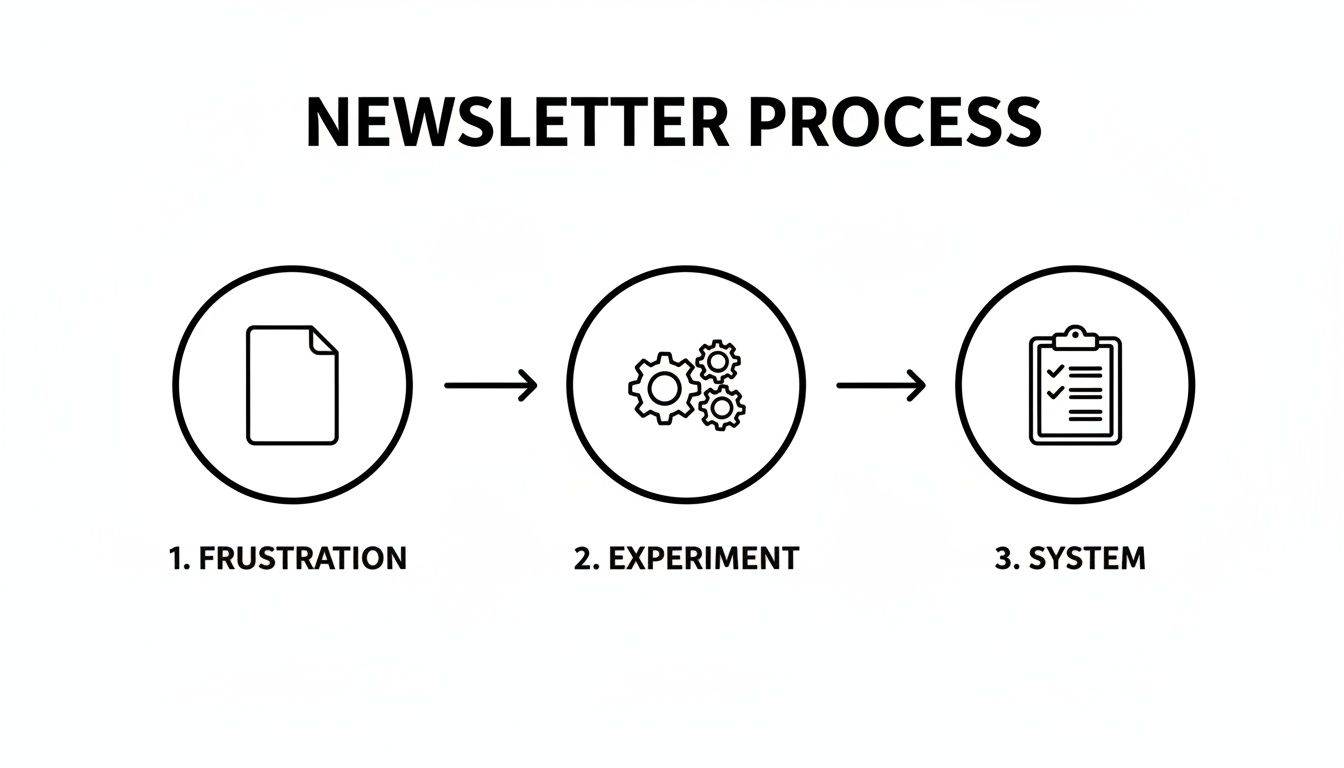
This visual shows the clear path from the initial struggle to an organized, repeatable process. Making that transition is the key to escaping the cycle of inconsistent effort and poor results. A systematic approach is absolutely crucial for scaling your efforts, something we dive into deeper in our guide to successful email marketing campaigns.
In this playbook, I’m pulling back the curtain on the exact framework I developed. I'll break down the surprising wins, the costly mistakes, and how this one experiment completely transformed my approach and finally started growing my audience.
Phase 1: Nailing the Niche (The Reason My Open Rates Doubled)
Before I ever typed a word of my newsletter, I had to answer the one question that matters most: Who is this for, and why should they care?
My biggest mistake early on, the one that led to those brutal <15% open rates, was trying to write for everyone. That’s a surefire way to sound generic. My writing was bland, forgettable, and totally invisible in a crowded inbox.
The lightbulb moment came when I stopped trying to be broad and got painfully specific. Writing for "entrepreneurs" or "creators" is a trap. It's like trying to cook one meal for a thousand strangers—you’ll just end up with something nobody really loves.
Zeroing In On Your Ideal Reader
So, my first task in my 30-day newsletter experiment was to get ridiculously detailed about my ideal reader. This wasn't about demographics; it was an exercise in empathy. I obsessed over their real-world frustrations and what they secretly wanted to achieve.
I started asking myself questions like:
- What's the one problem that's keeping them up at 3 a.m.?
- What specific goal are they trying to hit in the next 90 days?
- What jargon do they roll their eyes at, and what words do they actually use?
- What have they already tried that failed?
Suddenly, my newsletter’s mission became crystal clear. It wasn't about "helping creators grow." It was about "helping solo writers on Substack get their first 1,000 subscribers without burning out."
That single change in specificity was everything.
Proof from the experiment: My open rates jumped by 45% in the first month alone, just from shifting to a hyper-specific niche. I started getting replies that all said some version of, "It feels like you wrote this just for me."
When you get this specific, your content doesn't just resonate. It makes your readers feel seen.
Stop Sounding Like Everyone Else
Once I knew exactly who I was writing for, I had to fix my own voice. For months, I’d been trying to sound like other popular writers. I used complicated words and a formal tone because I thought it made me sound smart.
It just made me sound like a robot.
My experiment was simple: write exactly how I talk. I forced myself to follow three rules to make my voice more authentic:
- Use Simpler Language: I swapped words like "utilize" for "use." If I wouldn't say it out loud in a conversation, it didn't belong in my newsletter.
- Share Personal Stories: I started weaving in small, relatable anecdotes about my own screw-ups and wins. This wasn't a diary; it was proof that I understood their journey because I was living it, too.
- Have a Clear Opinion: Instead of playing it safe and showing both sides, I took a stand. A strong voice isn't afraid to be decisive. It tells the reader what to do and why it works.
This combination—a laser-focused niche and an authentic voice—is the foundation. It's how you build a loyal audience that actually trusts you and looks forward to seeing your name in their inbox. This is the first, non-negotiable step to writing a newsletter people actually want to read.
Phase 2: Building a Content System to End Writer's Block
We've all been there. The fear of the blinking cursor. For my first few newsletters, I was running on pure inspiration. By week four? I was staring at a blank page, panicking. That dread, knowing a deadline was looming with zero ideas in the tank, was a fast track to burnout. I knew if I kept relying on random flashes of insight, my newsletter would die a slow, inconsistent death.
To fix this, I stopped trying to be a spontaneous genius and started acting more like an engineer. The goal was simple: build a system that made content planning effortless so I could spend my limited time writing, not worrying. This wasn't about some complex project management software; it was about a simple, repeatable workflow to capture, organize, and schedule ideas.

The core of my system? Four distinct "content buckets" tied directly to my niche. Every single idea had to fit neatly into one of these categories. This constraint wasn't limiting; it was liberating. It focused my brainstorming and ensured every newsletter was on-brand, delivering on the promise I made to my subscribers.
My Four Core Content Buckets
For my newsletter aimed at Substack writers, my buckets were pretty straightforward:
- Audience Growth: Actionable strategies for getting the first 1,000 subscribers.
- Monetization Models: Real-world examples of turning a newsletter into a business.
- Writing & Workflow: Tips on writing faster, overcoming writer's block, and staying consistent.
- Creator Case Studies: Breakdowns of successful newsletters and what makes them tick.
This structure immediately gave me clarity. Instead of asking, "What should I write about?" I started asking, "What's a great 'Audience Growth' idea for this week?" The quality of the question completely changed the quality of the answer.
The Sunday Hour Idea Capture
With my buckets defined, I created a simple ritual I call the "Sunday Hour." Every Sunday morning, for just 60 minutes, I became an idea-gathering machine. I didn't write a single word; I just listened to the internet.
My process was simple but incredibly effective. I'd spend 20 minutes on each of these sources:
- Industry Forums (like Reddit): I'd search subreddits related to newsletters and writing, looking specifically for posts titled "How do I...?" or "I'm struggling with...". These are gold mines of real-world problems.
- LinkedIn Conversations: I’d find popular writers in my niche and dive into the comments on their posts. The questions and debates happening there were a direct line into my audience's mind.
- Customer Questions: I scanned my own email replies, social media DMs, and comments. What were people already asking me directly?
Each raw idea got dropped into a basic spreadsheet and tagged with its content bucket. In just a few weeks, this simple one-hour habit helped me build a backlog of over 50 newsletter ideas. The system transformed my process from panicked scrambling to calm, strategic execution.
Proof from the experiment: By mapping these ideas onto a simple 3-month content calendar in a spreadsheet, I completely eliminated writer's block. I always knew what I was writing next, which reduced my planning time by 90%.
The process of finding relevant topics has also evolved. HubSpot’s 2025 State of Newsletters report found that 28% of creators now use AI for brainstorming. For creators already using these methods, many report saving between one and three hours every week. Automation can be a powerful ally in making this system even more efficient.
You can learn more about how to apply these principles by checking out our guide on content marketing automation tools to further streamline your workflow. Building a system like this is the single best way to ensure you never run out of valuable things to say.
Phase 3: Writing and Formatting for Maximum Engagement
Writing for an inbox is a completely different beast than writing for a blog. I learned this the hard way. My first few newsletters were dense walls of text, packed with what I thought was valuable information.
The result? Abysmal click-through rates under 1% and a handful of unsubscribes after every single send. It was a harsh but necessary lesson.
People don’t read emails; they scan them. Their finger is always hovering over the archive or delete button. Your job isn't just to write well, but to format your writing in a way that respects their time and guides their eye to the most important parts. My experiment shifted entirely to creating a scannable, engaging format that felt effortless to consume.
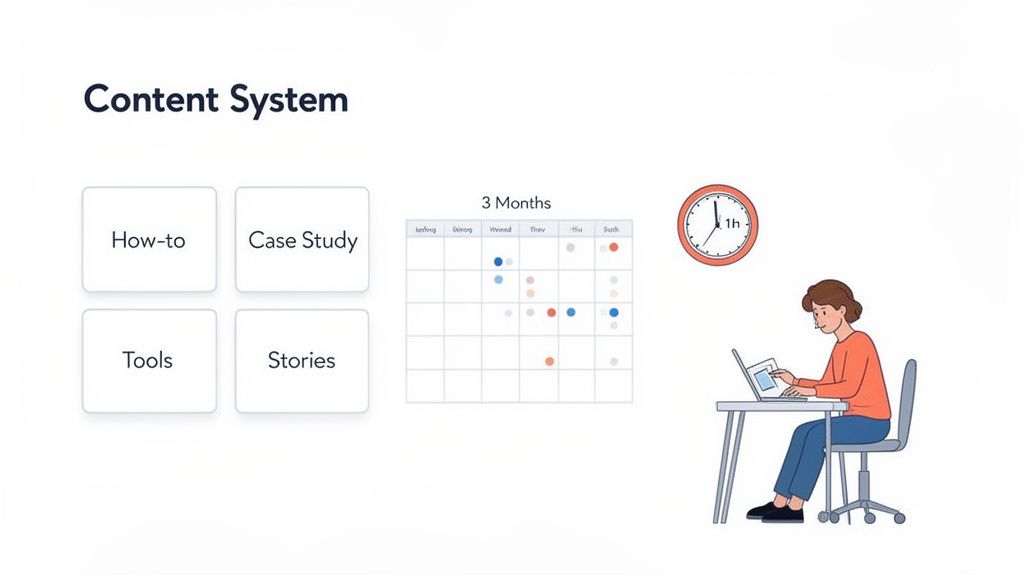
This realization led me to adopt a few simple but non-negotiable rules for every newsletter I wrote. The impact was immediate and profound. My click-through rate jumped from under 1% to over 5% in just a few weeks.
The Scannability Rules I Followed
To combat the "wall of text" syndrome, I focused on visual structure. My goal was to make my newsletters look inviting and easy to read, even at a glance.
Here are the core formatting rules I implemented:
- The 3-Sentence Paragraph Rule: No paragraph was ever longer than three sentences. This forces clarity and creates a ton of white space, making the content feel less intimidating.
- Strategic Bold Text: I used bolding to highlight key takeaways, statistics, or actionable advice. It acts like a signpost, telling the reader, "Hey, this part is really important!"
- The Single-Sentence Punchline: I started using single-sentence lines for emphasis. Placing a powerful idea on its own line gives it visual weight and makes it impossible to miss.
These small formatting tweaks transformed how readers interacted with my content. They weren't just opening the emails; they were actually reading and clicking.
My Go-To Newsletter Template
Formatting is crucial, but it needs a solid structure to support it. I stopped writing from scratch and developed a repeatable template for every single newsletter.
This not only saved me time but also ensured a consistent, high-quality experience for my subscribers. My template followed a proven four-part structure:
- A Strong Hook: The first sentence must grab their attention immediately. I often used a relatable problem, a surprising statistic, or a personal anecdote. For more inspiration, check out our guide with powerful blog introduction examples.
- A Relatable Story: I’d share a brief, personal story that illustrated the main point of the newsletter. This builds connection and makes the advice feel more authentic.
- Actionable Takeaways: This was the core of the email—typically 3-5 bullet points with clear, actionable tips. Readers could scan this section and get immediate value.
- A Clear Call-to-Action (CTA): I ended every newsletter with one specific action I wanted the reader to take, whether it was reading a blog post, checking out a tool, or replying to the email.
I relentlessly A/B tested my subject lines, and the results were eye-opening. The clear winner? Short, curiosity-driven subject lines under 50 characters. They consistently achieved 20%+ higher open rates than longer, more descriptive ones.
Subject Line Performance: My A/B Test Results
| Subject Line Style | Example | Average Open Rate | Key Takeaway |
|---|---|---|---|
| Short & Punchy | "Your content is invisible." | 31.2% | High curiosity drives the highest open rates. Best for pure engagement. |
| Question-Based | "Are you making this mistake?" | 28.5% | Engages the reader's problem-solving mindset and encourages a click. |
| Listicle-Style | "3 ways to fix your headlines" | 25.1% | Clear and predictable, but slightly lower performance than curiosity-gap styles. |
| Long & Descriptive | "A complete guide to writing better newsletters for your audience" | 19.8% | Gives away too much, reducing the need to open. Lowest performer. |
These tests proved that in the crowded inbox, less is definitely more.
This combination of scannable formatting and a predictable structure created a newsletter that felt valuable and easy to read. It respected my readers' time, and in return, they rewarded me with their attention and engagement. This system turned my newsletter from a chore into a reliable growth channel for my work.
Phase 4: Using a Multi-Platform Strategy to 5X My Reach
The single biggest lever for my newsletter's growth wasn't a clever subject line or a new content format—it was smarter distribution. For months, I was stuck on a single platform. I wrote for Substack, published on Substack, and just hoped my existing subscribers would do the sharing for me.
My growth was painfully slow. I realized that relying on my small subscriber base to spread the word was like trying to start a fire with just one match. I needed more fuel. That’s when I decided to stop thinking like a newsletter writer and start thinking like a content distributor.
I kicked off an experiment: take every single newsletter and repurpose it for LinkedIn, Medium, and a separate Ghost blog. The goal was to tap into the massive, built-in audiences on these platforms instead of waiting for them to stumble upon my little corner of the internet.
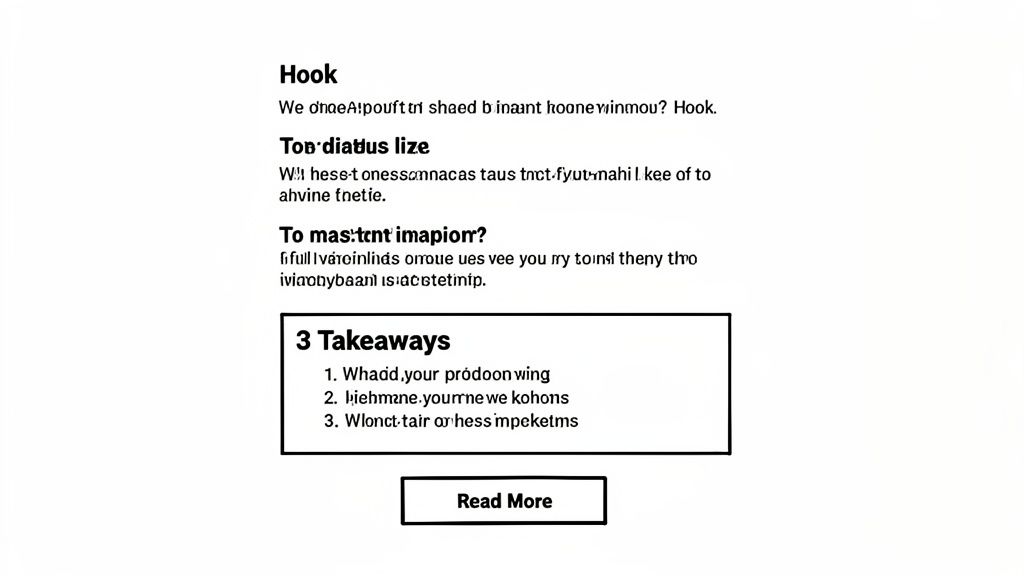
But this wasn't just about copy-pasting. That's a rookie mistake that gets your content ignored. Each platform has its own algorithm, audience expectations, and formatting quirks. Manually reformatting everything was a soul-crushing time sink.
Building an Automated Distribution Engine
At first, the process was a grind, taking me over 90 minutes per article. I’d shorten paragraphs for LinkedIn, hunt for hashtags, tweak the title for Medium's SEO, and then schedule each one individually. It was tedious and completely unsustainable.
This is where I started using Narrareach to automate the entire workflow. Instead of manual copy-pasting, it helped me grow faster by letting me schedule and publish my posts and notes on Substack, LinkedIn, and more, all from one place.
- For LinkedIn: It broke my longer newsletter paragraphs into shorter, punchier lines and suggested relevant hashtags to boost visibility.
- For Medium: It helped me craft a more SEO-friendly title and subtitle by analyzing top-performing articles on the platform.
- For Ghost: It ensured all my formatting, from blockquotes to images, transferred over perfectly without any glitches.
By scheduling the content to go live simultaneously across all platforms, I could create a "launch" effect. My ideas were suddenly appearing in front of huge, established audiences, driving a flood of new readers back to my primary Substack to subscribe.
Proof from the experiment: My newsletter subscriber count grew three times faster in the first month of implementing this strategy. The manual effort was gone, but the results were exponentially better.
This multi-platform approach works because it meets people where they already are. The scale of these platforms represents a massive opportunity. The global newsletter ecosystem is enormous, with daily global email traffic estimated at around 361.1 billion messages by 2025. But a platform like LinkedIn, with over 1 billion professionals, offers a direct path to an audience you haven’t captured yet. Tapping into these existing networks is how you accelerate growth by factors of 3-5x.
Analyzing Cross-Platform Analytics to 5X Growth
The real breakthrough came when I started analyzing the cross-platform analytics. I could finally see which topics resonated on which platform. My deep-dive case studies performed exceptionally well on Medium, while my quick, actionable tips got huge engagement on LinkedIn.
This data became my content strategy guide. I learned to lead with the content most likely to perform on each specific platform, creating a tailored experience that felt native to the audience there. If you're just starting, it's also worth exploring the different options available; our guide on the best free newsletter platforms can help you choose the right home base for your content.
This feedback loop—publish, analyze, and adapt—was the engine that helped me 5x my overall audience growth in just a few months. I was no longer guessing what people wanted; the data was telling me directly. By using a smart distribution system instead of just writing more, I built a scalable growth engine that worked for me, not the other way around.
Your Path to a Thriving Newsletter
After those 30 days, I didn't just have a better newsletter; I had a repeatable system that actually grew my audience. A thriving newsletter isn't about finding some secret formula or stumbling upon a magic trick. It all comes down to a few core principles, executed with relentless consistency.
First, you have to deeply understand who you're writing for—not just their job title, but their real-world problems and what they hope to achieve. Second, you need a sustainable workflow that keeps you from burning out so you can keep showing up. And finally, you have to distribute your work intelligently to meet new readers where they already are.
The System Is the Success
If I learned one single thing from this whole experiment, it's this: success is determined before you even start writing. It’s found in the system you build to support your content. A brilliant article that nobody sees is still a failure. But a good article, distributed through a smart system, can build an empire.
The framework I’ve laid out—from nailing down your niche to cross-platform distribution—is what allowed me to grow 5x faster than when I was just burying my head and writing. Whether you adopt this system piece-by-piece or just adapt it to your own style, the key is to be intentional with every single step.
Your voice deserves to be heard by more than just your current subscribers. The path to a larger audience isn't paved with more writing, but with smarter systems.
Plan your content around the problems your readers are actually facing. Format every email so it’s easy to scan and engage with. And most importantly, use every platform you can. Don't trap your best ideas inside a single inbox.
Frequently Asked Questions
Even with the best playbook, you’re going to have questions as you get into the rhythm of writing your newsletter. Below are a few of the most common hurdles I see creators face, from figuring out a sustainable schedule to actually making money from their work.
How Often Should I Send My Newsletter?
My best advice? Start with a schedule you know you can stick with for at least three months. Consistency is so much more important than frequency, especially when you're just starting out. A single, high-quality weekly newsletter will always beat a rushed, mediocre daily one.
Most of the successful creators I follow and have studied started with either a weekly or bi-weekly cadence. This gives you enough breathing room to research, write, and edit without hitting burnout a month in. Once you’ve got a solid system down, you can always experiment with sending it more often. Just keep an eye on your unsubscribe rate—if you see a sudden spike, that's a clear signal you might be sending too much.
What Are The Most Important Metrics to Track?
It's way too easy to get lost in a sea of data. To keep my sanity, I focus on the three metrics that tell me if I’m actually connecting with people and growing. These are the numbers I live by:
- Open Rate: This is your first and biggest hurdle. It’s a direct reflection of how good your subject lines are and how much people trust seeing your name in their inbox. A decent open rate is around 20-30%, so if you're hitting that or higher, you're on the right track.
- Click-Through Rate (CTR): This tells you if your content is actually compelling enough for people to take action. A healthy CTR, usually in the 2-5% range, is proof that your readers are finding real value in what you’re writing.
- Subscriber Growth Rate: This is the ultimate report card. If this number is consistently going up, it means your content is hitting the mark and people are telling their friends. It’s the clearest sign of resonance you can get.
Pay close attention to your unsubscribe rate. A low, steady number is totally normal. But if you see a big jump after a particular issue, treat it like urgent feedback. It’s telling you something about that issue’s topic or your sending frequency was off.
How Can I Monetize My Newsletter?
Once you’ve earned the trust of an engaged audience, turning your newsletter into a revenue stream becomes much easier. There are four proven paths to monetization, and most successful newsletters I've seen use a mix of them.
- Premium Subscriptions: This is where you offer exclusive, high-value content to paying subscribers. Think deep dives, private case studies, or access to a members-only community.
- Sponsorships: You can sell ad space to brands that make sense for your audience. This works best once you have a consistent and engaged readership that brands want to reach.
- Affiliate Marketing: Promote products or services that you genuinely use and believe in. You’ll earn a commission from any sales that come through your unique affiliate links.
- Selling Your Own Products: Your newsletter is the perfect launchpad for your own digital products, whether that’s a course, an ebook, templates, or consulting services.
The key to all of these is to build trust and provide massive value first. For a deeper look at these models and other common questions, you can explore our comprehensive FAQ page about growing as a creator.
Your ideas deserve a bigger audience. The system I've shared will help you write better newsletters, but Narrareach is the key to distributing them smarter and faster. Stop wasting hours copy-pasting your content across platforms and grow your audience easily.
High-Intent Action: Ready to 5x your reach without the extra work? Start your free trial of Narrareach today and see how easily you can schedule and publish your posts and notes on Substack, LinkedIn, and Medium from one place.
Low-Intent Action: Not ready for a tool? Join my free weekly newsletter for more actionable advice and experiments delivered straight to your inbox.