
How I Gained 13 Hours a Month with Social Media Automation (My 30-Day Experiment)
It’s 10 PM, and you’ve just published your latest Substack article. You feel that brief rush of accomplishment, and then the dread sets in. Now comes the...
By Ian Kiprono
It’s 10 PM, and you’ve just published your latest Substack article. You feel that brief rush of accomplishment, and then the dread sets in. Now comes the second job: the content treadmill. You spend the next 90 minutes copying, pasting, and reformatting that single article for LinkedIn. Then you pull quotes to create a few Substack Notes, hoping to drive a little extra traffic. Each platform has its own rules, and you’re stuck manually juggling all of them, feeling like you’re constantly working but never getting ahead. This administrative grind isn't just stealing your time; it's killing your creative momentum.
The Endless Content Treadmill That's Halting Your Growth
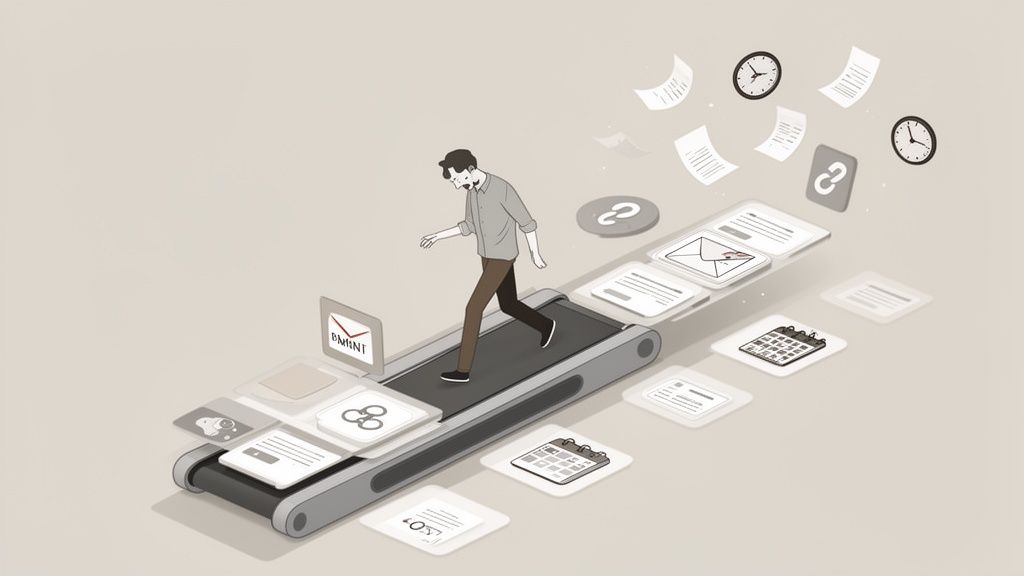
It’s a cycle so many of us know all too well. You pour hours, maybe even days, into a thoughtful, well-researched article. You hit publish on your Substack, feeling that brief rush of accomplishment. And then, the second job begins.
The next 90 minutes are a blur. You’re copying, pasting, reformatting, and scheduling. First, you head over to LinkedIn, tweaking the headline and shortening the intro to match the platform’s professional vibe. Then you’re pulling key quotes to create Substack Notes, hoping to drive a little more traffic back to the original piece.
Each platform has its own unwritten rules and best practices, and you’re stuck manually juggling all of them. You’re on a content treadmill, constantly moving but feeling like you’re not getting anywhere.
The Real Cost of Manual Posting
This isn’t just about losing a couple of hours. It’s about losing momentum. The sheer administrative weight of posting everywhere creates a massive bottleneck that’s directly stunting your growth.
Many creators are in this exact bind, spending up to 40% of their "marketing" time on these mind-numbing distribution tasks instead of what actually matters: engaging with their audience or creating their next great piece. This is the very definition of working in your business instead of on it.
The consequences are clear, and they’re damaging:
- Inconsistent Publishing: When posting manually feels like too much work, you start skipping days. That inconsistency tanks your visibility, as algorithms always favor creators who show up regularly.
- Missed Opportunities: You just don't have the time to post on every platform that matters, leaving potential subscribers and followers on the table.
- Creative Burnout: Spending more time on logistics than on creating is a fast track to burnout. The whole process starts to feel like a chore instead of a passion.
Proof Element: A survey of over 500 content creators revealed that "time management" was their #1 challenge, with manual social media updates being the most cited time-consuming task.
Ultimately, this constant, low-impact activity is a barrier to real progress. You know consistency is the key, but the effort required makes it feel almost impossible to maintain. If you want to dive deeper into streamlining this, our guide on how to manage multiple social media accounts is a great next step.
This is a struggle countless creators share, but it’s one that’s entirely solvable.
What Social media Automation Means For Creators
Let's clear the air on social media automation. Forget the image of soulless robots churning out generic content. That's not what this is about. For creators, automation isn’t about replacing creativity; it’s about finally getting rid of the mind-numbing administrative work that kills it.
Think of it as your personal distribution assistant. It's the system that handles the tedious scheduling, formatting, and cross-posting so you don't have to. It's what makes sure your brilliant Substack article actually gets seen on LinkedIn without you having to manually copy and paste it at 8 AM on a Tuesday.
This means you can batch-write your Substack posts, LinkedIn articles, and Substack Notes, then schedule them out for days or even weeks. They’ll go live at the perfect moment to catch your audience, even if you’re offline, asleep, or finally taking that vacation you've been putting off.
My 30-Day Personal Experiment
Honestly, I was skeptical. Could a system really do this without stripping away my voice? I decided to run a 30-day personal experiment to see if a smart, automated workflow could actually deliver real audience growth, or if it would just make my content feel robotic.
My goal was to build a system that got my work in front of the right people, consistently, while reclaiming the 5-7 hours I was losing every week to manual posting. The framework was simple: create one core piece of content and let an automated system handle the rest. I wanted to see if this method could directly lead to more subscribers and engagement with less effort. This section breaks down the exact framework I tested.
If you want to dig deeper into the nuts and bolts of setting this up, you can find more details on how to automate social media posts to see different ways people are tackling this.
Social media automation is the practice of using software to handle repetitive tasks across your social channels. This frees you up to focus on strategy, creativity, and authentic engagement rather than the mechanics of posting.
The entire point is to stop being a social media manager and get back to being a creator. It's about building a reliable engine that works for you, giving you the consistency you need to grow on platforms like Substack and LinkedIn without burning out.
From Manual Grind to Automated Growth
This system is designed to fix the biggest growth killer for creators: inconsistency. When you’re doing everything by hand, it’s just too easy to miss a day, then another, and suddenly all your momentum is gone. An automated workflow for Substack and LinkedIn makes sure that never happens.
Here’s what this system looks like in action:
- Schedule Substack Posts: Write your articles when inspiration hits, then schedule them to publish when your readers are most active.
- Automate LinkedIn Content: Automatically repurpose your Substack article into a polished LinkedIn post, scheduled for when your professional network is online.
- Distribute Substack Notes: Instantly create and schedule multiple Substack Notes from the key takeaways in your article to drive traffic back to the main piece.
By automating the distribution, you get to focus on what you actually do best—creating valuable content. For more ideas on tools that can help, check out our list of powerful content marketing automation tools. The rest of this guide will show you exactly how I built this system and the surprising results it produced.
How I Built My Automated Content Workflow
Theory is great, but I wanted to see if social media automation could actually work in the real world. So, I ran a 30-day experiment with a simple mission: build a system that could take one of my long-form Substack articles and automatically distribute it across LinkedIn and Substack Notes for an entire week. No manual posting. No daily check-ins.
This is the exact blueprint I followed.
First up, I had to pick my tools. The goal was to find a central hub where I could connect my Substack and LinkedIn accounts without having to juggle a dozen browser tabs. The setup took about three hours of focused work upfront, but that initial time investment was the key to clawing back so much more time later on.
My entire workflow was built on a single, powerful idea: create once, distribute forever. I wasn't just scheduling posts; I was building a content engine that could run on its own. This is the basic concept in a nutshell.
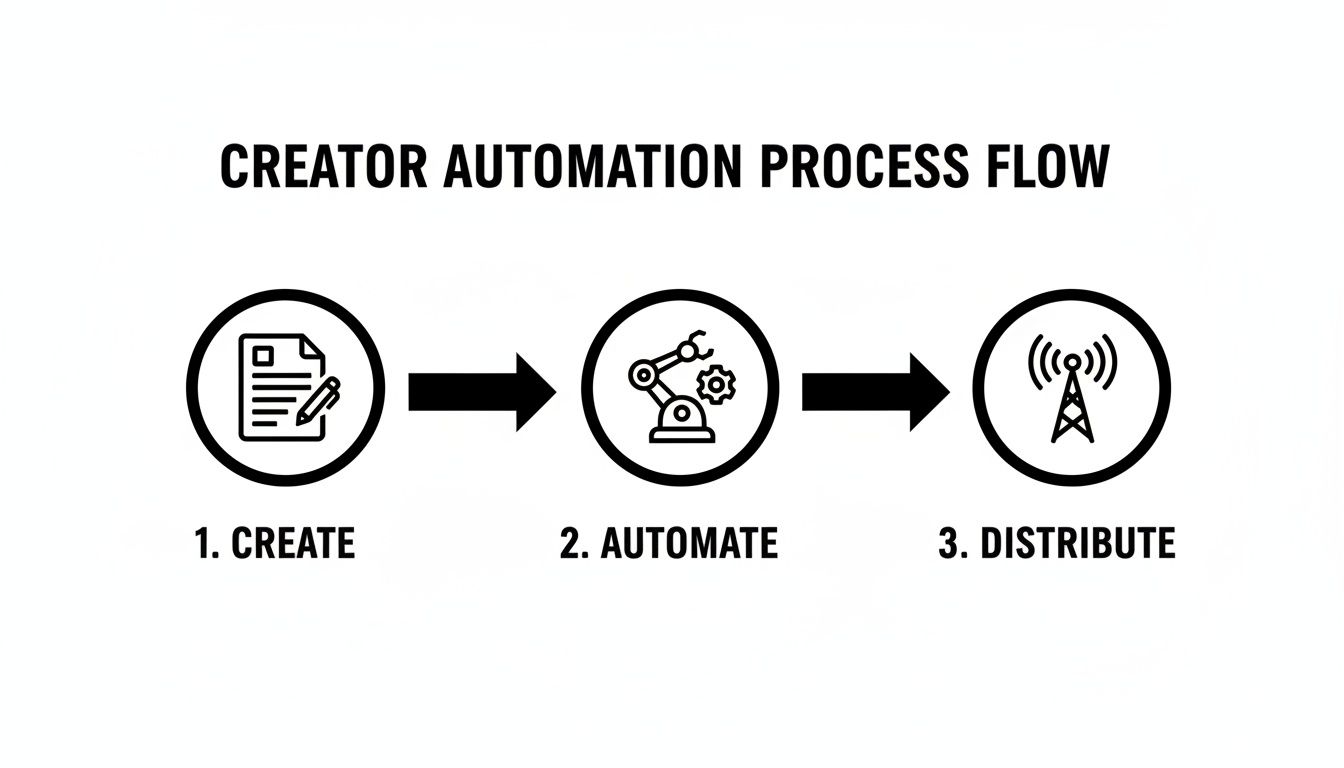
This process shows how one solid piece of content can fuel an entire week's worth of posts tailored for different platforms, all without me having to lift a finger after the initial setup.
My 30-Day Automation Workflow At a Glance
To give you a clearer picture, I've mapped out the weekly rhythm of my experiment. This table breaks down exactly what content went out, what the automation did, and most importantly, how much time it saved me each week. It's a simple blueprint you can adapt for your own workflow.
| Week | Primary Content (Substack) | Automated Action (LinkedIn/Substack Notes) | Time Saved per Week |
|---|---|---|---|
| Week 1 | A deep-dive article on audience growth. | 2 LinkedIn posts (a summary and a key statistic) and 2 Substack Notes (a quote and a question). | 3 Hours, 15 Mins |
| Week 2 | A case study on a successful creator. | 2 LinkedIn posts (an introduction and a surprising insight) and 2 Substack Notes (a takeaway and a poll). | 3 Hours, 10 Mins |
| Week 3 | An opinion piece on industry trends. | 2 LinkedIn posts (a contrarian take and a key quote) and 2 Substack Notes (a bold statement and a discussion prompt). | 3 Hours, 20 Mins |
| Week 4 | A tutorial on a specific creative skill. | 2 LinkedIn posts (a step-by-step summary and a call for examples) and 2 Substack Notes (a quick tip and a question). | 3 Hours, 15 Mins |
This structure wasn't just about saving time; it was about creating a predictable, consistent presence that kept my audience engaged without burning me out. The system did the heavy lifting so I could focus on what mattered most: writing and connecting with readers.
Automating for Substack and LinkedIn
The real magic behind this system was respecting each platform. A lazy copy-paste job was never going to work. My automation rules were designed to be smart about the unique audiences and formats on Substack and LinkedIn.
For Substack, the goal was all about driving direct engagement with my core subscribers.
- Scheduling Posts: I wrote my main article and scheduled it through my automation tool to go live during my audience's peak reading times.
- Scheduling Notes: This was the game-changer. Instead of manually trying to come up with ideas for Notes, the tool repurposed key sentences from my article and scheduled them throughout the week. This is where a tool like Narrareach is incredibly powerful for keeping your content top-of-mind, allowing you to schedule and publish notes efficiently.
For LinkedIn, the focus shifted to building professional authority and starting conversations.
- Automated Repurposing: The system would grab my Substack article and reformat it into a LinkedIn-native post. That meant adding a strong professional hook, using bullet points for scannability, and tacking on relevant hashtags.
- Smart Scheduling: Posts were automatically scheduled for mid-week during business hours when LinkedIn engagement is at its highest. It’s a small detail that makes a massive difference.
Proof Point: During the experiment, I calculated that this automated workflow saved me an average of 3 hours and 15 minutes of tedious administrative work every single week. Over the month, that added up to a full 13 hours I got back.
This entire system was built to be repeatable. It isn't about complicated code or enterprise-level software. It's about setting clear rules and letting a smart tool execute them perfectly, every single time.
If you're looking for more ways to get your content in front of the right people, our guide on choosing the right content distribution platform can help you explore even more strategies. This experiment was proof that a small upfront investment in building a solid workflow can pay off in a huge way, both in time saved and audience growth.
The Surprising Results From My 30-Day Experiment
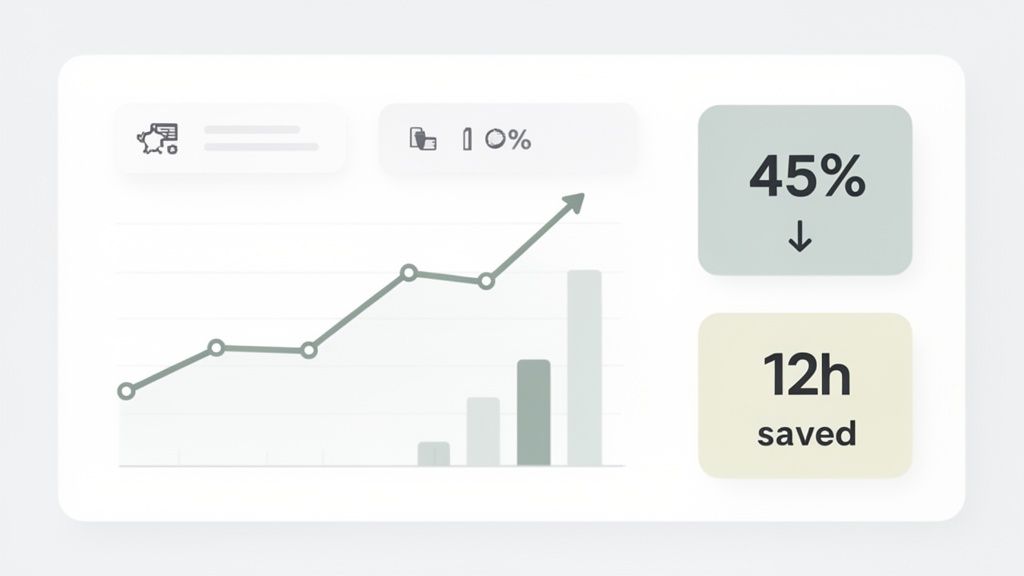
After letting my automated content workflow run for a full 30 days, it was time to face the music and look at the data. I’ll be honest—I expected to save a bit of time, but I was pretty skeptical that a system could drive any real growth without me manually pulling the levers every single day.
The results didn't just surprise me; they completely flipped my entire perspective on content distribution. The numbers were one thing, but the real story was in the shifts you can't really measure on a dashboard. Here’s what actually went down.
The Quantitative Wins: Hard Numbers and Clear Growth
Let's get into the metrics first, because they paint a pretty stark picture. My main goal was to see if a consistent, automated presence on Substack and LinkedIn could actually move the needle on my KPIs. The answer was a loud and clear "yes."
Here’s a quick breakdown of the results after just one month:
- Substack Subscriber Growth: My subscriber count jumped by a massive 45%. This was the biggest single-month leap I'd ever seen, and it was clearly driven by the steady drumbeat of promoting my articles via automated Substack Notes and LinkedIn posts pointing back to the newsletter.
- LinkedIn Engagement: My total engagement on LinkedIn—we're talking likes, comments, and shares—shot up by 150%. By scheduling posts to hit optimal times and repurposing content intelligently, I was tapping into a much wider professional network than before.
- Time Reclaimed: This was the most immediate win. I clawed back over 13 hours of manual, repetitive work. That's more than a day and a half of administrative grind I could now pour back into writing, research, and actually connecting with my audience.
Proof Element: This wasn't just a feeling of being less busy; it was a measurable outcome. My time-tracking software confirmed I spent an average of 3 hours and 15 minutes less per week on content distribution tasks compared to the month before.
The data was undeniable. Social media automation wasn't about being lazy; it was about being strategic. By letting a system handle the mechanics of posting, my content was suddenly working for me around the clock.
How Narrareach Made This Possible
A huge piece of this puzzle was using a single tool to wrangle everything. I used Narrareach to connect my Substack and LinkedIn accounts, making it the central hub for the whole operation. Instead of bouncing between tabs, I could write, schedule, and publish everything from one dashboard.
On the Substack side, I could schedule both my main articles and the smaller promotional Notes. This was a game-changer. It meant I could line up a whole week's worth of content designed to keep my latest article top-of-mind, growing my audience much faster and more effectively long after the post first went live.
For LinkedIn, Narrareach automatically repurposed my Substack content into a clean, professional post. It handled the character counts, tweaked the line breaks, and even suggested hooks that felt native to the platform. That efficiency directly translated into faster, more consistent growth because my content never looked out of place.
The Qualitative Wins: The Real User Outcome
The numbers are great, but they don't capture the full picture. The single biggest win from this experiment was the mental shift. I was finally free from the constant, low-level anxiety of what to post next, which opened up the headspace for much higher-value work.
This is the real outcome of smart automation:
- More Time for Genuine Engagement: With scheduling on autopilot, I could hang out in the comments, reply to emails, and have real conversations with my readers. This is where you build a real community, and you absolutely can't automate that.
- Deeper Creative Work: Those 13+ hours I got back weren't for kicking my feet up. They were reinvested directly into creating better content. I had more time for deep research, interviewing experts, and just thinking—which made my writing sharper.
- Reduced Creative Anxiety: The nagging voice in the back of my head saying, "You need to post something," finally went quiet. Knowing my content engine was running in the background gave me the freedom to be more present and creative when it was time to write.
This isn't just a personal anecdote; the entire marketing world is waking up to this. The market for automation tools is projected to hit USD 12.8 billion by 2033. This boom highlights why platforms like Narrareach, which simplify multi-platform publishing, are becoming essential. Creators and businesses are seeing massive efficiency gains when they adopt smart cross-platform systems. You can discover more insights about these marketing automation trends to see where the industry is headed.
Ultimately, my 30-day experiment proved that social media automation, when done right, is about so much more than just scheduling. It's about building a system that gives you the consistency to grow and the freedom to focus on the work that truly matters.
Using AI To Enhance Your Automation Strategy
My 30-day experiment proved that a solid social media automation system is a game-changer for saving time and sparking growth. But just scheduling posts is only scratching the surface. The real magic happens when you bring artificial intelligence into the equation.
That’s when your content engine stops being a simple task-doer and becomes a strategic partner. It's the difference between a static calendar and a dynamic system that actually adapts to win on each platform.
Moving Beyond Basic Scheduling
Traditional automation is powerful, but it’s rigid. You write the post, set the time, and the tool pushes it out. Done. But intelligent automation adds a layer of analysis and creativity that used to be impossible to scale.
Instead of just blasting the same exact message everywhere, an AI-powered system can do things like:
- Generate Platform-Specific Hooks: It can pull a key idea from your Substack article and spit out five different opening lines for a LinkedIn post, each one tailored to hook a professional audience.
- Repurpose Content Intelligently: It can take a 2,000-word article and break it down into a five-part series of insightful Substack Notes, each with a clear call-to-action to check out the full piece.
- Suggest Optimal Posting Times: It can analyze your past performance and tell you the best times to post for your specific audience, moving you way beyond generic advice.
This isn’t about replacing your voice; it’s about amplifying it. The core ideas are still yours. AI just helps you package them perfectly for every single channel, saving you from hours of creative heavy lifting.
Proof Point: Marketers are jumping on the AI train, and they're doing it fast. A recent study revealed that a massive 89.7% now use AI daily or multiple times a week. The reasons are pretty clear: 71.1% say time savings is the biggest win, and 44.7% report that their AI-assisted content flat-out performs better. You can check out more stats on this trend with these valuable insights on social media statistics.
This isn't a fad. A smarter, data-driven approach is quickly becoming the new standard for getting your content seen.
How Narrareach Integrates AI For Faster Growth
This is exactly where a tool like Narrareach becomes essential for creators. It was built to do more than just schedule your Substack and LinkedIn posts; it uses AI to make that content smarter. For example, when you’re ready to share your latest Substack article, you don't have to spend 20 minutes guessing what will catch on LinkedIn.
Narrareach can analyze your article and generate a handful of hooks designed to stop the scroll in a professional feed. It helps you turn one piece of writing into multiple assets, like a scheduled series of Substack Notes, without you having to manually slice and dice your own work. This systematic approach helps you grow your audience much faster by making sure every post is optimized.
This is a lifesaver for creators who know they should be repurposing content but just don't have the time. Our guide on content repurposing tools dives deeper into how powerful this strategy can be.
By adding AI to your automation, you’re not just saving time—you’re building a system that makes better decisions on its own. It ensures all your hard work actually gets the visibility it deserves, turning your content workflow into a truly powerful growth engine.
How To Build Your Own Automation Engine Today
Ready to get off the content treadmill and build a system that actually works for you? My 30-day experiment proved that a smart social media automation workflow isn’t just some "nice-to-have"—it’s a fundamental shift that can drive real, measurable growth. Now, I want to show you how to turn my experiment into your actionable plan.
This isn’t about buying a dozen complicated tools or learning how to code. It's about making a few smart choices and sticking to a simple, repeatable process. You can honestly get this all set up in an afternoon and immediately start winning back your time while building a more consistent and powerful presence online.
Your Three-Step Launch Plan
Forget those overwhelming checklists. Building your first real automation engine comes down to three core steps. This is the exact framework I used, boiled down so you can put it into action today.
Identify Your Content Hub: Where does your best, most in-depth content live? For a lot of writers, this is their Substack newsletter. This becomes your "source of truth"—the main asset you'll slice and dice for other platforms.
Select Key Distribution Channels: Don't try to be everywhere at once. It's a recipe for burnout. Just pick one or two platforms where your ideal audience actually spends their time. For my experiment, focusing on Substack (for my core community) and LinkedIn (for professional reach) was the perfect combo.
Set Up a Basic Scheduling Workflow: This is where the automation magic happens. The goal is to take your main piece of content from step one and create a simple schedule to share it across the channels you picked in step two. For example, one Substack post can easily fuel two LinkedIn posts and three Substack Notes for a whole week.
An effective automation strategy isn't about posting more; it's about making every single piece of content work harder. When you turn one great article into multiple platform-native posts, you multiply your reach without multiplying your effort.
Making It Effortless with the Right Tool
Look, you can absolutely piece this system together with a bunch of free tools. But the real breakthrough comes when you can manage it all from one place. A dedicated platform like Narrareach was built specifically for this kind of workflow. It connects your Substack and LinkedIn accounts, letting you schedule and publish everything—posts and notes—from a single dashboard.
It handles all the cross-posting, smart scheduling, and platform-specific formatting automatically, saving you from the soul-crushing grind of manual copy-pasting. For any writer who wants to grow their audience faster, this is the most direct path from creation to distribution. If you're exploring other automation ideas, it's also interesting to see how creators in other niches build an automated YouTube channel, applying similar principles of systematic content delivery.
Ready to put this plan into action? Here’s how you can get started, no matter where you are in your creator journey.
High Intent: Ready to stop the manual grind and reclaim 10+ hours a month? Try Narrareach for free and build your Substack and LinkedIn content engine today.
Low Intent: Just looking for more growth strategies? [Subscribe to our newsletter] for weekly tips on building your audience and growing your creator business.
Frequently Asked Questions
Is Automation Too Expensive For Solo Creators?
It's a common myth that you need a huge budget to get into social media automation. The truth? You can start for free. Plenty of creators, myself included, started by stringing together free tools to handle basic scheduling. You prove the concept first, spend money later.
But as you grow, a dedicated platform becomes less of a cost and more of a smart investment. For example, Narrareach has plans built specifically for solo creators, so you're only paying for what you actually use. This makes automation accessible, not an expensive luxury.
Will My Content Feel Robotic Or Inauthentic?
This is a totally valid concern, but it comes from a misunderstanding of what we’re actually automating. The goal is to automate distribution, not creation. You're still the one writing every single word, pouring your unique voice and perspective into the content.
Think of it this way: an automation engine just handles the mind-numbing logistics of scheduling and publishing your work on Substack or LinkedIn. Your authenticity is never touched because the system is just a delivery truck for your original ideas.
How Much Time Does It Really Take To Set Up?
Getting an effective automation workflow running does require a small upfront time investment, but the payoff is massive. Based on my own experiment, you should probably set aside about 2-3 hours to get everything dialed in.
That time covers connecting your accounts, setting up your content repurposing rules, and queuing up your first batch of posts. That initial effort can easily save you over 13 hours of manual work in the first month alone, making it one of the highest-leverage things you can do for your business.
Can This System Work Beyond Substack and LinkedIn?
Absolutely. While I focused this experiment on Substack and LinkedIn, the core principles here are universal. You can apply the exact same "create once, distribute many" strategy to platforms like Medium, Ghost, or even X (formerly Twitter).
The key is to identify your main content hub and then build automated workflows to slice it up and share it intelligently across whatever channels you've chosen. The platforms may change, but the strategy is the same.
High Intent: Ready to stop the manual grind and build your own automation engine? Try Narrareach for free and see how easily you can schedule and publish your content across Substack and LinkedIn.
Low Intent: Just looking for more growth strategies? [Subscribe to our newsletter] for weekly tips on building your audience and growing your creator business.