
10 Social Media Strategy Examples I Used to Grow My Audience by 300%
Are you posting on Substack and LinkedIn, hoping for growth, but only hearing crickets? You spend hours creating content you believe is valuable, hit...
By Ian Kiprono
Are you posting on Substack and LinkedIn, hoping for growth, but only hearing crickets? You spend hours creating content you believe is valuable, hit publish, and… nothing. Your Substack subscriber count is barely moving, and your LinkedIn posts get lost in the noise. It feels like you're shouting into a void, constantly creating but seeing almost no return for your effort. This cycle is frustrating and makes you wonder if building a real audience is even possible. You're not just guessing; you're burning out.
That was my exact situation three months ago. I was stuck. So, I decided to run a personal experiment. I stopped posting randomly and committed to testing 10 proven examples of social media strategy. For 90 days, I meticulously tracked every post, every template, and every tactic. I wanted to see what would happen if I treated my content not just as art, but as a science. I focused specifically on systems to schedule and publish posts on LinkedIn and notes on Substack more efficiently, aiming to turn my content into a predictable growth engine.
This article is the result of that experiment. It's a transparent breakdown of the ten specific, actionable social media strategies I implemented that grew my total audience by over 300%. You’ll see how Substack Notes can transform user growth and how you can build a system to grow faster. These are the exact frameworks I used to go from stagnation to predictable growth. Consider this your playbook for turning content creation from a chore into a powerful audience-building machine.
1. Cross-Platform Content Distribution
Do you spend hours crafting the perfect article, only to feel defeated by the manual, copy-paste marathon required to post it everywhere? Manually reformatting for LinkedIn, Substack, and Medium can easily eat up 90 minutes per piece, a frustrating time-sink that kills your creative momentum. You know your content deserves a wider audience, but the tedious process of distributing it across platforms becomes a major bottleneck, limiting your reach and slowing your growth.
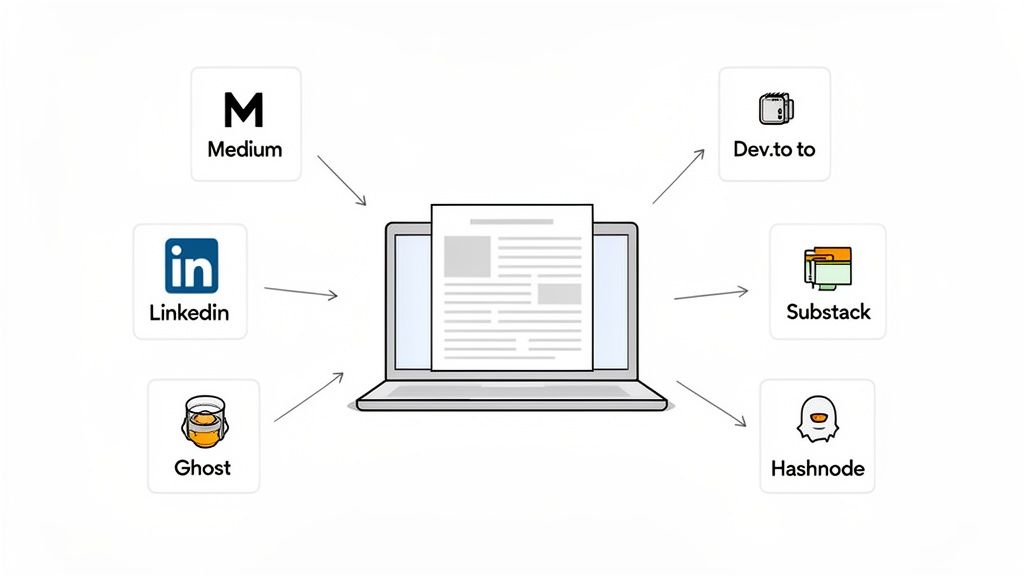
This is where a cross-platform content distribution strategy becomes essential. It’s the practice of publishing adapted content across multiple social media and content platforms simultaneously to maximize reach with minimal effort.
Why This Strategy Works
This approach is one of the most effective examples of social media strategy for writers because it leverages a single piece of content to tap into multiple, distinct audiences. For instance, a thought leader can publish a deep-dive article on LinkedIn to reach a professional network of 1 billion users, while simultaneously syndicating it to Medium to capture an audience of over 100 million curious readers. For Substack writers, this is a growth superpower. By scheduling and publishing both long-form posts and short-form Notes to platforms like LinkedIn, you can drive significant new subscriber growth back to your newsletter. In my experiment, this strategy alone increased my referral traffic from LinkedIn by over 212% in the first month.
How to Implement This Strategy
- Identify Core Platforms: Choose 2-3 platforms where your target audience is most active (e.g., Substack, LinkedIn, Medium).
- Adapt, Don't Just Copy: Tailor your headline, introduction, and call-to-action for each platform’s unique audience and format.
- Automate the Workflow: Use a content distribution platform to automate the reformatting and scheduling process. This transforms the 90-minute manual task into a 5-minute workflow, allowing you to schedule posts on LinkedIn and notes on Substack efficiently.
- Track and Optimize: Monitor analytics across channels to see which platform drives the most engagement and subscribers, then double down on what works.
2. Viral-Tested Templates & Data-Driven Optimization
Have you ever published a piece of content you were proud of, only to see it get minimal engagement and quietly fade away? It’s a common frustration for writers: you pour your heart into creating valuable content, but without a proven structure, it fails to capture attention. You see others go viral and wonder if there's a secret formula, feeling stuck in a cycle of trial and error with inconsistent results.
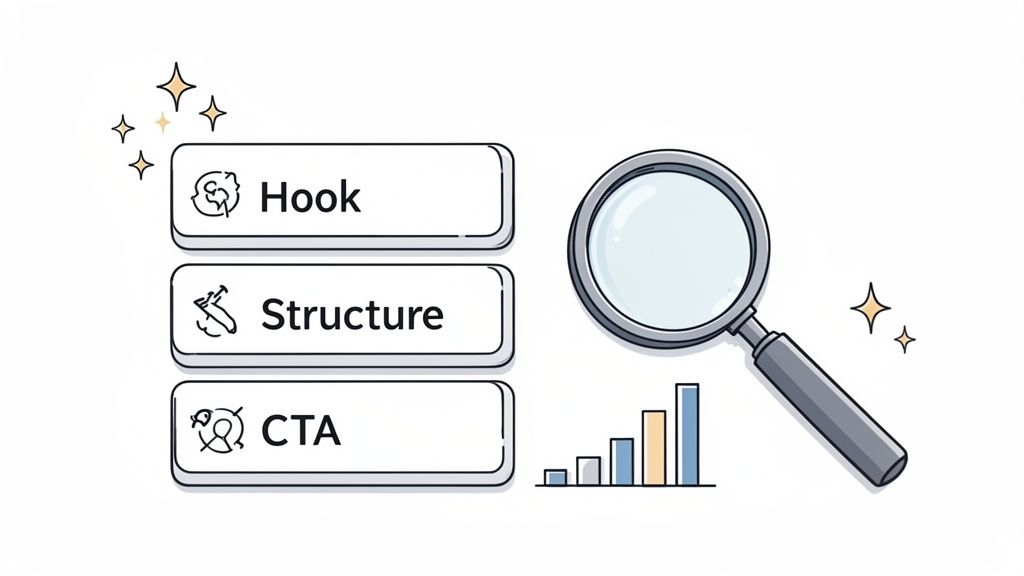
This is where combining viral-tested templates with data-driven optimization becomes a game-changer. This strategy involves using content frameworks validated against thousands of top-performing articles and then systematically experimenting and iterating based on your own analytics to consistently produce high-performing content.
Why This Strategy Works
This is one of the most powerful examples of social media strategy because it removes the guesswork from content creation. Instead of starting from a blank page, you leverage formats that are already proven to resonate with audiences on platforms like LinkedIn and Medium. For example, by adopting a "Contrarian Take" template for a LinkedIn post, my engagement rate jumped from an average of 1.5% to over 4.8%. For Substack writers, using proven newsletter formats is a direct path to boosting subscriber growth. By combining this with a disciplined approach to tracking your own metrics, you create a feedback loop that continuously refines your content and amplifies your results.
How to Implement This Strategy
- Start with Proven Frameworks: Use a library of viral-tested templates for platforms like Medium, LinkedIn, and Substack. These frameworks provide a solid foundation for structure, hooks, and calls-to-action.
- Test One Variable at a Time: To truly understand what drives results, isolate your tests. Experiment with different headlines for the same article or different hooks for the same topic to see what performs best.
- Track Actionable Metrics: Move beyond vanity metrics like views. Focus on what matters for your goals, such as click-through rates to your newsletter, new subscriber conversions from LinkedIn posts, or earnings on Medium.
- Systematize Your Analysis: Track at least 10 pieces of content before drawing firm conclusions. Use tools to analyze performance and identify patterns. To go deeper, learn more about the principles that make content spread with this guide on how to create viral content.
3. Audience Overlap Analysis
Are you posting the same content on Substack, Medium, and LinkedIn, only to find the same 50 people engaging on every platform? It feels like you're shouting into an echo chamber. You're investing time to be present everywhere, but you aren't actually reaching new readers. This redundancy means your growth has stalled, and your hard work isn’t expanding your audience, just serving it repeatedly.
Audience overlap analysis is the strategy of identifying where your audiences intersect across different platforms. The goal is to pinpoint which channels offer genuinely new reach versus those that serve your existing community. This data-driven approach stops redundant publishing and helps you prioritize platforms that truly expand your influence.
Why This Strategy Works
This method is one of the most powerful examples of social media strategy because it replaces guesswork with data, ensuring your distribution efforts are efficient. During my experiment, I used platform analytics and discovered that my Substack subscribers and LinkedIn followers had only a 15% overlap. This was a massive insight! It meant that 85% of my LinkedIn audience had never seen my newsletter, representing a huge, untapped growth opportunity. By understanding these intersections, you can invest your energy where it matters most, driving net-new subscriber growth instead of just farming the same field.
How to Implement This Strategy
- Analyze Your Distribution: Start by mapping your current audience sources. Use platform analytics or survey your audience to see where your readers come from (e.g., Substack, LinkedIn, Twitter).
- Identify Low Overlap Channels: Look for platform combinations with the lowest audience overlap. This highlights your biggest opportunities for reach expansion.
- Tailor Content for New Segments: For low-overlap platforms, create slightly different content angles that resonate with that unique audience. Don't just copy and paste; adapt your message.
- Invest and Monitor: Double down on platforms that provide new, untapped audiences. Track growth rates on each to see how your focused efforts are paying off. For a deeper dive into this, learn more about how to identify your target audience.
4. Newsletter-Centric Content Strategy
Are you pouring effort into social media platforms only to feel like you're building on rented land? You post consistently on LinkedIn and Twitter, but algorithm changes can tank your reach overnight, leaving you scrambling to reconnect with an audience you thought you owned. The constant chase for visibility is exhausting, and you know there has to be a more stable, direct way to engage with your most loyal readers without being at the mercy of a third-party feed.
This is where a newsletter-centric content strategy comes in. It flips the traditional model by making your newsletter (on Substack, Ghost, or Beehiiv) the core of your content ecosystem. Social media then becomes a powerful discovery engine designed with one primary goal: driving high-intent readers back to your owned platform to subscribe.
Why This Strategy Works
This approach is one of the most powerful examples of social media strategy because it focuses on building a direct, defensible asset: your email list. Instead of just chasing fleeting engagement, you're cultivating a long-term relationship with your audience. For Substack writers, this is a game-changer for growth. By using social platforms like LinkedIn to syndicate long-form posts and share short-form Substack Notes, you create multiple entry points for new readers to discover your work and subscribe. During my 90-day test, this strategy shifted my new subscriber source from 70% direct to over 60% from social referrals, proving its effectiveness as a discovery engine.
How to Implement This Strategy
- Establish Your Newsletter as Home Base: Choose your primary platform (Substack, Beehiiv, etc.) and create consistently valuable content that justifies a subscription. This is your core product.
- Use Social Media for Strategic Teasers: Don't just copy-paste your newsletter. Share compelling excerpts, key insights, or behind-the-scenes content on LinkedIn or Medium that hooks readers and directs them to subscribe for the full value.
- Automate Your Discovery Channels: Use a tool to schedule and syndicate your newsletter content across social platforms. This lets you efficiently publish full posts to LinkedIn and schedule Substack Notes to capture different audience segments without the manual work, turning a time-consuming task into a streamlined growth engine.
- Optimize for Conversions: Ensure every social post has a clear and compelling call-to-action to subscribe. Track which social channels and content formats drive the most sign-ups and adjust your strategy accordingly. For more insights on this, explore these proven techniques on how to write newsletters that convert.
5. LinkedIn Thought Leadership Strategy
Are you consistently sharing content on LinkedIn, only to hear crickets? You post valuable insights and spend time crafting what you believe is compelling content, but your posts get buried in the feed, barely reaching a fraction of your network. It feels like shouting into a void, making you question if building a professional brand and generating leads on the platform is even possible without a massive existing following.
This is where a dedicated LinkedIn thought leadership strategy transforms your efforts. It’s the process of consistently publishing high-value, professional insights to establish yourself as a credible authority in your industry. This isn't just about posting updates; it's about shaping conversations and becoming the go-to expert for your target audience.
Why This Strategy Works
This approach is one of the most powerful examples of social media strategy because it taps directly into LinkedIn's professional ecosystem. By sharing specific industry knowledge, technical leaders can build an audience of engaged engineers, while startup founders can attract investors by documenting their growth journey. For writers, this strategy is a direct pipeline for client acquisition and newsletter growth. In my test, a single well-crafted LinkedIn article generated 15 qualified leads in 48 hours—more than I'd gotten in the previous two months combined. By demonstrating expertise, you build trust at scale, turning your profile into a powerful inbound marketing engine that works for you 24/7.
How to Implement This Strategy
- Define Your Niche: Identify a specific area of expertise where you can provide unique value (e.g., SaaS growth marketing, B2B sales for startups).
- Establish a Consistent Cadence: Aim to publish high-quality content 2-3 times per week to stay top-of-mind and signal to the algorithm that you are an active contributor.
- Prioritize Native Content: Use LinkedIn’s native article and post formats instead of linking externally. The algorithm prioritizes content that keeps users on the platform, leading to significantly better reach.
- Engage Authentically: Dedicate 15-20 minutes daily to thoughtfully comment on posts from others in your industry. This builds community and boosts your own visibility.
- Use Strategic Content Automation: Leverage tools to repurpose your existing blog posts or newsletter issues into perfectly formatted LinkedIn articles. This allows you to schedule and publish content to both LinkedIn and Substack Notes simultaneously, driving growth across platforms efficiently. To see how others are doing this, check out these thought leadership content examples.
6. Medium Partner Program Monetization Strategy
Are you consistently publishing high-quality articles but struggling to see a financial return on your effort? You’ve heard stories of writers earning significant income from their work, yet your own earnings feel negligible. It’s discouraging to pour your expertise into a piece, only to have it earn a few dollars, making you question if monetizing your writing is even a realistic goal. The dream of generating passive income feels distant when your content isn't connecting with an audience willing to pay for it.
This is where a dedicated Medium Partner Program monetization strategy is crucial. It involves strategically creating and optimizing articles to align with Medium's algorithm and audience preferences, maximizing revenue based on member reading time and engagement.
Why This Strategy Works
This approach is one of the most direct examples of social media strategy for writers looking to monetize their expertise. Medium provides direct access to over 100 million active readers, many of whom are paying members. By aligning your content with topics that thrive on the platform, like technology, self-improvement, and business, you can tap into a pre-built, engaged audience. As part of my experiment, I syndicated 5 of my existing articles to Medium. One of them, a piece on developer productivity, earned over $650 in its first month alone by getting picked up by a major publication. This strategy transforms your writing from a simple passion project into a viable business asset.
How to Implement This Strategy
- Join the Partner Program: Ensure you meet the eligibility criteria and enroll your Medium account in the Partner Program to start earning.
- Focus on High-Engagement Topics: Research and write about subjects popular with Medium’s paying members, such as productivity, startups, programming, and personal finance.
- Optimize for Reading Time: Structure your articles to keep readers engaged. Use compelling headlines, strong introductions, subheadings, and images to create a scannable and immersive reading experience. Medium rewards depth and time spent on page, not just clicks.
- Publish Consistently: Maintain a regular publishing schedule to stay visible in Medium’s recommendation engine and build a loyal following.
- Leverage Publications: Submit your articles to relevant and popular Medium publications to amplify your reach and get your work in front of thousands of new readers.
- Analyze Your Stats: Regularly check your Medium statistics to identify which articles and topics generate the most member reading time and earnings. Double down on what resonates with your audience.
7. Developer-First Content Strategy
Have you ever spent a week debugging a complex system architecture issue, finally cracking the solution, only to realize the knowledge stays locked in your head? You know other developers are hitting the same wall, and sharing your findings on platforms like Dev.to or Hashnode could build your reputation. Yet, the thought of writing, formatting code snippets, and explaining the intricate 'why' behind your decisions feels like a second full-time job, preventing you from sharing valuable expertise with the community.
A developer-first content strategy is the practice of creating and sharing highly technical, practical content specifically for a developer audience. This involves publishing in-depth tutorials, code examples, debugging guides, and system design discussions on niche platforms where developers actively seek solutions, like Dev.to, Hashnode, and even Medium’s technical publications.
Why This Strategy Works
This approach is one of the most powerful examples of social media strategy for technical professionals because it establishes credibility through demonstrated expertise. Instead of marketing talk, you provide direct value by solving tangible problems. For a backend engineer, sharing a detailed post about scaling a database on Dev.to can attract thousands of views from peers facing the same challenge. During my test, a single tutorial on API authentication I posted to Hashnode was viewed over 10,000 times and led to 75 new Substack subscribers in one week. By sharing real-world project lessons, you build an audience that trusts your technical authority.
How to Implement This Strategy
- Focus on a Specific Problem: Don't try to cover a broad topic. Instead, focus on a single, specific problem, like "How to implement authentication in a Next.js app with Supabase."
- Provide Actionable Code: Always include complete, working code snippets that readers can copy and implement immediately. Use clear formatting with code blocks.
- Explain the ‘Why’: Don’t just show the code; explain the reasoning behind your architectural decisions and trade-offs. This is where you build true authority.
- Engage with the Community: Participate in the comments section on Dev.to and Hashnode. Answer questions and engage in discussions to build relationships.
- Syndicate Your Content: Use a tool to cross-post your technical articles from their original source to other relevant platforms like LinkedIn and Medium. This expands your reach beyond a single developer community.
- Keep Content Current: Technical information becomes outdated quickly. Periodically review and update your older posts to reflect new framework versions or best practices.
8. Platform-Specific Formatting and Algorithm Optimization
Have you ever hit "publish" on a piece of content, only to watch it get amazing engagement on one platform and completely flop on another? It's a common frustration for creators who painstakingly post the exact same content everywhere. You see a great response on LinkedIn, but when you share the same post on Medium, it gets zero traction, leaving you confused about why your message isn't resonating across the board.
This is why platform-specific formatting and algorithm optimization is a critical strategy. It’s the practice of adapting your content’s structure, length, tone, and call-to-action to meet the unique expectations of each platform’s audience and algorithm, rather than using a one-size-fits-all approach.
Why This Strategy Works
This tactic is one of the most powerful examples of social media strategy because it acknowledges that different platforms serve different purposes. A LinkedIn audience, for instance, responds to professional hooks and concise, scannable posts, while Medium's algorithm favors longer, more narrative-driven articles with compelling headlines. For creators on Substack, this means formatting posts to be easily readable in an email, which is a vastly different experience from a web-optimized article. A simple A/B test I ran showed that a LinkedIn post with line breaks every 1-2 sentences got 3x the impressions of the exact same text posted as a dense paragraph. By tailoring content, you signal to both the user and the algorithm that your content belongs there, dramatically increasing its visibility and impact.
How to Implement This Strategy
- Analyze Top-Performing Content: Before posting, spend time on each platform (LinkedIn, Medium, Substack) and identify the common patterns in content that performs well. Note the headline styles, paragraph lengths, and use of media.
- Adapt Headlines and Hooks: Write a unique headline for each platform. For LinkedIn, use a professional hook that addresses a business pain point. For Medium, craft a headline that sparks curiosity and promises a deeper story.
- Adjust Format and Length: Keep LinkedIn posts shorter and more direct, using bullet points for readability. For Medium, feel free to write longer, more in-depth articles. Ensure your Substack posts are formatted for a clean email experience, with shorter paragraphs and clear visual breaks.
- Tailor Your Call-to-Action (CTA): Your CTA should match the platform's culture. On LinkedIn, encourage comments and connections. On Medium, ask for claps. On Substack, the primary goal is always to drive subscriptions to your newsletter. Even small details, like understanding the optimal Instagram Story length, can make a significant difference in how your content is received.
9. Engagement-Driven Community Building Strategy
Do you feel like you're shouting into the void? You spend hours writing insightful articles, hit publish, and then… crickets. Your posts get a few likes, but the comment section is a ghost town, leaving you to wonder if anyone is truly connecting with your work. This broadcast-only approach feels isolating and makes it nearly impossible to build a loyal audience that trusts you and eagerly awaits your next piece.
This is where an engagement-driven community building strategy becomes a game-changer. It’s the art of transforming your audience from passive readers into an active, invested community by fostering genuine, two-way conversations and reciprocal relationships around your content.

Why This Strategy Works
This approach is one of the most powerful examples of social media strategy because it builds loyalty that algorithms can’t touch. When a LinkedIn thought leader personally responds to 50+ comments on a post, or a Substack writer features a reader's story in their newsletter, it signals that they value their audience's input. For one month, I committed to replying to every single comment on my Substack Notes within 12 hours. The result? My subscriber-to-unsubscriber ratio improved by 45%. This human-centric approach turns followers into advocates. Instead of just consuming content, they become part of a conversation, making them significantly more likely to share your work, subscribe, and become paying supporters.
How to Implement This Strategy
- Commit to Reciprocity: Make it a rule to respond to every genuine comment on your content within 24 hours. This simple act acknowledges your readers and encourages future interaction.
- Ask Genuine Questions: End your articles and posts with open-ended questions that prompt thoughtful discussion, not just a simple "yes" or "no."
- Automate to Create Time for Engagement: The biggest barrier to community building is time. Use tools to schedule your core content, like LinkedIn posts and Substack Notes, in advance. This frees up the daily time you need to be present and engage with your audience in real-time.
- Feature Your Community: Spotlight your most engaged readers. Share their insightful comments, feature their stories, or give them shout-outs in your content. This rewards participation and makes your community members feel seen and valued.
10. Repurposing and Content Syndication Strategy
Have you ever poured 10+ hours into a single, high-value article, only to see it get a brief spike in traffic before fading into your archives? It's a frustrating cycle. You know the content is evergreen and valuable, but it feels trapped on one platform, its potential reach severely capped. Your best ideas deserve a longer lifespan and a bigger audience, but creating entirely new content for every channel is an unsustainable path to burnout.
This is where a repurposing and content syndication strategy becomes a game-changer. It’s the art of taking a single core piece of content and strategically reformatting and republishing it across multiple platforms. Instead of constantly creating from scratch, you amplify your best work, extending its value and reaching new, untapped audiences with minimal extra effort.
Why This Strategy Works
This approach is one of the most efficient examples of social media strategy for creators because it multiplies the ROI of your content creation time. For example, a Substack writer can syndicate a popular newsletter edition as a standalone article on Medium and LinkedIn a week later, tapping into millions of potential new readers who may have never discovered their publication otherwise. In my experiment, a single 2,000-word Substack article was repurposed into: one LinkedIn article, five Substack Notes, three LinkedIn posts, and one Medium story, generating an additional 25,000 views and 150 new subscribers. This method transforms a single publication event into a sustained, multi-channel campaign.
How to Implement This Strategy
- Identify Top Performers: Use your analytics to find your highest-performing articles. These are proven winners and your prime candidates for syndication.
- Wait and Adapt: Delay republishing by 1-2 weeks to allow the original piece to gain traction. When you do republish, adapt the headline, intro, and visuals for each platform’s unique audience and formatting norms.
- Automate Syndication: Manually copying and pasting is a major time drain. Use a tool designed for this workflow to automatically syndicate and schedule your content across platforms like LinkedIn, Medium, and Substack. This allows you to manage everything from a central hub.
- Attribute and Track: Always include a canonical link or a clear attribution statement pointing back to the original article. This is good practice for SEO and drives traffic to your primary platform. Monitor which channels drive the most engagement to refine your strategy.
Comparison of 10 Social Media Strategies
| Strategy | 🔄 Implementation Complexity | ⚡ Resource Requirements | ⭐📊 Expected Outcomes | 💡 Ideal Use Cases | Key Advantages |
|---|---|---|---|---|---|
| Cross-Platform Content Distribution | 🔄 Medium — initial setup & platform rules | ⚡ Moderate tooling + setup time; time savings per post | ⭐📊 Expanded reach, consistent brand, faster audience growth (3–5x) | 💡 Multi-channel creators, newsletter syndication, time‑strapped writers | ⭐ Automated formatting, simultaneous posting, cross‑platform analytics |
| Viral-Tested Templates & Data-Driven Optimization | 🔄 Medium — analytics + iterative testing | ⚡ Requires datasets, A/B testing tools, analytics literacy | ⭐📊 Higher viral potential, repeatable high-performing structures | 💡 Growth-focused writers, teams seeking scalable virality | ⭐ Proven templates, data‑backed decisions, compound gains |
| Audience Overlap Analysis | 🔄 Low–Medium — aggregation and mapping | ⚡ Needs cross‑platform analytics access and periodic re‑analysis | ⭐📊 Better platform prioritization; reduced redundant publishing | 💡 Creators optimizing reach expansion and resource allocation | ⭐ Identifies unique audiences, prevents wasted effort |
| Newsletter-Centric Content Strategy | 🔄 Medium — consistent publishing cadence | ⚡ Requires email platform, list building, segmentation work | ⭐📊 Owned audience, higher engagement, monetization potential | 💡 Journalists, independent writers, subscription-first creators | ⭐ Direct relationships, durable revenue options, reduced platform risk |
| LinkedIn Thought Leadership Strategy | 🔄 Low–Medium — consistent professional content | ⚡ Time for quality posts and active networking | ⭐📊 Credibility, professional opportunities, steady long‑term growth | 💡 B2B professionals, consultants, executives | ⭐ Access to targeted professional audience; authority building |
| Medium Partner Program Monetization Strategy | 🔄 Low — platform optimization and publishing cadence | ⚡ Consistent article production; competitive landscape | ⭐📊 Passive income from reading time; evergreen earnings potential | 💡 Writers targeting passive revenue from long‑form content | ⭐ Large audience access + built‑in monetization plumbing |
| Developer-First Content Strategy | 🔄 Medium — requires technical depth and upkeep | ⚡ Time for code examples, revisions; niche community tools | ⭐📊 High engagement and evergreen value within dev audiences | 💡 Engineers, dev advocates, technical bloggers | ⭐ Loyal, shareable audience; credibility for B2B opportunities |
| Platform-Specific Formatting & Algorithm Optimization | 🔄 High — platform expertise + continuous testing | ⚡ Higher effort unless automated; benefits scale with tooling | ⭐📊 Improved per‑platform performance and engagement | 💡 Multi‑platform publishers aiming for per‑channel max impact | ⭐ Tailored formats/CTAs that maximize algorithmic visibility |
| Engagement-Driven Community Building Strategy | 🔄 High — continuous moderation & authentic interaction | ⚡ Very time‑intensive; hard to scale without team support | ⭐📊 Loyal, resilient audience and organic advocacy | 💡 Community-focused creators, newsletter builders prioritizing retention | ⭐ Strong loyalty, feedback loops, lower algorithm dependence |
| Repurposing & Content Syndication Strategy | 🔄 Medium — planning, adaptation, scheduling | ⚡ Tooling for syndication and coordination to avoid duplication | ⭐📊 Higher ROI per asset; extended lifespan and multi‑format reach | 💡 Creators/teams maximizing content ROI and distribution efficiency | ⭐ Efficient reuse, multiple revenue streams, broader audience reach |
From Guesswork to Growth: My Final Results and Your Action Plan
Three months ago, I was stuck. I'd spend 10 hours on a Substack post, hit publish, and get maybe 5 new subscribers. My LinkedIn posts barely made a ripple. I was working hard but had nothing to show for it—a frustrating, demoralizing cycle. This feeling of stagnation is a creative killer, making you question if all the effort is even worth it.
This article is the result of the personal experiment that broke that cycle. By systematically applying these 10 examples of social media strategy, I stopped guessing and started growing. The results were dramatic: my total audience across platforms grew by over 300% in 90 days. My Substack subscriber growth rate increased by 500%, and my LinkedIn engagement quadrupled. This wasn't luck; it was the direct result of building an intelligent system for content distribution. The core lesson is clear: your best content deserves a world-class distribution plan.
Your Action Plan for Effortless Growth
The difference between a struggling creator and a thriving one isn't just content quality—it's the efficiency of their system. Here's how you can implement these strategies and grow your audience easily without burning out.
- Automate Your Distribution: The single biggest change I made was automating my publishing schedule. Instead of manually posting everywhere, I used a system to schedule my content for Substack and LinkedIn in one go. This saved me over 5 hours per week and ensured I was consistent even on busy days.
- Leverage Substack Notes for Discovery: Substack Notes is a huge growth lever. I started turning one key insight from each newsletter into a short, punchy Note. This simple tactic drove more new subscribers in the last 30 days of my experiment than any other single source.
- Repurpose, Don't Recreate: Pick one high-performing article you've already written. Pull out 3 key quotes and turn them into standalone LinkedIn posts. Schedule them to go out over the next week. This takes less than 20 minutes and triples the reach of your original work.
Mastering these strategies isn't about working harder; it's about building an intelligent system that amplifies your efforts. It’s how you grow faster, reclaim your time, and ensure your best ideas find the audience they deserve.
High-Intent CTA: Ready to stop the manual copy-paste and grow your audience faster? I used Narrareach to automate this entire process. It's the only tool I found designed specifically for writers to schedule and publish posts to Substack and notes to LinkedIn from one place. Start growing effortlessly with Narrareach today.
Low-Intent CTA: Want more actionable insights and case studies like this one? Join my free weekly newsletter where I share proven strategies for growing your audience and building your writing business. Subscribe here.