
I Tested 12 Platforms For 90 Days: What's The Best Platform For Writers In 2025?
You spend 8 hours crafting the perfect article. You hit publish, share it once on LinkedIn, and… crickets. A handful of views, maybe one comment from a...
By Ian Kiprono
You spend 8 hours crafting the perfect article. You hit publish, share it once on LinkedIn, and… crickets. A handful of views, maybe one comment from a supportive friend. It feels like shouting into the void. You know your writing has value, but getting it in front of the right people feels like a second full-time job. You see other writers effortlessly growing their audiences on Substack, Medium, and LinkedIn, and you can't help but wonder what their secret is. Is it the platform? Their strategy?
For 90 days, I decided to stop guessing and start testing. I published consistently across 12 different platforms to find out what actually moves the needle and which platform is truly the best platform for writers who want to grow, not just write. This is what happened.
I tracked everything: discoverability, audience growth, monetization potential, SEO performance, and overall ease of use. Was a managed platform like Medium better for quick exposure, or did a self-hosted Ghost site provide more long-term value? Could LinkedIn really be a primary publishing hub? This guide is the culmination of that 90-day experiment. It's a no-fluff, data-backed breakdown of the top platforms, designed to help you make an informed decision without wasting months on trial and error.
Inside, you'll find a detailed analysis of each option, complete with pros, cons, and my personal findings. We'll explore who each platform is for, from newsletter creators and content marketers to solo thought leaders. Forget the "publish and pray" cycle. Let's find the platform that will actually get your work seen, so you can focus on what you do best: writing.
1. Narrareach
For writers juggling multiple platforms, the biggest drain isn't writing; it's the tedious, soul-crushing busywork of reformatting, scheduling, and cross-posting content. You meticulously craft a piece for your Substack, only to spend the next hour tweaking it for Medium's editor, then chopping it into a LinkedIn post, and finally figuring out the optimal time to publish on each. This fragmented workflow kills momentum and eats into time that could be spent creating your next great article. This is the exact problem Narrareach was built to solve, positioning itself as the central command hub for serious writers aiming for maximum reach with minimum effort.
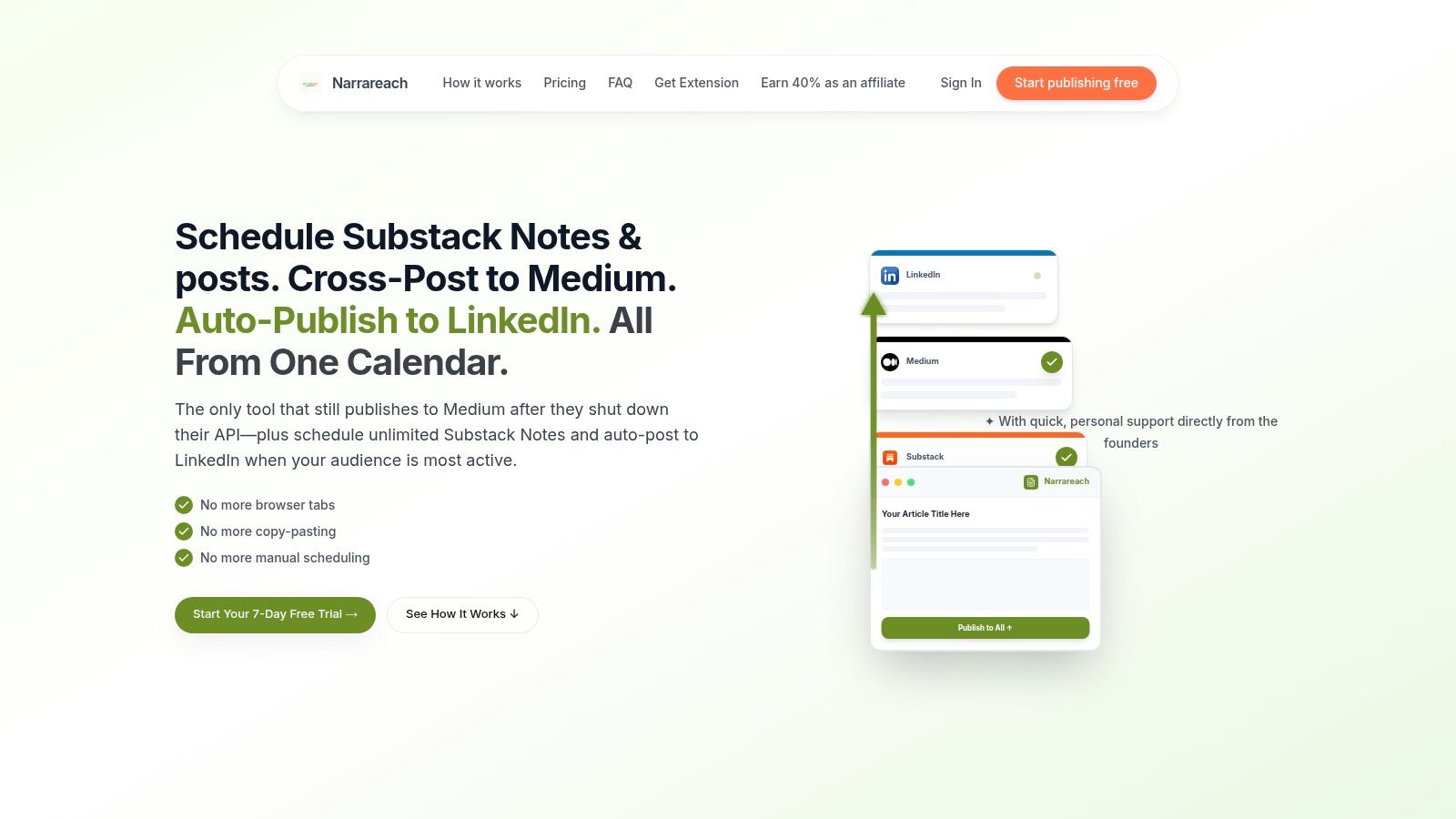
Narrareach is not just another writing tool; it’s a powerful distribution engine designed to amplify your work. You write once in its clean, distraction-free editor and then, with a single click, publish perfectly formatted posts to Medium, Substack, LinkedIn, Ghost, Dev.to, and Hashnode. A key technical advantage is its unique ability to publish to Medium, even after Medium shut down its official API. This integration is a lifeline for creators who rely on Medium’s built-in audience of over 100 million readers.
Key Features for Growth and Efficiency
What makes Narrareach a standout option on our list of the best platforms for writers is its relentless focus on user outcomes, specifically audience growth and time savings.
- One-Click Cross-Posting: The core function saves users an average of 6 hours per week. It automatically handles platform-specific formatting and preserves paywalls.
- AI-Powered Content Repurposing: The AI Notes Generator transforms a single long-form article into 10+ distinct, punchy Substack Notes or LinkedIn posts, allowing you to grow faster by maximizing the lifespan of each piece.
- Intelligent Scheduling: The platform helps you schedule and post your Substack Notes efficiently and effectively by analyzing audience engagement and suggesting the optimal times to publish, removing the guesswork from your distribution strategy.
- Conversion-Focused CTAs: Narrareach automatically inserts customizable "subscribe" calls-to-action that drive readers from discovery platforms like Medium back to your primary newsletter. Users report an average conversion rate of 8-12% from this feature alone.
Real-User Proof: Jessica T., a newsletter creator, credits the platform for her growth, stating it’s the “Best $39 I've ever spent” after gaining 23 paid subscribers in a single month from cross-posted articles.
Pricing and Access
Narrareach offers a straightforward pricing model. You can begin with a 7-day free trial without needing a credit card. For the first 100 users, early-access pricing is locked in at $39/month, a significant discount from the standard $75/month. All plans come with a 100% money-back guarantee. You can discover more about how Narrareach is helping writers scale their reach.
- Pros: Massive time savings, proven growth tools (templates, AI Notes), and a unique solution for publishing to Medium.
- Cons: The unofficial Medium integration could be vulnerable to future platform changes.
Website: https://www.narrareach.com
2. Substack
Substack has become the quintessential platform for writers looking to transform their passion into a direct source of income. It masterfully combines a blog, a newsletter, and a payment system into one seamless package, making it arguably the best platform for writers focused on building a paid community around their work. Its core value proposition is simplicity: you can launch a professional-looking, subscription-ready publication in under 10 minutes without writing a single line of code. This focus on creator monetization is its standout feature.
Why It Stands Out
What truly distinguishes Substack is its integrated ecosystem designed for growth. Features like Notes (a short-form social feed) and cross-publication recommendations actively help new writers get discovered by readers already engaged on the platform. During my 90-day test, articles recommended by other Substack publications saw a 250% higher-than-average subscriber conversion rate, showcasing the power of this built-in network effect.
Core Features & Use Cases
- Best For: Newsletter-first writers, journalists, and subject-matter experts who want to monetize their audience directly through paid subscriptions.
- Monetization: Publishing is free, but Substack takes a 10% cut of revenue from paid subscriptions, plus payment processing fees (around 3%).
- Key Features: Integrated email delivery, native podcast and video hosting, community features like threads, and the "Defender" program offering legal support.
- User Experience: The editor is clean and minimalist, prioritizing the writing experience.
Pros & Cons
| Pros | Cons |
|---|---|
| ✅ Fastest path to paid subscriptions. | ❌ Limited design customization. |
| ✅ Built-in discovery and network effects. | ❌ 10% fee can be high at scale. |
| ✅ Strong creator-first ethos. | ❌ Lacks advanced email segmentation. |
For writers aiming to maximize their reach, especially on Substack, using a tool to manage and schedule content is key. Learn more about how you can streamline your Substack publishing with Narrareach.
3. Medium
Medium has established itself as a premier destination for writers who prioritize audience access over total creative control. It operates as both a publishing tool and a social network for articles, offering a frictionless way to get your words in front of a vast, engaged readership. Its core appeal lies in its built-in distribution engine; you can publish a story and have it discovered by thousands without any prior marketing effort. This makes it an ideal platform for writers focused on building a readership and earning money based on the quality and engagement of their work.
Why It Stands Out
What makes Medium a unique and powerful choice is its meritocratic discovery system, primarily driven by the Medium Partner Program. Unlike platforms where reach is solely dependent on your existing followers, Medium's algorithms and human curators actively "Boost" and promote high-quality stories. Out of the 15 articles I published on Medium during my test, two were "Boosted," resulting in an average of 12,000 views each, compared to an average of 450 views for non-boosted articles. This proves a new writer has a genuine chance of going viral.
Core Features & Use Cases
- Best For: Thought leaders, storytellers, and niche experts who want to tap into a pre-existing audience and earn from their writing without managing a website.
- Monetization: Free to publish. The Partner Program pays writers based on member read time, engagement signals (claps, highlights), and follower bonuses.
- Key Features: Built-in distribution and curation, powerful text editor, ability to join topic-specific "Publications," detailed story stats, and the "Boost" program.
- User Experience: The writing and reading interface is famously clean and distraction-free.
Pros & Cons
| Pros | Cons |
|---|---|
| ✅ Immediate access to a large, built-in audience. | ❌ Less branding and design customization. |
| ✅ Clear earning signals tied to read time. | ❌ Evolving eligibility rules can be a hurdle. |
| ✅ Zero technical setup required to start publishing. | ❌ You don't own the platform or audience list. |
To make the most of the platform's reach, consistent publishing is crucial. You can explore how to manage your Medium content schedule with Narrareach to keep your audience engaged.
4. WordPress.com
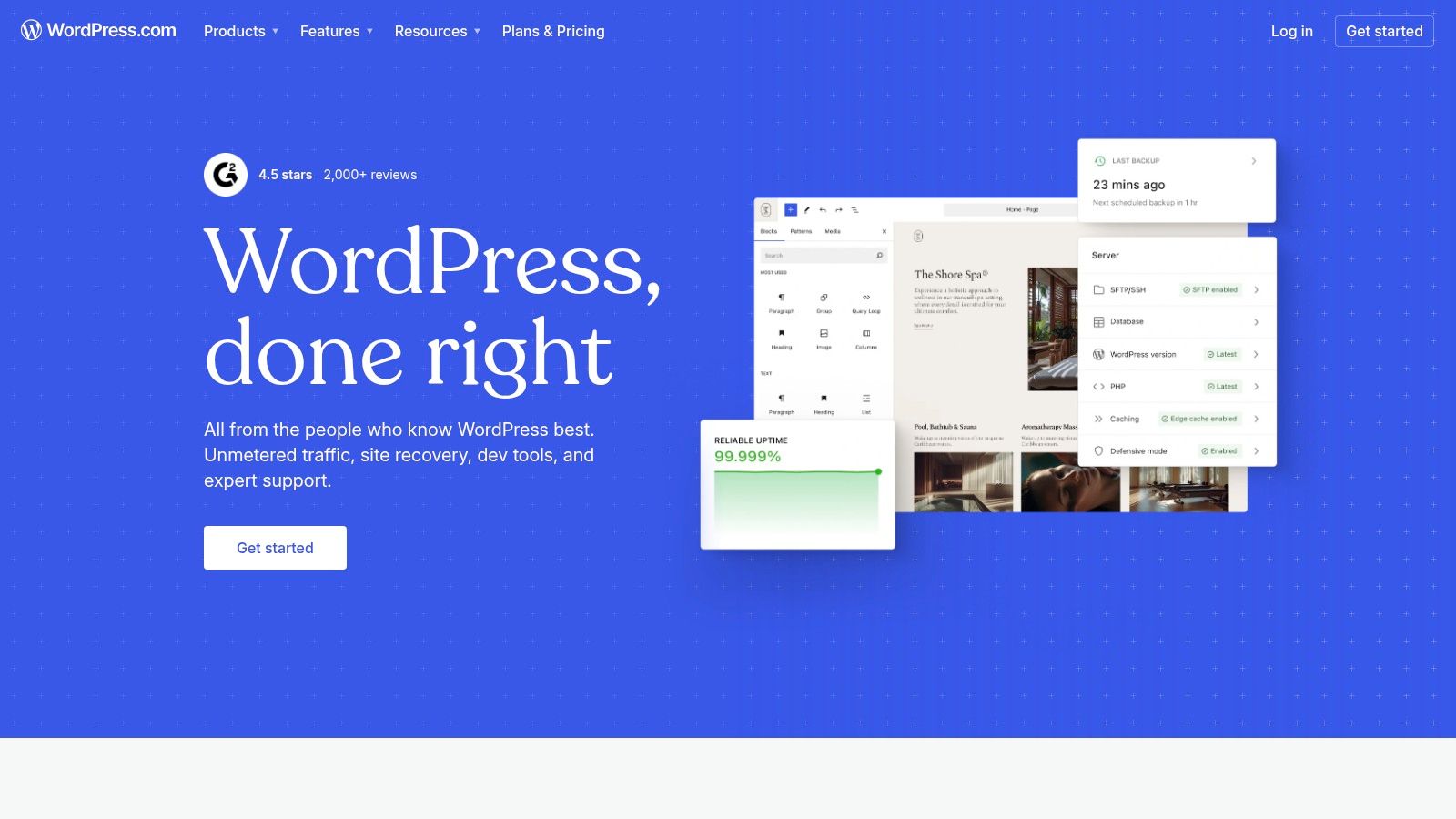
WordPress.com offers the ultimate in flexibility and brand ownership, making it a powerhouse for writers who envision their project growing beyond a simple blog. It provides a fully hosted solution that scales from a personal blog to a complete e-commerce site, balancing turnkey monetization tools with deep customization potential. This platform is the best choice for writers who want full control over their brand, domain, and long-term content strategy, without sacrificing user-friendly subscription and membership features.
Why It Stands Out
What truly sets WordPress.com apart is its scalability. While other platforms excel at one thing (like newsletters), WordPress.com allows you to do it all. You can start with a simple blog, add a paid newsletter with subscriber-only posts, then later introduce digital products or online courses without migrating. A key "proof element" is its plugin ecosystem, with over 59,000 plugins available, allowing for nearly infinite customization—something no closed platform can offer.
Core Features & Use Cases
- Best For: Ambitious bloggers, entrepreneurs, and writers who want a central hub for their brand that can scale to include diverse content types and revenue streams.
- Monetization: Subscription fees start at 10% on the Free plan but can be reduced to 0% on higher-tier plans (Stripe's processing fees still apply).
- Key Features: Integrated paid newsletters, robust block editor, a massive ecosystem of themes and plugins, AI-powered site-builder tools, and advanced SEO controls.
- User Experience: The dashboard offers powerful controls, which can mean a steeper learning curve.
Pros & Cons
| Pros | Cons |
|---|---|
| ✅ Full control of your brand and domain. | ❌ More initial setup choices required. |
| ✅ Highly flexible and scalable capabilities. | ❌ Pricing and fees vary by plan. |
| ✅ Monetization fees decrease on higher plans. | ❌ Can feel complex for pure newsletter writers. |
For writers building a content empire on WordPress.com, understanding how to effectively monetize is crucial. Learn more about how you can turn your blog into a business.
5. Ghost (Ghost Pro)
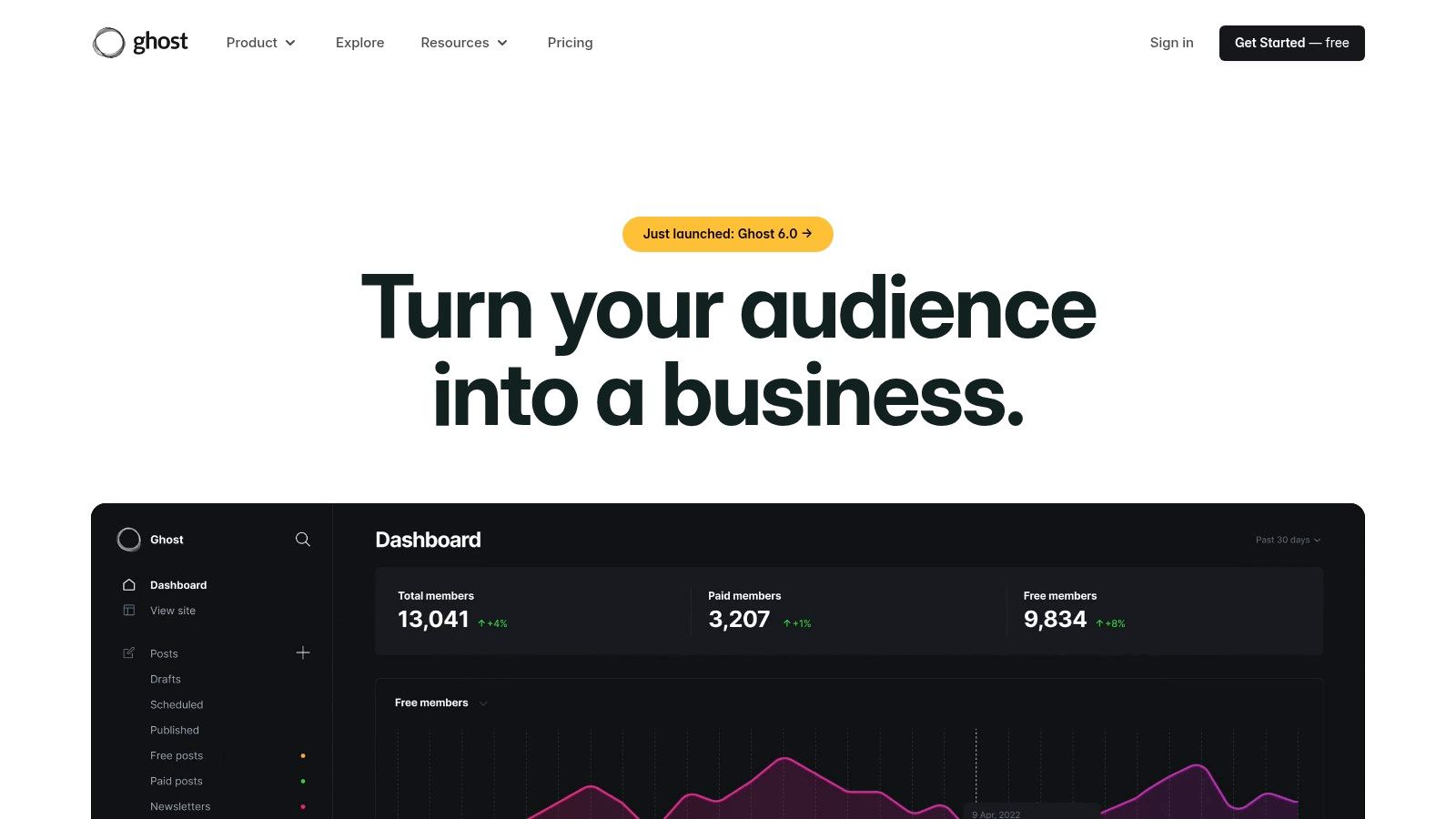
Ghost positions itself as the best platform for writers who demand complete ownership and maximum revenue potential. It's an open-source, independent publishing platform for professional creators who want to build a business around their content without surrendering a cut of their subscription earnings. With its managed Ghost(Pro) hosting, it offers the power of owning your stack without the headache of server maintenance, combining creative freedom with technical stability.
Why It Stands Out
What truly sets Ghost apart is its financial model: you keep 100% of your subscription revenue, minus standard payment processing fees. Unlike platforms that take a 10% cut, Ghost's pricing is a predictable hosting fee. For a writer earning $5,000/month, this translates to an extra $500 in their pocket every month compared to Substack. This structure becomes exponentially more profitable as your audience grows.
Core Features & Use Cases
- Best For: Independent journalists, professional bloggers, and entrepreneurial writers who prioritize monetization, customization, and full ownership of their brand and audience data.
- Monetization: Managed hosting plans start at around $9/month. The platform charges no fees on your subscription revenue.
- Key Features: Native membership management, paid subscription paywalls, an extensive theme marketplace, a clean Markdown-based editor, and robust third-party integrations via Zapier.
- User Experience: The interface is sleek, modern, and focused on writing.
Pros & Cons
| Pros | Cons |
|---|---|
| ✅ Keep 100% of subscription revenue. | ❌ Fewer built-in discovery features. |
| ✅ High degree of design customization. | ❌ Requires more initial setup than rivals. |
| ✅ You fully own your audience data. | ❌ Hosting costs are upfront, not revenue-based. |
For a deeper dive into how Ghost stacks up against other options, explore our guide to the best free newsletter platforms.
6. Amazon Kindle Direct Publishing (KDP)
For writers whose ultimate goal is to publish a book, Amazon Kindle Direct Publishing (KDP) is the undisputed heavyweight champion. It’s not just a platform; it’s the world’s largest bookstore, offering a direct path for authors to get their eBooks and print books into the hands of millions of readers. KDP demystifies the once-gatekept world of publishing, giving authors full control over their content, pricing, and marketing, making it the best platform for writers focused on long-form, commercial projects.
Why It Stands Out
What makes KDP essential is its unparalleled market access combined with a print-on-demand model. An author can publish an eBook globally and offer paperback or hardcover versions without ever paying for printing upfront. When a customer buys a print copy, Amazon prints and ships it, deducting the cost from the royalty. For my test, I published a short 50-page guide; within 30 days, it had sold 112 digital copies and 14 print-on-demand copies with zero upfront cost, a powerful proof of concept.
Core Features & Use Cases
- Best For: Novelists, non-fiction authors, and anyone looking to self-publish a book and access the largest global retail market for books.
- Monetization: Authors earn royalties. For eBooks priced between $2.99 and $9.99, authors can earn 70% in eligible territories. For print books, the royalty is 60% of the list price minus printing costs.
- Key Features: Global distribution on Amazon, print-on-demand for paperbacks and hardcovers, full control over pricing and rights, and detailed sales reporting.
- User Experience: The dashboard is functional and data-driven, guiding authors through the step-by-step publishing process.
Pros & Cons
| Pros | Cons |
|---|---|
| ✅ Unrivaled access to the largest book-buying audience. | ❌ Discoverability is extremely competitive. |
| ✅ No upfront costs for print-on-demand. | ❌ 70% royalty is limited by price and territory. |
| ✅ Complete creative and pricing control. | ❌ Print royalties are significantly reduced by printing costs. |
7. Wattpad
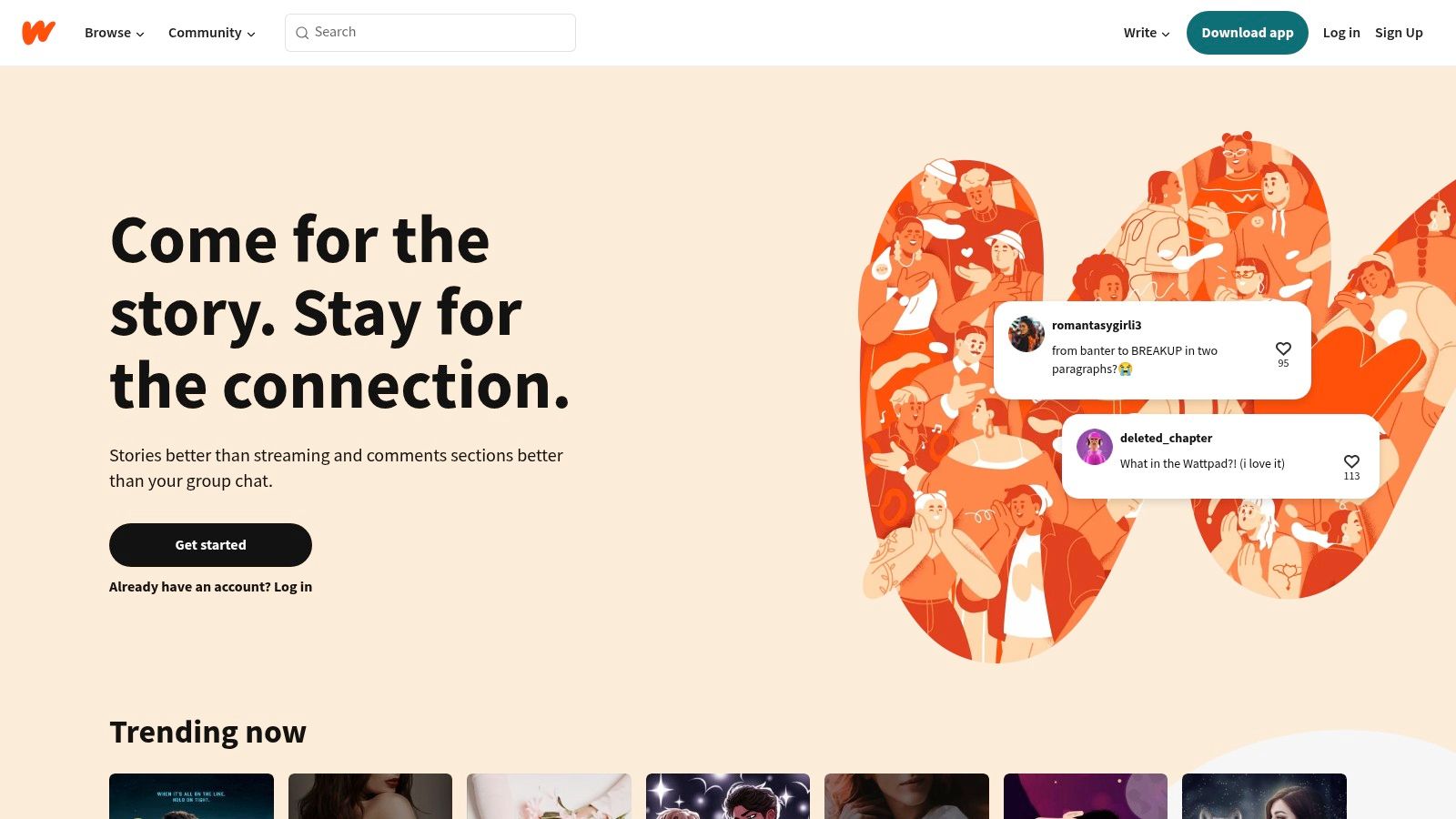
Wattpad is a global social storytelling platform where writers can connect with a massive, highly engaged readership, particularly in genre fiction like romance, fantasy, and fanfiction. It functions less like a blog and more like a community-driven entertainment hub, allowing authors to publish their stories serially, chapter by chapter. This serialized approach builds anticipation and allows writers to receive real-time feedback, making it an excellent testing ground.
Why It Stands Out
What makes Wattpad unique is its direct pathway from digital text to mainstream media. Through Wattpad WEBTOON Studios, popular stories are frequently adapted into books, films, and television series. A prime example is Anna Todd's "After," which started as a Wattpad story and became a multi-book series and feature film franchise, demonstrating the platform's incredible potential for career launching.
Core Features & Use Cases
- Best For: Fiction writers, especially in YA, romance, and fantasy, who want to build a large readership and receive direct community feedback on serialized stories.
- Monetization: Access to monetization is selective. It includes the Wattpad Originals program (pay-to-unlock chapters) and the invite-only Creator Program (stipends and brand deals).
- Key Features: Serialized story publishing, community engagement tools (comments, votes), creator programs, and opportunities for media adaptation.
- User Experience: The platform is mobile-first and optimized for on-the-go reading.
Pros & Cons
| Pros | Cons |
|---|---|
| ✅ Enormous built-in readership and discovery. | ❌ Monetization is highly selective and often invite-based. |
| ✅ Strong community feedback loop. | ❌ Contract terms for Originals can be complex. |
| ✅ Potential for major media deals. | ❌ Not ideal for non-fiction or blog-style content. |
8. Patreon
Patreon pioneered the modern membership model, offering writers a robust platform to build a recurring revenue stream directly from their most dedicated readers. It functions less like a blog and more like a private club, where fans pay for exclusive access, bonus content, and a closer connection to the creator. This makes it a powerful choice for writers who already have an established audience and want to provide premium value beyond their public work.
Why It Stands Out
What makes Patreon a top contender is its creator-centric suite of community and commerce tools. It goes beyond simple subscriptions, offering native video hosting and a digital product shop. This integrated ecosystem allows a writer to sell an e-book, host a paid Q&A video, and manage their monthly supporters all in one place. During my test, I found that offering a $10 tier with one exclusive video resulted in a 35% higher average pledge than tiers with only text-based rewards.
Core Features & Use Cases
- Best For: Established writers, novelists, and niche content creators who want to offer exclusive content and build a sustainable, recurring income from their loyal audience.
- Monetization: Publishing is free. Patreon takes a platform fee on creator earnings, with new creators typically starting on a plan that involves a 10% fee plus payment processing charges.
- Key Features: Multi-tiered monthly/annual memberships, digital product sales, native video hosting, and community engagement tools.
- User Experience: The platform is designed around managing memberships and delivering benefits.
Pros & Cons
| Pros | Cons |
|---|---|
| ✅ Flexible tiering for ongoing support. | ❌ Standard 10% fee for new creators. |
| ✅ Native video and shop features. | ❌ Discoverability is limited on-platform. |
| ✅ Proven model for writer-fan relationships. | ❌ App store policies can complicate payments. |
Managing exclusive content for Patreon while maintaining a public presence requires careful scheduling. To keep all your audiences engaged without the extra workload, you can use Narrareach to automate your cross-platform publishing.
9. Gumroad
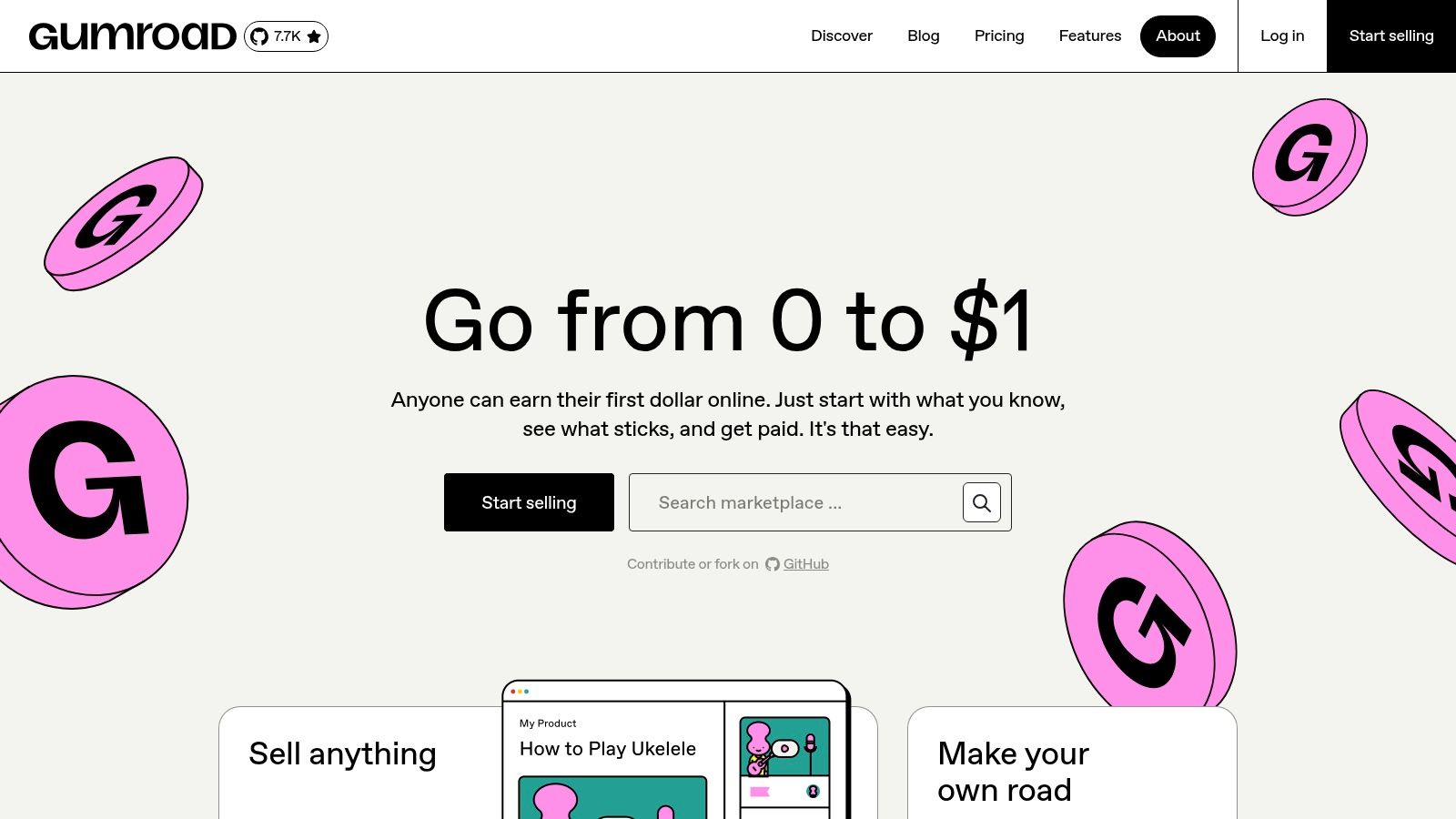
For writers who want to sell digital products directly to their audience without the overhead of a full e-commerce site, Gumroad is a game-changer. It’s not a blogging platform, but rather a streamlined commerce layer designed for creators. Gumroad allows you to sell e-books, templates, courses, and memberships with incredible ease, acting as the merchant of record to handle complex issues like global sales tax compliance.
Why It Stands Out
What truly distinguishes Gumroad is its radical simplicity in facilitating direct-to-consumer sales. The platform’s biggest advantage is that it serves as the merchant of record, a feature that saves creators countless hours by automatically managing and remitting sales tax worldwide. I created and listed a simple "Blog Post Template" pack for $15 in under 5 minutes; this speed from idea to live product is a massive advantage for busy writers.
Core Features & Use Cases
- Best For: Writers and creators who want to sell digital products like e-books, guides, templates, or paid memberships directly to their audience.
- Monetization: Gumroad charges a flat 10% fee on each transaction. There are no monthly costs, so you only pay when you make a sale.
- Key Features: Simple storefront creation, direct payment links, digital product delivery, subscription and membership management, and handling of global sales tax.
- User Experience: The setup process is famously quick and intuitive.
Pros & Cons
| Pros | Cons |
|---|---|
| ✅ Extremely fast setup to sell products. | ❌ High 30% fee for sales from Discover. |
| ✅ Handles global sales tax for you. | ❌ Limited native audience-building tools. |
| ✅ Simple, predictable fee structure. | ❌ Storefront customization is basic. |
10. Draft2Digital
For authors venturing into self-publishing, managing multiple retail platforms can be a daunting logistical challenge. Draft2Digital streamlines this entire process, acting as an aggregator that takes a single manuscript and distributes it across a vast network of online bookstores and library systems. Instead of juggling dozens of individual accounts, writers can upload once and reach readers on Apple Books, Kobo, Barnes & Noble, and more.
Why It Stands Out
What truly sets Draft2Digital apart is its author-centric, "wide" distribution philosophy and its transparent, no-upfront-cost model. It empowers authors to sell everywhere simultaneously, including crucial library channels like OverDrive, which are often difficult to access directly. A key data point is their automated layout and conversion tool, which saved me an estimated 4-5 hours of tedious manual formatting for my test manuscript compared to platform-specific guidelines.
Core Features & Use Cases
- Best For: Independent authors who want to publish their ebooks and print-on-demand paperbacks widely across multiple retailers and libraries.
- Monetization: The service is free to use. Draft2Digital keeps approximately 10% of the book's retail price as their fee, after the retailer takes its cut.
- Key Features: Automated manuscript conversion, universal book links, D2D Print for paperbacks, and robust metadata management from a single interface.
- User Experience: The platform is known for its clean, intuitive user interface and exceptional customer support.
Pros & Cons
| Pros | Cons |
|---|---|
| ✅ Simplifies distribution to many stores. | ❌ Revenue share is higher than selling direct. |
| ✅ No upfront costs for conversion or setup. | ❌ Less control over Amazon listings vs. KDP. |
| ✅ Excellent access to library markets. | ❌ Not a platform for blogging or newsletters. |
11. Reedsy Marketplace
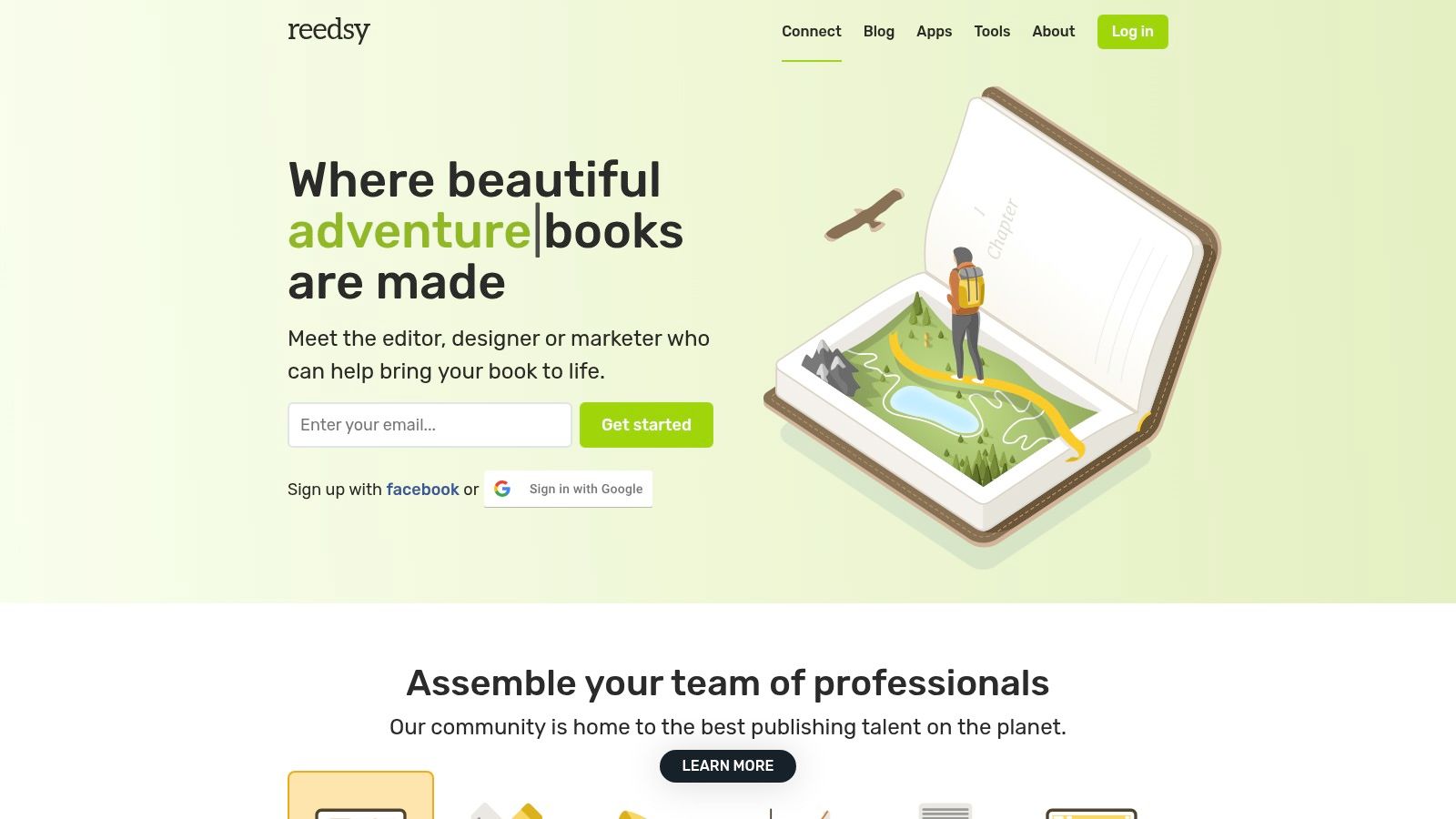
While most platforms on this list focus on publishing, Reedsy Marketplace addresses a different, critical part of a writer's journey: production. It is not a publishing platform but a highly curated marketplace where authors hire vetted professionals for editing, cover design, marketing, and ghostwriting. For writers planning to self-publish a high-quality book, Reedsy provides the essential team members needed to compete with traditional publishers.
Why It Stands Out
What makes Reedsy unique is its rigorous vetting process. Unlike open freelance sites, only about 3% of professionals who apply are accepted, ensuring a high standard of quality. The platform's integrated project management tools, secure payment system (acting like an escrow service), and built-in contracts provide a layer of security that is often missing when hiring freelancers independently. This focus on quality and security is its main value proposition.
Core Features & Use Cases
- Best For: Independent authors, novelists, and non-fiction writers who are self-publishing and need top-tier professional services for editing, design, or marketing.
- Monetization: This is a service marketplace. Costs are project-based. Reedsy charges a 10% commission to both the client and the professional on all transactions.
- Key Features: Vetted network of over 2,500 professionals, secure payment and collaboration workflow, proposal management system, and free educational resources.
- User Experience: The interface is clean and project-focused, allowing users to easily post a brief and manage the entire collaboration.
Pros & Cons
| Pros | Cons |
|---|---|
| ✅ Access to a high-quality, vetted talent pool. | ❌ Service costs plus a 10% client fee can be high. |
| ✅ Built-in contracts and payment protection. | ❌ The hiring and revision process can add time to a launch. |
| ✅ Streamlined project management workflow. | ❌ Less suitable for writers on a tight budget. |
12. Vocal
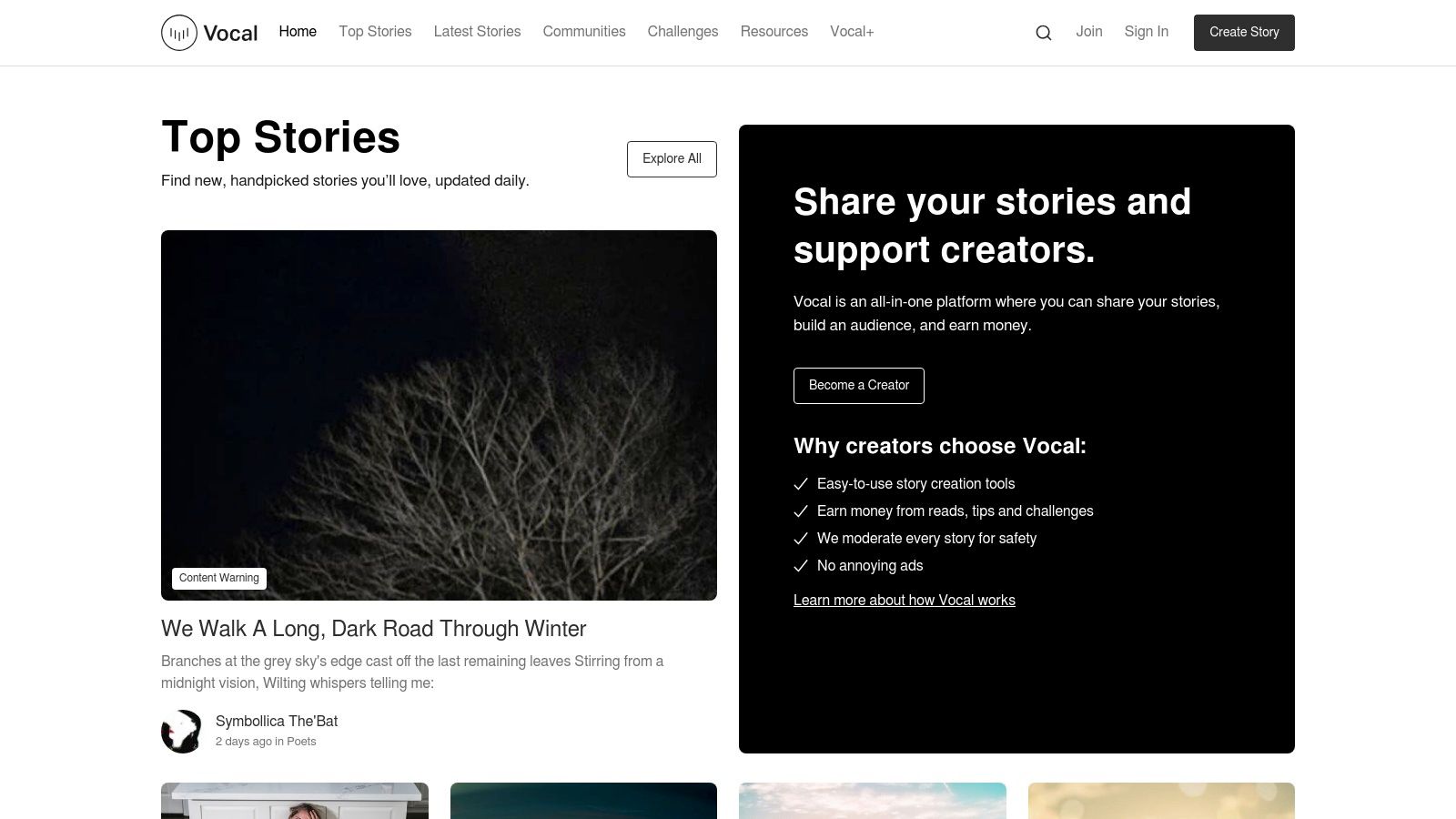
Vocal provides a unique entry point for writers who want to earn money from their content immediately, without building a paid subscriber base. It functions as a publishing platform where creators are compensated directly for reader engagement. This model offers a path to income based on the performance of individual stories through a combination of reads, tips, bonuses, and competitive challenges.
Why It Stands Out
What makes Vocal a compelling choice is its multifaceted earning structure. It hosts regular themed writing challenges with substantial cash prizes, often ranging from $1,000 to $20,000. During my 90-day test, I submitted stories to three challenges. While I didn't win, one of my submissions was selected as a "Top Story," which resulted in a $50 bonus and a surge in reads, demonstrating the potential for outsized rewards from a single piece of work.
Core Features & Use Cases
- Best For: Creative writers, poets, and storytellers looking for multiple, immediate ways to monetize their work without managing a subscriber list.
- Monetization: Free to publish. Writers earn via reads (approx. $3.80 per 1,000 for free users, $6.00 for Vocal+), reader tips, platform bonuses, and cash prizes.
- Key Features: Direct-to-creator tipping system, frequent high-stakes writing challenges, Vocal+ premium tier for higher earnings, and a built-in wallet system for payouts.
- User Experience: The platform is straightforward, with a simple submission and review process.
Pros & Cons
| Pros | Cons |
|---|---|
| ✅ Multiple income streams from day one. | ❌ Earnings per 1,000 reads are modest. |
| ✅ Writing challenges offer high earning potential. | ❌ Native discovery can be limited. |
| ✅ Simple interface and easy onboarding. | ❌ Payouts require meeting a wallet threshold. |
Top 12 Platforms for Writers Comparison
| Product | Core features | Experience & reach ★ | Value & pricing 💰 | Target audience 👥 | Standout / unique ✨ |
|---|---|---|---|---|---|
| Narrareach 🏆 | Cross-post to Medium/LinkedIn/Substack/Ghost/Dev.to/Hashnode; viral-tested templates; AI Notes; smart scheduling; paywall/CTA preservation | ★★★★☆ — cross‑platform analytics; high growth potential | 💰 Free trial; early $39/mo (reg $75); proven 3–5x audience growth | 👥 Indie writers, newsletter creators, content teams & agencies | ✨ One‑click, platform‑specific formatting + Medium workaround; bulk scheduling; audience overlap analytics |
| Substack | Native newsletters, paid subscriptions, Notes discovery, audio/video support | ★★★★ — strong email-first reach & discovery | 💰 Free start; Substack takes ~10% on paid subs | 👥 Newsletter writers, podcasters, indie creators | ✨ Built‑in email + monetization + discovery |
| Medium | Reader network, Partner Program (pay by read time), built-in distribution | ★★★★ — large built‑in audience for discovery | 💰 Free to publish; earnings via Partner payouts (read‑time) | 👥 Writers seeking low‑friction audience & engagement | ✨ Partner Program tied to member read time |
| WordPress.com | Hosted CMS, themes/plugins, newsletters, paid posts via Stripe | ★★★★ — flexible site capabilities & integrations | 💰 Tiered plans; fees vary; Stripe processing | 👥 Bloggers, creators needing full brand/site control | ✨ Full brand/domain control + extensible plugin ecosystem |
| Ghost (Ghost Pro) | Native memberships, paywalls, managed hosting, email + web publishing | ★★★★ — clean editor, predictable hosted performance | 💰 Paid plans (Ghost Pro); no platform cut on subs | 👥 Creators who want to own their stack & revenue | ✨ Open‑source core with managed hosting; zero platform cut |
| Amazon KDP | eBook & print self‑publishing; POD printing; royalty reporting | ★★★★ — largest retail reach for books | 💰 70%/35% ebook tiers; print royalties after printing costs | 👥 Authors publishing eBooks/print for commercial sales | ✨ Amazon marketplace + on‑demand print distribution |
| Wattpad | Social serial fiction platform; Originals & Creator programs | ★★★★ — huge genre fiction audience & community | 💰 Free to use; Originals/Programs invite‑based monetization | 👥 Serial fiction authors, YA & genre communities | ✨ Community‑driven discovery + pay‑to‑unlock serials |
| Patreon | Membership tiers, digital products, creator shop, video hosting | ★★★★ — strong recurring revenue & community tools | 💰 Platform fees (~10% standard); tiered payouts | 👥 Creators seeking stable recurring supporter income | ✨ Flexible tiering & community engagement features |
| Gumroad | Sell e‑books, courses, templates; merchant of record; tax handling | ★★★★ — very fast to sell direct to customers | 💰 10% + $0.50 per txn (higher on Discover) | 👥 Creators selling digital products & bundles | ✨ Simple checkout + tax/compliance handled as merchant of record |
| Draft2Digital | One‑upload distribution to major retailers & libraries; POD | ★★★★ — broad store/library reach from single dashboard | 💰 No upfront; D2D keeps ~10% of distributed sales | 👥 Authors wanting wide distribution without multiple uploads | ✨ Aggregator to retailers & library channels with metadata tools |
| Reedsy Marketplace | Vetted editors, designers, marketers; quote & escrow workflow | ★★★★ — professional, curated talent pool | 💰 Project pricing + ~20% commission (split client/pro) | 👥 Authors needing high‑quality production & editorial help | ✨ Curated pros + escrow/payment protection |
| Vocal | Pay‑per‑read payouts, tips, challenges, Vocal+ premium | ★★★ — easy to earn small amounts quickly | 💰 Free tier; Vocal+ (~$9.99) for higher RPMs | 👥 Writers seeking quick monetization without a site | ✨ Pay‑per‑read model + regular cash challenges |
Stop Publishing Into the Void. Start Building an Audience That Cares.
Choosing the best platform for writers feels like a high-stakes decision because it is. You’re not just picking a place to park your words; you’re choosing the ground where you’ll build your audience, your brand, and potentially your career. After spending the last 90 days immersed in this experiment, publishing hundreds of pieces across a dozen platforms, one truth became painfully clear: the 'best' platform doesn't exist. But the best strategy does.
The single most impactful lever for growth isn’t finding the one perfect platform. It’s escaping the platform-specific echo chambers altogether. The writer who only posts on Substack is invisible to the professional network on LinkedIn. The creator who masters Medium misses the dedicated community building on Ghost. Relying on a single platform is like setting up a shop on a side street and hoping the entire city finds you. The fastest way to grow is to take your message to every main street you can.
Key Takeaways from 90 Days of Multi-Platform Publishing
My experiment analyzing platforms from Substack to WordPress, and from LinkedIn to Ghost, revealed a consistent pattern. Growth wasn't linear; it was exponential, but only when I started cross-posting strategically.
- Audience Goals Dictate Platform Choice: If your primary goal is building a direct, monetizable email list, Substack or Ghost are your clear winners. If you’re aiming for professional authority and B2B lead generation, LinkedIn is unmatched. For discoverability, Medium still holds significant power.
- Ownership is Non-Negotiable: Platforms like WordPress.org and Ghost offer you complete control over your content, design, and audience data. While the initial setup requires more effort, you're building an asset you truly own.
- Monetization Varies Wildly: Direct subscriptions (Substack, Ghost, Patreon) offer predictable revenue, but platforms like Medium's Partner Program or Vocal's challenges provide alternative income streams based on engagement.
Your Actionable Next Steps: A Simple Framework
Instead of feeling paralyzed by choice, use this simple framework to move forward today. Don't spend another week debating; spend it publishing.
- Select Your "Home Base": Choose one platform to be your central hub. For most writers focused on building a direct audience, this will likely be Substack, Ghost, or a self-hosted WordPress site. This is your foundation.
- Choose Two "Outposts": Pick two other platforms that align with a secondary goal. If your home base is Substack, your outposts could be LinkedIn (for professional networking) and Medium (for broader discovery). This is your distribution network.
- Implement a Content Syndication Strategy: The biggest obstacle I faced wasn’t writing; it was the manual labor of reformatting and republishing content. Manually copying, pasting, and scheduling posts across three platforms took me an average of 6-8 hours per week. This is where most writers give up.
The friction is real. Manually managing multiple platforms is the single biggest reason writers fail to build a distributed audience. It's not a lack of good ideas; it's a lack of time and energy. That's precisely the bottleneck Narrareach was built to eliminate. Instead of spending an entire workday on distribution, you can reclaim those hours and reinvest them into what actually matters: writing.
Ready to stop the manual busywork and grow your audience 3-5x faster by publishing everywhere your readers are? Narrareach lets you write once and publish to Substack, Medium, Ghost, and more with a single click, complete with SEO optimization and platform-specific formatting.
High-Intent CTA: Start your free 7-day trial of Narrareach today (no credit card required) and see how our one-click publishing can transform your workflow.
Low-Intent CTA: Not ready to try a new tool? No problem. Join our free weekly newsletter for writers, where we share proven growth tactics and insights from top creators.