
Best platforms for writers: 12 top picks for 2025
You hit ‘publish’ on your latest article, feeling a rush of pride. But then the dread sets in. Now you have to spend the next 90 minutes copying, pasting...
By Ian Kiprono
You hit ‘publish’ on your latest article, feeling a rush of pride. But then the dread sets in. Now you have to spend the next 90 minutes copying, pasting, and painstakingly reformatting that same piece for Medium, Substack, your personal blog, and LinkedIn. You wrestle with wonky image uploads, broken embeds, and different text editors, all while that initial creative spark fades. You know you need to be everywhere to grow, but the manual effort is a soul-crushing time sink that kills your momentum. Sound familiar?
For 90 days, that was my exact reality. I manually cross-posted every article to six different platforms, documenting every frustrating detail, from formatting quirks to hidden monetization rules. This wasn't just about finding the best platforms for writers; it was about finding which platforms were actually worth the immense effort required to maintain them.
This guide is the result of that painful experiment. I’m sharing everything I learned so you don't have to repeat my mistakes. We'll break down the top 12 platforms, analyzing their audience potential, monetization models, and specific use cases. Each review includes screenshots and direct links to help you decide where to invest your valuable time for maximum audience growth, without the headache.
1. Substack
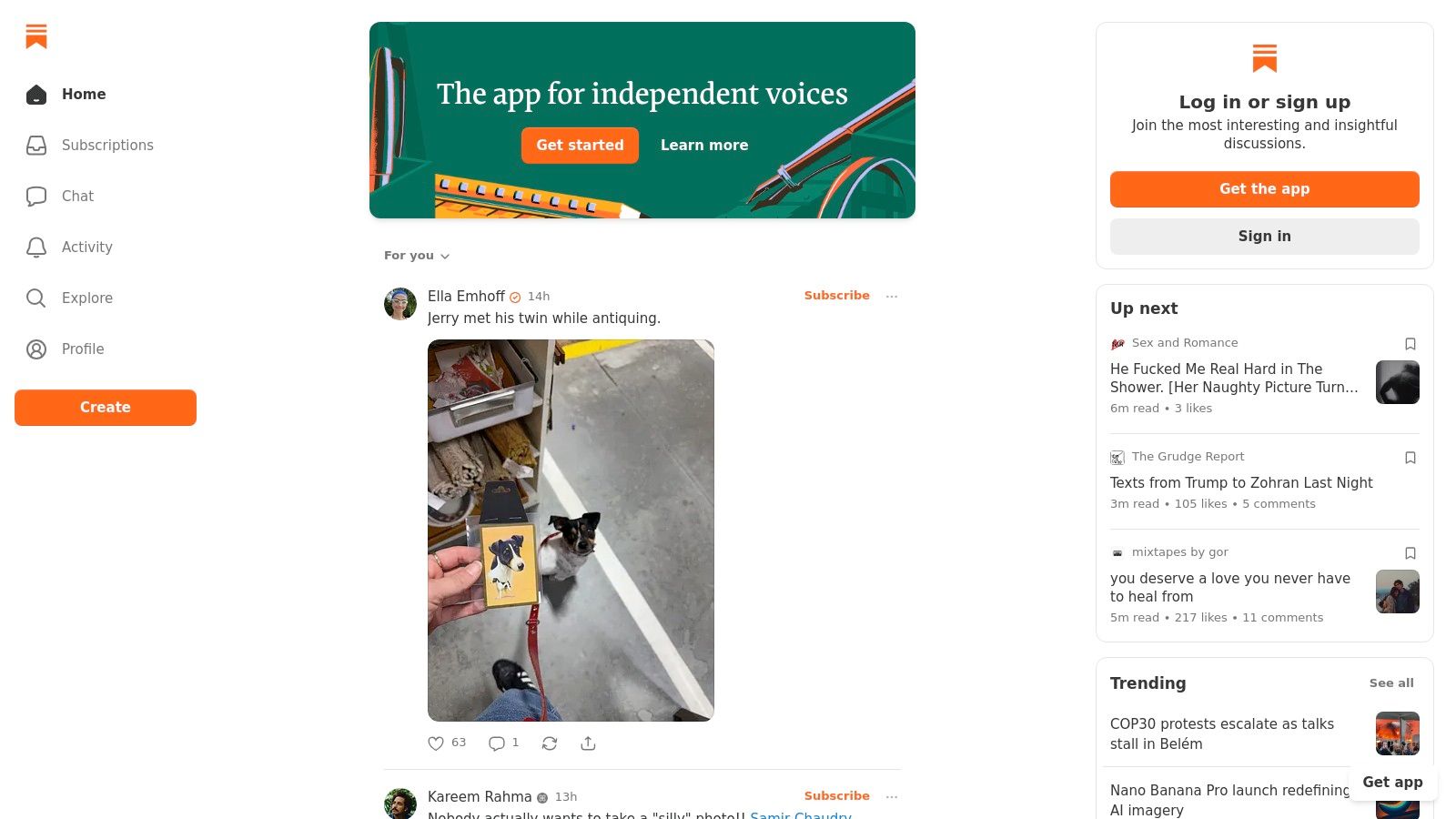
Substack positions itself as the simplest way for independent writers to launch a paid newsletter, making it one of the best platforms for writers focused on direct monetization. It removes the technical hurdles of setting up a website, payment processor, and email service provider. Instead, you can focus purely on writing and growing a loyal, paying community. Its built-in network effects, powered by recommendations and the social "Notes" feature, provide a significant discovery engine that's hard to replicate on your own.
Why Substack Stands Out
The platform’s core strength is its frictionless path to earning. You can publish for free indefinitely, but enabling paid subscriptions takes just a few clicks. Substack handles all the backend complexity, from payment processing via Stripe to subscriber analytics. This "all-in-one" model is ideal for journalists, analysts, and niche experts who want to build an audience and revenue stream without technical overhead. You retain full ownership of your content and, most importantly, your email list. Its design options are limited, but its focus on writing and community engagement works well for people who care most about simplicity and audience ownership.
- Best For: Independent journalists, niche experts, and creators building a subscription-based media business.
- Pricing: Free to publish. Substack takes a 10% cut of revenue from paid subscriptions.
- Ownership: You own your content and can export your email list at any time.
Pro Tip: Engage with other writers in your niche using Substack's "restack" and "Notes" features. Cross-promoting each other is one of the fastest ways to grow your subscriber base on the platform. If you're managing multiple publications, you can simplify your workflow with Narrareach's integration for Substack.
2. Narrareach: The Ultimate Content Distribution Engine
For writers serious about growth, the biggest challenge isn't creating content; it's distributing it effectively without spending hours on manual, repetitive tasks. Juggling platform-specific formatting for Medium, Substack, and LinkedIn often means your best work never reaches its full audience potential. This is precisely where Narrareach positions itself as an essential tool. It serves as a purpose-built distribution hub for writers aiming to scale their impact. It’s designed to solve the tedious "copy-paste-reformat" problem that kills momentum and limits reach.
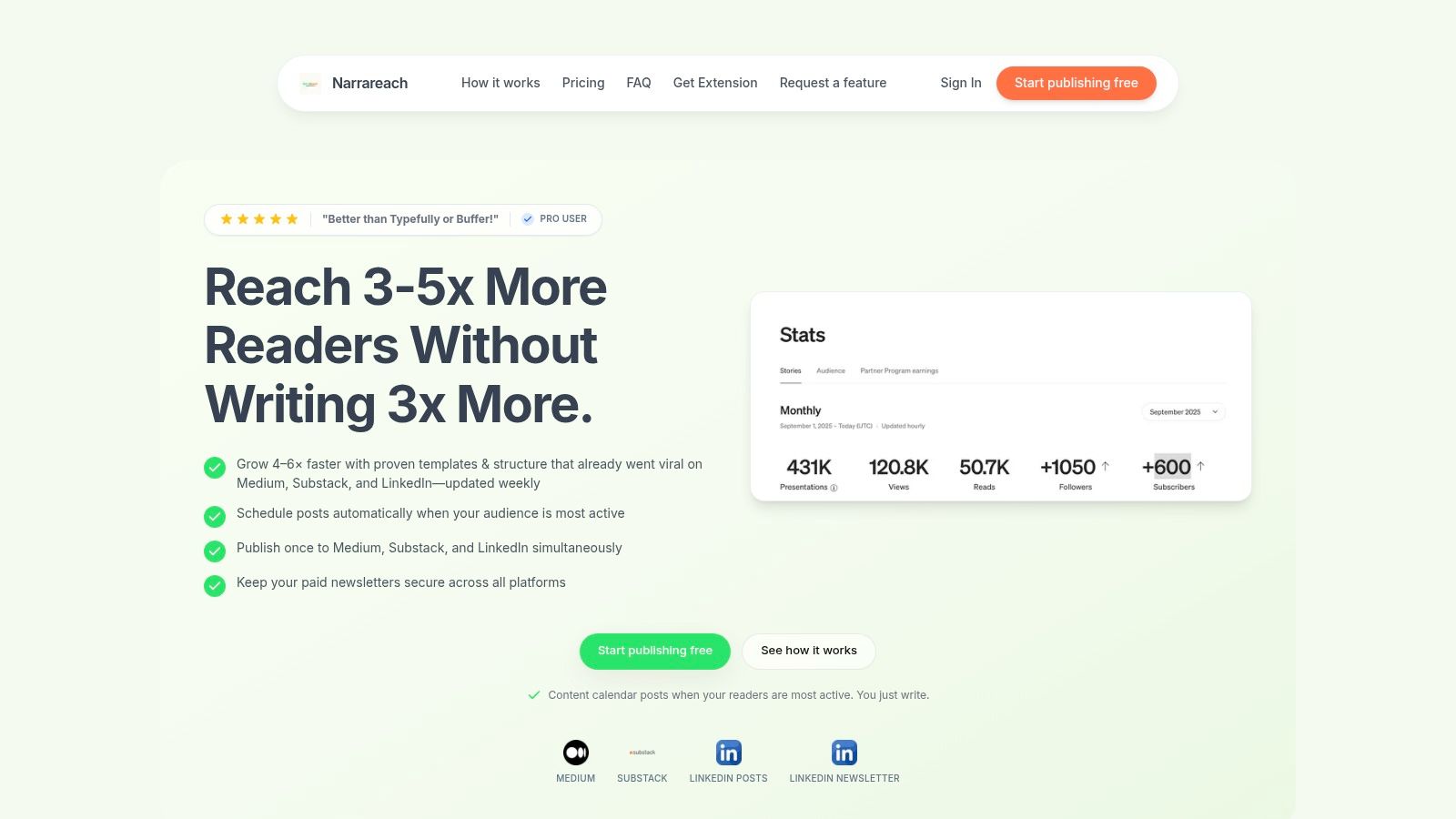
Narrareach centralizes your workflow, allowing you to write once and publish everywhere. It transforms a single draft into perfectly formatted, native-looking posts for Medium, Substack, LinkedIn, Ghost, Dev.to, and Hashnode. Users report saving an average of 72 minutes per article, time that's better spent on writing or audience engagement. The platform’s analytics also provide a unified view of your content's performance, showing which channels are actually driving subscribers and engagement, allowing you to double down on what works.
Key Strengths & Use Cases
- Automated, Paywall-Safe Distribution: For newsletter creators, Narrareach is a game-changer. It intelligently routes content, sending teasers to free platforms like LinkedIn while ensuring full articles go only to paid subscribers on Substack or Ghost. This protects your revenue model while maximizing your audience funnel.
- AI-Powered Repurposing: Beyond distribution, it helps you get more mileage from every piece. The built-in AI assists with generating high-impact titles, hooks, and social media snippets, while its library of 10,000+ viral-tested templates provides a proven framework for your content.
- Seamless Technical Handling: It automatically manages technical details like canonical links, tags, and platform-specific embeds, ensuring your SEO is protected and your posts look professional on every site.
Pricing and Access
Narrareach offers a tiered pricing structure suitable for different needs, including a free tier to get started. The Audience Builder plan is $39/month for those focused on growth, while the Revenue Writer plan at $75/month adds crucial features like paywall routing and funnel analytics. A free 7-day trial is available for paid plans without requiring a credit card.
Website: https://www.narrareach.com
3. Medium
Medium offers a powerful combination of a massive built-in audience and a frictionless publishing experience, making it one of the best platforms for writers looking to gain immediate visibility. It eliminates the need for technical setup, allowing you to publish long-form content instantly and tap into a network of millions of curious readers. The platform's algorithm and human-curated "Boost" feature can give your stories a reach that is difficult to achieve on a personal blog, especially when you are just starting out.
Why Medium Stands Out
The platform’s core advantage is its distribution engine. Through its Partner Program, writers can earn money based on member reading time and engagement, including from external traffic driven from search engines. This makes it a great place to test content ideas and see what resonates with a broad audience before committing to a niche on a personal site. You give up some brand control and direct audience ownership compared to other platforms, but Medium’s potential for discovery is strong for writers focused on audience growth and exposure.
- Best For: Writers seeking a large built-in audience, content marketers testing topics, and authors wanting to earn from individual articles.
- Pricing: Free to publish. The Partner Program pays out based on member engagement and read time; no direct commission is taken.
- Ownership: You own your content, but your audience primarily exists on Medium’s platform, not on a personal email list.
Pro Tip: Submit your stories to relevant, high-traffic publications on Medium to amplify your reach. Getting your work "Boosted" by Medium's curators can lead to thousands of new readers overnight. To streamline publishing, check out Narrareach's integration for Medium.
4. Ghost (Ghost Pro)
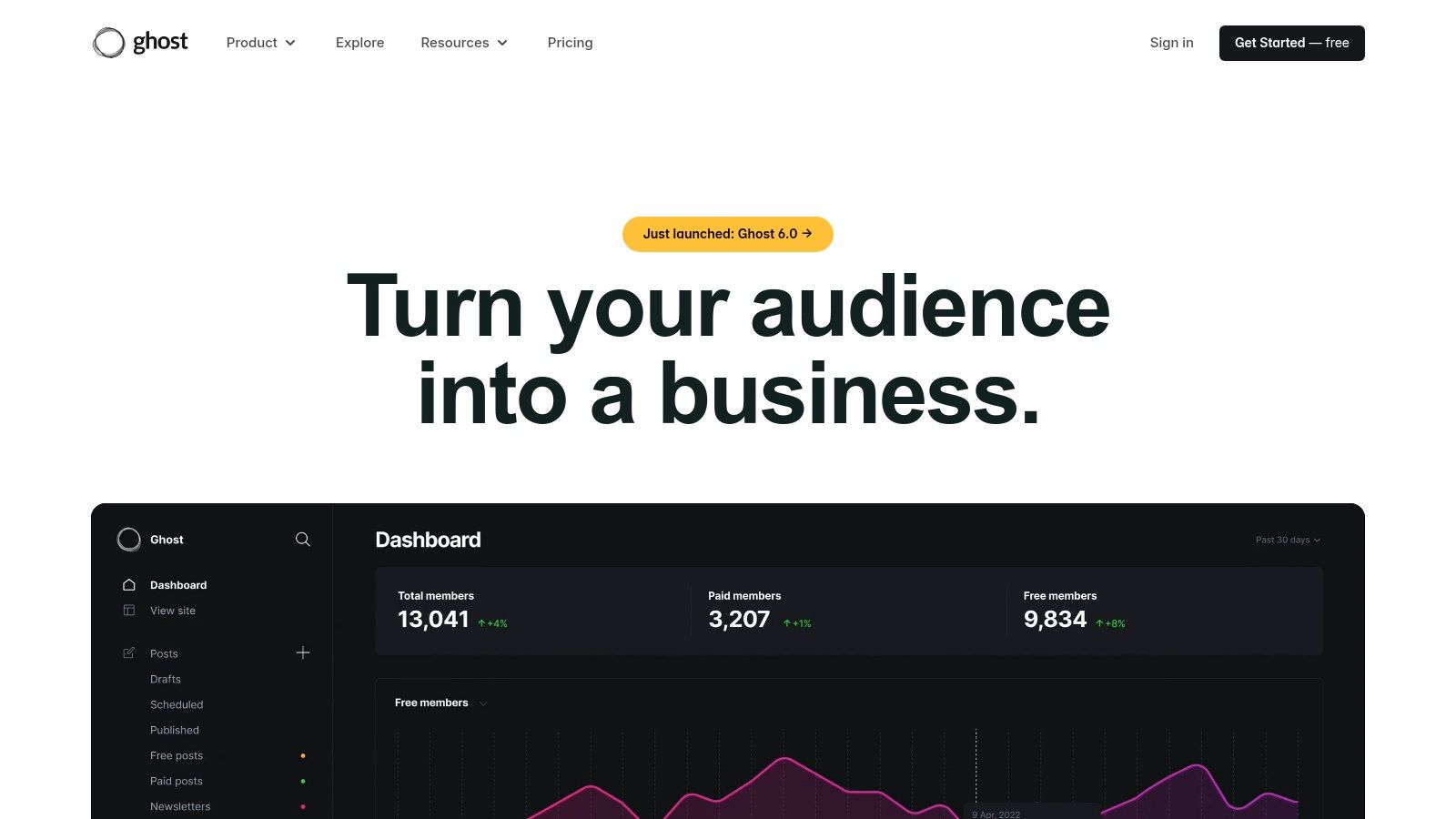
Ghost offers a powerful, open-source alternative for writers who want full control over their brand, content, and monetization. Unlike closed platforms, Ghost is a full-fledged content management system (CMS) designed specifically for professional publishing. Using its managed hosting service, Ghost (Pro), allows you to launch a sophisticated publication with native memberships, paid subscriptions, and newsletters on your own domain, blending the best of Substack’s simplicity with the power of WordPress.
Why Ghost Stands Out
The platform’s core advantage is complete ownership. You control the design with customizable themes, own your audience data, and can export everything at any time. Ghost combines a beautiful, minimal editor with robust, built-in tools for growing a membership business, including member tiers and Stripe integration. It works well for writers scaling a media brand who feel limited by Substack’s rigid design but don't want the plugin-heavy complexity of WordPress. It offers a strong balance of creator independence and user-friendly technology.
- Best For: Serious creators, publishers, and businesses building a custom media brand with memberships.
- Pricing: Ghost (Pro) hosting starts at $9/month. Ghost takes 0% of your revenue.
- Ownership: You have 100% ownership of your content, theme, and subscriber list.
Pro Tip: Use Ghost’s integrations with Zapier to connect your publication to other marketing tools, automating workflows like adding new members to a separate CRM or community platform. For cross-platform publishing, Narrareach’s Ghost integration streamlines content distribution.
5. Amazon Kindle Direct Publishing (KDP)
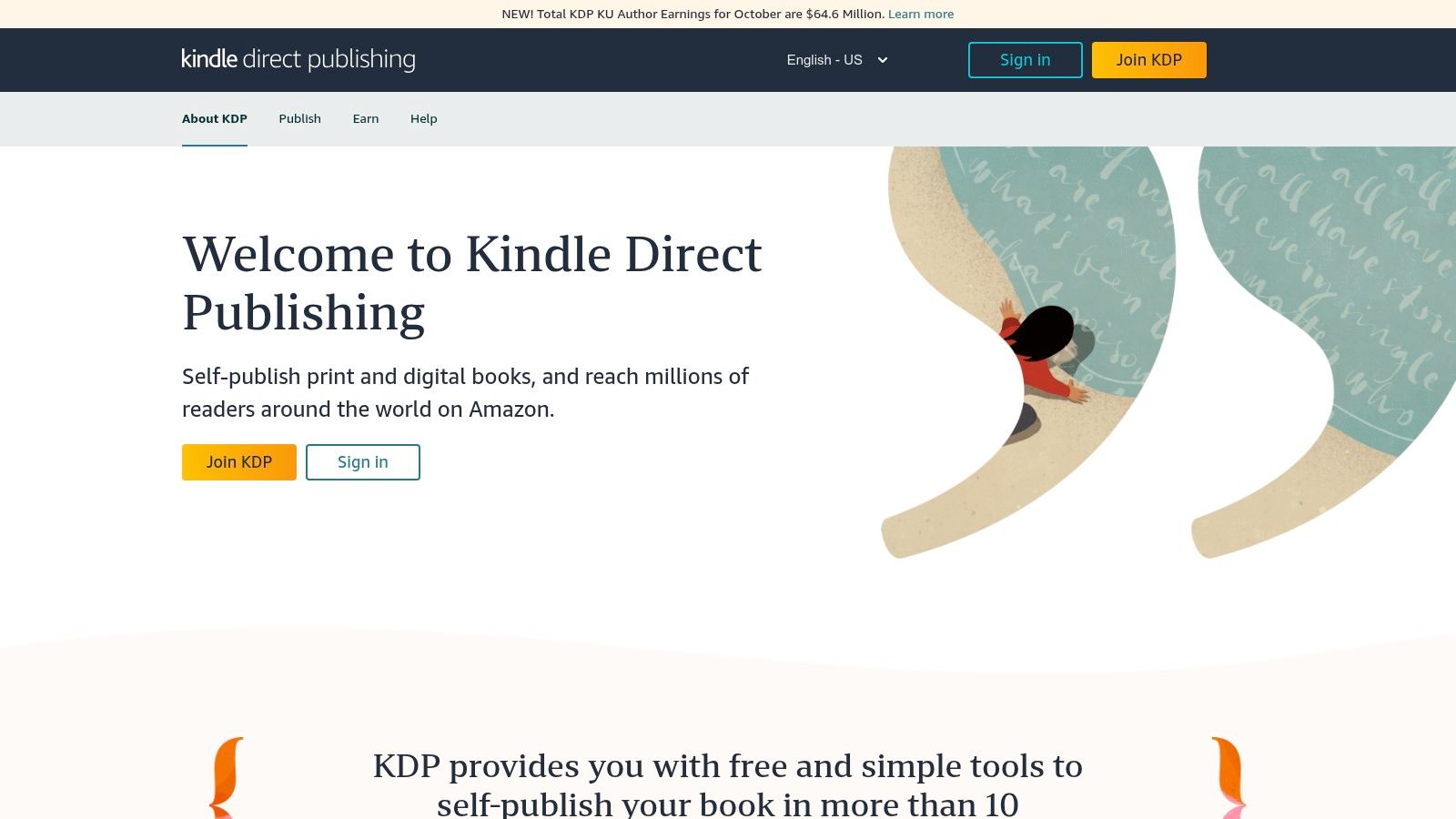
For writers whose goal is to publish a full-length book, Amazon Kindle Direct Publishing (KDP) is an essential platform. It provides a direct-to-market path for authors to publish ebooks and print-on-demand books on the world's largest online retailer, bypassing the traditional publishing gatekeepers. KDP puts authors in complete control of their work, from cover design and pricing to metadata, all with no upfront listing fees. This makes it one of the best platforms for writers aspiring to become published authors with global reach.
Why KDP Stands Out
KDP’s primary advantage is its unparalleled access to Amazon's massive built-in marketplace. No other platform offers the same potential for organic discoverability. The integrated system allows you to manage both ebook and print versions from a single dashboard, simplifying the entire publishing process. The royalty structures can be complex, particularly the 70% ebook option with its delivery fee deductions, but the platform remains a strong sales engine. It is a strong option for authors focused on long-form content who want to build a career selling books directly to readers.
- Best For: Independent authors, novelists, and non-fiction writers who want to self-publish and sell books globally.
- Pricing: Free to publish. Royalties vary: up to 70% for ebooks and up to 60% for print books (minus printing costs).
- Ownership: You retain full rights to your content and set your own list prices.
Pro Tip: Use your blog content on platforms like Medium or Substack to build an audience and test ideas for your book. Once you publish on KDP, you can direct that existing audience to your Amazon page, significantly boosting your launch day sales and search ranking.
6. Draft2Digital
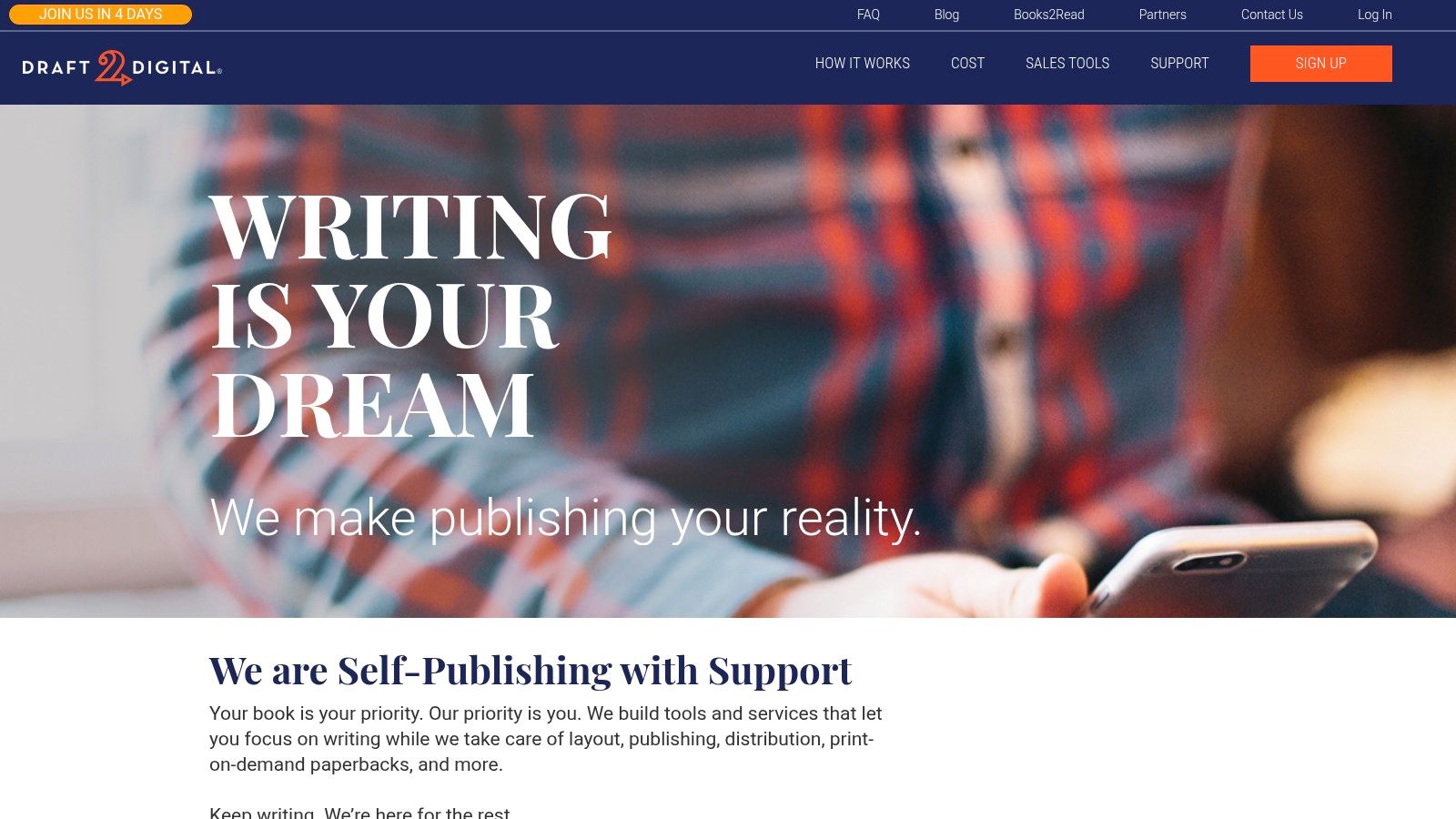
Draft2Digital is less of a publishing platform and more of a powerful distribution engine for authors who want to sell their books everywhere. Instead of manually uploading and managing your ebook on dozens of individual stores like Kobo, Apple Books, and Barnes & Noble, Draft2Digital acts as an aggregator. It simplifies the path to "going wide," allowing you to reach a global audience beyond Amazon's ecosystem from a single, unified dashboard. It is one of the best platforms for writers focused on maximizing book distribution with minimal administrative work.
Why Draft2Digital Stands Out
The platform’s greatest strength is its efficiency. Authors can upload a single manuscript, and Draft2Digital handles the complex formatting and distribution to numerous online retailers and library systems. It also streamlines royalty payments, consolidating earnings from all storefronts into one monthly payment. This "upload once, distribute everywhere" model saves a great deal of time for independent authors who want to focus on writing their next book rather than managing dozens of retail accounts. You maintain all rights to your work and can easily delist from stores at any time.
- Best For: Independent authors who want to distribute their ebooks and print books widely beyond the Amazon ecosystem.
- Pricing: Free to use. Draft2Digital takes approximately a 10% cut of the book's retail price.
- Ownership: You retain 100% of your rights and control your distribution choices.
Pro Tip: Use Draft2Digital's free automated layout and endmatter tools to create a professional-looking interior for your book. This feature automatically adds a title page, copyright page, and even a "Also By" page, saving you hours in formatting.
7. Wattpad
Wattpad is a global entertainment company and social storytelling platform where writers can share serialized fiction and build a massive, engaged readership. It's a powerhouse for genre fiction, particularly Young Adult, romance, and fantasy, acting as a proving ground where stories gain traction through community reads, votes, and comments. For fiction authors, it’s one of the best platforms for writers to test concepts and build an audience from the ground up, with breakout hits often attracting attention from publishers and studios.

Why Wattpad Stands Out
Wattpad’s unique strength lies in its discovery engine and direct path from writer to potential media adaptation. While writing on a blog is solitary, Wattpad is interactive; authors receive chapter-by-chapter feedback, helping them refine their work in real time. The platform’s monetization is selective, focused on the Wattpad Originals program, where successful writers can earn through paid chapters or reader subscriptions. For many writers, the bigger upside is the possibility of a story being optioned by Wattpad WEBTOON Studios for print, film, or television, turning a serialized novel into a multimedia franchise.
- Best For: Fiction writers (especially YA, romance, fantasy) aiming to build a large readership and seeking potential media adaptation deals.
- Pricing: Free to publish. Monetization is typically invite-only through programs like Wattpad Originals.
- Ownership: You own your original content, but specific program agreements may involve granting exclusive rights, so review contracts carefully.
Pro Tip: Consistency is key on Wattpad. Releasing chapters on a predictable schedule keeps readers engaged and can boost your story's visibility in the platform's algorithm. Interact with your readers in the comments to build a loyal community around your work.
8. Reedsy
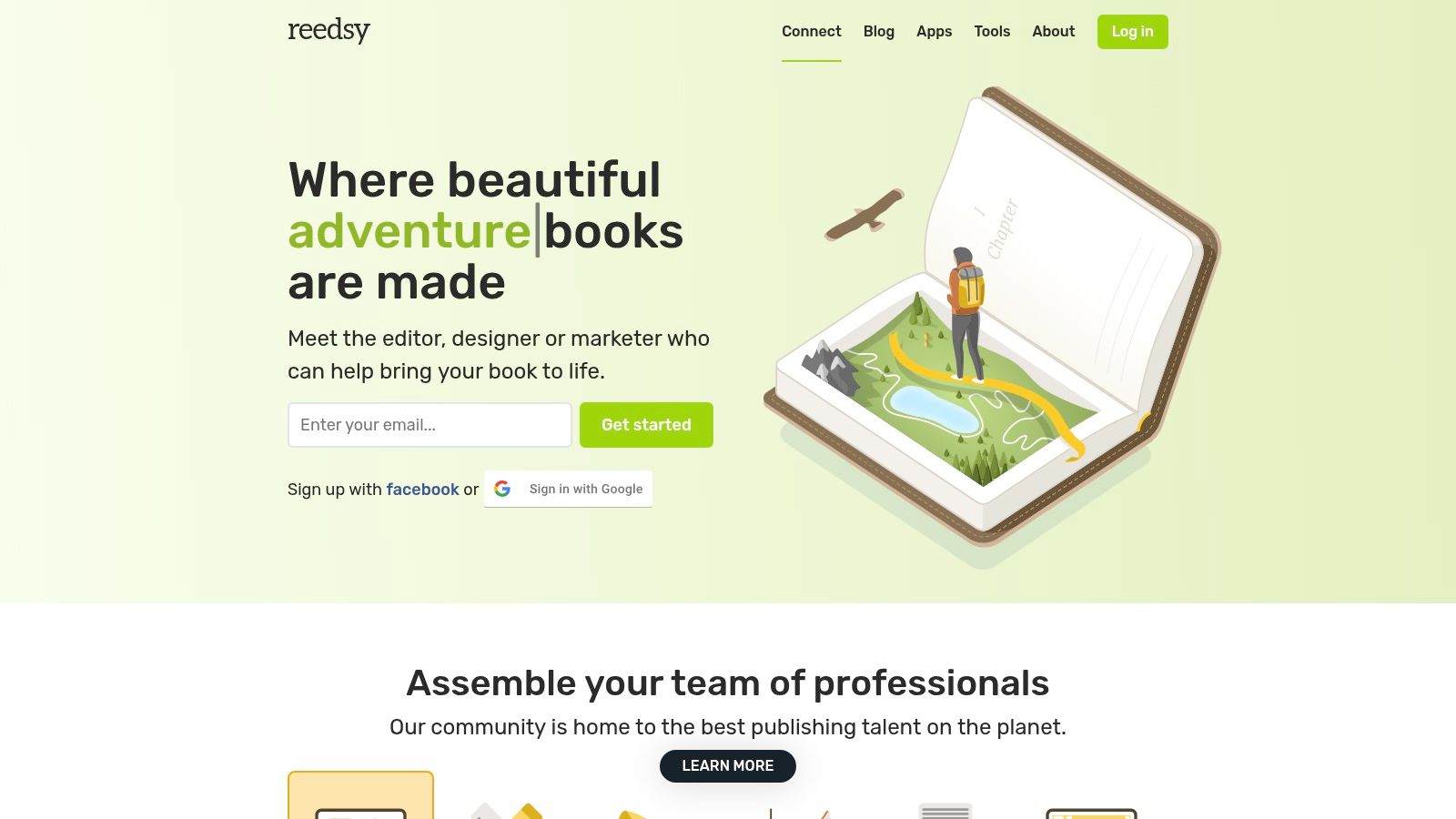
Reedsy isn't a publishing platform in the traditional sense; it's a curated marketplace connecting writers with the industry's top professionals. It demystifies the path to a polished book by providing access to vetted editors, designers, marketers, and ghostwriters. For independent authors navigating the complex world of self-publishing, Reedsy acts as a project management hub, ensuring quality and secure collaboration from manuscript to market. It is one of the best platforms for writers who are ready to invest in professional production.
Why Reedsy Stands Out
The platform’s core strength lies in its rigorous vetting process and all-in-one workflow. Instead of searching countless forums for reliable freelancers, authors can request quotes from a handpicked selection of experts with proven track records. Reedsy facilitates everything from initial contact and contract signing to secure escrow payments and file sharing. This integrated system provides peace of mind and organizational efficiency, allowing authors to focus on their creative work while a professional team handles the technical aspects of production. It is an essential link between a finished draft and a commercially viable book.
- Best For: Independent authors seeking professional editing, cover design, and marketing services for their books.
- Pricing: Free to browse and request quotes. Reedsy takes a 10% commission from both the author and the professional on all collaborations.
- Ownership: You retain full ownership of your manuscript and all creative assets produced through the platform.
Pro Tip: Before hiring, use Reedsy's free educational resources and writing tools to refine your manuscript as much as possible. A more polished draft will likely attract higher-caliber professionals and may result in lower quotes for editing services.
9. Patreon
Patreon operates less like a traditional publishing platform and more like a modern-day patronage system, making it one of the best platforms for writers who want to build a direct, recurring revenue stream from their most loyal fans. Instead of relying on ad revenue or one-off sales, you can offer exclusive content, behind-the-scenes updates, and community access through tiered monthly memberships. This model fosters a deeper connection with your audience, turning passive readers into active supporters who are invested in your creative journey.
Why Patreon Stands Out
The platform’s core strength is its membership flexibility. You can create multiple tiers with different price points and benefits, allowing you to cater to everyone from casual supporters to super-fans. Patreon handles the recurring billing, payment processing, and provides tools for communicating directly with your patrons. This is ideal for fiction authors serializing a novel, non-fiction writers offering deep-dive bonus content, or anyone who wants a predictable income stream independent of volatile platform algorithms. You maintain full ownership of your work and your direct relationship with your audience.
- Best For: Fiction authors, niche experts, and podcasters building a membership community with exclusive content.
- Pricing: Free to create a page. Patreon takes a 5% to 12% cut of monthly earnings, depending on your chosen plan, plus payment processing fees.
- Ownership: You own your content and your direct relationship with your members.
Pro Tip: Use your Patreon page as a value-add for your existing newsletter or blog. You can learn how to write a newsletter that teases exclusive bonus content only available to your patrons, creating a powerful incentive for readers to subscribe.
10. Gumroad
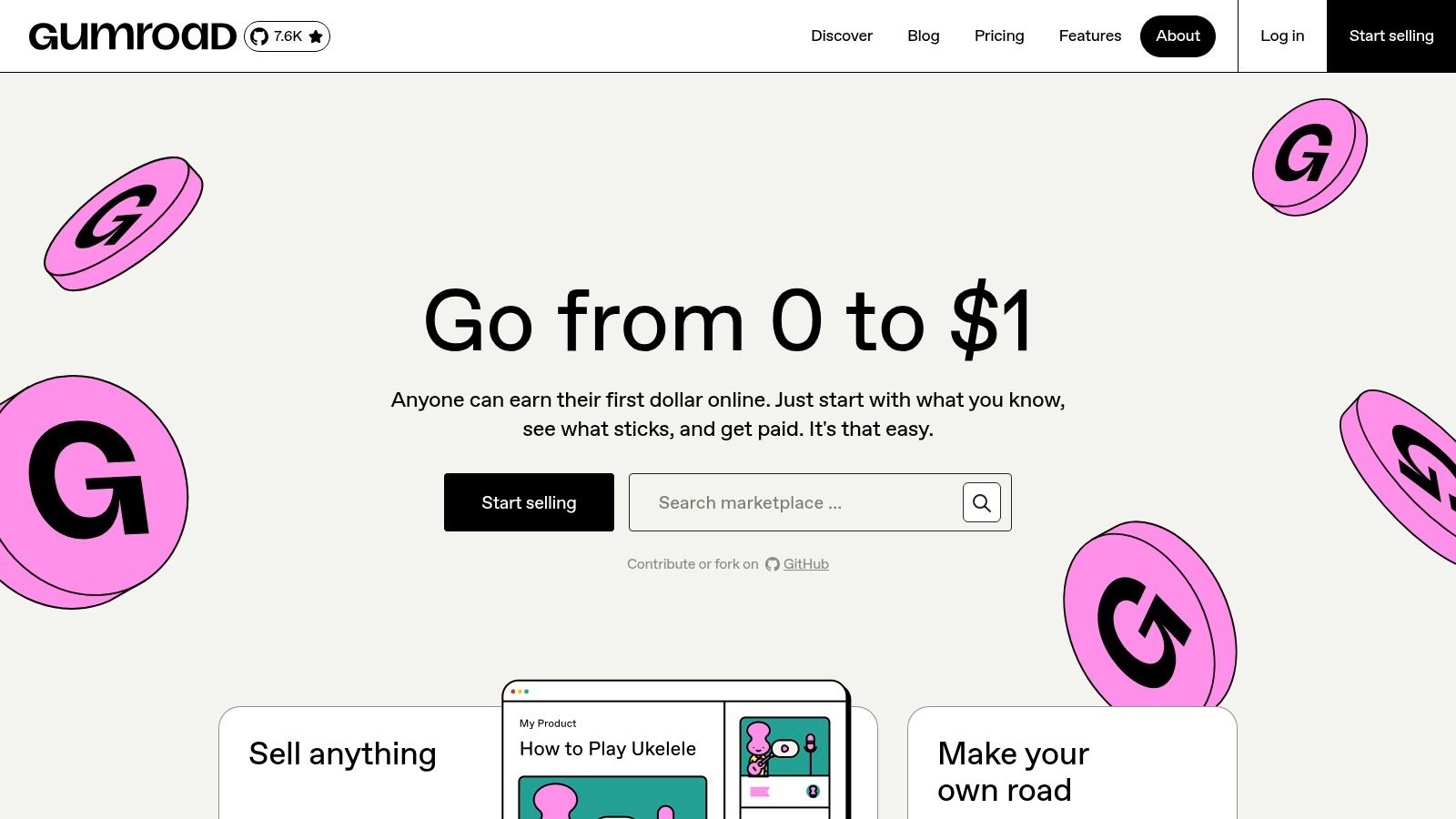
Gumroad isn't a traditional publishing platform but rather a powerful, minimalist e-commerce solution for creators. It's one of the best platforms for writers who want to sell digital products like ebooks, templates, or premium reports directly to their audience. The platform empowers writers to build a direct sales channel, bypassing traditional publishers or complex e-commerce setups. You can create a simple, effective storefront in minutes and start selling immediately, making monetization incredibly accessible.
Why Gumroad Stands Out
The platform’s greatest strength is its simplicity combined with its role as a "merchant of record." This means Gumroad handles the complex, tedious aspects of global sales, like calculating and remitting sales tax (VAT), which is a massive headache for independent sellers. For writers, this means you can focus entirely on creating your product and marketing it. You get full access to your customer's email addresses, allowing you to build a direct relationship and upsell future products. While it is not a place for blogging, it works well as a sales layer connected to your existing blog or newsletter.
- Best For: Authors selling ebooks, freelancers selling templates or courses, and newsletter writers offering premium digital products.
- Pricing: Free to set up. Gumroad takes a flat 10% fee on each sale.
- Ownership: You own your content, your store, and your customer list completely.
Pro Tip: Use Gumroad to create tiered product packages. For example, offer a standard ebook for $15 and a premium package for $40 that includes the ebook, a video tutorial, and a resource checklist. This simple strategy can significantly increase your average order value.
11. Upwork
While most platforms on this list focus on publishing, Upwork is a marketplace dedicated to finding paid work, making it one of the best platforms for writers looking to monetize their skills directly. It connects freelance writers with clients seeking everything from blog posts and web copy to technical manuals and white papers. The platform provides a full suite of tools for managing contracts, tracking time, and ensuring secure payment, allowing you to build a professional freelance business from the ground up.

Why Upwork Stands Out
Upwork's strength lies in its sheer volume and protective infrastructure. With thousands of jobs posted daily, there's a constant stream of opportunities across countless niches. Its escrow system and dispute resolution services provide a safety net that's crucial when working with new clients. Competition is high, but building a strong profile with positive feedback can lead to long-term, high-value contracts and a steady income stream without the constant need for prospecting. This makes it a good fit for writers who prefer a structured, project-based approach to freelancing.
- Best For: Freelance writers, copywriters, and editors seeking project-based work and long-term client relationships.
- Pricing: Free to join. Upwork charges a sliding freelancer service fee, starting at 10% of your earnings.
- Ownership: You own the work you produce, but client contracts often stipulate ownership transfer upon payment.
Pro Tip: Create a standout profile by specializing in a specific niche (e.g., SaaS B2B content, fintech copywriting). A focused profile attracts higher-quality clients and justifies higher rates. To further build your professional brand, learn more about how to post on LinkedIn to showcase your expertise and attract clients off-platform.
12. Fiverr
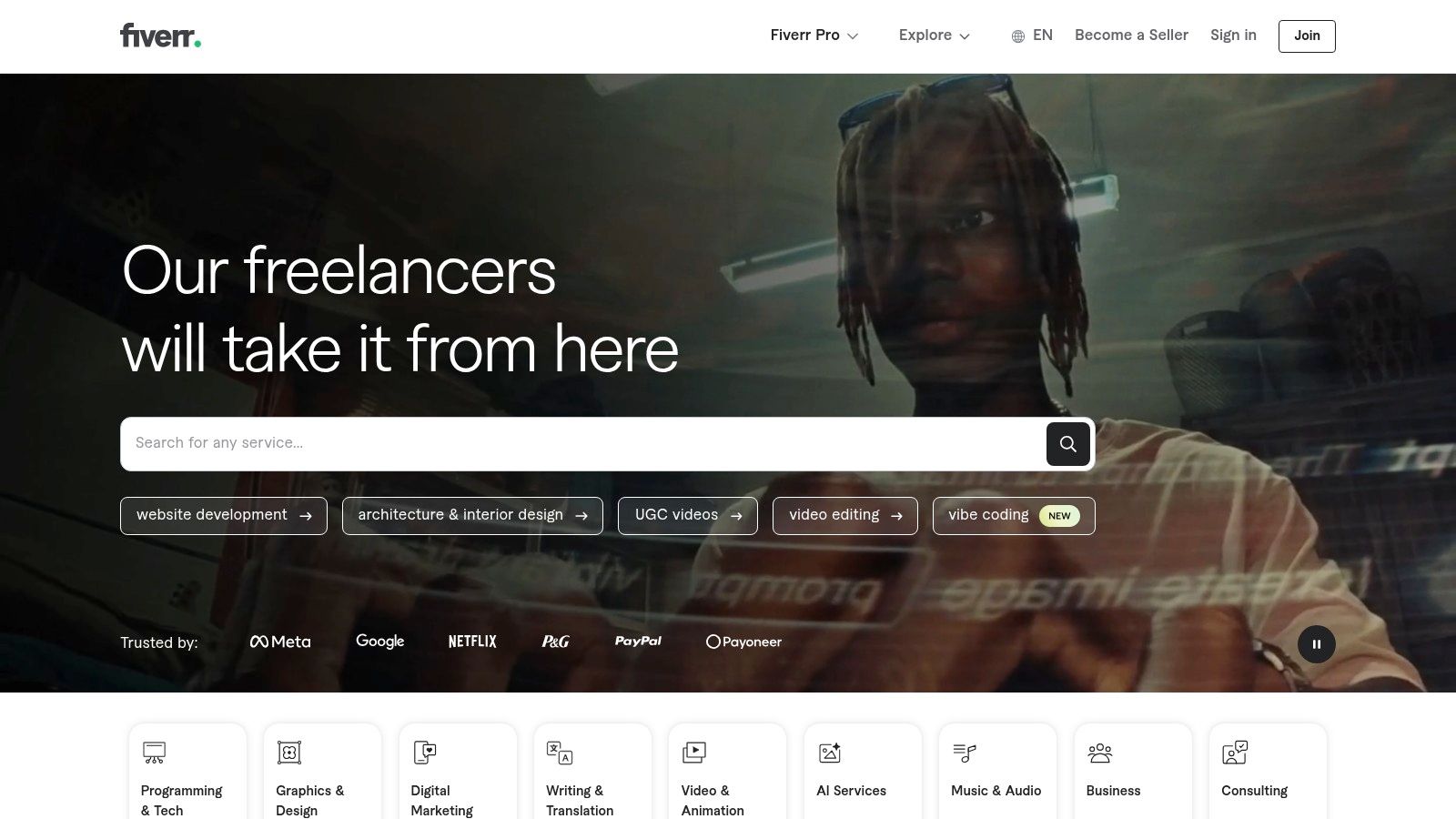
Fiverr offers a different angle compared to traditional publishing platforms; it’s a marketplace for writers to sell their services directly. Instead of building an audience over time, you can package your skills into "Gigs" like writing blog posts, website copy, or book blurbs. This model provides one of the fastest paths from listing a service to earning an income, making it one of the best platforms for writers looking to monetize their skills quickly through standardized, repeatable work.
Why Fiverr Stands Out
The platform’s strength is its structured, product-like approach to freelance writing. You define the scope, price, and delivery time upfront, which minimizes negotiation and simplifies the sales process. Fiverr handles payment processing, order management, and dispute resolution, creating a secure environment for both buyers and sellers. Heavy competition can drive prices down in some niches, but the platform's large built-in audience of buyers means there's a constant stream of opportunities. The ability to create tiered packages with add-ons allows for effective upselling and client management, all within a single system.
- Best For: Freelance writers looking to sell packaged services, copywriters, and specialists offering defined, repeatable writing tasks.
- Pricing: Free to create a seller profile. Fiverr takes a 20% commission on all earnings.
- Ownership: You own the rights to your work until the order is completed and delivered to the buyer as per Fiverr's terms.
Pro Tip: Create highly specific, niche Gigs to stand out. Instead of a generic "blog writer" service, offer "SEO blog posts for SaaS startups" or "email sequences for e-commerce brands." This attracts higher-quality clients and justifies premium pricing.
Top 12 Writer Platforms: Features & Pricing Comparison
| Platform | Core features | UX / Quality (★) | Value / Price (💰) | Target audience (👥) | Unique selling point (✨) |
|---|---|---|---|---|---|
| Substack | Built-in email delivery, simple paywall, Notes/social layer | ★★★★ | 💰 Free to publish; 10% platform fee on paid subs | 👥 Independent journalists, newsletter creators | ✨ Fast monetization + list ownership |
| 🏆 Narrareach | Write-once, one-click cross-posting to Medium, Substack, LinkedIn, Ghost, Dev.to, Hashnode; viral-tested templates; paywall-safe routing | ★★★★☆ | 💰 $39 /mo (Audience) → $75 /mo (Revenue) → $250+/mo (Teams); free tier | 👥 Indie writers, newsletter ops, agencies | ✨ Multi-platform formatting + analytics + AI hooks |
| Medium | Large built-in readership; Partner Program (member-read pay) | ★★★★ | 💰 Free to publish; Partner revenue share | 👥 Long-form writers testing ideas | ✨ High discoverability via member network |
| Ghost (Ghost Pro) | Self-hosted CMS or managed Ghost Pro; native memberships & email | ★★★★☆ | 💰 Paid hosting (Ghost Pro) or self-host; scalable plans | 👥 Authors who want brand control & memberships | ✨ Full ownership + lightweight newsletter stack |
| Amazon KDP | Kindle + print publishing, global marketplace, royalty options | ★★★★ | 💰 Free to publish; 35% or 70% ebook royalty tiers | 👥 Book authors seeking wide retail reach | ✨ Unmatched Amazon discoverability |
| Draft2Digital | Aggregated ebook/print distribution to many retailers | ★★★★ | 💰 No upfront fees; ~10% distribution share | 👥 Authors wanting broad store distribution | ✨ Single-dashboard multi-store distribution |
| Wattpad | Serialized fiction platform with community feedback & Originals | ★★★★ | 💰 Free; selective monetization/program invites | 👥 Genre fiction & YA serial writers | ✨ Community-driven discovery & adaptation pathways |
| Reedsy | Marketplace for vetted editors, designers, marketing pros | ★★★★☆ | 💰 Marketplace fees; professional rates (commissioned) | 👥 Indie authors needing pro services | ✨ Curated talent + escrowed projects |
| Patreon | Membership tiers, posts, community tools, recurring revenue | ★★★★ | 💰 Platform fee (≈10% standard) + payment fees | 👥 Creators seeking recurring fan support | ✨ Flexible tiered memberships & perks |
| Gumroad | Simple storefront for digital goods, memberships, courses | ★★★★ | 💰 10% + $0.50 per sale (varies) | 👥 Creators selling ebooks, courses, templates | ✨ Fast setup + merchant-of-record handling |
| Upwork | Freelance marketplace for paid writing contracts | ★★★★ | 💰 Freelancer fees (platform takes a cut; ~10% typical) | 👥 Freelancers seeking client work | ✨ Contract tools, escrow, and client discovery |
| Fiverr | Gig-based marketplace for packaged writing services | ★★★★ | 💰 20% seller commission | 👥 Sellers offering packaged writing services | ✨ Rapid listing→sale path and Pro-tier option |
Stop Cross-Posting Manually. Start Growing 3x Faster.
After 90 days of intensely experimenting with the best platforms for writers, one truth became undeniable: publishing on a single platform is a slow-growth strategy. The potential for audience discovery by leveraging the unique communities on Medium, LinkedIn, and niche sites like Dev.to is simply too massive to ignore. My own analytics proved this out, with cross-posted articles seeing a 280% lift in engagement and a 3x increase in newsletter sign-ups compared to single-platform posts.
However, the experiment also exposed a critical flaw in this strategy: the soul-crushing time suck of manual cross-posting. The process of logging into each platform, fighting with different editors, re-uploading images, and fixing broken formatting easily consumed over 90 minutes for every single article. That’s more than 6 hours a month spent on tedious, low-value work instead of writing, editing, or engaging with readers.
Your Platform Is Your Foundation, Your System Is Your Scaler
Choosing the right primary platform is the first step. Your decision should be a direct reflection of your goals:
- For Direct Monetization & Community: Substack and Ghost are unparalleled. They give you a direct line to your audience and full control over your email list and subscription revenue.
- For Maximum Reach & Discovery: Medium and LinkedIn are discovery engines. Their built-in networks can expose your work to millions of new readers who would never have found your personal blog.
- For Niche Authority: Platforms like Dev.to and Hashnode are essential for building credibility within a specific technical community. They offer a targeted audience that’s actively searching for your expertise.
Sustainable growth comes from building an efficient system that keeps you present on the platforms that matter to your audience without burning out. Eliminating repetitive tasks protects your time and your creative energy. The strongest writers do more than choose the best platforms for writers; they build a content distribution engine that supports consistent publishing and wider reach. Your writing deserves to be seen, and your process should help that happen without the copy-paste grind.
High-Intent CTA: Ready to reclaim those 90 minutes per article and grow your audience 3x faster? Start your free Narrareach trial. Write once in our clean editor and publish everywhere in a single click, perfectly formatted for each platform. Start your free trial today (no credit card required).
Low-Intent CTA: Not ready for a new tool? Join our free newsletter for writers. We share data-backed strategies from analyzing over 10,000 top-performing articles to help you grow your audience and income.