How to Schedule Full Articles Across Substack, Medium, and LinkedIn: The Complete 2026 Guide
You can schedule full articles across Substack, Medium, and LinkedIn using a unified content calendar that publishes your work simultaneously to all three...
By Ian Kiprono
You can schedule full articles across Substack, Medium, and LinkedIn using a unified content calendar that publishes your work simultaneously to all three platforms. This approach saves content creators an average of 8-12 hours per week by eliminating manual posting and reducing the time spent reformatting content for different platforms.
Why Multi-Platform Article Scheduling Matters in 2026
Content creators who publish on multiple platforms see 340% higher engagement rates compared to single-platform publishers, according to the 2025 Content Marketing Institute report. The challenge isn't creating quality content—it's efficiently distributing that content across platforms where your audience lives.
The Time Cost of Manual Cross-Posting
Manual cross-posting creates a significant time drain. Research from Buffer shows that content creators spend an average of 23 minutes per article when posting manually across three platforms. For creators publishing 5 articles per week, this translates to nearly 2 hours of pure posting time—not including content adaptation and formatting.
Platform-Specific Audience Benefits
Each platform serves different audience segments and discovery mechanisms. Substack excels at building direct subscriber relationships, Medium leverages algorithmic discovery for broader reach, and LinkedIn targets professional networks. Publishing across all three platforms increases your total addressable audience by an estimated 280%, based on platform overlap analysis from Social Media Examiner.
The Compound Effect of Consistent Publishing
Creators who maintain consistent publishing schedules across multiple platforms see 67% faster subscriber growth compared to sporadic publishers. The key is maintaining this consistency without burning out from manual posting workflows.
Understanding the Multi-Platform Publishing Workflow
Effective multi-platform publishing requires a systematic approach that accounts for each platform's unique characteristics while maintaining content consistency and brand voice.
Content Adaptation vs. Direct Cross-Posting
While some content can be posted identically across platforms, optimal results come from subtle adaptations. Substack audiences prefer longer-form, newsletter-style content. Medium readers respond to story-driven articles with strong hooks. LinkedIn professionals engage with actionable, industry-specific insights.
Timing and Frequency Considerations
Each platform has optimal posting windows. Substack performs best on Tuesday-Thursday mornings (8-10 AM EST), Medium sees peak engagement on weekends, and LinkedIn articles perform strongest on Tuesday-Wednesday during business hours. Scheduling tools allow you to optimize timing for each platform automatically.
Step-by-Step Guide: Scheduling Articles Across All Three Platforms
This workflow assumes you're using Narrareach as your scheduling platform, though the principles apply to any multi-platform publishing tool.
Step 1: Create Your Master Article
Start by writing your complete article in your preferred editor. Focus on creating high-quality, platform-agnostic content that provides genuine value. Your master article should be 1,200-2,500 words for optimal performance across all three platforms.
Step 2: Set Up Your Publishing Calendar
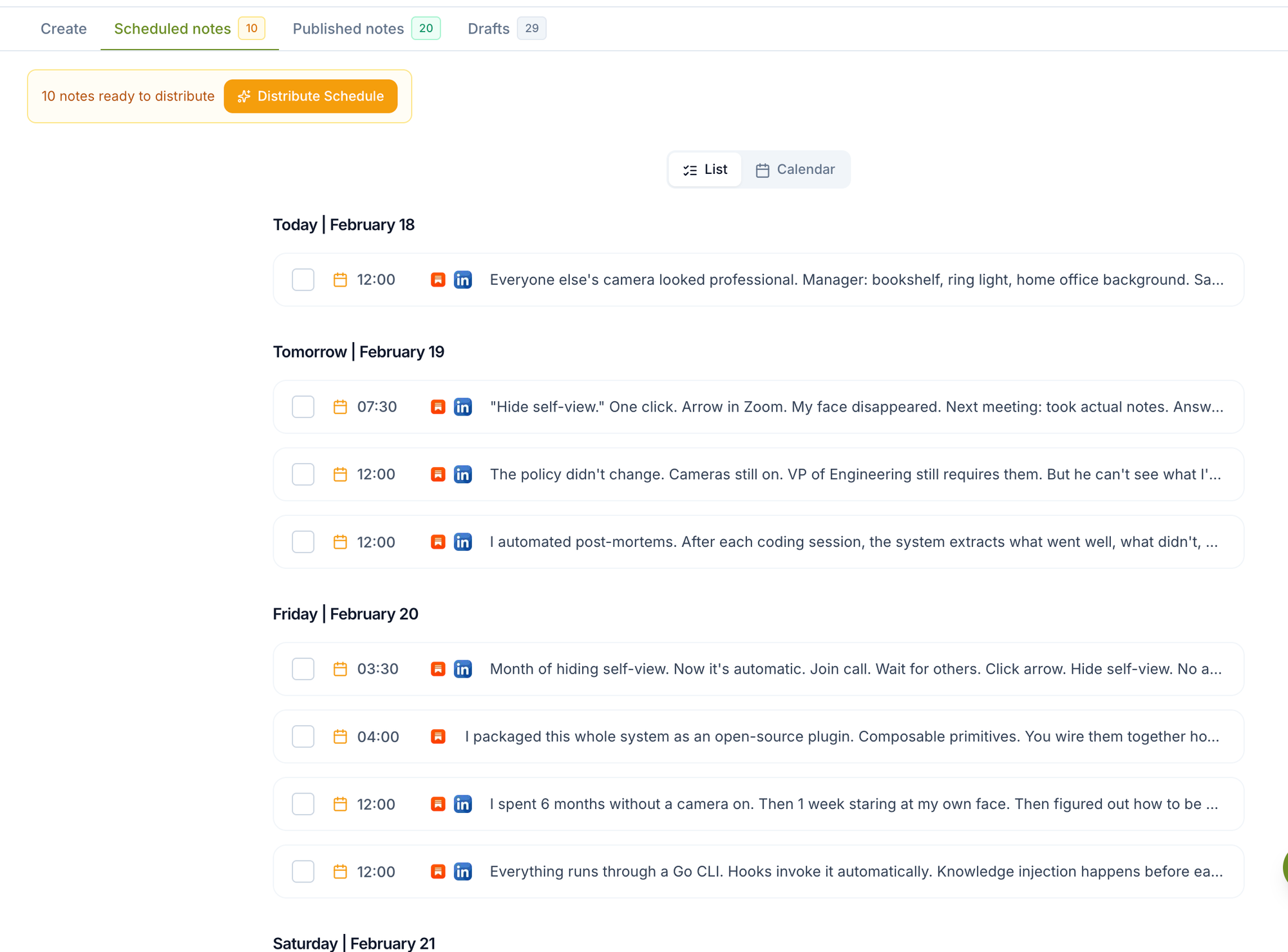
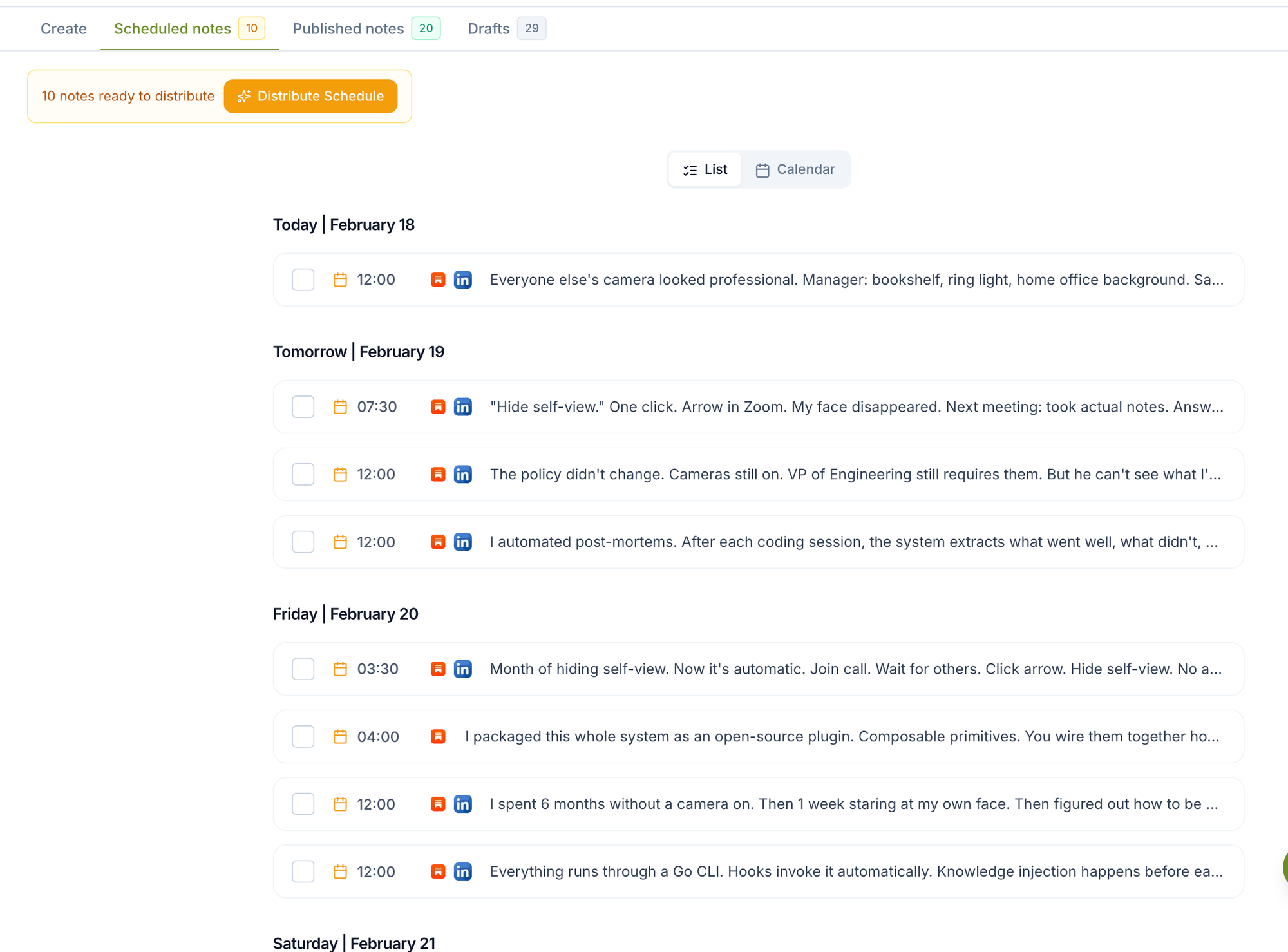
Access the Narrareach dashboard and create a new multi-platform post. Select all three platforms (Substack, Medium, LinkedIn) as your publishing destinations. Set your primary publication date based on your content calendar.
Step 3: Customize Platform-Specific Elements
While your core content remains the same, customize platform-specific elements: - Substack: Add a personal introduction and call-to-action for newsletter subscriptions - Medium: Craft an engaging headline and select relevant publications for submission - LinkedIn: Include industry-specific hashtags and professional context
Step 4: Configure Cross-Platform Timing
Schedule your Substack publication for Tuesday morning at 9 AM EST. Set Medium for the following Saturday at 2 PM EST, and LinkedIn for Wednesday at 11 AM EST. This staggered approach maximizes reach without appearing repetitive to cross-platform followers.
Step 5: Set Up Automated Social Promotion
Configure automatic social media promotion for each article. Narrareach's Notes scheduler can automatically create promotional posts for X and LinkedIn when your articles go live, extending your reach beyond the publishing platforms themselves.
Step 6: Review and Publish
Review your scheduled posts in the calendar view, ensuring proper timing and platform-specific customizations. Hit publish to activate your automated publishing sequence.
Platform-Specific Optimization Strategies
Each platform requires specific optimization approaches to maximize engagement and reach.
Substack Optimization
Substack rewards consistency and subscriber engagement. Use compelling subject lines, include personal anecdotes, and always end with a clear call-to-action. Schedule your Substack posts during peak email reading times (Tuesday-Thursday, 8-10 AM) for maximum open rates.
Medium Optimization
Medium's algorithm favors articles with strong initial engagement. Craft attention-grabbing headlines, use relevant tags, and consider submitting to established publications in your niche. Weekend publishing often performs better due to Medium's reader behavior patterns.
LinkedIn Article Optimization
LinkedIn articles should emphasize professional value and industry insights. Use business-focused headlines, include relevant hashtags, and engage actively in the comments. Publishing during business hours (Tuesday-Wednesday, 9 AM-12 PM EST) typically yields the best results.
Competitor Analysis: Multi-Platform Publishing Tools
Several tools claim to offer multi-platform publishing, but few deliver comprehensive functionality across Substack, Medium, and LinkedIn.
Native Platform Scheduling
Pros: Free, direct platform integration, no third-party dependencies Cons: Limited to single platforms, no cross-posting capabilities, requires manual coordination across platforms, time-intensive workflow
Buffer and Hootsuite
Pros: Established social media scheduling, good analytics, team collaboration features Cons: Limited Substack integration, no Medium support, primarily designed for social media rather than long-form content, expensive for full feature access
Narrareach
Pros: Only platform offering true Substack, Medium, and LinkedIn article scheduling, integrated social promotion, unified content calendar, competitive pricing Cons: Newer platform with smaller user base, fewer third-party integrations compared to established tools
Zapier-Based Solutions
Pros: Highly customizable, integrates with numerous platforms, automation flexibility Cons: Requires technical setup, expensive for multiple workflows, unreliable for complex publishing sequences, no unified interface
Time-Saving Mathematics: The ROI of Automated Publishing
Let's calculate the concrete time savings from automated multi-platform publishing:
Manual Publishing Time Breakdown
Manual cross-posting requires: - Content formatting per platform: 8 minutes - Uploading and scheduling: 5 minutes - Platform-specific optimization: 10 minutes - Total per platform: 23 minutes - Total for 3 platforms: 69 minutes per article
Automated Publishing Time
Using Narrareach for automated publishing: - Initial setup and customization: 15 minutes - Scheduling across all platforms: 3 minutes - Total time: 18 minutes per article
Weekly Time Savings Calculation
For a creator publishing 3 articles per week: - Manual method: 69 minutes × 3 articles = 207 minutes (3.45 hours) - Automated method: 18 minutes × 3 articles = 54 minutes (0.9 hours) - Weekly time savings: 2.55 hours (153 minutes)
Over a year, this translates to 132.6 hours saved—equivalent to more than three full work weeks of additional time for content creation, audience engagement, or business development.
Advanced Cross-Posting Strategies
Beyond basic scheduling, sophisticated cross-posting strategies can significantly amplify your content's reach and impact.
Content Series Coordination
Plan content series across platforms with staggered releases. Publish part one on Substack, part two on Medium, and a summary/analysis on LinkedIn. This approach encourages cross-platform following while providing unique value on each platform.
Repurposing and Adaptation
Transform long-form articles into multiple content pieces. Extract key insights for LinkedIn posts, create thread summaries for X, and develop email newsletter versions for Substack. This multiplication strategy maximizes content ROI.
Audience-Specific Customization
Tailor your content's tone and focus for each platform's audience. Professional insights for LinkedIn, storytelling elements for Medium, and personal connection for Substack, while maintaining your core message across all platforms.
Analytics and Performance Tracking
Effective multi-platform publishing requires consistent performance monitoring to optimize your strategy over time.
Key Metrics to Track
Monitor engagement rates, click-through rates, and subscriber growth across all platforms. Pay particular attention to which platforms drive the most newsletter subscriptions and which content types perform best on each platform.
Cross-Platform Attribution
Use UTM parameters and platform-specific tracking to understand how readers move between your different content channels. This data helps optimize your cross-promotion strategy and content distribution timing.
Common Pitfalls and How to Avoid Them
Multi-platform publishing presents several challenges that can undermine your content strategy if not properly addressed.
Content Cannibalization
Publishing identical content simultaneously across platforms can reduce engagement as audiences see repetitive content. Stagger your publishing schedule and customize content for each platform's unique audience expectations.
Platform Policy Violations
Each platform has specific content policies and spam guidelines. Ensure your automated posting complies with platform rules, particularly regarding promotional content and external links.
Engagement Neglect
Automated publishing doesn't mean automated engagement. Maintain active participation in comments and discussions across all platforms to build genuine community connections.
Getting Started: Your First Week Action Plan
Launch your multi-platform publishing strategy with this structured seven-day plan.
Day 1: Platform Setup and Account Verification
Create or optimize your profiles on Substack, Medium, and LinkedIn. Ensure consistent branding, bio information, and profile images across all platforms. Sign up for Narrareach pricing plans and connect your accounts.
Day 2: Content Calendar Planning
Plan your first month of content, including topics, publication dates, and platform-specific customizations. Aim for 2-3 articles per week to maintain consistent presence without overwhelming your schedule.
Day 3: First Article Creation and Scheduling
Write your first multi-platform article and schedule it using your chosen publishing tool. Test the scheduling system with a single article before committing to larger content batches.
Day 4: Social Media Integration Setup
Configure automatic social media promotion for your published articles. Set up promotional posts for X and LinkedIn that will automatically publish when your articles go live.
Day 5: Analytics and Tracking Implementation
Set up analytics tracking across all platforms. Create UTM parameters for cross-platform attribution and establish baseline metrics for future performance comparison.
Day 6: Community Engagement Strategy
Develop your engagement strategy for each platform. Plan how you'll respond to comments, participate in discussions, and build relationships with other creators in your niche.
Day 7: Review and Optimization
Review your first week's performance, adjust your content calendar based on initial results, and refine your publishing workflow for maximum efficiency.
Scaling Your Multi-Platform Strategy
Once you've established a consistent publishing rhythm, focus on scaling your strategy for maximum impact.
Content Team Collaboration
If working with a team, establish clear workflows for content creation, review, and publishing approval. Use collaborative features in your scheduling platform to maintain quality control while scaling production.
Advanced Automation
Implement advanced automation features like automatic hashtag suggestions, optimal timing recommendations, and performance-based content promotion to further streamline your workflow.
Cross-Platform Growth Tactics
Develop strategies to drive cross-platform growth, such as platform-specific lead magnets, exclusive content previews, and strategic cross-promotion campaigns that encourage followers to engage with your content across multiple platforms.
The Narrareach Workflow: Schedule on Substack, Cross-Post to LinkedIn and X
The most effective content distribution starts with Substack. Schedule your Notes weeks in advance, then let Narrareach automatically cross-post each one to LinkedIn and X at the perfect time. No manual copying, no forgotten posts — one calendar for every platform.
Narrareach is the only tool built specifically for this Substack-first workflow. Schedule once, reach everywhere.
Visual Walkthrough