
How I Scaled My Content Creation by 10x in 90 Days (And Reclaimed 20 Hours a Month)
Are you stuck on the content treadmill? That feeling like you spend all week creating, formatting, and publishing, only to see minimal growth? You publish a...
By Ian Kiprono
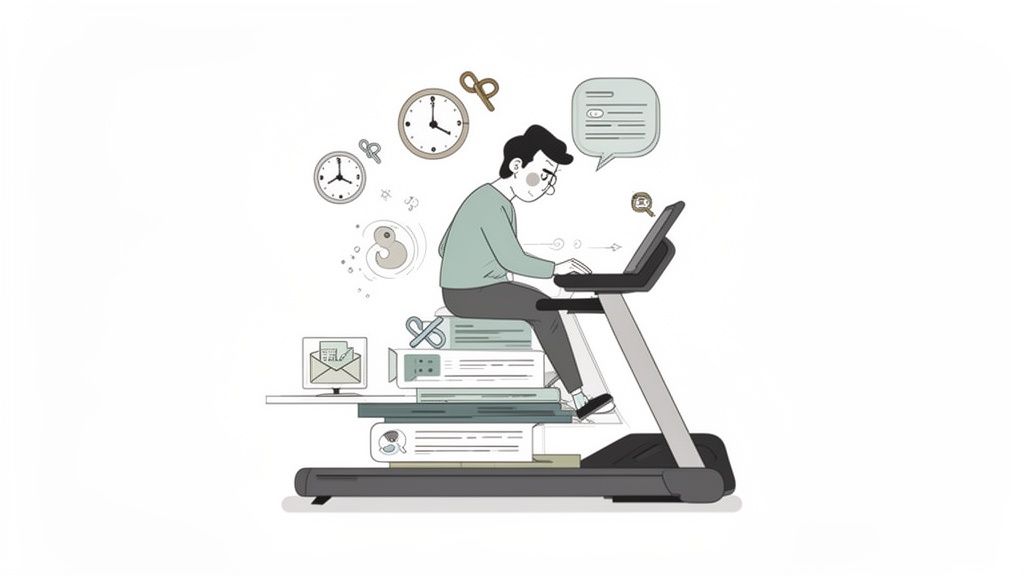
Are you stuck on the content treadmill? That feeling like you spend all week creating, formatting, and publishing, only to see minimal growth? You publish a great article on your blog or Substack, then waste another 90 minutes wrestling it into LinkedIn's editor, then Medium's, then tweaking it for social media. By the end, you're exhausted, your creativity is drained, and you have no time left for strategy or engaging with your audience. If you've ever felt like 80% of your time is spent on low-value tasks like copying and pasting, you're not alone. I was there.
The Content Treadmill Was Burning Me Out
I was right there with you. My entire week was a hamster wheel of manual, mind-numbing tasks that had almost nothing to do with being creative.
I’d spend hours getting a Substack post just right, only to lose the next 90 minutes battling with LinkedIn's quirky editor, then Medium's, then tweaking it all over again for my blog. It was a textbook case of diminishing returns. The thrill of creating something great was immediately killed by the drudgery of distributing it.
It hit me one day that 80% of my time was being eaten up by low-value activities like copying, pasting, and endless reformatting. That left me with barely any time to think strategically, talk to my audience, or even dream up my next big idea. Burnout was setting in fast, and my growth had flatlined.
This is a huge bottleneck for solo creators and small teams. You know you need to be on multiple platforms to grow, but you just don’t have the bandwidth to do it manually.
Why Manual Distribution Is a Losing Game
This isn't just about feeling overwhelmed; it's a dead-end strategy in a market that's growing at an insane pace. The global content marketing industry didn't just grow—it exploded, jumping from $36.8 billion in 2018 to $413.3 billion by 2022. And it's projected to hit a mind-boggling $1.95 trillion by 2032.
That kind of growth tells you one thing: staying put on a single platform is no longer a viable option if you're serious about this. Trying to manually format and post for Medium's 100M+ readers and then do it all over again for LinkedIn's 1B+ professionals is a direct path to exhaustion.
“I was so focused on the creation part that I completely ignored the system part. My ‘distribution strategy’ was just brute force and a lot of wasted hours.”
This is the exact problem I became obsessed with solving. I knew there had to be a way to break the cycle, get my time back, and actually scale my work to see real audience growth. It took a complete mental shift—I had to stop thinking like a creator and start thinking like an architect of my own content engine. And if you're trying to figure out how to maximize your reach, a good starting point is our guide on the best days to post on social media.
My 90-Day Experiment: Reclaim 20 Hours a Month
I hit a wall. Hard. I was spending all my time on the content treadmill—writing, formatting, copying, pasting, scheduling. It was a brute-force approach that wasn't just draining my time; it was killing my creativity and putting a hard cap on my growth. I knew something had to give.
So I stopped everything for a month and audited my entire process. I set myself an audacious goal: reclaim at least 20 hours a month. More specifically, I wanted to slash the 90 minutes I spent formatting every single article for different platforms down to less than five. It felt impossible, but the alternative was burning out completely.
What came out of that deep dive was a three-pillar framework. This is the system that finally got me off the hamster wheel and back to doing work that matters.
Pillar 1: The Content Atom Method
The first pillar is all about working smarter, not harder. I borrowed a concept from physics: you can release a massive amount of energy by splitting a single atom. I started applying that same thinking to my content.
Instead of creating one-off pieces for every platform, I now start with one core, high-value asset—my "Content Atom." This is usually the meatiest piece, like a 2,000-word Substack newsletter or a deep-dive guide. But here's the key: I never write it in a vacuum. Before I even type the first sentence, I'm already mapping out how this one "atom" will be splintered into 10+ smaller pieces of content.
A single article becomes an entire campaign:
- Five LinkedIn posts: Each one drills down on a single, potent takeaway from the main article.
- Three Substack Notes: These are short, provocative thoughts designed to spark conversation and tease the full piece.
- A Twitter (X) thread: The core argument gets broken down into a bite-sized, easily shareable format.
- Two visual carousels: I turn key stats or steps into simple graphics that work great on Instagram or LinkedIn.
This flipped a switch in my brain. I was no longer just writing an article; I was building a whole content ecosystem from a single, focused effort. If you're struggling to keep up with different channels, our guide on how to manage multiple social media accounts can give you some more structure.
Pillar 2: The Batching Blueprint
The second pillar is about taming the chaos. My old schedule was a mess of context-switching—an hour of writing, then some editing, then brainstorming, then getting sucked into social media. It was a productivity nightmare.
The fix was a strict "Batching Blueprint." I started dedicating entire days—or at least big, protected blocks of time—to a single type of task. This is the only way to get into that elusive state of deep work and actually get things done.
My weekly calendar became my most powerful tool. By assigning a specific purpose to each day, I eliminated decision fatigue and dramatically increased my output. The key was to stop multitasking and start single-tasking with intense focus.
Here’s what my week looks like now:
- Mondays: Ideation & Outlining (4-hour block)
- Tuesdays: Deep Writing on the "Content Atom" (6-hour block)
- Wednesdays: Editing & Derivative Creation (5-hour block)
This blueprint means that by the time Friday rolls around, I have a polished core article and all its smaller spinoffs ready to fly. No last-minute scrambling.
Pillar 3: The Distribution Engine
This is the final, most crucial piece of the puzzle—the part that solves the 90-minute formatting nightmare. Having a brilliant article and a dozen derivatives is useless if publishing them takes an entire day. I needed a Distribution Engine.
The engine’s only job is to get all the content from the batching phase out into the world with as little friction as possible. For me, that meant finding a way to publish and schedule my Substack posts, Substack Notes, and LinkedIn content from one central command center.
The goal was simple: write once, distribute everywhere. No more soul-crushing copy-paste-reformat cycles. This was the missing piece that truly allowed me to scale.
Building a Repeatable Content Creation System
To really scale your content, you need more than just a few good ideas; you need an assembly line. My entire system boils down to two things that work in tandem: picking a central "Content Atom" and then executing it all within a strict "Batching Blueprint." This is what turns random acts of content into a predictable, high-output engine.
The first thing I had to do was stop thinking in terms of one-off articles. Now, every major piece I create starts its life as a "Content Atom"—for me, that’s usually a deep-dive newsletter of around 2,000 words. Before I even write a single sentence, I map out its entire lifecycle across all my channels.
Deconstructing a Content Atom
The trick is to view that big piece as a collection of smaller, self-contained ideas. Each one of those little ideas is destined to become a derivative piece of content for a different platform. This isn’t just repurposing; it's pre-purposing.
Here’s a real-world example of how I broke down a recent 2,000-word article on audience growth:
- Five LinkedIn Posts: I pulled out the five most actionable tips from the article. Each one became its own standalone post with a unique hook and a clear call to action driving people back to the original Substack newsletter.
- Three Substack Notes: I extracted three provocative or surprising stats from the main piece. These short, punchy notes are designed for quick engagement and to build curiosity for the full article.
- Ten Tweets: I deconstructed the article's main argument into a ten-part Twitter (X) thread, making the deep dive accessible for a fast-scrolling audience.
- Two Visual Carousels: I turned two of the step-by-step processes from the article into simple, visually appealing carousels for LinkedIn and Instagram, which helps me reach a different segment of my audience.
This visual shows the basic flow, from the core idea to the full distribution engine.
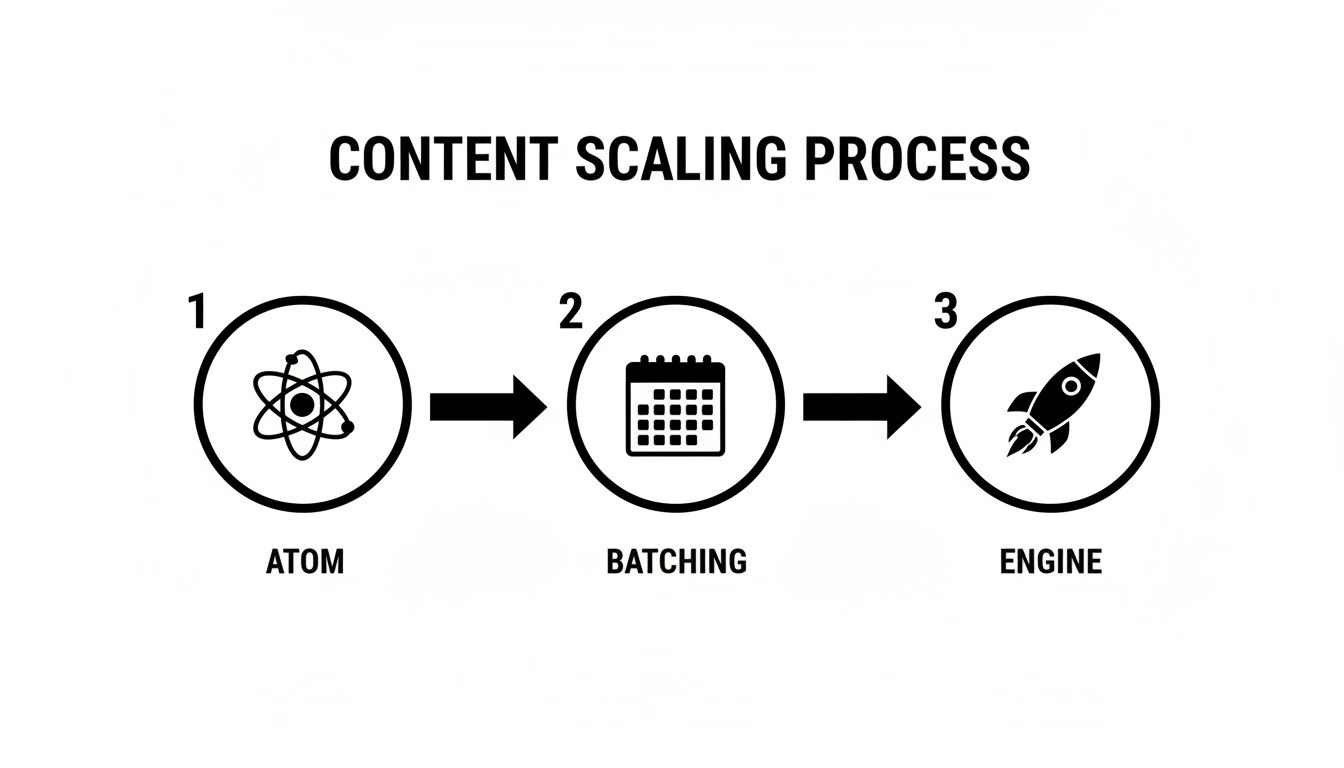
With this process, a single deep-work session produces assets that can last for weeks. It dramatically increases my output without me having to spend any more time writing. Using the right content structures from the start makes this deconstruction process even easier. You can explore some effective templates for articles to see what I mean.
My Exact Batching Blueprint
Having a plan for all your derivatives is useless if you don't carve out the time to actually create them. That’s where my Batching Blueprint comes in. I stopped letting my calendar be a chaotic mess of random tasks and instead gave each day a specific purpose. This ruthless focus is the only way I've found to consistently hit my goals.
The magic of batching is that it eliminates decision fatigue. When you know Monday is only for outlining, you don't waste mental energy wondering if you should be editing or posting on social media. You just do the work.
This structure protects my most valuable resource: focused creative energy. To build a truly repeatable system, you have to get serious about designing and implementing a solid workflow. There's a great guide on creating a workflow to scale your content production that goes into even more detail on this topic.
My weekly schedule is non-negotiable and designed for peak efficiency. It's the engine that powers the entire system.
Here's a look at my exact weekly schedule, which breaks down my tasks into dedicated time blocks to maximize focus.
My Weekly Content Batching Schedule
| Day | Primary Focus (AM Block) | Secondary Focus (PM Block) | Time Allotment |
|---|---|---|---|
| Monday | Ideation & Research (3 hours) | Outline Content Atom & Derivatives (2 hours) | 5 hours |
| Tuesday | Deep Writing on Content Atom (6 hours) | No secondary tasks to protect focus | 6 hours |
| Wednesday | Editing & Polishing Atom (3 hours) | Creating All Derivative Content (4 hours) | 7 hours |
| Thursday | Schedule All Posts & Notes (2 hours) | Audience Engagement & Community (3 hours) | 5 hours |
| Friday | Analytics Review & Strategy (3 hours) | Plan Next Week's Content Atom (2 hours) | 5 hours |
This blueprint completely transformed my productivity. By Wednesday afternoon, I have an entire week’s worth of high-quality content ready to go. Thursday is just about loading it into the distribution engine.
This system is how I reclaimed over 20 hours a month and finally got off the content treadmill for good.
The Automation Breakthrough: My Distribution Engine
I had my system down. The Content Atom method was giving me a steady stream of solid ideas, and the Batching Blueprint had turned my week into a predictable, creative rhythm. But there was still one massive bottleneck that was draining all my energy: the soul-crushing, manual work of actually publishing everything.
After all the deep work of writing a 2,000-word article and all its smaller pieces, I was still spending an agonizing 90+ minutes per piece just copying, pasting, reformatting, and scheduling. It was a tedious loop of logging into Substack, then LinkedIn, then Medium, fighting with each platform's quirky editor. This manual grind was the single biggest thing holding me back.
I was ready to build the final pillar of my system: the Distribution Engine.
Finding the Right Tool for the Job
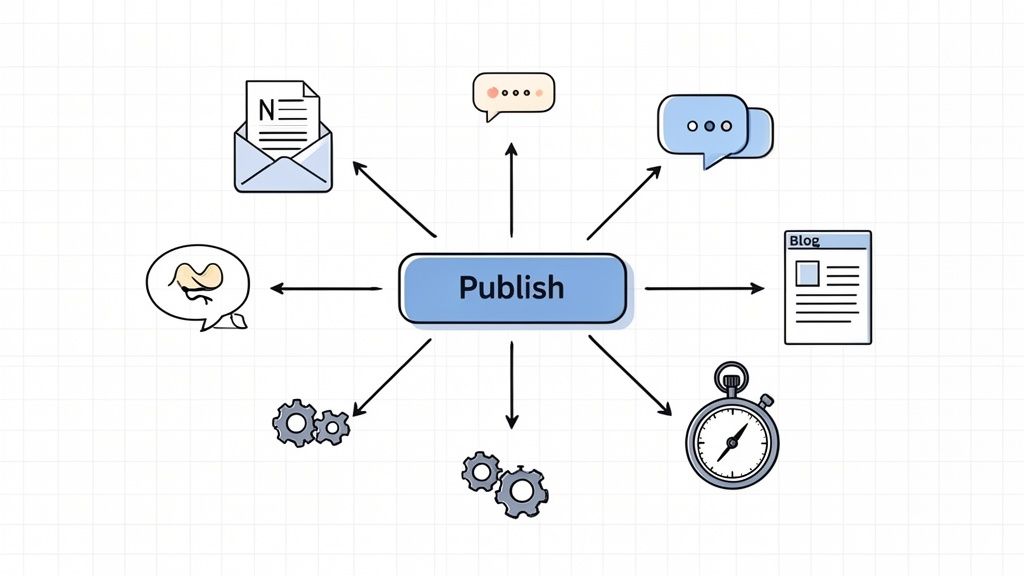
My whole experiment depended on finding a single tool that could connect my key platforms into one clean workflow. The goal was simple: write once, publish everywhere with a single click.
After a bit of digging, I decided to run my experiment with Narrareach. The promise of scheduling my Substack posts, Substack Notes, and LinkedIn content from one place seemed to address my exact pain point. I connected my accounts, dropped in my first "Content Atom," and hoped for a breakthrough.
The first time I used it was almost anticlimactic in the best way possible. I wrote my article in the editor, picked a few proven templates for my LinkedIn hooks, and hit 'publish.'
The result was immediate and profound. What used to take over 90 minutes of frustrating manual labor was suddenly done in about 3 minutes. That wasn't just an improvement; it was a complete reinvention of my process. This was the lever that let me jump from publishing 2 articles a month to over 20—a 10x increase in output.
The Substack and LinkedIn Game-Changer
The biggest impact was on my Substack and LinkedIn strategy. These two platforms are the core of my audience growth engine, but managing them together was always a headache. Substack has its long-form posts, but its "Notes" feature is critical for daily engagement. LinkedIn, of course, needs a totally different, more conversational tone.
Trying to schedule content for both platforms to go live at the perfect, coordinated times was a logistical nightmare.
This is where automation with Narrareach became a game-changer. Using one central dashboard, I could:
- Schedule Substack Posts and Notes Simultaneously: I could write my main newsletter and then, from the same screen, schedule a series of promotional Substack Notes to drop over the next few days. This helped me grow on Substack much faster by keeping my audience engaged.
- Coordinate with LinkedIn Content: I could schedule LinkedIn posts that teased the newsletter to go live at the exact same time my Substack email went out, creating a unified promotional push.
- Maintain a Consistent Presence: Instead of publishing in random bursts, I could build a content calendar that kept me active on both platforms every single day, building momentum and keeping my audience hooked.
This level of coordination was flat-out impossible when I was doing everything by hand. It directly sped up my Substack growth because my LinkedIn presence was constantly funneling new, relevant readers back to my newsletter.
Before, my platforms felt like isolated islands. Now, they work together as a cohesive ecosystem, each one amplifying the others. My audience on LinkedIn discovers my Substack, and my Substack readers connect with me on LinkedIn. This synergy is how you grow your audience easily and effectively.
The Power of Templated Distribution
Another huge win came from using templates. Instead of guessing what kind of hook would work on LinkedIn, I could choose from formats that were already tested and proven across thousands of top-performing articles. This took the guesswork out of the equation and made my results far more consistent.
Blogging is still a powerful way to scale content, but time is the ultimate killer—until you automate. There are over 600 million active blogs in the world, and data from HubSpot shows that 77% of internet users read them regularly. The real secret to standing out is efficiency. With 94% of marketers planning to use AI for content creation, tools that slash production time are no longer a luxury; they're a necessity.
By automating my distribution, I wasn't just saving time. I was freeing up my brainpower to focus on what actually matters: creating valuable content. The hours I once spent copy-pasting are now spent on strategy, research, and talking to my community. You can dive deeper into how this works by exploring our guide to social media automation.
The Results From 90 Days of Scaled Content
A system is only as good as the results it produces, right? For 90 days, I went all-in on this new framework—the Content Atom, the Batching Blueprint, and an automated Distribution Engine. The difference wasn't just noticeable; it was staggering. Let's get into the hard numbers.
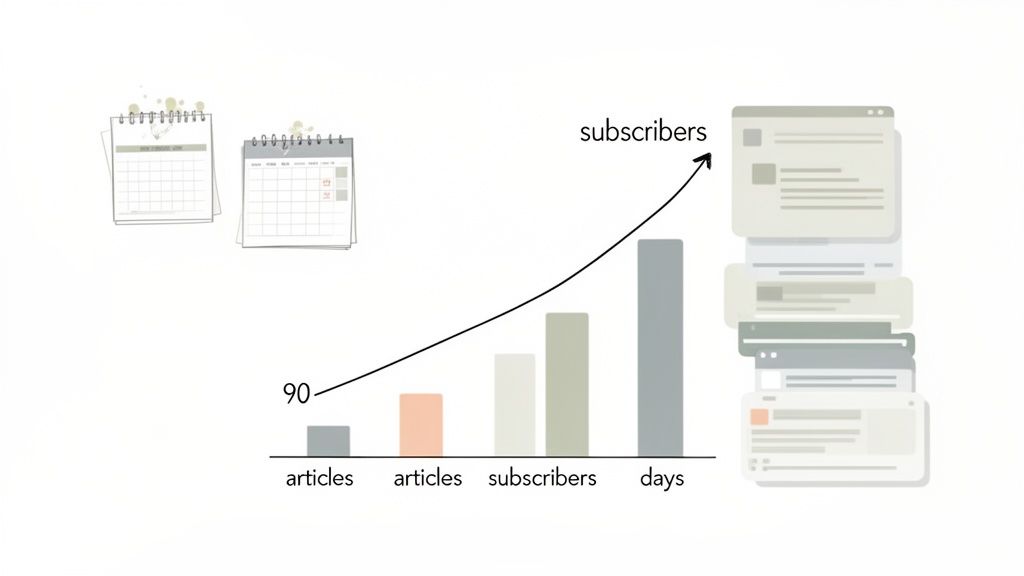
Before I committed to this experiment, I was stuck on the content treadmill. I barely managed to publish 6 articles over a three-month period. My growth was flat, and my time was gone. After implementing this system, my output exploded.
In those 90 days, I published 60 articles and notes across Substack, LinkedIn, and Medium. That’s a 10x increase in production. But the most incredible part? I did it while spending less time on the tedious, soul-crushing parts of the job.
Reclaiming My Most Valuable Asset: Time
The single biggest change was getting my time back. I was previously sinking over 20 hours a month just on the mind-numbing task of copying, pasting, and reformatting content for different platforms. It was the absolute definition of low-value work.
By automating my distribution, I slashed that time to less than 2 hours a month. That’s over 18 hours of creative and strategic time reclaimed every single month. This wasn't just about being more efficient; it was about getting my energy back to focus on what actually grows an audience.
The goal was never just to create more content. It was to create more impact with less friction. The numbers show that a smarter system, not harder work, is the key to how to scale content creation effectively.
This shift directly translated into measurable growth across my most important channels.
Tangible Audience and Engagement Growth
The data speaks for itself. My Substack, which was the primary focus of my "Content Atom" strategy, saw the most dramatic lift.
- Substack Subscriber Growth: I went from gaining around 50 subscribers in the previous quarter to adding 500 new subscribers in 90 days. This was a direct result of consistently publishing high-quality newsletters and using LinkedIn to funnel engaged readers back to my main platform.
- LinkedIn Follower Growth: My LinkedIn presence also took off, adding over 2,500 new followers during the experiment.
- Engagement Rate Jump: Even more importantly, my engagement rate on LinkedIn doubled. This proved that the increase in quantity didn't come at the expense of quality; in fact, the consistency was building a more loyal community.
This is where mastering cross-platform distribution becomes the ultimate growth hack. Last year alone, social media users grew by 4.8%, adding 259 million new people to these platforms. For writers, this means one powerful article, distributed simultaneously across multiple networks with a tool like Narrareach, can drive growth 3-5x faster. This approach is validated by the 90% of marketers who say creator content beats brand posts for reach and conversions. You can discover more insights on these trends by exploring the latest social media statistics.
Your Plan to Scale Content Starting Today
This entire 90-day experiment boils down to one simple truth: learning how to scale content isn't about writing faster. It’s about building a smarter system that relentlessly eliminates the manual friction holding you back, giving you the time and energy to focus on what actually grows your audience.
The path from being stuck on the content treadmill to reclaiming 20+ hours a month is clearer than you think. It begins with a decision to stop trading your most valuable hours for low-impact tasks like copying and pasting. You’ve seen my results—a 10x increase in output and a 500-subscriber jump on Substack—all from systemizing my work.
Two Paths Forward
I’m sharing my exact playbook because I know how frustrating the content treadmill is. Here are two clear paths you can take right now, depending on where you are on your journey.
1. High Intent: Ready to Automate Now? If my 90-minute to 3-minute distribution story resonated with you, the fastest way to feel that relief is to try automation for yourself. I built Narrareach to solve this exact problem. You can start a free trial today, connect your Substack and LinkedIn, and publish your first piece in minutes. Stop the copy-paste grind and see how it feels to get your time back.
2. Low Intent: Want to Keep Learning? If you're not ready for a new tool but want more actionable strategies like the ones in this article, subscribe to my newsletter. Every week, I share one powerful, proven tip for growing your audience and becoming a more effective creator. It's a no-pressure way to keep improving your system. For more immediate insights, you can also explore different content repurposing strategies that complement this workflow.
Choose the path that feels right. The most important step is simply taking one.
Got Questions? Let's Talk Specifics
Even with a killer system in place, I get it—scaling up your content can feel a little daunting. A few practical questions always pop up when writers start trying to implement this kind of high-output workflow.
Let's walk through the most common ones I hear. Nailing these details is often the difference between building a sustainable growth engine and just creating more work for yourself.
Does Publishing the Same Content on Multiple Platforms Hurt SEO?
This is probably the number one concern, and it's a valid one. The short answer? No, not if you do it right. The big fear is getting hit with a "duplicate content" penalty from Google, but search engines are a lot smarter than they used to be. They understand that content needs to exist in different contexts for different audiences.
For platforms where you have some control, like posting an article on your own blog and then syndicating it to Medium, the solution is a canonical tag. It's just a small snippet of code that points back to the original source (like your Substack article), telling search engines, "Hey, this is the main version. Give all the SEO juice to that one."
But what about platforms like LinkedIn where you can't add a canonical tag? Honestly, the benefit of reaching a completely different audience there far outweighs any tiny, theoretical SEO risk. The person scrolling LinkedIn is looking for professional insights, while your Substack reader is a dedicated subscriber. You're simply meeting different people where they already are.
How Do You Maintain Quality When Creating So Much More Content?
This always seems like a paradox, but this system actually made my content better. The secret is in the batching process. Instead of constantly context-switching between writing, editing, designing, and scheduling, I carve out huge, uninterrupted blocks of time for deep work.
My deep writing day is sacred. For six hours, I'm completely immersed in the topic. This focused effort produces a much higher quality "Content Atom" than if I were trying to write in short, distracted bursts throughout the week.
On top of that, templates are my secret weapon for consistency. My LinkedIn post formats, for example, are all based on proven structures that I know drive engagement on that specific platform. This takes the guesswork out of the equation and ensures every single derivative piece of content is high-quality and perfectly tailored to its channel.
Can This System Work for a Team?
Absolutely. In fact, it's even more powerful when you have a team. Instead of one person juggling everything, you can turn this workflow into a full-blown content assembly line by assigning specific roles to each stage.
Here’s a simple way you could structure it:
- Strategist/Ideator: This person is responsible for topic research and outlining the main "Content Atom" and all its derivative pieces.
- Writer: Their sole focus is the deep writing day. They take the outline and create the core article without any other distractions.
- Editor/Repurposer: They come in after the writer, editing the main article for clarity and then slicing and dicing it into all the smaller content pieces.
- Distributor/Scheduler: This person manages the final step, loading everything into a distribution tool like Narrareach and scheduling it all to go live.
This kind of specialization allows each team member to play to their strengths, which dramatically boosts both the speed and the quality of your entire content operation.