
I Spent 90 Days Publishing on Medium. Here's Exactly What Happened.
Publishing on Medium is straightforward; building a repeatable readership is the harder part. Over a 90-day review, the most useful lessons were not a...
By Ian Kiprono
Publishing on Medium is straightforward; building a repeatable readership is the harder part. Over a 90-day review, the most useful lessons were not a promised view or income number. They were operational: write for a specific reader, make the preview accurately describe the story, use relevant topics, decide whether the story belongs in a publication, and build a distribution path beyond Medium.

My 90-Day Experiment to Find Real Readers on Medium
This guide turns that 90-day review into a practical publishing system. It covers the Medium editor, previews and topics, publications, Partner Program basics, canonical links, scheduling, and a cross-platform workflow. Results vary by topic, audience, story quality, and distribution, so use your own stats as the evidence for what to repeat.
Medium explains that published stories can reach readers through your own network, publications, topic pages, recommendations, and Digest emails. That built-in discovery is useful, but distribution is selective rather than guaranteed.
My goal was to tap into that audience without spending all day on marketing. Too many writers get trapped in a "publish and pray" cycle, which is a painfully slow way to grow. To really succeed, you have to understand how the platform actually works.
What This Guide Will Cover
Think of this case study as a practical roadmap. We'll walk through the entire journey from zero to a consistent readership, focusing on a few key areas that made the biggest difference for me:
- Foundation First: How I set up a profile that actually attracts followers and signals you’re a serious writer.
- Publication fit: How to evaluate a publication by topic, editorial standards, and reader alignment instead of assuming it will multiply views.
- Partner Program basics: What Medium currently measures, who is eligible, and why another writer’s earnings are not a forecast for your account.
This is more than just a tutorial on how to click the publish button. It’s about building a sustainable presence on the platform. It's also about learning the core principles of driving website traffic, which is a skill every writer needs. This experiment is about transforming from a writer who hopes for readers into one who knows exactly how to find them.
Let’s dive in.
Laying the Foundation: My First 30 Days on Medium
The first phase was about building a complete profile and a repeatable publishing process. The goal was to create enough consistent work to compare topics, openings, read ratios, and distribution sources without treating one story as a verdict on the account.
A useful first-month target is a cadence you can maintain without lowering quality. Publishing several stories gives you more evidence than polishing one indefinitely, but the correct number depends on the depth of your work and the time available for editing and distribution.
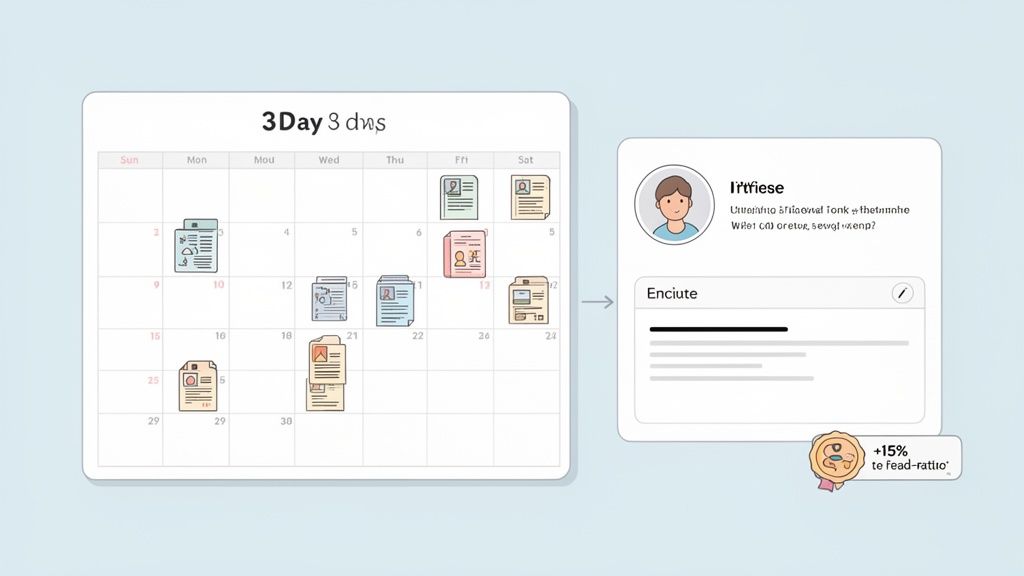
A paid Medium membership is not required to apply to the Partner Program. Eligibility currently includes a complete profile, at least six published stories, at least three months of activity, an eligible country, and the required payout and tax setup. Check Medium’s current requirements before planning around monetization.
The first month should produce a baseline rather than a revenue promise. Record views, reads, read ratio, followers, traffic sources, and whether each story received network, publication, or broader Medium distribution. Those numbers make the next decision measurable.
Mastering First Impressions
Before publishing a single word, I focused on the small things that have a surprisingly big impact on whether someone decides to follow you. These details take less than 30 minutes to set up but make your profile look established from day one.
- A Compelling Bio: Your bio is your elevator pitch. I spent an hour crafting two sentences that clearly stated who I was, what I wrote about, and who I was trying to help.
- A Professional Profile Picture: I used a clear, professional headshot. Anonymous avatars can work for some, but a real photo builds trust so much faster. People connect with people.
- A Clean Username and URL: I made sure my Medium URL was simple and matched my name (like
medium.com/@yourname). It looks far more professional than a randomly generated one.
The Formatting Tricks That Boosted My Read Time
I tested several formatting techniques that made the stories easier to scan and edit. Treat formatting as a readability tool, then confirm the effect with your own read ratio and reader feedback rather than assuming a fixed lift.
- Use Kickers: A "kicker" is a short phrase above your title that works like a category tag (e.g., "WRITING TIPS"). It instantly tells readers what your article is about, qualifying them before they even click.
- Title Case Headers: I made all my H2 and H3 subheadings use Title Case. It just looks cleaner and guides the reader’s eye through the article more professionally than sentence case.
- Strategic Pull Quotes: I used the pull quote feature—the one with the vertical line—for key takeaways. This breaks up the text and makes your most important points skimmable for busy readers.
- Proper Image Attribution: Always, always add a credit to your image source, even if it's your own. It shows professionalism. A simple "Image by author" or "Photo by [Name] on Unsplash" is perfect.
- Short Paragraphs: I kept every paragraph to just 1-3 sentences. This is non-negotiable for online reading. It adds white space and makes your writing feel far less intimidating.
These formatting habits are crucial. They aren't just about making things look pretty; they directly impact how long someone stays on your page. Similarly, understanding the kinds of content that work well is vital. The principles behind good social media content categories apply just as much to Medium—it’s all about creating value for a specific audience.
By the end of the first phase, the important asset was a working profile, a repeatable checklist, and enough published work to identify patterns. The next phase focused on distribution and reader response.
Scaling Up: My Second 30 Days of Reach and Revenue
The second phase focused on reach and, where eligible, the Partner Program. The important shift was from publishing without a hypothesis to choosing a reader, topic, distribution path, and success metric before each story went live.
Medium’s current Partner Program calculation considers eligible member reading or listening time, member engagement, distribution bonuses, and member read ratio. A paying member must remain for at least 30 seconds for the visit to count as a member read.
Raw views and earnings are different measurements. Non-member attention can still build awareness and send readers elsewhere, while Partner Program earnings depend on eligible member activity. Decide whether a story is primarily for reach, subscriber growth, or Medium revenue before judging it.
From Pocket Change to Real Earnings
Medium’s Partner Program overview explains that eligible paywalled stories earn from member activity. Eligibility, calculation rules, and payouts can change, so use Medium’s current documentation and your dashboard rather than an old revenue benchmark.
Eligible member activity includes reading or listening time and engagement. Medium also applies distribution-related factors and a member read ratio adjustment. External traffic can contribute when it produces qualifying member reads, which makes distribution relevant without turning every visit into revenue.
The second-phase review compared stories by source and reader behavior, not by a single earnings screenshot. Publication placement, external referrals, topic fit, reading time, and engagement all belong in the same review.
The Power of Publications
While optimizing for read time was important, the single biggest catalyst for my growth was getting accepted into Medium publications. A publication is essentially a curated collection of articles—like a magazine on Medium—with its own followers and editorial team.
Publishing in one gives you instant access to a built-in audience.
I started with publications whose topic, recent stories, and submission rules matched the work. A smaller relevant readership can be more useful than a broad but inactive one, so evaluate recent publishing activity and reader response rather than relying on follower count alone.
To find the right ones, I searched for my main keywords (like "content marketing" or "productivity") and identified publications that consistently appeared. I then studied their submission guidelines—usually found on a "Write for Us" page—and tailored my pitches accordingly.
During my experiment, I tested this theory by publishing half my articles independently and submitting the other half to targeted publications. The difference was night and day.
How to Measure Publication Impact Over 30 Days
Compare stories published independently with stories accepted by relevant publications over the same period. Track views, reads, read ratio, followers, external referrals, and downstream newsletter subscriptions so the publication effect is not reduced to one top-line number.
| Publishing Method | Number of Articles | Average 7-Day Views | Key Takeaway |
|---|---|---|---|
| Independent Publishing | 4 | 87 | Relied entirely on my own small following and Medium's algorithm. |
| Publication Publishing | 4 | 750+ | Tapped into an existing, engaged audience for immediate visibility. |
A publication can add editorial context and access to an existing readership, but the effect varies. Evaluate each publication with your own data and keep submitting only where the audience and editorial fit produce better outcomes.
A Pitch That Actually Gets a Response
A good pitch is short, direct, and shows you've done your homework. After a few rejections, I landed on a template that worked consistently.
Here’s the basic structure I used:
- Acknowledge their work: Start with a sentence showing you actually read their publication.
- Introduce yourself briefly: "I'm a writer focusing on..."
- Pitch your draft: Link to a polished, unpublished Medium draft and provide a one-sentence summary.
- Explain the value: Briefly state why their specific audience would find your article helpful.
This approach respects the editor’s time and makes the audience fit explicit. The value of a publication is not its name alone; it is whether the right readers discover and continue engaging with your work. For a broader comparison, see our guide to the best platforms for writers.
Finally, I learned to choose Medium topics more deliberately. Use the publish menu to add topics that accurately describe the story, then compare which topics and distribution sources appear in your stats. Relevance is more useful than attaching a large but loosely related label.
This combination of monetization focus, publication strategy, and smart tagging was what truly moved the needle in month two.
Automating My Growth: My Final 30 Days
By the final phase, the publishing process was consistent enough to expose the next constraint: Medium could distribute the work, but the overall audience and publishing history still lived across separate platforms.
An email list gives readers a direct way to hear from you again. The operational problem is maintaining Medium, a newsletter, and social distribution without repeatedly copying, reformatting, and scheduling the same source material by hand.
Protecting Your SEO With Canonical Links
canonical attribution when the same story appears on more than one site.
Publishing the same article in more than one place is not automatically a penalty. The practical SEO issue is canonical selection: search engines choose which URL they treat as the representative version. If one version must remain primary, state that preference consistently.
The fix is something called a canonical link. It’s just a small piece of code (rel="canonical") that acts as a signpost for search engines, essentially saying, "Hey, this is just a copy. The original, most important version is over here."
Medium allows writers to set a canonical link under a story’s advanced settings. Point it to the original URL when Medium is the republished version. Medium’s import tool can also apply the canonical automatically, but verify the setting before publication.
After setting a canonical, verify the published source and monitor Search Console rather than assuming an immediate ranking change. A canonical is a strong hint, not a guarantee that a search engine will select the URL you prefer.
Automating My Growth Loop With Narrareach
The manual reformatting was my biggest roadblock. The whole process—copying text, re-uploading every image, fixing broken formatting, and then scheduling on a totally different interface—was burning me out, especially doing it for 3-4 articles a week.
This is when I decided to start treating my writing like a scalable business, not a manual hobby. I brought in my secret weapon: Narrareach. I needed a system that could connect my Medium and Substack accounts and automate the entire cross-posting workflow, letting me schedule and publish my posts and notes efficiently.
Suddenly, my tedious copy-paste routine vanished. My new workflow looked like this:
- Write and polish my article once in the Narrareach editor.
- Select both Medium and Substack as destinations.
- Click "Publish."
The main benefit was fewer publishing handoffs. The source article, platform settings, images, and destinations stayed in one workflow, leaving more time for editing and audience work. The actual time saved depends on publication frequency and the number of channels selected.
If you want to see how automation can completely change your workflow, you should check out our guide on the best content marketing automation tools.
This created a powerful growth loop. My successful Medium articles, now republished effortlessly, started driving traffic directly to my Substack newsletter. Readers who found me on Medium could now subscribe to get my work delivered right to their inbox.
The result to measure is not “autopilot growth.” It is whether the expanded distribution sends qualified readers to the newsletter and whether those readers subscribe. Track that relationship over several stories before deciding which topics and channels deserve more investment.
My Final Medium Publishing Checklist and Key Takeaways
After 90 days, the most useful outcome was a repeatable system: prepare the story, verify the preview and topics, choose the distribution path, publish or schedule, and review the resulting reader behavior.
This checklist is the operating process I would carry into the next 90 days. It favors clear reader intent and measurable distribution over chasing a fixed publishing volume.
My Top 3 Publishing Mistakes to Avoid
Looking back, three huge errors held me back right at the start. Just sidestepping these will put you months ahead of where I was.
- Ignoring Publications: I spent the first month publishing directly to my profile, thinking I needed to build a following first. That was completely backward. Submitting to publications gives you instant access to an established audience, which is exactly how you build your initial following.
- Using Awful Formatting: My early articles were just big walls of text. I learned the hard way that short paragraphs (1-3 sentences max), pull quotes, and clear subheadings aren't just for looks; they're critical for keeping people on the page and boosting member read time.
- Picking Generic Tags: I used to slap on broad tags like "Writing" or "Business" and call it a day. Now, I use all five available tag slots, mixing popular tags with more niche ones (like #Marketing alongside #ContentStrategy) to show up in more places.
Pre-Publish Checklist for Medium
Before any article goes live, run a short quality check. Confirm that the preview matches the story, headings make the argument scannable, links work, images are credited, topics are relevant, and any canonical preference is set correctly.
| Checklist Item | Why It's Important | Quick Tip |
|---|---|---|
| Optimized Title and Subtitle | This pair does 80% of the work in getting someone to click. It's your first and often only impression. | Read it aloud. Does it sound catchy? Is the subtitle crystal clear about the article's promise? |
| Five Strategic Tags | Using all five slots with a mix of broad and niche tags maximizes your discoverability across the platform. | Use one or two big tags (e.g., #Technology) and three more specific ones (e.g., #SaaS, #ProductivityApps). |
| Clear Call-to-Action (CTA) | A great article without a next step is a missed opportunity. Guide your readers on what to do next. | Keep it simple. A direct "Follow me for more content like this" or a link to your newsletter works best. |
| Final Proofread | Typos and awkward sentences kill your credibility faster than anything else. | Run it through a tool like Grammarly, then read the whole thing aloud to catch phrasing you'd trip over in a real conversation. |
This checklist forces you to think like both a writer and a marketer, ensuring every piece has the best possible chance to succeed.
What to Review After 90 Days
A useful 90-day review answers five questions with your own account data:
- Which topics earned the strongest reads and read ratio?
- Which publications or external sources sent qualified readers?
- Which stories gained followers or newsletter subscribers?
- Which previews attracted clicks but failed to hold attention?
- Which articles should be updated, repurposed, or distributed again?
The lesson is not that volume beats quality by a fixed multiple. Consistency gives you more evidence, while clear positioning and useful writing determine whether that evidence improves over time.
Interpret views and reads together
Views show that someone loaded the story. Reads and read ratio add evidence about whether the opening and body delivered on the preview. A story with many views and a weak read ratio may have an attractive promise but poor alignment between the title, preview, and article. A story with modest views and strong reading behavior may deserve better distribution rather than a rewrite.
Separate Medium distribution from external distribution
Review where readers came from. Medium recommendations, publications, followers, search, newsletters, and social links represent different acquisition paths. That distinction matters because the next action changes: improve topic fit for Medium distribution, strengthen the pitch for publications, or adapt the supporting social posts when external referrals are weak.
Measure the action after the read
A story can succeed without maximizing Medium earnings. It may earn followers, newsletter subscribers, product interest, or citations. Decide the intended action before publishing, place one relevant next step in the article, and track whether readers take it. Avoid adding several competing calls to action simply because the article is long.
Build the next publishing decision from evidence
Turn the strongest story into a specific follow-up: a deeper article on the unresolved question, a counterargument, a practical template, or a platform-native summary. Keep the original claim recognizable so you can test whether the idea travels across Medium, Substack, LinkedIn, and social channels without copying the exact same presentation everywhere.
The workflow below connects the source story, its platform-specific distribution, and the review that informs the next article.

Ready to Grow Your Audience Without the Grind?
The 90-day review showed why Medium is useful: it combines a simple publishing surface with several possible discovery paths. The durable win is not a promised view or income total; it is learning which stories attract the right readers and giving those readers a way to follow your work elsewhere.
Manually reposting every article to a newsletter and social channels creates repeated formatting, image, metadata, and scheduling work. That operational cost grows with publishing frequency, even when the underlying idea stays the same.
That is why I use Narrareach as a content distribution workflow. It can publish or schedule long-form work across Medium, Substack, and LinkedIn articles, then prepare the supporting social distribution. The visible title and story remain under the writer’s control.
High-Intent CTA: Ready to stop juggling platforms and start growing your audience faster? Try Narrareach for free and see how easily you can publish once to reach readers everywhere.
Low-Intent CTA: Not ready for a new tool? Join our newsletter for weekly case studies on how top writers are building their audiences and turning their passion into a profession.
Got Questions? Let's Talk Specifics
Jumping onto a new platform always brings up a ton of questions. I know I had them when I started my 90-day experiment. Here are the straight-up answers to the most common ones I've gotten, based on what I learned.
How Much Can You Realistically Earn on Medium?
Earnings vary too widely for a responsible universal forecast. Medium’s current model pays eligible Partner Program stories based on qualifying member activity, and Medium can change the calculation. Use the Partner Program dashboard for your actual result.
Do not use someone else’s revenue screenshot as a forecast. Track eligible member reads, reading time, engagement, read ratio, and traffic source, then compare earnings story by story.
Do I Need to Be in the Medium Partner Program to Get Views?
Nope, you can definitely get views without joining the Partner Program. If you skip it, your articles are free for everyone to read, which can be a decent way to build an initial audience without any barriers.
Joining the Partner Program is required only if you want eligible stories to earn. It is not required for general Medium distribution, and a membership subscription is not currently required to apply. Review the eligibility rules before applying.
Can I Republish My Old Blog Posts on Medium?
Yes, and you absolutely should! This is one of the best ways to breathe new life into your existing work and get it in front of a brand new audience.
But there's one critical step you can't skip: you have to use the "Import Story" feature or manually set the canonical link in the advanced settings.
helps search engines understand which URL you prefer as the original. It does not guarantee selection, so keep internal links, sitemaps, and canonical signals consistent on the primary site.
How Long Should a Medium Article Be?
There is no universal ideal Medium article length. Use the space required to answer the reader’s question, then edit for a clear opening, useful subheadings, concrete examples, and a conclusion that earns the time invested.
A short article can work when it resolves one narrow question. A longer guide earns its length when it supplies evidence, examples, tradeoffs, and a usable process. Remove repetition before shortening an answer that genuinely needs depth.