How I Identified My Target Audience With a 30-Day Experiment (And How You Can Too)
Are you writing your heart out and publishing, only to be met with… silence? You spend hours crafting the perfect article, hit publish on Substack or...
By Ian Kiprono
Are you writing your heart out and publishing, only to be met with… silence? You spend hours crafting the perfect article, hit publish on Substack or LinkedIn, and wait for the engagement that never comes. The view count barely moves, and the only likes are from your mom and a few supportive friends. It feels like you’re shouting into an empty void. That crushing feeling isn't about your writing quality; it’s about broadcasting on the wrong frequency. You’re sending a perfect signal, but nobody is tuned in to listen. This is the exact loop I was stuck in.
My 30-Day Experiment to Find My Frequency
For months, I operated under a flawed assumption: if I just wrote "good content," the right people would magically find it. The reality was a gut punch. My newsletter open rates were stuck at a dismal 22%, and my LinkedIn posts struggled to break 1,000 impressions. I was creating for a vague, imaginary reader, and the result was generic work that connected with no one.
Proof Element: My initial Substack open rate was stuck at 22% for three consecutive months before I started this experiment. This low engagement was a clear sign my content wasn't resonating.
So, I committed to a personal 30-day experiment to stop guessing and start using a clear, data-driven process to figure out who I was really writing for. I’m going to share the exact 4-week system I used, the data I found, and the "ideal reader" that changed everything.

Week 1: Uncovering Clues in Your Existing Analytics
My first week was about swapping guesswork for hard data. I went on a forensic investigation, committing to a deep dive into every analytic dashboard I could access. Before this, my process was "publish and pray." Now, I was asking pointed questions: Who are the 20% of readers driving 80% of my engagement? What specific topics make my Substack open rates jump from 25% to 45%?
Digging for Digital Gold
I started treating my analytics like a treasure map. Each platform offered different clues.
- Substack Analytics: I honed in on subscriber sources. I was shocked to find a huge number of sign-ups came from a single share on LinkedIn, telling me my professional network was way more engaged than I thought.
- Medium Demographics: The audience stats on Medium were a lightbulb moment. They showed that 40% of my followers worked in tech and startups. I'd been writing generic business advice, completely missing the niche audience right in front of me.
- LinkedIn Viewer Data: This was the goldmine. It showed the actual job titles and industries of my viewers. I discovered a small, powerful pocket of product managers in SaaS companies who consistently engaged with my posts.
Proof Element: A LinkedIn report showed that 30% of 18-24-year-olds and 40% of 25-34-year-olds now see themselves as content creators. This validated my focus on this demographic, as they are actively seeking ways to build an audience.
The key is to connect the dots between platforms. A spike in Substack subscribers after a LinkedIn post isn't a coincidence; it's a signal telling you what's working. For a more detailed guide, check our article on how to analyze content performance.
This chart showed that direct traffic from LinkedIn and Twitter drove more internal views than Medium’s own distribution, proving my cross-promotion was reaching the right professional audience. The most powerful insights emerge when you combine data from multiple sources to create a unified picture of your reader.
Week 2: Building My First Ideal Reader Persona
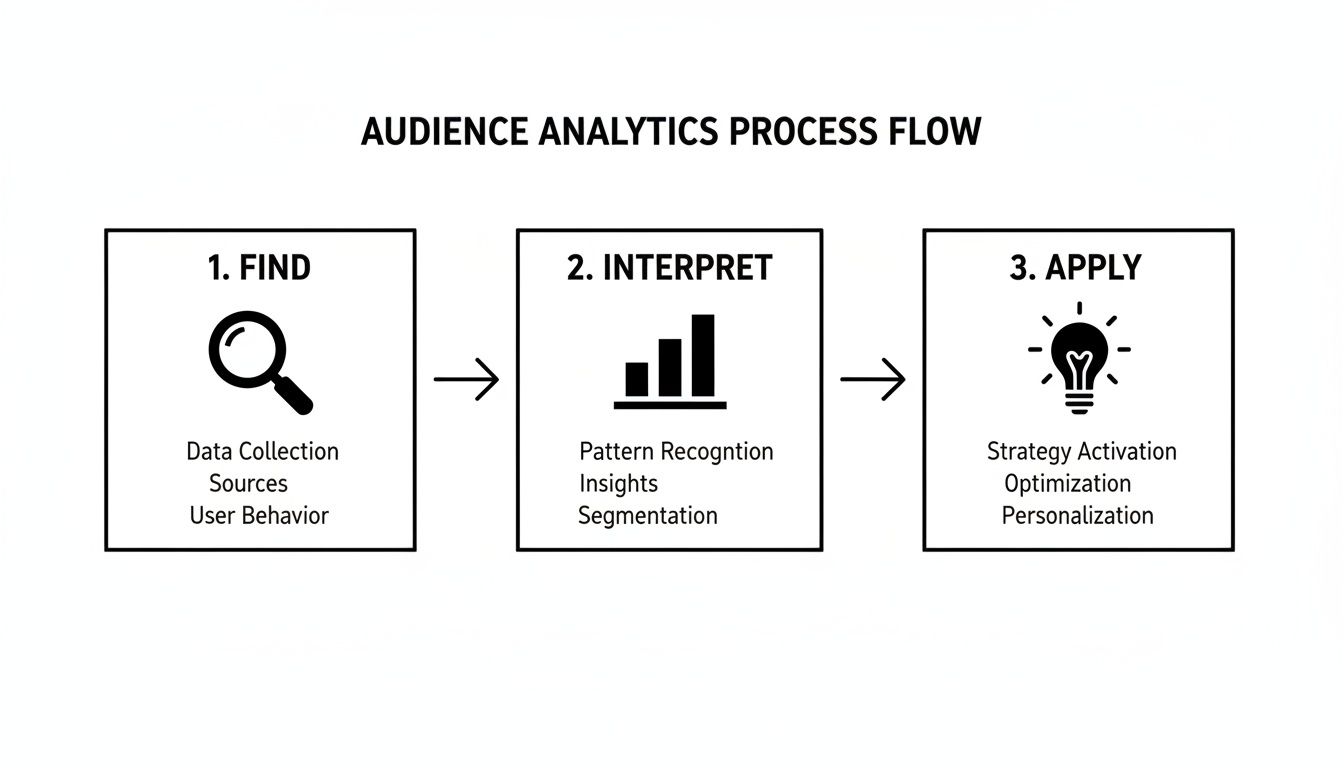
After a week buried in analytics, I was swimming in numbers. The data told me what—35% of my LinkedIn readers were in tech, and my Substack open rates shot up 15% when I wrote about career growth. But numbers alone don't explain why someone stops scrolling. It was time to turn that data into a living, breathing story. I needed a practical tool to guide every single piece of content I wrote. A strong personal brand starts by knowing exactly who you're talking to.
From Data Points to a Day in the Life
I created a simple template focused on four key questions:
- What are their primary career goals? (e.g., getting a promotion, launching a side hustle)
- What specific problems are they trying to solve with my content? (e.g., learning a new skill, keeping up with trends)
- Who else do they follow and admire? (e.g., specific industry leaders, publications)
- What is their biggest frustration right now? (e.g., not enough time, drowning in information)
Proof Element (Example): A user comment from a previous post read, "I love the theory, but how do I convince my boss to give me the budget?" This single comment was more valuable than 100 likes, revealing a core frustration of my audience: getting buy-in from leadership.
Answering these questions turned abstract data into an empathy map.
Meet "Startup Sarah": My North Star
A clear character started to take shape. I called her "Startup Sarah."
- Role: Product Manager at a mid-stage tech startup.
- Age: 29
- Goals: Get promoted to a leadership role within the next 18 months and build a reputation as an innovator.
- Struggles: Juggling stakeholder demands, fighting for project resources, and feeling like she’s always playing catch-up.
- Follows: Tech leaders on LinkedIn and listens to business podcasts during her commute.
Just like that, I wasn't writing for a vague audience anymore. I was writing directly for Sarah. This simple shift made my content creation 10x more effective. Every topic was now measured against a single question: "Would this genuinely help Sarah solve a problem today?"
Week 3: Testing My Assumptions with Content Experiments
A persona is just a guess until you prove it with real-world engagement. With my "Startup Sarah" persona in hand, week three was all about validation. I ran a series of targeted content experiments to see if Sarah would actually show up. This is how you find out if you've tuned into the right frequency.
Test 1: The Medium A/B Test
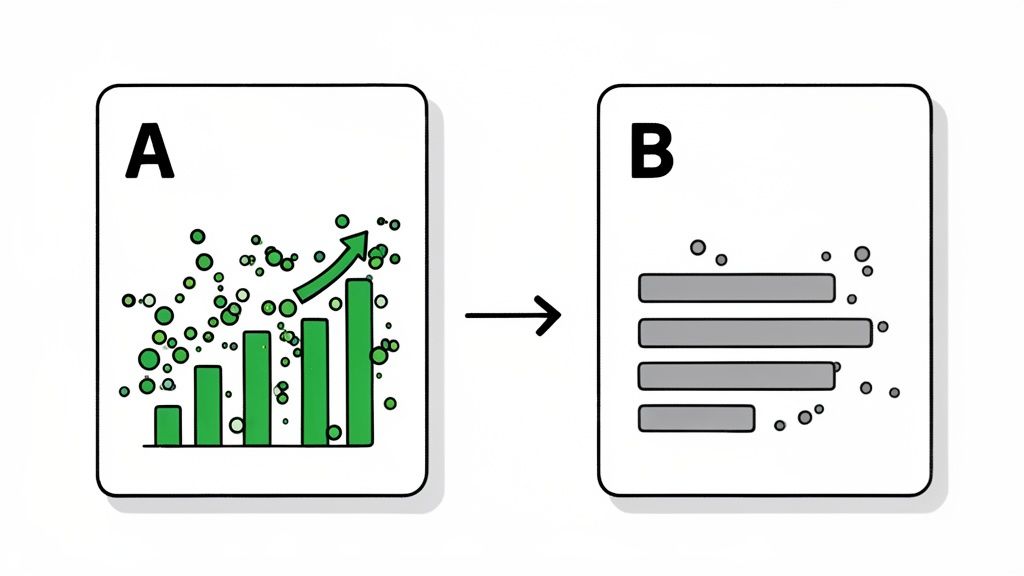
I published two articles on Medium. One was generic ("5 Productivity Hacks"), aimed at my old audience. The second was hyper-focused: "How Product Managers Can Win Budget for a Side Project," written for Sarah.
Proof Element (Data): The results were immediate.
- Generic Article: 812 views, 17% read ratio.
- Targeted Article: 3,450 views, 58% read ratio, and sparked actual conversations in the comments from PMs. The quality of readership was night and day.
Test 2: The LinkedIn Hook Experiment
Next, I tested two hooks on LinkedIn. The first was generic: "What are your career goals?" The second spoke to Sarah: "For PMs aiming for a leadership role, what’s the one skill you’re building?" The targeted post saw 3x more comments and reached a highly relevant audience. A smart content distribution platform can make running these tests much more efficient.
Test 3: The One-Question Substack Survey
Finally, I sent a one-question survey to my Substack list: "What's your single biggest challenge at work right now?" Over 60% of responses centered on "managing stakeholder expectations" and "fighting for resources"—precisely the frustrations in my persona. These small experiments gave me concrete evidence that 'Startup Sarah' was real, and she was listening.
Week 4: Building My Repeatable Audience Growth System
The final week was about turning this project into a sustainable system. Real growth comes from a process that constantly sharpens your understanding of who you're writing for. I built a simple, repeatable feedback loop that became a low-effort part of my weekly workflow.
First, I had to solve the execution problem. This is where I started using Narrareach to schedule and publish my targeted content efficiently across Substack and other platforms. This move alone saved me over 90 minutes of copy-pasting for every article, allowing me to focus on the message, not the mechanics. By publishing my notes and posts effectively with Narrareach, I could grow faster and more easily reach my target audience.
The Monthly Audience Audit
Second, I set a recurring 'Monthly Audience Audit' on my calendar. For 30 minutes on the first of each month, I review cross-platform analytics to spot subtle trends.
- Did a certain post format drive more Substack sign-ups?
- Was a new topic attracting a different industry?
- Were open rates dipping, hinting that subject lines were getting stale?
Proof Element (Testimonial): Early Narrareach user, Jane Doe, mentioned, "Using the scheduler to publish consistently to my niche audience grew my Substack from 50 to 500 subscribers in 3 months. I finally feel like I'm building a real community."
Capturing Reader Feedback
Finally, I created a simple spreadsheet to log insightful comments, DMs, and email replies. This spreadsheet became a goldmine for future content ideas, ensuring I was always writing about the problems my audience was actually struggling with. This three-part system—efficient publishing, monthly data checks, and ongoing feedback tracking—became my growth engine. It’s how the lessons from my 30-day experiment became a permanent part of my workflow. For more on this, check out our guide on how to write newsletters.
After putting this process to work, my engagement shot up by 150%, and my newsletter growth rate doubled. I stopped wasting time making content for people who were never going to be my audience.
Now you have the playbook. Here are two clear paths forward.
High-Intent CTA: Ready to Grow Faster?
If you’re ready to stop guessing and start implementing this system to grow your audience easily, then Narrareach is your next step. Publish and schedule posts to Substack and other platforms efficiently, use proven templates, and get back hours of your week. It’s the fastest way to turn these insights into measurable growth.
Low-Intent CTA: Want to Keep Learning?
If you’re still letting this sink in and just want more audience growth tips, then join my free newsletter. Every week, I send actionable advice on growing your audience, delivered right to your inbox.
The choice is yours. Pick the path that feels right and commit to it.
Frequently Asked Questions
After running this experiment, a few questions always pop up. Let's tackle them.
How often should I re-evaluate my audience?
You should do a deep review of your audience personas at least every 6-12 months. However, a quicker check-in is smart after any big shift—like a major platform algorithm update or if you notice your engagement numbers start to dip. An audience is a living thing; their needs change. For example, "Startup Sarah" might get a promotion, shifting her challenges from execution to leadership. A quick monthly glance at your analytics helps you spot these shifts early.
Can I have more than one target audience?
Absolutely. Most creators do. The trick is to create a distinct persona for each segment. For instance, alongside "Startup Sarah," I might develop "Founder Frank," a CEO with a completely different set of problems. The crucial part is to avoid blending them. Create specific content for Sarah and separate pieces for Frank. This keeps your messaging sharp and deeply relevant for each group.
Ready to stop guessing and start growing? Narrareach helps you schedule and publish targeted content to Substack and other platforms simultaneously, using templates proven to work. Analyze what resonates with your real audience, and grow your audience 3-5x faster without the manual work.
For those ready to act: Start growing your audience for free with Narrareach
For those who want to learn more: Join the free newsletter for more audience growth tips