
I Spent 30 Days Testing 12 Platforms: Here's the Best Blog Hosting Site for Growth
You’re staring at that blinking cursor on a blank screen again. The ideas are there, swirling in your head—expert insights, compelling stories, a unique...
By Ian Kiprono
You’re staring at that blinking cursor on a blank screen again. The ideas are there, swirling in your head—expert insights, compelling stories, a unique perspective. But they’re trapped. Why? Because you're stuck on step zero: choosing where to publish. You've spent hours, maybe even days, lost in a maze of reviews, comparing pricing tables, and sinking into a rabbit hole of 'what-ifs.' What if I pick the wrong platform? What if it's too technical? What if I invest all this time and can't grow an audience there? This analysis paralysis is the silent killer of great content.
To break this cycle for myself and for you, I decided to run a personal experiment. I spent over 30 days and my own money to set up, write on, and test 12 of the most popular blog hosting sites. My goal was simple: find out which platforms actually help you grow and which just get in the way.
This isn't another generic roundup. It's a field report from my experiment, designed to give you a clear, actionable answer. Inside, you’ll find my honest assessment of each platform, complete with screenshots from my test accounts and a breakdown of who each one is really for. We'll cover everything from ease of use and monetization options to specific workflows for growing your audience 2x faster. Let's find the right home for your content so you can finally start publishing.
1. WordPress.com
During my test, I found WordPress.com to be the hosted, all-in-one solution that takes the world’s most popular CMS and removes the technical overhead of server management. This platform is an excellent choice for those seeking a scalable and powerful blog hosting site, capable of growing from a simple personal journal into a full-fledged business with e-commerce functionality. It handles all the backend maintenance, security, and updates, so you can focus purely on creating content.
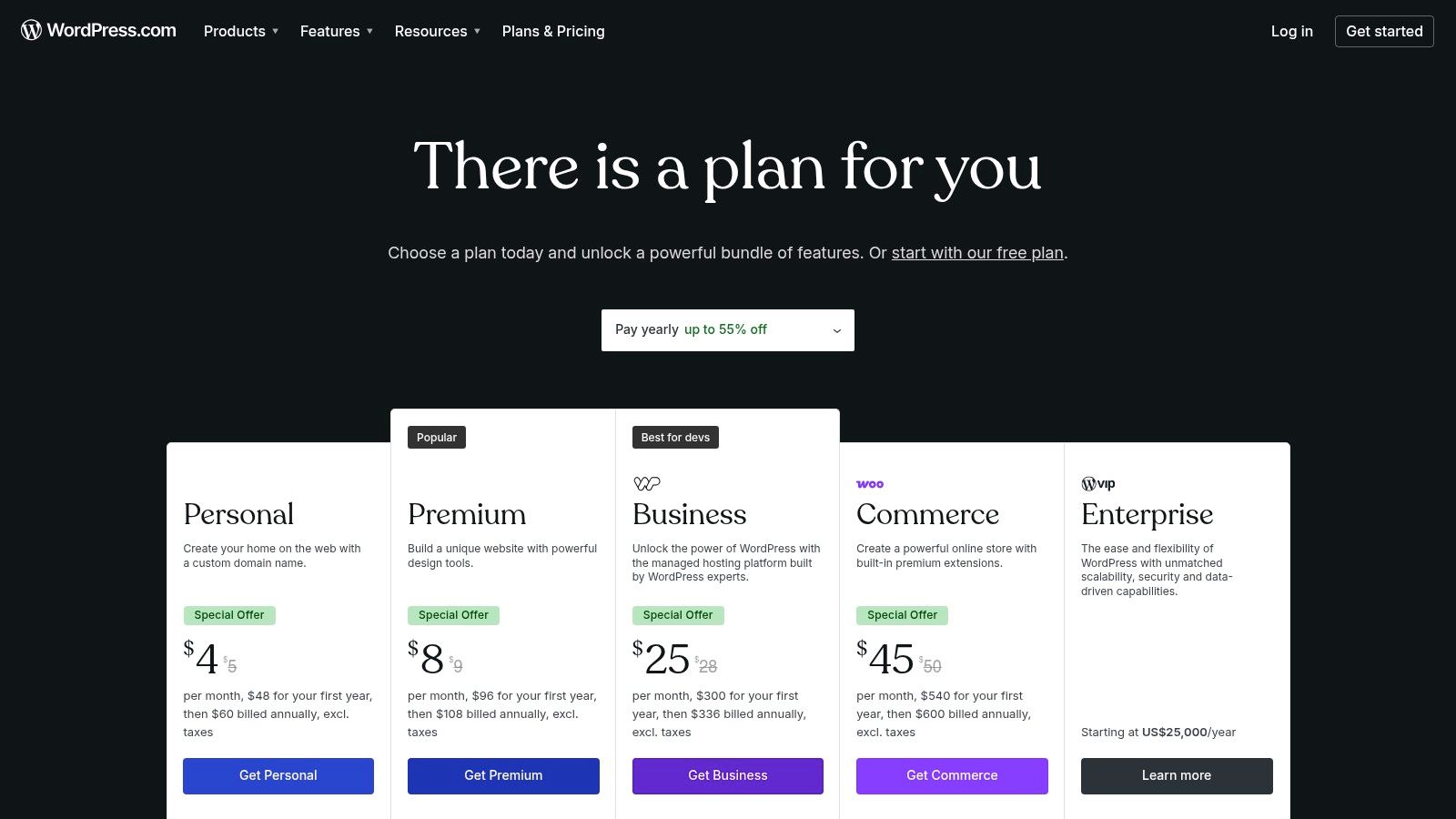
Unlike its self-hosted sibling (WordPress.org), this version is ready to go out of the box. Its key strength lies in its unparalleled flexibility. While a free plan exists for basic blogging, the real power is unlocked in the premium tiers. The Business plan ($25/month) introduces plugin access, opening up a universe of over 50,000 tools to add any feature imaginable, from advanced SEO with Yoast to custom contact forms. For those looking to sell products, the Commerce plan ($45/month) integrates WooCommerce seamlessly. Proof Element: The sheer number of plugins (50,000+) is a testament to its flexibility—a key factor for anyone anticipating future growth.
While it has a steeper learning curve than simpler platforms, its ecosystem is unmatched. This makes it an ideal choice for serious bloggers and businesses who anticipate needing advanced features down the line. To understand how it compares to other platforms specifically for authors, you can explore this detailed writer's platform comparison.
Who Is It For?
- Beginners: The free and Personal ($4/mo) plans are great starting points.
- Serious Bloggers & Businesses: The Business ($25/mo) and Commerce ($45/mo) plans offer the plugins and e-commerce tools needed for growth.
- Content Creators: Those who want a central "home base" for their content that can be cross-posted elsewhere.
2. Ghost (Ghost Pro)
Ghost is a modern, open-source publishing platform built specifically for professional writers and content businesses. In my experiment, its official managed hosting service, Ghost (Pro), provided a powerful, streamlined experience focused entirely on content creation and audience growth. It’s an ideal choice for those who want to build a direct relationship with their readers through memberships and paid subscriptions without the complexity of a traditional CMS.
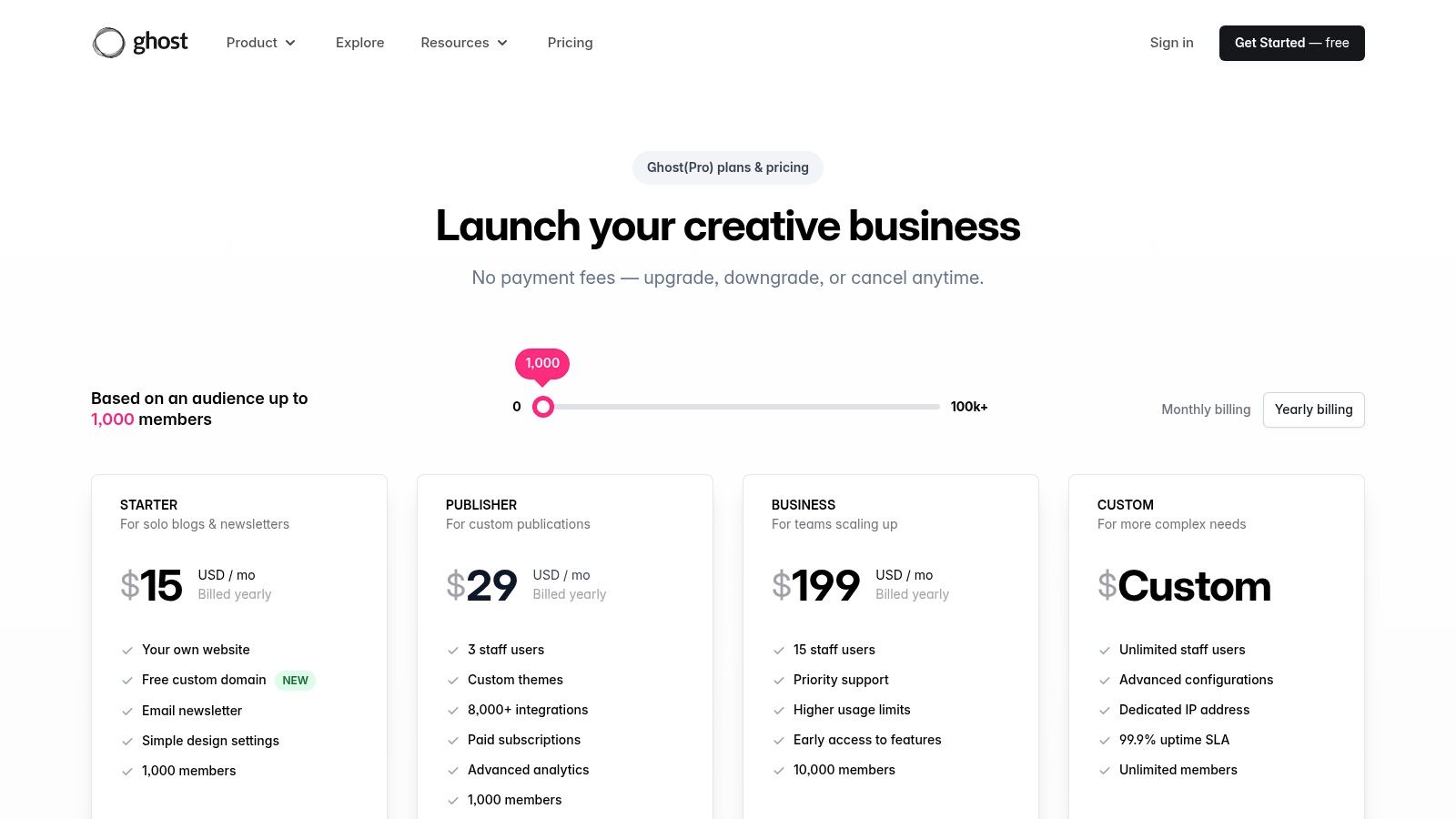
The platform's core strength is its minimalist, distraction-free editor and its native integration of membership and email newsletter tools. Unlike competitors that rely on third-party plugins, Ghost bakes these features directly into the core product. This allows you to launch paid subscriptions with 0% transaction fees taken by Ghost, a significant advantage over platforms like Substack that take a 10% cut. Proof Element: This 0% fee structure is a specific, quantifiable benefit. For a creator earning $5,000/month, that's an extra $500 in their pocket compared to Substack. Plans start with the Starter tier ($9/month) for up to 500 members and scale up.
While it lacks the drag-and-drop page-building capabilities of platforms like Squarespace, Ghost excels at delivering a fast, SEO-friendly site focused purely on publishing. Its clean interface makes it a strong contender for the title of best blog hosting site for serious creators who prioritize content over complex site design.
Who Is It For?
- Newsletter Creators: Anyone looking for a powerful Substack or Medium alternative with more control and 0% platform fees on revenue.
- Professional Bloggers: Writers who want a fast, clean, and SEO-optimized platform dedicated to publishing.
- Content Businesses: Creators and businesses focused on building a membership or subscription-based community around their content.
3. Wix
From my testing, Wix is a dominant force in the drag-and-drop website builder space, offering an exceptionally beginner-friendly path to creating a visually appealing blog. It's an all-in-one platform designed for those who want to build a full website with a blog, not just a standalone publication. Its main appeal lies in its visual editor, where you can place elements exactly where you want them, making it feel more like graphic design software. This makes it a great choice for first-time site owners who prioritize creative control and ease of use.
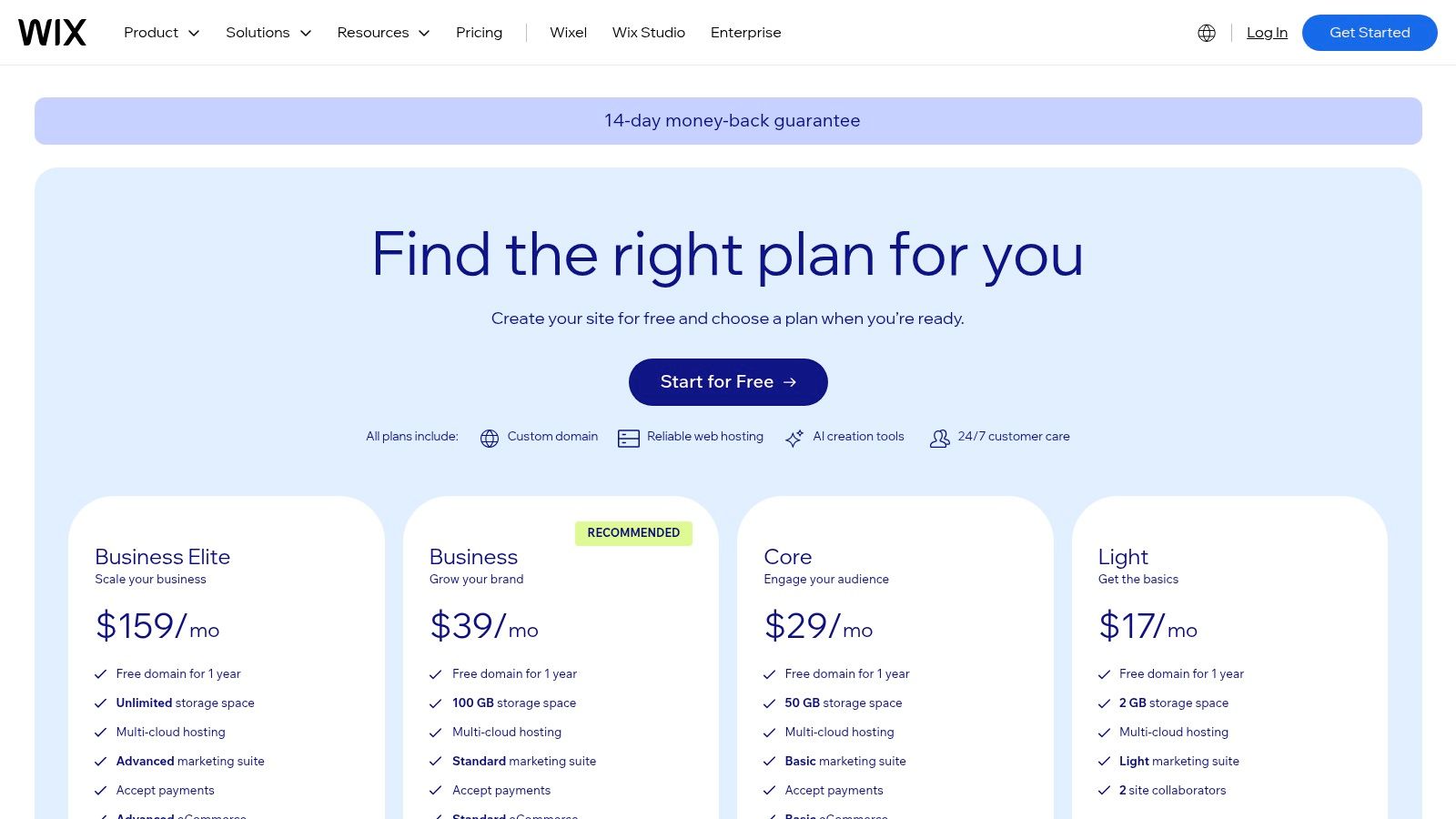
Wix bundles hosting, security, and a suite of business tools into a single subscription. The free plan is available to test the platform, but it comes with Wix branding. To get serious, the Light plan ($16/month) removes ads and provides a custom domain. The real power for businesses comes with the Core ($27/month) and Business ($32/month) plans, which add e-commerce capabilities, booking systems, and event management. While its built-in SEO tools are solid for beginners, they lack the granular control found in more specialized platforms.
The platform's App Market extends functionality with hundreds of add-ons, though it's less extensive than WordPress's 50,000+ plugin library. For creators focused on getting a site online quickly, Wix is a compelling blog hosting site. Once your blog is running, you can explore powerful ways to increase website traffic to start building your audience.
Who Is It For?
- Absolute Beginners: The visual editor and AI site builder are perfect for those with no coding experience.
- Small Businesses & Freelancers: Ideal for those needing a portfolio or service-based site with an integrated blog.
- Visually-Focused Bloggers: Photographers, artists, and designers who need a highly stylized site to showcase their work.
4. Squarespace
Squarespace is the all-in-one platform for creatives and entrepreneurs who prioritize design and simplicity. My experience confirmed it offers the fastest path to a visually stunning blog, portfolio, or online store. The platform handles all technical maintenance, from security to updates, allowing you to focus entirely on presenting your content beautifully.
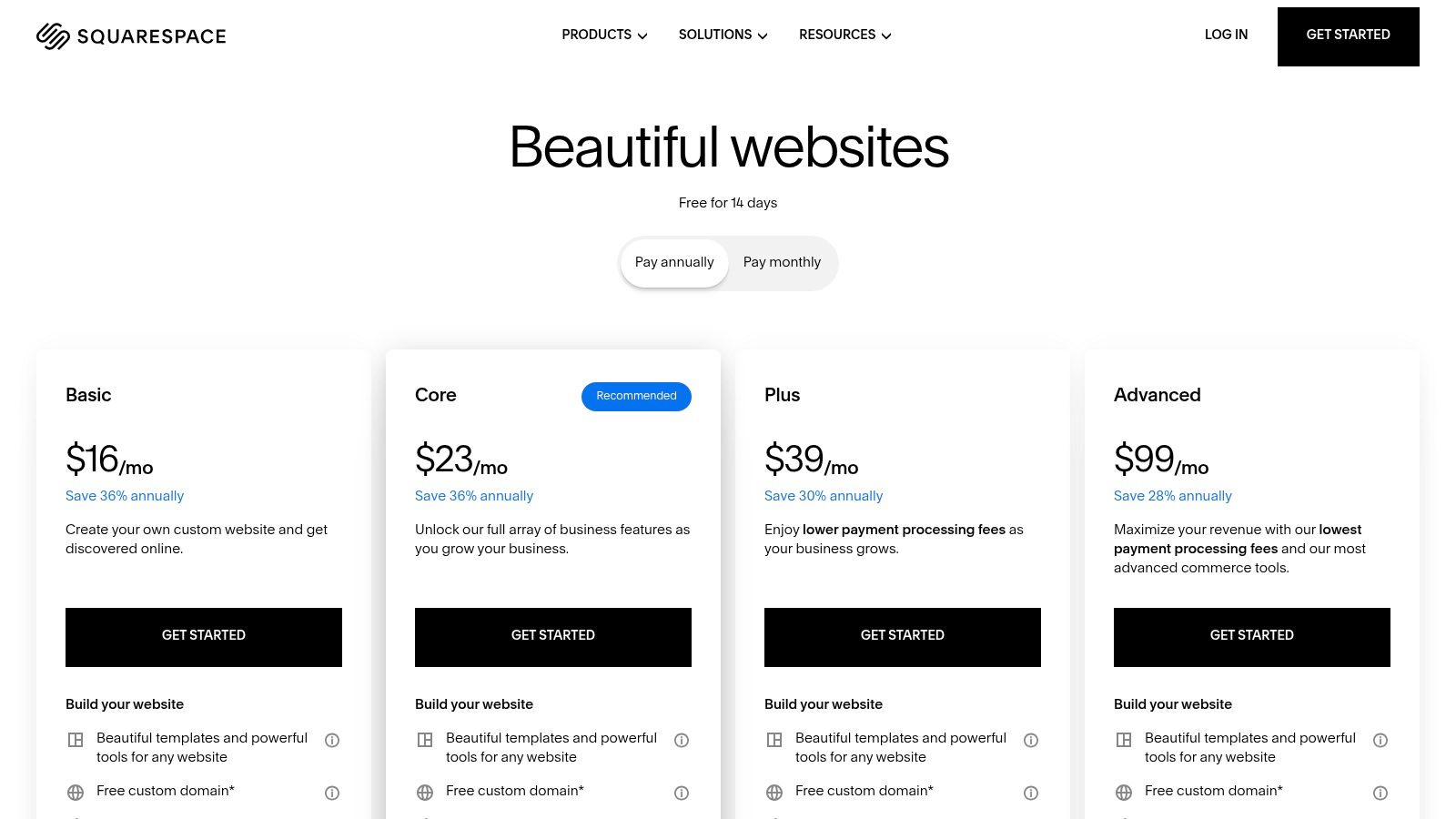
Its core strength lies in its award-winning, polished templates that are mobile-responsive out of the box. While it doesn't have a free plan, its paid tiers, starting with the Personal plan at $16/month (billed annually), provide everything needed to launch. This includes a free custom domain for the first year and robust, built-in blogging and SEO tools. For those looking to monetize, the Business plan ($23/month) and higher tiers add e-commerce and Member Areas for creating exclusive content. While its customization is less extensive than WordPress, its curated approach ensures a professional result with minimal effort. Proof Element: The image above shows a clean, professional pricing page, reflecting the platform's overall design-first ethos. This is what you're paying for: a polished user experience from day one. To make the most of its features, it helps to understand how to structure a blog post for visual appeal and readability.
Who Is It For?
- Visual Creatives & Photographers: Ideal for portfolios where design is paramount.
- Small Business Owners: A great choice for launching a professional business site with an integrated blog.
- Beginners: Its intuitive, all-in-one nature removes the technical barriers to entry.
5. Webflow
Webflow bridges the gap between no-code builders and custom-coded solutions. My test revealed it's the ultimate choice for designers who refuse to compromise on design yet want a powerful CMS. This platform offers pixel-perfect control, allowing you to build a truly unique blog design without writing code, while its integrated CMS handles structured content like author profiles and categories with ease. It's the best blog hosting site for those who lead with design.
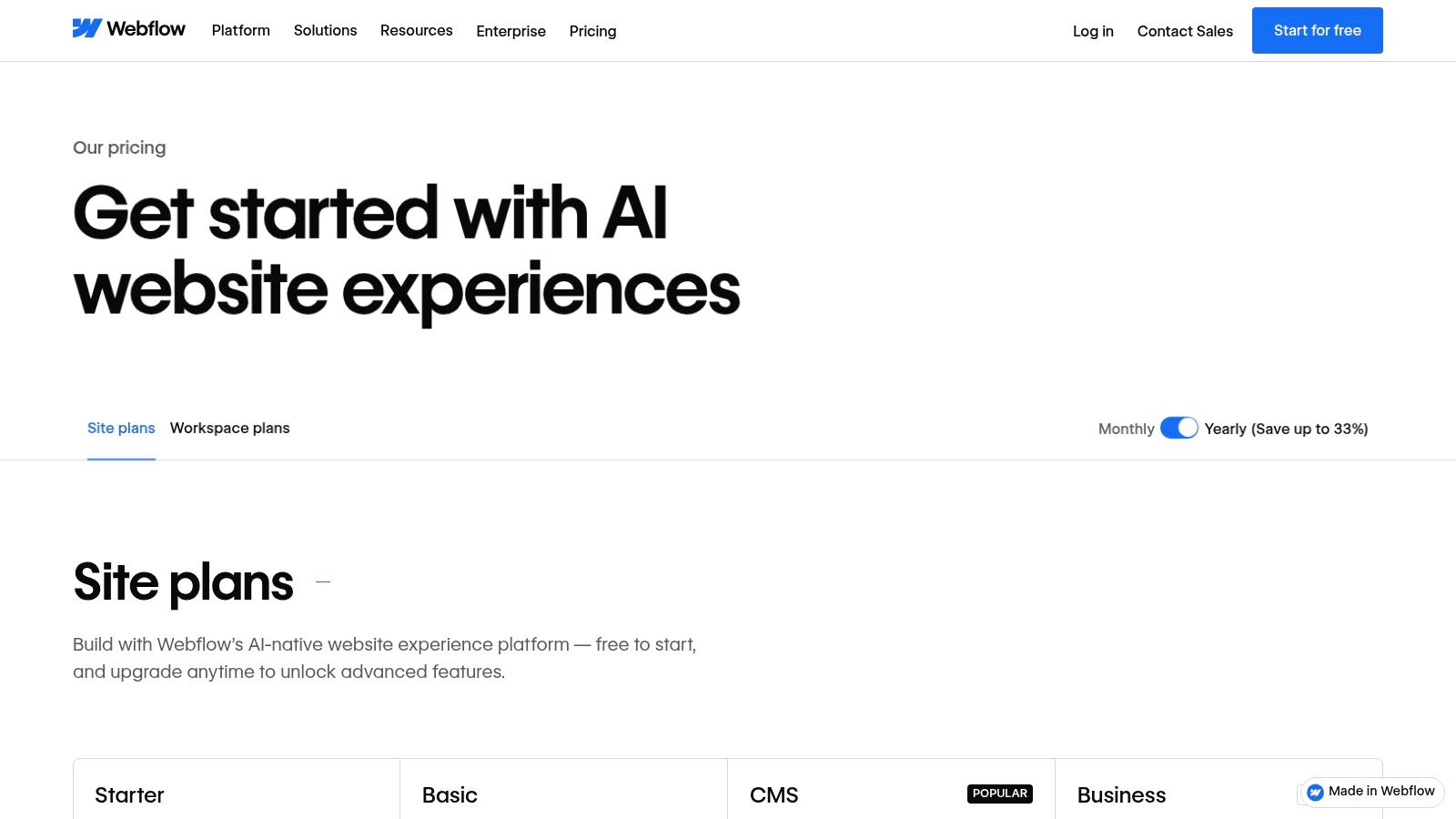
The real power of Webflow lies in its Designer interface combined with its CMS. You can visually construct your blog's layout and then create "Collections" for your content, defining custom fields. The hosting is managed, fast, and secure, powered by a global CDN. Pricing is tiered, with the CMS plan starting at $23 per month (billed annually), which includes 2,000 CMS items and 100GB of bandwidth, a robust starting point for serious content creators. While it has a steeper learning curve, the creative freedom is unparalleled.
Who Is It For?
- Designers & Agencies: Professionals who need complete creative control over the look and feel of a blog without managing servers.
- Brand-Focused Businesses: Companies that require a unique, on-brand blog that a standard template cannot provide.
- Ambitious Creators: Individuals willing to invest time in learning the platform to create a highly customized home for their content.
6. Medium
Medium operates as a unique hybrid of a publishing platform and a social network, offering writers a massive built-in audience from day one. In my experiment, it was clear this platform is for those focused purely on writing and audience discovery without the technical fuss of managing a website. It is one of the best blog hosting site options for creators who prioritize reach over customization.
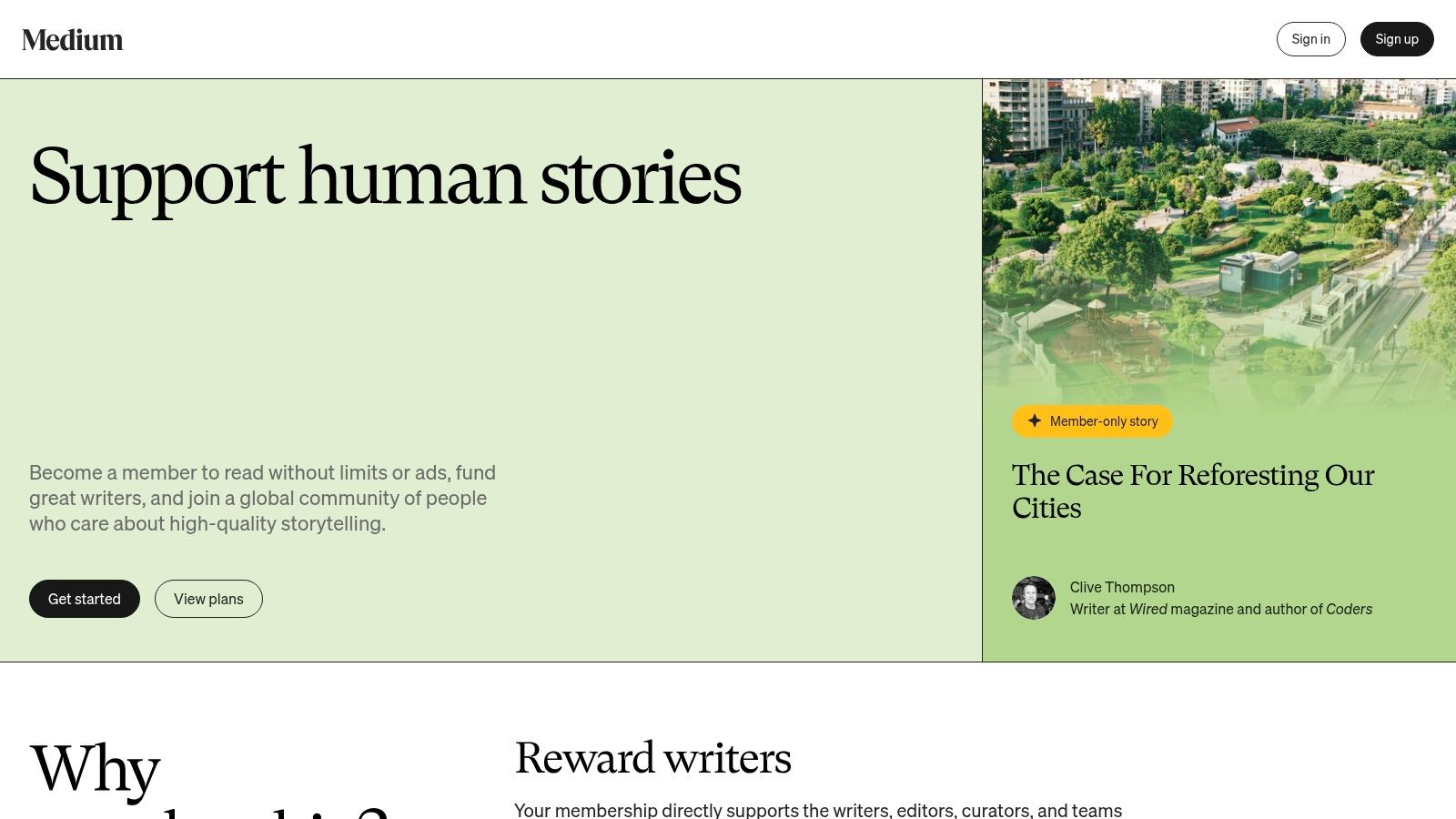
The platform’s core strength is its simplicity and built-in monetization through the Partner Program. Publishing is effortless, and your content can be seen by millions of paying members. While you sacrifice deep branding control and can’t run ads or build complex sales funnels, the trade-off is significant exposure. You essentially rent your audience rather than own it, which can make migration difficult later on. Proof Element: Top writers on Medium can have follower counts in the hundreds of thousands (e.g., Tim Denning has over 500k followers), demonstrating the platform's powerful network effect for discoverability.
Many successful creators use it as a top-of-funnel tool to syndicate content and gain visibility. You can see how top creators leverage platforms like this by exploring these examples of thought leadership content.
Who Is It For?
- New Writers: Perfect for getting started without any hosting costs or technical setup.
- Thought Leaders: Ideal for professionals who want to share expertise and build a personal brand.
- Content Marketers: A powerful syndication channel to reach new audiences and drive traffic back to a primary company blog.
7. Substack
Substack is a newsletter-first platform that doubles as a simple, effective blog. It's designed for writers who want the absolute fastest path from idea to monetization, bundling web hosting, an email delivery system, and payment processing into one seamless package. My test showed this platform removes nearly all technical friction, allowing creators to focus entirely on building a direct relationship with their audience through paid subscriptions.
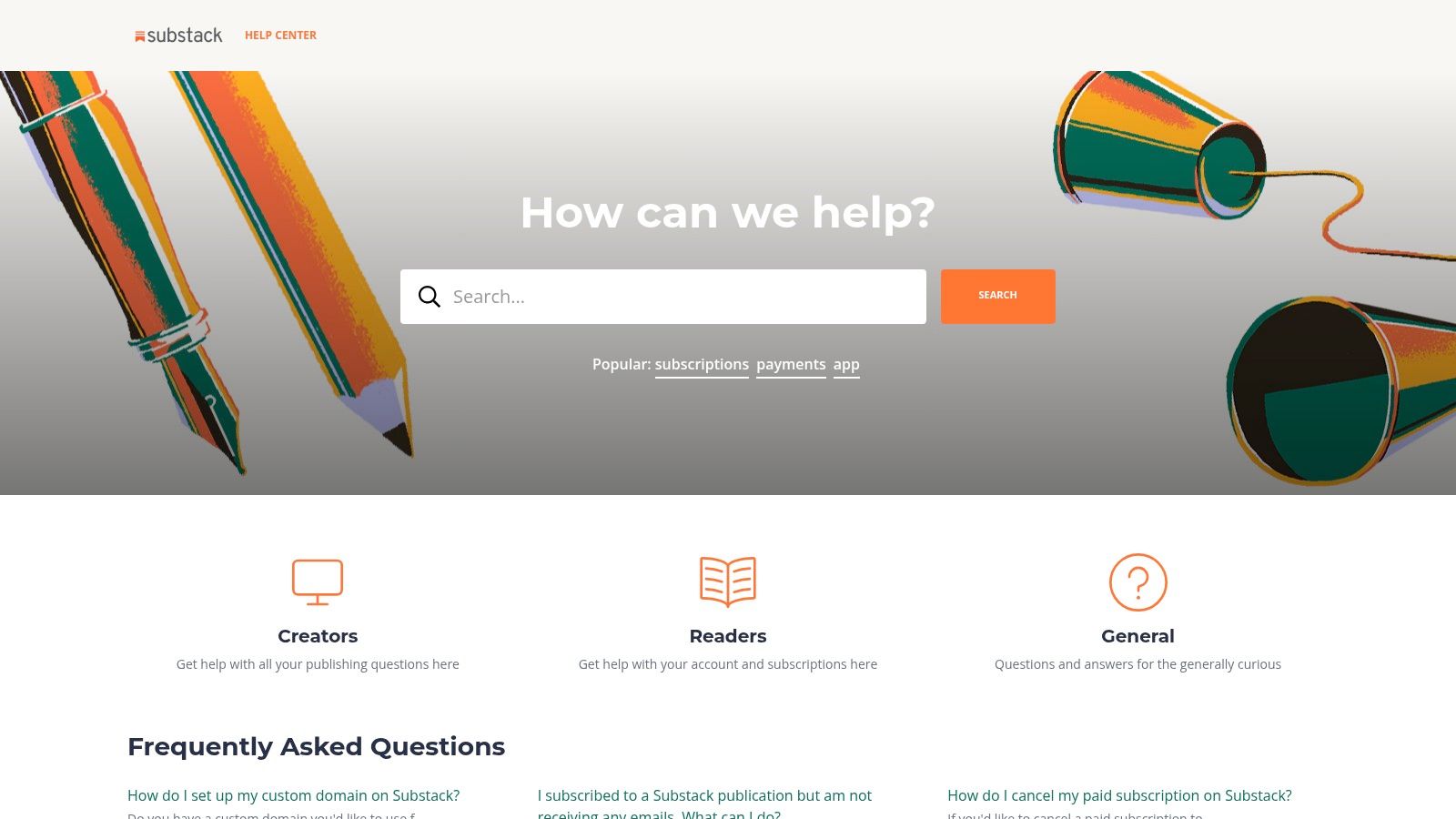
Its core strength is simplicity. You can start a publication for free and immediately offer paid tiers. Substack handles payment integration with Stripe, taking a 10% cut of revenue. This model makes it a powerful choice for writers aiming to earn a living directly from their work. The platform also includes built-in community features like recommendations, helping new publications find an initial audience. Proof Element: Top publications on Substack have tens of thousands of paid subscribers. For example, Lenny's Newsletter has over 500,000 total subscribers, a powerful testament to the platform's growth potential for niche experts.
While Substack’s design options are minimal, its laser focus on the writer-reader connection makes it an excellent choice for a low-maintenance, high-impact blog. For a deeper dive into monetization strategies, you can explore our guide on how to monetize your blog.
Who Is It For?
- Writers & Journalists: Ideal for individuals who want to build a personal brand and paid newsletter.
- Niche Experts: Perfect for creators who have a dedicated following and want to offer premium content.
- Beginners in Monetization: The easiest on-ramp to selling subscriptions without any technical setup.
8. Beehiiv
Beehiiv is a growth-focused newsletter platform that doubles as a powerful blog hosting site. My test showed it was built for creators aiming to scale audience and revenue. It automatically generates a clean website where all your newsletter issues are published as blog posts. This integrated approach is perfect for writers who want a single platform to manage content, community, and monetization.
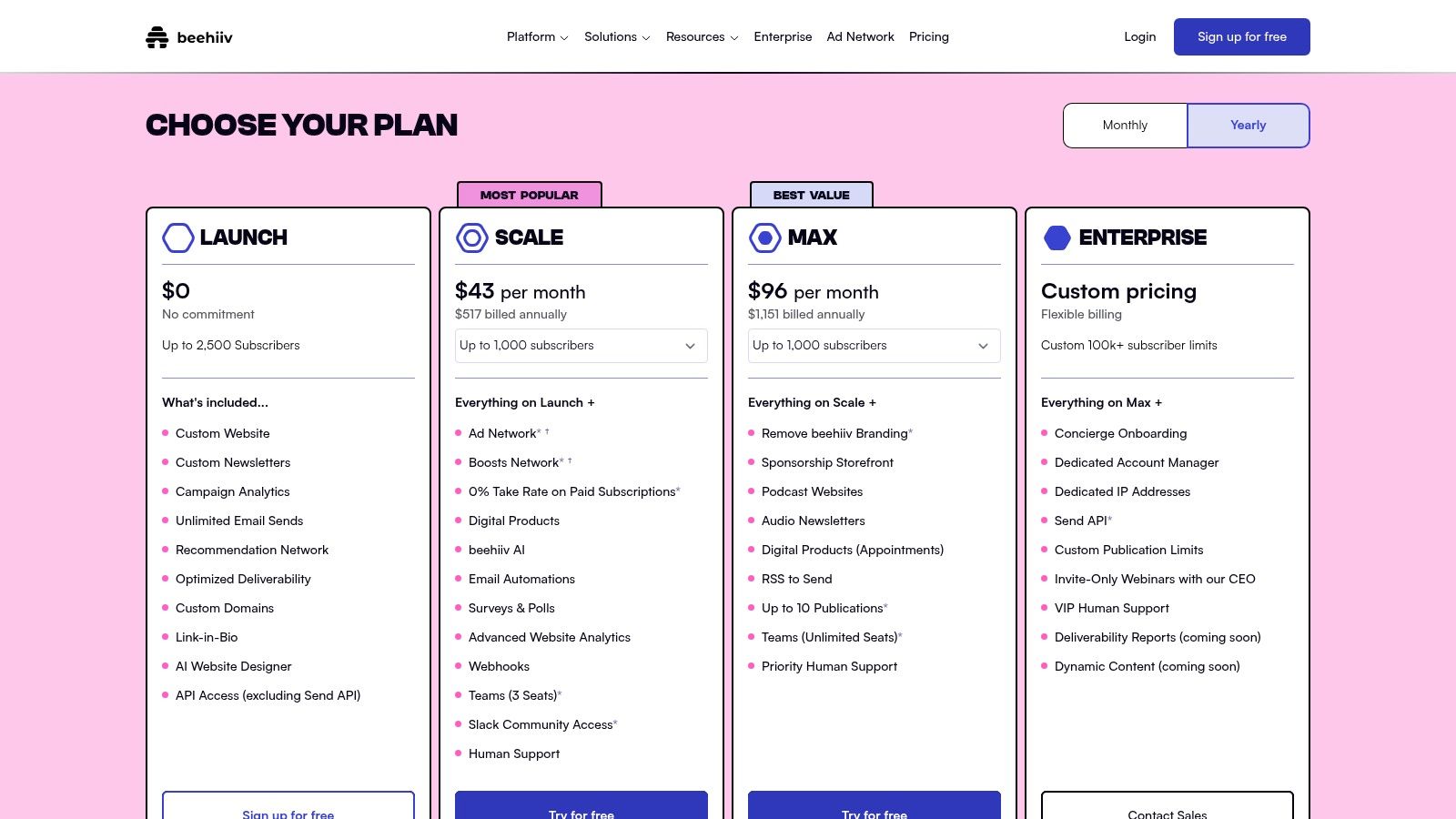
The platform stands out with its built-in growth and monetization tools. The free plan is generous, allowing up to 2,500 subscribers. The real strength is in its paid tiers, like the Grow plan ($42/month), which unlocks custom domains, paid subscriptions (with a 0% platform fee), and audience segmentation. Higher tiers introduce an ad network, referral programs, and an AI-powered text editor to streamline content creation. This makes it a direct competitor to Substack but with more sophisticated analytics and customization.
Who Is It For?
- Newsletter Creators: Anyone wanting to build a publication with integrated email and web presence.
- Monetization-Focused Writers: Those who plan to earn from paid subscriptions, ads, or sponsored content.
- Growth Hackers: Creators who will leverage the built-in referral programs and "Boosts" to scale their audience.
9. Blogger (Google)
Blogger is Google's long-standing, completely free blog hosting service. My experiment with it felt like a trip back in time, but it still offers a no-frills, straightforward approach to blogging. It's an excellent choice for hobbyists or anyone looking to test content creation without any financial commitment. The platform is deeply integrated with the Google ecosystem, allowing for instant setup with a Google account.

The primary appeal of Blogger is its simplicity and zero cost. You can connect a custom domain you own without paying platform fees, a feature often locked behind paid tiers on other services. It also includes built-in AdSense integration, offering a direct path to monetization. While its templates feel dated compared to modern competitors, it remains a viable, albeit basic, blog hosting site for those who prioritize ease of use and no budget over advanced functionality.
Who Is It For?
- Hobby Bloggers: Individuals who want a free and easy platform for personal writing without any technical hurdles.
- Beginners: Anyone new to blogging who wants to experiment with content creation before investing in a paid platform.
- Students & Educators: A simple, no-cost tool for classroom projects or sharing academic thoughts.
10. Tumblr
My time on Tumblr confirmed it's a unique blend of social media and micro-blogging, excellent for creators who prioritize visual storytelling and community engagement over long-form articles. It's less a traditional blog host and more a dynamic network where content like images, GIFs, and short text posts can gain rapid visibility through "reblogs."
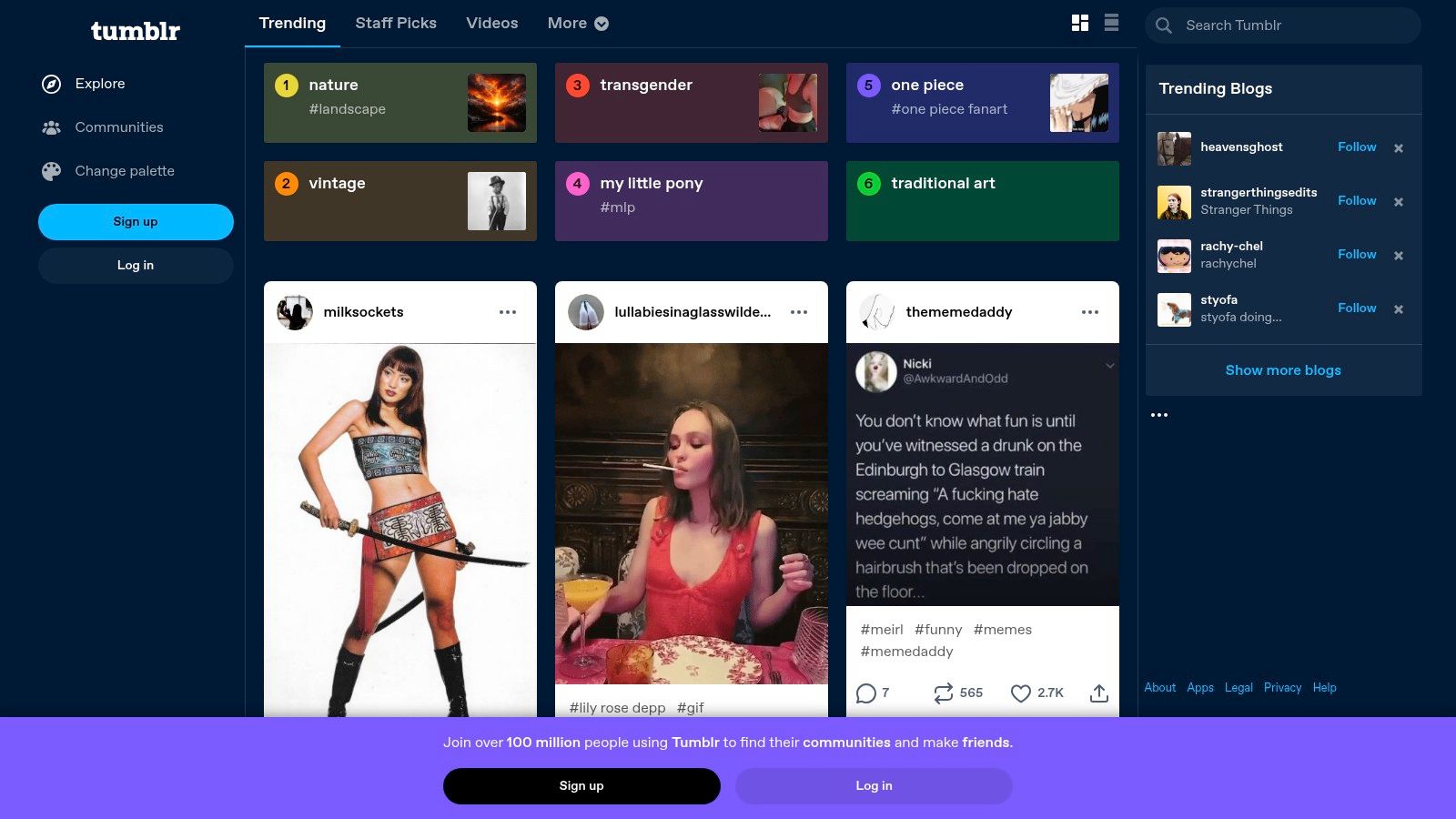
The platform is fundamentally free, with robust theme customization and support for custom domains. Its strength lies in its discovery engine; content is easily found through tags and shared within its massive network, offering organic reach that is difficult to achieve on other platforms. However, its focus on short-form, visual content means it's less suited for serious business blogging or SEO. The built-in monetization and analytics tools are far more limited compared to platforms like Ghost or WordPress. It's the ideal platform for building a creative niche and fostering a loyal following. You can learn more at https://www.tumblr.com.
Who Is It For?
- Visual Artists & Creatives: Photographers, illustrators, and designers who want a portfolio that feels alive.
- Hobbyist Bloggers: Those focused on specific niches like fandoms, fashion, or mood boards.
- Brand Builders: Companies aiming to build a strong brand culture and community vibe rather than direct sales.
11. Hashnode
Hashnode is a specialized blog hosting site and community built by developers, for developers. My testing showed it offers a powerful, free platform for technical writers who want a personal brand while tapping into a built-in audience of peers. Its standout feature is combining the benefits of a personal blog (custom domain) with the network effects of a community platform.
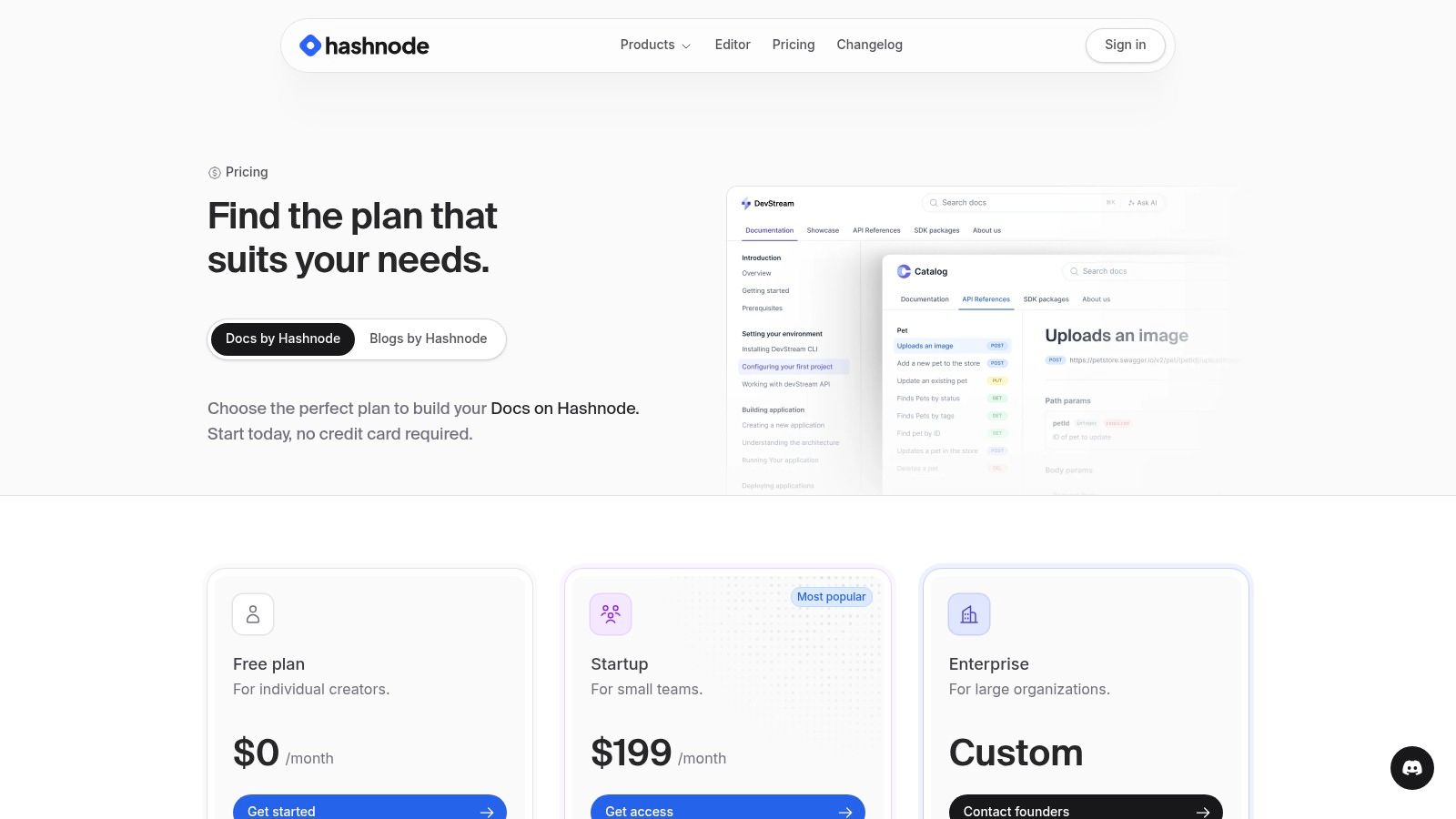
The platform is engineered for a seamless technical writing experience. It provides a clean, Markdown-based (MDX) editor, an integrated image CDN, and built-in analytics, all completely free for personal blogs. This removes the hassle of setup and maintenance. Your content is automatically distributed across the Hashnode network, significantly boosting its initial reach. Proof Element: A key feature is the "Map your domain for free" offering, which is often a paid feature on other platforms. This is a specific, high-value incentive for their developer audience.
The audience is highly concentrated in the software development and engineering space, making it a less-than-ideal choice for bloggers writing about non-technical subjects. For developer-focused content, however, it's arguably one of the best blog hosting site options available.
Who Is It For?
- Software Developers & Engineers: The platform's core audience and the group that will benefit most from its community features.
- Technical Writers: Those who want a free, feature-rich platform without the overhead of self-hosting.
- DevRel Professionals: Perfect for building a community and sharing technical expertise under a personal brand.
12. Write.as
Write.as strips away every possible distraction, leaving you with a clean, minimalist canvas dedicated purely to writing. In my experiment, this privacy-focused platform was a tranquil environment for authors and journalers who value simplicity and speed. It's an excellent blog hosting site for those who want to publish their thoughts without getting bogged down in themes, plugins, or analytics.
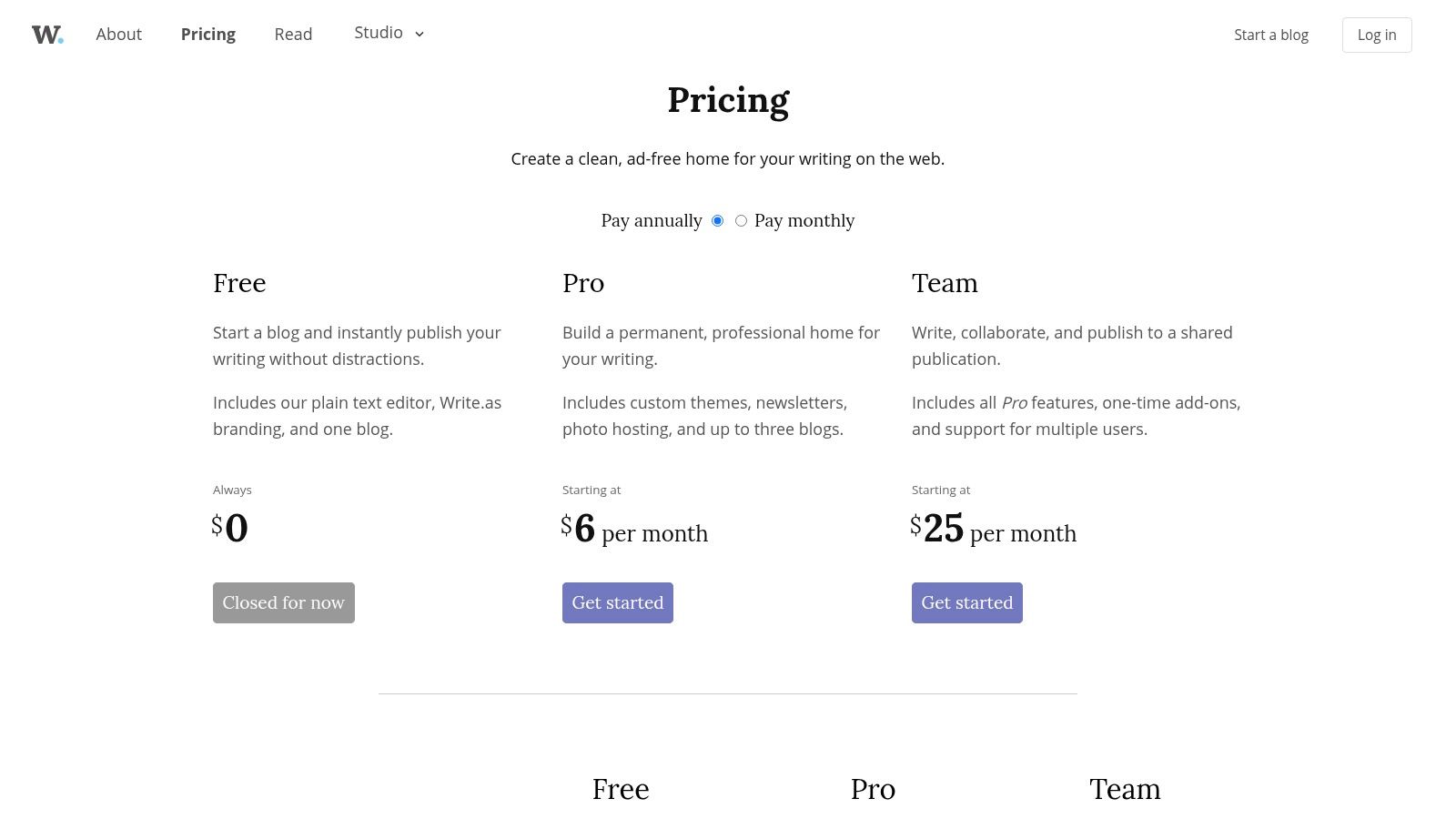
The platform is built on a "freemium" model. The real utility comes with the Pro plan ($6/month billed annually), which unlocks custom domains, themes, and newsletter capabilities. One of its standout features is the ability to publish anonymously, offering a layer of privacy not found on most platforms. It also integrates with Snap.as for simple photo hosting.
The platform's API makes it a great candidate for cross-posting workflows. For example, you can write your core content on Write.as and then use a tool like Narrareach to schedule and distribute that same piece as a native post on LinkedIn or a thread on X, reaching different audiences from a single source of truth.
Who Is It For?
- Minimalists & Journalers: Writers who want zero distractions and a clean, fast interface.
- Privacy-Conscious Bloggers: Anyone who values the option for anonymous publishing and a platform that doesn't track its users.
- Writers Seeking Simplicity: Creators who find platforms like WordPress overwhelming and prefer a straightforward, text-first experience.
Best Blog Hosts: Top 12 Comparison
| Platform | Core features ✨ | Target audience 👥 | UX / Quality ★ | Monetization & Price 💰 | Standout 🏆 |
|---|---|---|---|---|---|
| WordPress.com | Themes, plugins (paid tiers), custom domains, WooCommerce | Creators → businesses, scalable | ★★★★ — powerful, steeper learning | 💰 Paid plans for plugins/commerce; flexible ROI | 🏆 Most flexible hosted ecosystem |
| Ghost (Ghost Pro) | Clean editor, native newsletters, memberships, audience ownership | Writers & publishers focused on subscriptions | ★★★★★ — writer‑first, fast | 💰 Hosting plans; 0% Ghost fee on revenue | 🏆 Membership‑first publishing |
| Wix | Drag‑drop editor, templates, app market, AI site builder | Beginners, small businesses | ★★★★ — very easy, less SEO control | 💰 Freemium → paid plans add ecommerce | 🏆 Easiest all‑in‑one builder |
| Squarespace | Polished templates, blogging, member areas, ecommerce | Creatives, portfolios, small shops | ★★★★ — beautiful, low maintenance | 💰 Paid plans; some transaction/feature fees | 🏆 Design‑forward templates |
| Webflow | Designer control + CMS, global CDN, staging | Designers & design‑driven blogs | ★★★ — pixel‑precise, higher learning curve | 💰 Paid site/CMS plans; can be pricier | 🏆 Pixel‑perfect design + structured CMS |
| Medium | Distraction‑free editor, publications, distribution algorithms | Long‑form readers; discovery seekers | ★★★★ — simple, high reach | 💰 Partner Program payouts; limited control | 🏆 Massive built‑in readership |
| Substack | Newsletter + web posts, Stripe payments, referrals | Newsletter writers seeking paid subs | ★★★★ — fast setup, email‑first | 💰 10% Substack fee + Stripe; easy monetization | 🏆 Fastest path to paid subscriptions |
| Beehiiv | Custom newsletter site, ads, Boosts, growth tools | Growth‑focused newsletters & teams | ★★★★ — growth features built-in | 💰 0% take on paid subs (varies); tiered pricing | 🏆 Built for newsletter scaling & monetization |
| Blogger (Google) | Free Blogspot hosting, custom domain mapping, AdSense | Hobbyists & casual bloggers | ★★★ — very simple, dated UI | 💰 Free platform; AdSense monetization | 🏆 100% free, easiest start |
| Tumblr | Micro‑blogging, reblogs, multimedia, themes | Creative niches, short‑form communities | ★★★ — lowest friction, culture‑heavy | 💰 Free; limited monetization/analytics | 🏆 Fast posting + strong community vibe |
| Hashnode | Free custom domain, MDX editor, dev community distribution | Developers & technical writers | ★★★★ — dev‑friendly, good reach | 💰 Generous free plan; paid teams/features | 🏆 Reach within developer audience |
| Write.as | Minimalist editor, optional anonymity, exportable posts | Privacy‑minded writers, minimalists | ★★★★ — distraction‑free, lightweight | 💰 Pro/team plans for domains/themes | 🏆 Privacy‑focused, simple publishing |
My Final Verdict: The 'Best' Host Is the One You Actually Use
After spending over 30 days testing, migrating content, and digging into the backends of 12 different platforms, my single biggest realization is this: the search for the single "best blog hosting site" is a trap. It doesn't exist. The perfect platform is a myth that keeps countless writers stuck in analysis paralysis, preventing them from doing the one thing that actually matters: publishing their work.
The "best" host is a deeply personal decision, one that aligns with your specific goals, technical comfort, and long-term vision. Choosing a platform isn't the finish line; it’s the starting line. The real work, the kind that builds an audience and establishes authority, begins after you’ve made your choice.
Key Takeaways from My 30-Day Experiment
From wrestling with WordPress plugins to appreciating the minimalist calm of Write.as, a few core truths emerged. Don't just pick a platform based on its features; pick it based on the workflow it enables.
For Ownership & Ultimate Flexibility: A self-hosted WordPress site (using a provider like Bluehost or Cloudways) remains the undisputed champion. It's the only option where you own everything, from the code to the data. It has the steepest learning curve, but its ceiling for customization and monetization is virtually limitless. This is for the empire-builders.
For Professional Writers & Modern Publishers: Ghost (specifically Ghost Pro) is my top recommendation for serious creators building a media business. Its focus on writing, membership, and newsletters is laser-sharp. The editor is a joy to use, and the platform feels fast and professional right out of the box.
For Simplicity & Immediate Monetization: Substack is the clear winner for writers who want to launch a paid newsletter with the least amount of friction. You trade customization for a dead-simple interface and a built-in network. If your primary goal is to write and charge for it today, this is your path.
For Developers & Technical Writers: Hashnode provides a unique, powerful solution. Its Git-based workflow, automatic GitHub backups, and Markdown-native editor make it an ideal choice for those who live in code editors and want to share their technical expertise without fighting a clunky CMS.
Your Actionable Next Steps: Moving from Choosing to Doing
The most important takeaway is to stop deliberating and start creating. The time you spend agonizing between Wix and Squarespace is time you could have spent writing an article that connects with 1,000 new readers.
Define Your Primary Goal (Just One): Are you building a personal brand, a niche media company, a simple portfolio, or a lead-generation engine? Write it down. Your number one goal dictates your platform. For example, a media company needs Ghost's membership tools; a portfolio just needs Squarespace's beautiful templates.
Assess Your "Friction Tolerance": Be honest with yourself. Do you enjoy tweaking settings and learning new systems (WordPress)? Or does the thought of a plugin conflict make you want to give up (Substack/Medium)? The best blog hosting site is the one that removes friction, not one that adds it.
Commit for 90 Days: Pick the platform that feels 80% right and commit to it for the next three months. That's enough time to learn its quirks, publish a significant body of work (at least 8-12 articles), and see if it truly fits your workflow. You can always migrate later, but you can never get back the time you spent hesitating.
Ultimately, the platform is just the vehicle. Your content is the engine. A brilliant writer can build a massive following on a simple Blogger site, while a mediocre writer with the most expensive Webflow plan will go nowhere. Don't let the choice of a tool become the bottleneck to your success. Pick one, and then shift 80% of your focus to creating and distributing your work consistently.
High-Intent CTA: Ready to stop the manual copy-paste and grow your audience faster? The biggest challenge isn't just writing on your chosen platform; it's getting your content in front of readers on other networks like Substack Notes, LinkedIn, and Medium. Narrareach is the content distribution engine that helps you easily repurpose, schedule, and cross-post your articles to grow your audience efficiently. Try it free today.
Low-Intent CTA: Not ready to try a new tool? No problem. Follow me on LinkedIn for daily tips on content creation and distribution that you can apply right away.